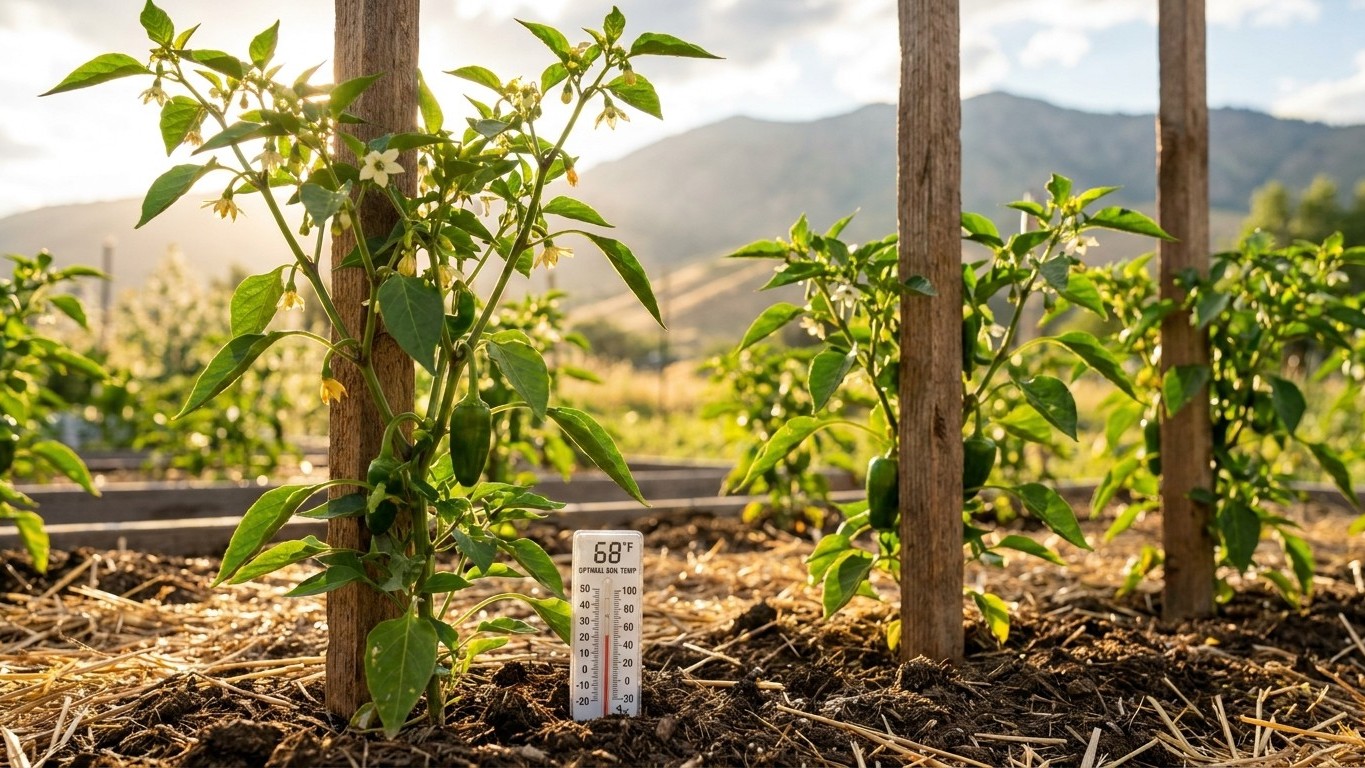

Pepper fruit set in Hawaii runs into trouble at both ends of the thermometer, not just the hot one. The islands average 18.7 days a year at or above 90 F at the Honolulu reference station, which is enough heat to stall pollen some afternoons but not enough to shut a garden down for the season. The bigger unknown is the cool side: nights under 55 F also stop fruit from setting, and this site does not track summer night minimums for Hawaii. That number depends on your elevation and whether you garden windward or leeward, so it’s on you to watch it.
The short answer

Eighteen-point-seven days a year at or above 90 F sounds modest next to a mainland desert garden, but it’s not spread evenly. Those hot days cluster in the leeward lowlands, the dry, sun-baked flats on the Kona side of the Big Island or the Ewa plain on Oahu, where afternoon heat can knock pollen viability down for a stretch and cause flowers to drop without setting fruit. Gardeners at these low, dry elevations should expect a few weeks each summer where pepper plants flower heavily but fruit doesn’t follow. That’s not a disease or a nutrient problem. It’s heat doing exactly what Utah State University Extension describes: pepper fruit set fails when days climb above 90 F, full stop, regardless of variety.
The other threshold matters just as much and gets ignored far more often. Nights below 55 F also block fruit set, and in Hawaii that threshold is not something a state-level climate normal can answer for you. Upland gardens on the Big Island, in Kula on Maui, or in the cooler pockets above Waimea can drop into that range on clear nights even without anything resembling a mainland cold snap. This site carries the heat-day count because that’s a fixed climate normal tied to a reference station. It does not carry night minimums, because those swing wildly with elevation, cloud cover, and exposure within the same island, sometimes within the same valley. Watch your own thermometer at dawn during a cool, clear stretch. If it’s dipping into the mid-50s, don’t blame your seed packet when the flowers fall.
| Threshold | Effect on peppers | Data for Hawaii |
|---|---|---|
| Days at or above 90 F | Pollen viability drops, blossoms abort | 18.7 days/year average (Honolulu reference station) |
| Nights below 55 F | Fruit set stalls | Not published here; varies by elevation and exposure |
Put together, the practical read is this: heat alone rarely wrecks a Hawaii pepper crop, since 18.7 days is a small fraction of a growing season. The risk that catches people off guard is the cool nights at elevation, precisely because there’s no widely quoted number for it the way there is for the 90 F days. Track your own site for a season before you assume you’re clear.
When to start seed here
Utah State University Extension’s guidance is built around two dates: an indoor start 8 to 10 weeks before transplant, and a transplant date set by soil temperature reaching 60 F, timed after frost. Hawaii breaks the frost half of that formula, because frost does not occur in any inhabited part of the state. NOAA’s 1991-2020 climate normals for the reference station return a flag of “not computable” for every freeze percentile at 32 F and 36 F, with zero days a year at or below freezing. The only frost in Hawaii sits on the summits of Mauna Kea, Mauna Loa, and Haleakala, thousands of feet above any garden bed. So the arithmetic below swaps “after frost” for “after the wet season eases and soil warms,” which in practice means working from rainfall and elevation instead of a calendar frost date.
- Drop the frost anchor entirely. There’s no last-frost date to count back from here. Instead, use the point when heavy rains taper and soil at your elevation holds steady warmth, which growers on drier leeward sites reach earlier than those on wet windward slopes.
- Confirm soil hits 60 F. At sea level and in most low to mid elevations, soil temperature clears 60 F for most of the year. The exception is upland sites, Kula, Volcano, Waimea’s higher pockets, where cooler air and shaded soil can sit below that mark longer than growers expect. Check your own soil with a probe rather than assuming.
- Count back 8 to 10 weeks for the indoor start. Once you’ve picked a transplant window based on soil warmth, subtract 8 to 10 weeks to land your seed-starting date. A transplant target in early spring means seed indoors in mid-winter; a target later in the dry season pushes the whole schedule later by the same 8 to 10 weeks.
- Add 35 to 45 days from flowering to harvest, not from sowing. Utah State’s guidance is explicit that this window starts once the plant is in bloom, not when the seed goes in the tray. Skipping this step is the single most common reason gardeners think their peppers are running late when they’re actually on schedule.
- Re-check the cool-night side before committing. If your planned transplant date falls during a stretch when your specific site regularly dips under 55 F at night, you’re better off waiting, even if soil temperature and rainfall both look fine.
Redo this same sequence for your own address rather than borrowing a neighbor’s schedule two valleys over. Windward and leeward sites on the same island can be weeks apart in when soil warms and rain eases.
What goes wrong here
- Blossom drop during a hot spell. When afternoon temperatures push into or past that 90 F range, even for a handful of days within the 18.7-day yearly average, flowers can drop without setting fruit. There’s no product fix for this. Providing afternoon shade cloth over the hottest rows during a heat spike, and keeping soil moisture steady so the plant isn’t fighting drought stress on top of heat stress, are the only practical responses.
- Blossom drop from an unexpectedly cool night. This hits upland and shaded gardens more than lowland ones, and it’s the failure most Hawaii gardeners don’t see coming because there’s no widely published night-minimum figure for their exact site. If flowers are dropping and daytime heat isn’t the obvious cause, check your predawn temperatures for a few nights running before assuming a pest or disease problem.
- Sunscald on exposed fruit. Hawaii’s sun angle and clear-sky intensity, especially on leeward, cloud-free sites, can scald fruit that loses leaf cover to wind damage or over-pruning. Keep the natural leaf canopy intact rather than stripping foliage to “let more light in,” which is a common but counterproductive instinct.
- Blossom-end rot from uneven watering. Hawaii’s rainfall pattern, heavy and sudden on windward sites, sparse and spiky on leeward ones, makes consistent soil moisture harder to hold than it sounds. Rot at the fruit’s blossom end usually traces back to a wet-dry-wet cycle rather than a true calcium deficiency. Mulch heavily and water on a fixed schedule instead of reacting to whichever way the sky looks that morning.
Common questions
Do pepper varieties differ in how well they handle Hawaii’s heat?
Utah State University Extension names six common garden pepper varieties in its guidance but publishes no heat rating, no days-to-harvest figure, and no plant size for any of them individually. Without that data, there’s no verified basis for ranking specific named varieties against Hawaii’s climate, so the safer approach is to manage the site (shade, moisture, timing) rather than shop for a “heat-proof” variety based on unverified claims.
Is there a real frost date I should use for planning in Hawaii?
No. NOAA’s climate normals for the reference station return zero days a year at or below freezing, with every frost percentile flagged as not computable. Frost exists only on the high volcanic summits, never where gardens grow. Any planting calendar built around a frost date for lowland or midland Hawaii is working from the wrong model; rainfall, elevation, and windward-versus-leeward exposure drive the actual timing.
How many days should I count from flowering to harvest?
Utah State University Extension’s figure is 35 to 45 days, and that window starts at flowering, not at seeding or transplanting. Counting from the wrong starting point is the most common reason gardeners believe their peppers are behind schedule when they’re actually right on pace.
Why do my peppers flower heavily but set so little fruit?
That pattern points to one of the two thresholds Utah State University Extension flags: daytime heat above 90 F or nighttime temperatures below 55 F. Hawaii’s statewide average of 18.7 days a year at or above 90 F makes the hot end a real but limited risk. The cool end isn’t tracked here at a state level, so check your own predawn readings, especially at higher elevation or shaded sites, before ruling it out.