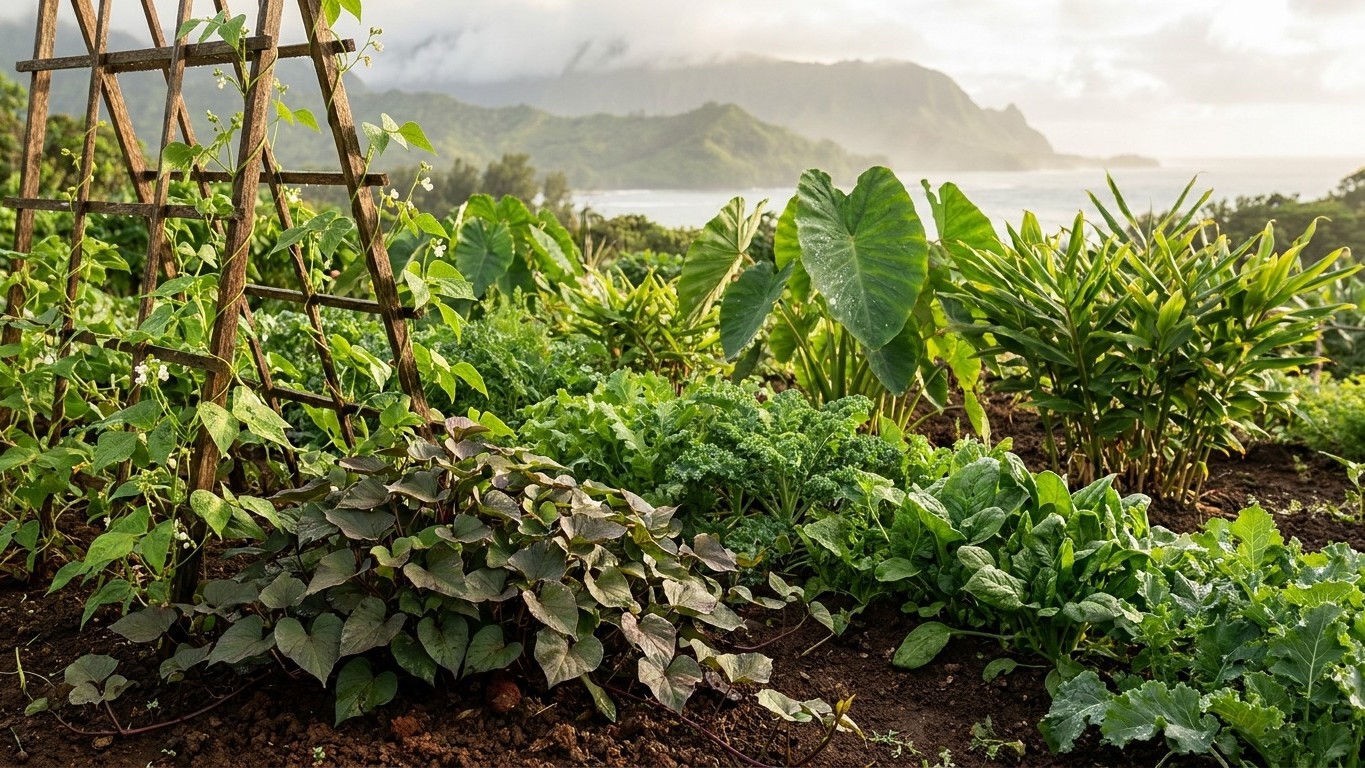

February in Hawaii isn’t governed by a last-frost date because there isn’t one anywhere people garden. The real question is elevation and rain exposure. At sea level, warm-season crops like sweet potato, beans, and tropical greens go in without hesitation. Up in the cooler districts, lettuce, peas, and brassicas are still fair game too.
What goes in the ground in February

NOAA’s 30-year climate data for Hawaii shows zero days per year at or below 32°F in inhabited areas, and every freeze percentile in the record comes back “not computable.” Frost exists in this state, but only on the summits of Mauna Kea, Mauna Loa, and Haleakala, thousands of feet above where anyone grows a tomato. That single fact rewrites the whole planting calendar. There’s no frost window to count from here. Instead, two other forces decide what survives: how much rain a spot gets and how high above sea level it sits.
Windward coasts (the sides facing the trade winds) stay wet through winter, which in February means saturated soil and slug pressure but no cold stress. Leeward coasts stay drier and warmer, closer to true desert conditions in some spots. Elevation adds a third layer: temperatures step down as the land climbs, so upland pockets on Maui, the Big Island, and even parts of Kauai run cool enough in February to behave almost like a mainland spring.
| Zone type | Rain pattern in February | Typical temperature feel | What fits now |
|---|---|---|---|
| Windward lowland | Wet, frequent showers | Warm, humid | Sweet potato, taro, ginger, tropical greens, banana |
| Leeward lowland | Drier, sunnier | Warm, drier air | Beans, corn, tropical squash, papaya, peppers |
| Upland/high elevation | Variable, often misty | Cool mornings and evenings | Lettuce, peas, cabbage, broccoli, carrots, potatoes |
The USDA Plant Hardiness Zone Map places Hawaii across an unusually wide span, from 9a to 13a, all within one state. That range means a seed packet’s zone recommendation is close to meaningless here unless you already know whether you’re gardening near the beach or up in the clouds. Buy for your microclimate, not for the island’s average.
What to start under cover
Since frost never enters the equation, “under cover” in Hawaii means shade cloth, hoop houses, or a covered porch table, not a heated seed mat fighting off cold. February’s wet-season downpours can pound tender seedlings flat or rot them at the soil line before they get true leaves, so starting trays under a roof and moving them out once they’ve toughened up is the safer play, especially on windward ground.
Count backward from when you actually want mature transplants in the bed, not from any date on a calendar page. Most warm-season transplants (tomatoes, peppers, eggplant) need roughly six to eight weeks under cover before they’re sturdy enough to handle open soil and wind. Cool-season transplants for upland gardens (lettuce, brassicas) often need less, closer to four to six weeks. Work backward from your target planting week and that’s your start date.
Two ways this goes wrong. Start too early and the trays sit under cover too long, roots circle the container, stems stretch thin reaching for light, and the plant never fully recovers once it’s in the ground. Start too late, especially heading toward the drier months that follow, and transplants go into soil that’s already losing moisture faster than young roots can chase it. Neither mistake kills a whole season in Hawaii the way it might on the mainland, but both cost weeks of growth you won’t get back.
What is ready to pick
Hawaii’s growing season doesn’t shut down for winter, so February gardens are rarely empty. Citrus varieties suited to the islands are commonly still coming off the tree through this stretch, and avocado trees bearing winter-ripening fruit keep dropping steadily. Papaya and banana, which fruit on their own rhythm rather than a season, keep producing at whatever pace the individual plant has set.
Leafy greens planted in the fall, especially in upland gardens, are usually at peak size now and worth cutting before they bolt in warmer weeks ahead. Sweet potato beds started months earlier can be checked by feeling around the base of the vine; if the soil mounds and cracks, tubers are sizing up underneath. Root crops in cooler upland plots (carrots, beets) are worth a test pull on the largest-looking plant before committing to the whole row.
For stored crops, this is the month to go through onions and any winter squash held from a fall harvest. Squash with a soft spot near the stem or a hollow sound when tapped should get used first. Onions that have started sprouting a green shoot are still edible but won’t hold much longer in storage, so they belong in the next few meals rather than the back of the pantry.
The jobs that matter this month
Hawaii gardens don’t get a true dormant season, so February’s job list is about staying ahead of growth that never really stops, not catching up after a winter break.
Prune mango, avocado, and citrus trees once they’ve finished their main fruiting push; cutting back now, while growth has slowed slightly, shapes the tree before the next flush of new wood takes over. On windward ground soaked by wet-season rain, check drainage around raised beds and containers; standing water for even a day or two in February can rot roots that would tolerate the same rain if it drained through. Mulch helps here too, both to slow erosion on sloped plots and to keep weed pressure down, since weeds in Hawaii grow on the same year-round clock as everything else.
Slugs and snails thrive in wet-season conditions, so scout leafy greens and seedlings closely; a few minutes checking undersides of leaves saves entire trays of transplants. Coffee growers and anyone with fruiting trees should also watch for coffee berry borer and fruit fly activity, both of which stay active through winter in Hawaii’s climate rather than dying back. Turn compost piles regularly since the warmth speeds breakdown, and use the slower rain days to sharpen tools, check fencing for storm damage, and order seed for crops that need a longer lead time before the drier months arrive.
What not to do in February
The most common mistake is importing a mainland calendar wholesale, treating February like a dead month because that’s what the seed packet or a gardening app assumes. Hawaii doesn’t work that way. Skipping planting because “it’s winter” wastes weeks that could be growing something.
The opposite mistake shows up on windward ground: planting into soil that’s still saturated from the last storm because the sun came out for an afternoon. Wet-season soil can look dry on top and stay soggy two inches down, and seeds or transplants set into that will rot at the root before they establish. Wait for soil to actually crumble in your hand, not just for the rain to pause.
Nitrogen timing trips people up too. Heavy February rain on windward and upland ground leaches nitrogen out of the root zone fast, so a feeding right before a predicted storm is largely wasted. Feed after a wet stretch breaks, when plants can actually take it up, rather than on a fixed schedule. And on leeward, drier ground, don’t assume the same watering rhythm that works windward; leeward gardens in February often need supplemental water even while the windward side of the same island is dealing with runoff.
Checking this against your own county
Everything above describes Hawaii broadly, but the state’s real planting windows shift by elevation, by which side of an island you’re on, and by how close you sit to a particular valley or ridge that funnels wind and rain differently than the spot a mile away. A garden in upland Kula behaves nothing like one on a leeward coastal flat, even on the same island. The University of Hawaii’s CTAHR extension service is the source built for exactly this kind of local variation, with staff and county offices that can speak to your specific microclimate rather than a statewide average.
Common questions
Does frost ever happen in Hawaii’s gardens?
No. NOAA’s 30-year climate data shows zero days per year at or below 32°F in inhabited parts of the state. Frost occurs only on the high summits of Mauna Kea, Mauna Loa, and Haleakala, well above any garden.
Can tomatoes go in the ground in February in Hawaii?
Yes, particularly in leeward and lower-elevation spots, though windward wet-season rain can bring disease pressure, so many gardeners start tomatoes under cover first and transplant once soil has dried out enough to crumble.
Why does the same island have such different planting advice?
Windward sides catch the trade winds and stay wetter, leeward sides stay drier and warmer, and elevation cools things further as land climbs, so three very different growing conditions can exist within a short drive of each other.
Does Hawaii’s USDA hardiness zone matter when buying seeds?
It matters less than elevation and rain exposure. The state spans zones 9a to 13a, a range wide enough that a seed packet’s zone listing tells you far less than knowing whether your garden sits near the coast or up in a cooler upland pocket.