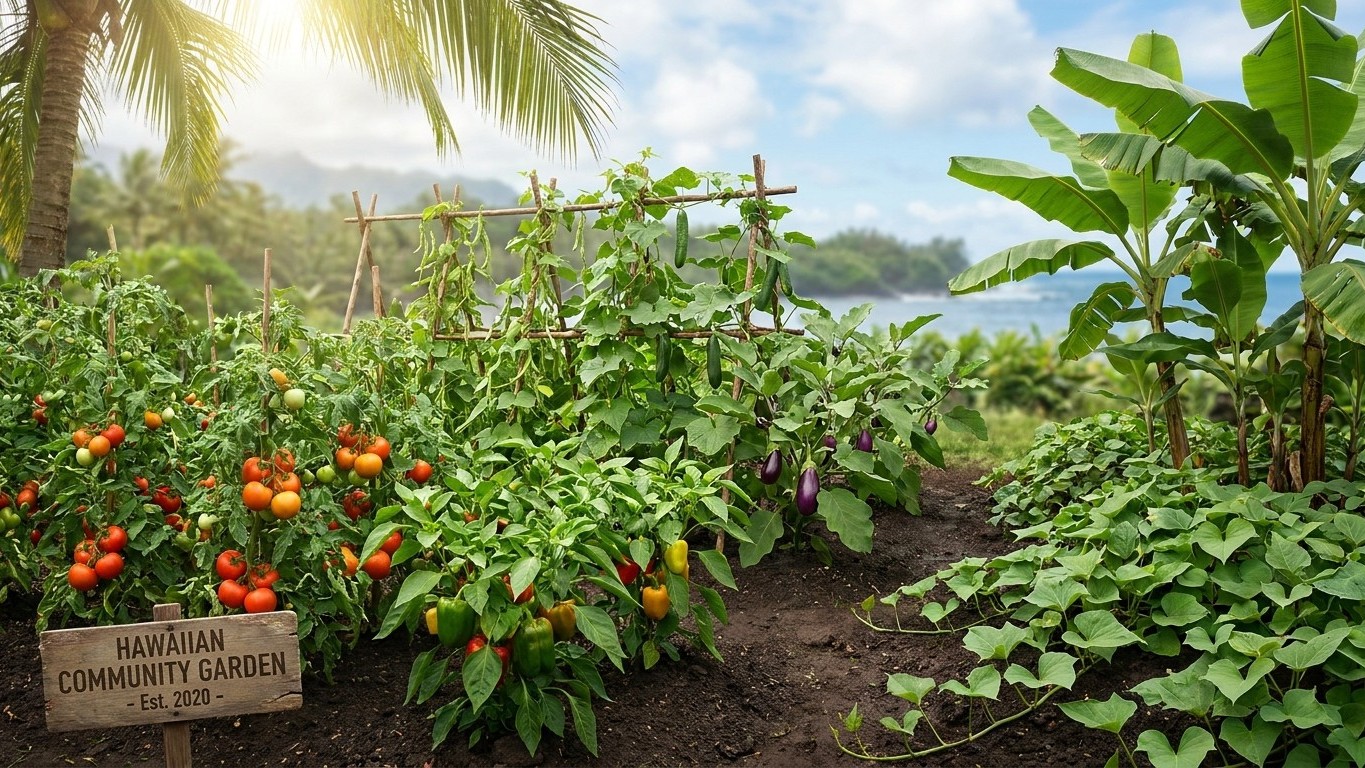

In Hawaii, March isn’t governed by a frost date because none exists in the places people garden. The real variables are rainfall pattern, elevation, and whether a garden sits on the windward or leeward side of an island. At sea level, nearly everything can go in the ground now. Above roughly 3,000 feet, cooler nights slow things down, and that changes what’s worth planting this month.
What goes in the ground in March

The USDA Plant Hardiness Zone Map places Hawaii’s inhabited areas across a wide range, zones 9a through 13a, all built from one measurement: the average annual extreme minimum temperature. That’s a territory-wide range, not a single number for your yard, so it’s worth checking the map for your specific spot rather than treating “Hawaii” as one zone. What actually decides planting success month to month isn’t that hardiness figure, though. It’s rainfall timing and elevation.
At low elevation, on either coast, March sits in the shoulder between the wetter winter months and the drier stretch ahead for leeward areas. That makes it a strong month for warm-season vegetables: tomatoes, peppers, eggplant, pole and bush beans, cucumbers, summer squash, and corn all transplant or direct-sow well now. Sweet potato slips, taro huli, and banana keiki also go in at this point, since soil is workable and warming without the saturation of peak wet season on windward coasts.
Elevation changes the answer
Mid-elevation gardens, roughly 1,000 to 3,000 feet, can still run most of that same list but with slower growth and a longer stretch to first harvest. Above 3,000 feet, in places like upcountry Maui or the Big Island’s cooler districts, nighttime temperatures drop enough that heat-loving fruiting crops struggle to set flowers. There, March favors brassicas, lettuce, carrots, beets, peas, and alliums, the same crops that do well in a cool-season bed on the mainland, just without a frost clock forcing the timing.
| Elevation band | Growing conditions in March | Good bets |
|---|---|---|
| Sea level to ~1,000 ft | Warm, workable soil, transitioning rainfall | Tomatoes, peppers, beans, squash, sweet potato, taro |
| ~1,000 to 3,000 ft | Warm days, cooler nights, slower growth | Same warm-season crops, longer maturity window |
| Above 3,000 ft | Cool nights limit fruit set | Brassicas, lettuce, carrots, peas, alliums |
What to start under cover
There’s no frost window to count backward from here, so the arithmetic works differently than it would in a mainland guide. Instead, count backward from the point when a seedling should be ready to transplant into its target rainfall window, whichever end of the season that is for your location. On leeward coasts heading into a drier stretch, that means starting warm-season transplants under shade cloth or in trays four to six weeks before you want them in open ground, giving roots time to establish before dry-season watering demands rise. On windward coasts still catching heavy rain, starting under cover protects tender seedlings from being battered or waterlogged before they have real root mass.
“Under cover” in a Hawaii garden usually means shade cloth, a covered lanai, or a simple greenhouse structure at higher elevation, not protection from cold. Peppers, eggplant, and tomatoes benefit from this head start almost everywhere, since they’re slow to germinate and vulnerable as tiny seedlings to both intense sun and pounding rain. Basil, lettuce, and other fast growers rarely need it; direct-sowing them wastes less time.
The two failure modes are the same ones gardeners hit anywhere. Start too early and seedlings get rootbound and leggy in their trays before conditions are right to move them out. Start too late, especially at higher elevation where the growing window before cooler months narrows, and warm-season crops run out of time to mature before growth stalls. Watching your own seedling’s root development, not a calendar square, is the better signal for when to transplant.
What is ready to pick
March harvests lean heavily on perennial and long-season crops that don’t run on an annual clock. Papaya bears continuously where trees are established, and banana bunches ripen on their own schedule regardless of month. Citrus, where it grows well at mid-elevation, often has fruit finishing up this time of year, and avocado varieties with a winter-into-spring season are still coming off the tree in many yards.
Sweet potato planted in the prior several months may be ready to dig, judged by the size of the vines and by carefully checking soil around the base rather than pulling blind. Taro is a longer game, nine months to a year from planting to harvest, so March harvests come from corms put in the ground roughly that far back. Leafy greens and herbs planted in the cooler months are usually at peak size now and worth cutting before rising temperatures push them to bolt.
For stored crops, onions and garlic (where grown at higher, cooler elevations) should be checked for any that have gone soft or started sprouting, and pulled from storage before they spread rot to the rest of the batch. Winter squash held from a prior harvest is worth a squeeze test at the stem end; any give means it’s past its storage life and should be used first.
The jobs that matter this month
March rewards gardeners who get ahead of the coming dry season on leeward coasts and the coming warmth everywhere else. Mulching beds now, before soil dries further, holds moisture and cuts down on weeding later. It also matters at higher elevation, where mulch buffers root zones against the wider day-to-night temperature swing.
Pruning fruit trees, mango, avocado, citrus, right after harvest and before the next flowering flush, shapes the tree for better light and airflow without cutting off next season’s crop. This is also the point to check irrigation lines and drip systems before demand rises; a cracked emitter is a minor fix now and a dead plant later on a leeward property heading into a dry stretch.
Soil, pests, and planning
Volcanic soils common across the islands often run acidic and can be short on phosphorus, so a soil test now, ahead of the main planting push, gives time to amend before roots are already in the ground. Turning compost and working it into beds before transplanting warm-season crops adds organic matter that volcanic soils frequently lack.
Pest pressure tends to build as temperatures rise, so scouting for early signs, aphids on new growth, slug damage on seedlings, scale on citrus, catches problems while they’re still manageable by hand-picking or targeted treatment rather than a full-blown infestation. Ordering seed for the coming season’s successions now, rather than waiting, avoids the scramble when popular varieties sell out.
What not to do in March
The most common mistake is treating “warm weather outside” as a green light without checking soil conditions first. Soil that’s still saturated from recent rain on windward coasts can rot transplant roots even when the air feels perfect for tomatoes. Wait for soil to drain and crumble in your hand before setting out warm-season starts.
At higher elevation, gardeners sometimes pull shade cloth or row cover too early after a stretch of warm days, only to have a cool night set back tender seedlings. Watch the overnight low trend, not one warm afternoon, before removing protection for good.
Nitrogen timing trips people up as well. Heavy nitrogen applications right as warm-season crops are getting established push soft, leafy growth that’s more attractive to aphids and more vulnerable to wind damage than growth that develops with balanced feeding. Save the heavier nitrogen push for once plants are flowering and setting fruit, not at transplant.
Finally, don’t ignore the windward-leeward split when following general advice. A planting move that’s perfectly timed on the dry side of an island can be premature or already-too-late on the wet side of the same island, even at the same elevation.
Checking this against your own county
A statewide answer for March is a starting point, not an instruction for your specific yard. Elevation, windward versus leeward exposure, and even which side of a single county you’re on can shift these windows by weeks. A garden in Hilo and a garden in Kailua-Kona sit in the same county but face very different rainfall patterns.
For local guidance tuned to your district, the University of Hawaii’s College of Tropical Agriculture and Human Resources Extension Service is the direct resource, with county-level offices that know the rainfall and elevation quirks of their own area far better than any single statewide guide can.
Common questions
Does Hawaii ever get frost in home gardens?
No. NOAA climate data for the islands shows zero freeze days per year in inhabited areas; frost only occurs on the high summits of Mauna Kea, Mauna Loa, and Haleakala, well above where anyone gardens.
What’s the single biggest factor in timing Hawaii planting?
Rainfall pattern and elevation matter far more than any calendar date. Windward coasts stay wetter, leeward coasts run drier, and elevation adds a temperature gradient on top of that.
Can I grow the same crops at sea level and at 3,000 feet?
Some, but not all. Warm-season fruiting crops like tomatoes and peppers slow down and set less fruit above roughly 3,000 feet, where cool-season crops like brassicas and lettuce tend to do better.
How long does taro take to mature after March planting?
Roughly nine months to a year, depending on variety and growing conditions, which is why most taro harvested in a given month came from corms planted the better part of a year earlier.