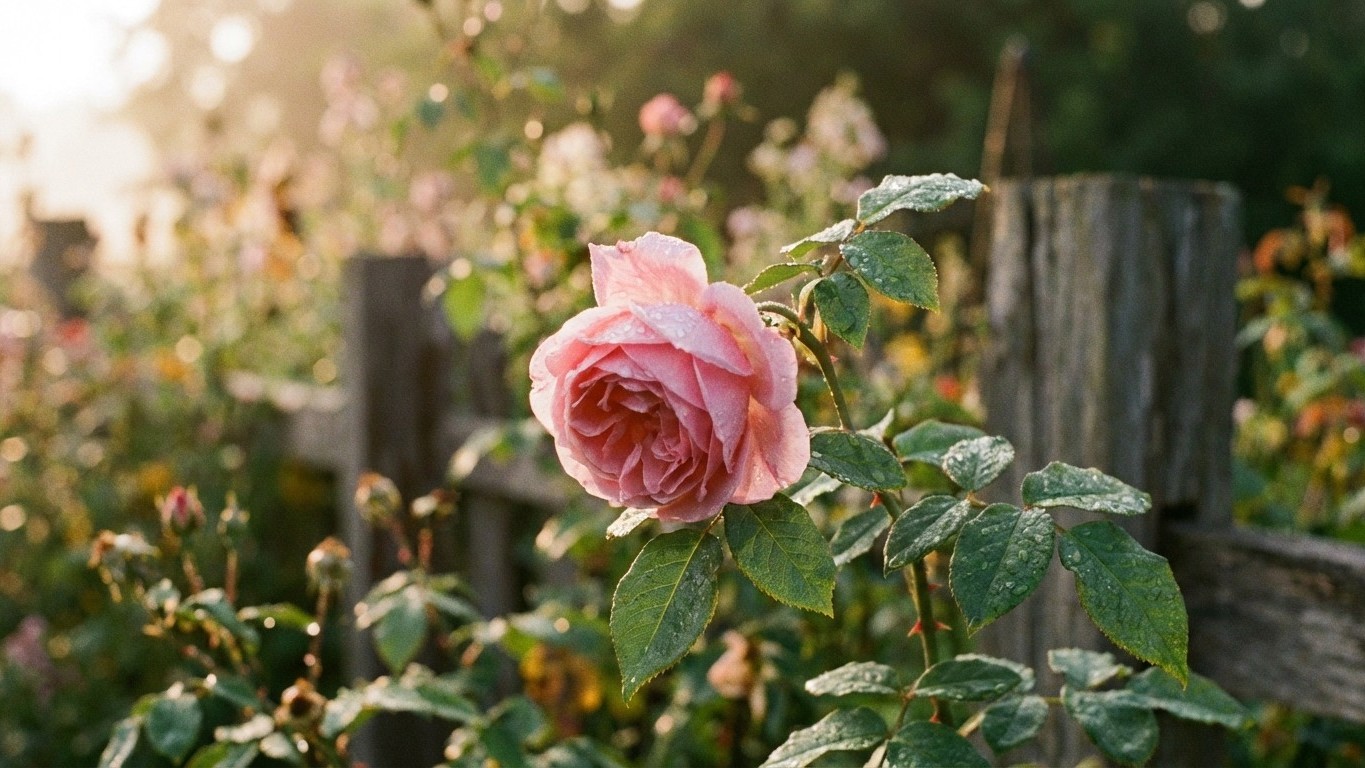

Roses can go in the ground in Hawaii in nearly any month of the year, because there’s no frost date to plan around anywhere people garden. What actually decides your timing is rainfall, elevation and whether your yard sits on the windward (wetter) or leeward (drier) side of your island. Get that read right, and a rose bed started in February performs the same as one started in August.
When to plant Roses in Hawaii

The NOAA climate station used for this region, station USW00022521, shows a not-computable flag for every frost percentile it tracks, at both 32°F and 36°F, with zero days per year at or below freezing. That’s not a data gap. It means frost simply does not happen in the lowland areas where people live and garden. The only frost in the state falls on the summits of Mauna Kea, Mauna Loa and Haleakala, thousands of feet above any rose bed. So the mainland habit of counting weeks backward from a last-frost date doesn’t apply here at all, and any calendar built on one would be fiction.
What replaces it is a read on your specific site. The same island can carry a wet, cool, cloud-wrapped windward side and a dry, sunny, hot leeward side within a few miles of each other, and elevation stacks another layer on top of that. A yard at 2,000 feet behaves differently from one at sea level even on the same coast, with cooler nights and slower disease drying. Gardeners on windward slopes, where rain falls most days of the year, need to plant with airflow and drainage foremost in mind, since damp foliage is what feeds black spot and rust. Gardeners on leeward, drier ground have more flexibility on timing but need to think harder about irrigation and heat stress during the driest stretches.
Bare-root, container and the acclimation step
Most roses reaching Hawaii gardens arrive as container plants grown either locally or shipped in from mainland nurseries, since bare-root roses depend on a winter chill period to break dormancy properly, and that chill doesn’t exist at low elevation here. A container rose that spent its early life in a shaded, humidity-controlled nursery house needs a transition period before it goes into a full-sun, trade-wind-exposed bed. Give it seven to fourteen days in a spot with morning sun and afternoon shade, watering normally, before moving it to its permanent site. Skip that step in a windward yard and you’ll often see scorched or shredded new growth within days, the plant equivalent of walking straight from an air-conditioned room into a gale.
Because there’s no forced dormant season, roses in Hawaii keep growing and often keep blooming right through what would be “winter” on the mainland. That means you can stagger plantings across the year rather than rushing everything into one narrow window. The practical guidance is simpler than a calendar: plant when the site is prepped, the plant is acclimated, and you’re not putting a fresh transplant into the heaviest week of rain your area typically sees.
Soil and site preparation
Roses want six or more hours of direct sun daily, and on windward sides that sun often arrives filtered through cloud cover that moves through fast, so don’t assume overcast means low light, roses there still color up and bloom respectably. What matters more locally is wind. Trade winds are a near-constant presence on many coasts, and a bed tucked against a low wall, hedge or building corner will outperform one standing fully exposed, since constant wind dries foliage unevenly and can snap young canes.
Drainage is the other non-negotiable. Volcanic soils vary enormously in texture from one valley to the next, from fast-draining cinder to dense, water-holding clay, and roses sitting in standing water for more than a day or two develop root rot fast in a climate this warm. Before planting, dig a test hole and fill it with water; if it hasn’t drained within a few hours, build a raised bed or mound rather than fighting the native soil. Raised beds also let you control the mix from the start, which matters more here than in drier mainland climates because heavy rain leaches nutrients out of open, sandy or cinder-based soils quickly.
Work compost or aged organic matter into the bed at least two to three weeks before planting, giving it time to settle and start feeding soil biology rather than sitting as a hot, undecomposed layer against new roots. Space rose bushes based on their mature spread, typically three to four feet apart for shrub and floribunda types and more for climbers, and resist the urge to crowd them for a fuller look early on; tight spacing traps humid air between plants and is one of the fastest routes to fungal disease in a wet climate. Set the bed up with a slight crown or slope so water sheds rather than pools at the base of each plant, and mulch the surface once planting is done to keep splashing rain from bouncing spores off bare soil onto lower leaves.
Varieties that suit Hawaii
The trait that matters most here isn’t days to bloom or cold hardiness, since cold is never in play. It’s disease resistance, specifically resistance to black spot and powdery mildew, because Hawaii’s humidity keeps foliage damp far more often than most mainland climates. A rose bred for resistance in a wet, warm setting will simply need less spraying and fewer discarded canes than a variety selected for a dry mainland region.
Grafting is worth understanding too. Many modern hybrid tea roses are grafted onto rootstock chosen for vigor after a cold dormant period, a cycle that never happens at low elevation in Hawaii. Own-root roses, and many of the older garden classes, don’t depend on that dormancy trigger and tend to sustain steady growth and rebloom without the stop-start pattern a grafted plant raised for temperate climates sometimes shows when it never gets its expected rest.
- China roses and Tea roses — old garden classes developed in warm, humid parts of Asia long before modern breeding; they carry a long history of tolerating heat and humidity that many newer hybrids don’t share.
- Bourbon roses — another older class known for repeat blooming without a hard winter rest, useful where the growing season never really stops.
- Modern disease-resistant shrub roses — bred specifically to shrug off black spot pressure; look for varieties marketed on resistance rather than show-bloom size.
- Floribundas — smaller, cluster-flowering types that tend to shed spent blooms and push new growth fast, which suits a climate with no off-season.
None of this means hybrid teas or other classic exhibition roses can’t be grown in Hawaii gardens; plenty are. It means they’ll typically demand more pruning for airflow, more attentive fungicide rotation, and more patience than a rose chosen first for its resistance genetics.
What to plant alongside
A few pairings genuinely help a rose bed function better rather than just looking nice. Low, dense ground covers like alyssum planted at the base shade the soil surface, which keeps splash-back from bare dirt to a minimum, and their flowers draw in small pollinators and predatory insects that help keep aphid numbers down. Alliums, including garlic and chives tucked at the rose’s feet, are often credited with repelling aphids and other soft-bodied pests through scent, though the actual research behind that claim is thin; treat it as a low-cost experiment rather than a guaranteed defense.
Lavender and rosemary planted nearby can work well structurally, since their woody, drought-tolerant habit doesn’t compete hard for the same water and nutrients a rose pulls from the topsoil, and their strong scent may help mask the rose from some flying pests looking for it by smell. What to avoid is packing heavy feeders, like large vegetable crops, right against the rose’s root zone; they’ll draw down the same nitrogen and moisture a rose needs for continuous bloom, leaving both plants shortchanged.
Keep other rose bushes with active black spot or powdery mildew well clear of a new planting rather than tucking them in the same bed, since both diseases spread readily between plants sharing airflow and rain splash. And be skeptical of any companion-planting claim that promises a pest-proof bed through marigolds or a single herb alone; in a state with the pest pressure Hawaii carries, no plant pairing substitutes for good airflow, clean pruning tools and regular scouting.
Watering, feeding and support
Roses want deep, infrequent watering rather than a light daily sprinkle, since shallow watering trains roots to stay near the surface where they dry out fast and struggle in wind. On leeward, drier sites, that might mean a thorough soak once or twice a week depending on rainfall; on windward sites getting frequent natural rain, supplemental watering may barely be needed except during unusually dry stretches. Either way, water at the base rather than overhead, since wet foliage sitting overnight is exactly what black spot spores need to germinate.
A two- to three-inch mulch layer, kept a few inches back from the crown of the plant, does double duty by holding soil moisture between waterings and suppressing the weeds that compete for nutrients in a climate where nearly everything grows fast year-round. Because roses here rarely go fully dormant, feeding needs to be steadier than a mainland spring-to-fall schedule; a balanced rose fertilizer applied every four to six weeks through the active growing months keeps repeat bloomers pushing new flushes rather than stalling out after their first big bloom cycle.
Climbing and larger shrub roses need support installed early, not after they’ve sprawled, since trying to train an established cane onto a trellis risks snapping wood that’s already set its growth pattern. Stake or tie loosely enough to allow some cane movement in the wind rather than binding tightly, which can girdle a cane as it thickens. Prune for airflow through the center of the plant, removing crossing or crowded canes, and clean out spent blooms regularly, both to encourage repeat flowering and to strip away tissue that’s starting to host fungal spores before it spreads.
Common problems

Black spot shows up as dark, irregular rings on lower leaves that yellow and drop, working its way up the plant in wet weeks; it thrives in exactly the humid, still-air conditions common on windward sites, and the fix starts with better airflow and base-only watering, backed by fungicide rotation if pressure stays high. Powdery mildew looks like a gray-white dusting on new leaves and buds, distorting growth, and tends to flare when days are warm but nights turn cool and damp, a pattern that shows up at higher elevations more than at the coast.
The Chinese rose beetle is a pest worth knowing by name here, since Hawaii’s state extension service lists it specifically as a rose feeder along with grapes, beans, eggplant, corn, cucumber and ginger. It feeds at night, chewing ragged holes through leaf margins, and vanishes by day, which is why gardeners often find damage without ever spotting the culprit; checking plants after dark with a flashlight is the most reliable way to confirm it’s the cause.
Aphids cluster on new growth and bud stems, sucking sap and, more importantly, spreading plant viruses as they move between bushes, so controlling them matters beyond the visible curling and stunting they cause directly. Thrips, including melon thrips and western flower thrips, hide inside developing buds and cause streaked, distorted petals that never open cleanly. Whiteflies coat the undersides of leaves and leave behind sticky honeydew that invites sooty mold. Mites show up as fine stippling and webbing on stressed, dry-season foliage. Slugs and snails, including the giant African snail, chew ragged holes in soft new leaves overnight, especially after rain. Because pest pressure varies noticeably from one part of the state to another, a home gardener’s most useful move when something unfamiliar shows up is bringing a sample or photo to their county extension office rather than guessing from a description alone.
Harvest and end of season
There’s no true end of season for roses in most of Hawaii, since the absence of frost means plants keep pushing new growth and flushes of bloom through every month of the year rather than shutting down for winter. Cutting blooms is really the “harvest” here, and timing that cut well matters: take stems in the cooler part of the morning, choosing buds just starting to show color and crack open rather than fully opened flowers, which fade fast once cut in a warm, humid climate. Cut at an angle just above a five-leaflet leaf, and get the stem into water within minutes if possible, since roses cut in Hawaii’s heat lose freshness faster than the same cut made in a cooler mainland morning.
Deadheading spent blooms promptly, rather than letting them form seed hips, is what keeps repeat-blooming varieties cycling through flushes continuously instead of pausing to set seed. Because growth never really stops, pruning for shape and airflow can happen on a rolling basis rather than waiting for a single dormant-season cutback; many gardeners do a harder structural prune once or twice a year during a naturally drier or slower stretch, then light maintenance pruning the rest of the time.
With no fall frost to prepare for anywhere in the state’s inhabited areas, there’s no seasonal shutdown checklist to run through. The closest equivalent is simply staying ahead of disease pressure during the wettest stretches of the year and keeping feeding steady enough that a plant blooming nonstop doesn’t run itself down.
Local help
Soil behavior, rainfall totals and pest pressure all shift from one valley and elevation band to the next across Hawaii, so county-level guidance beats any statewide generalization. The University of Hawaii’s CTAHR Extension offices offer soil testing and local pest identification specific to your island and district; find your county office through the CTAHR Extension directory before finalizing a planting plan.
Common questions
Can roses bloom year-round in Hawaii?
Many repeat-blooming varieties do, since there’s no winter dormancy trigger to interrupt them; expect flushes of bloom separated by shorter rest periods rather than one long growing season followed by total dormancy.
Do I need to worry about frost damage at all?
No, not anywhere people garden. Frost in Hawaii occurs only on the summits of Mauna Kea, Mauna Loa and Haleakala, far above elevations where roses are planted.
Why do my roses on the windward side struggle with disease more than a friend’s on the dry side?
Windward slopes see far more frequent rain and humidity, which is exactly what black spot and powdery mildew need to establish; airflow, spacing and base-level watering matter more there than on drier leeward ground.
Is the Chinese rose beetle only a problem for roses?
No. It also feeds on grapes, beans, eggplant, corn, cucumber and ginger, so a vegetable garden nearby can host and sustain the same population attacking your roses.
Should I buy bare-root roses shipped from the mainland?
Most gardeners have better results with container-grown roses acclimated locally, since bare-root roses are bred around a chilling period that low-elevation Hawaii doesn’t provide.