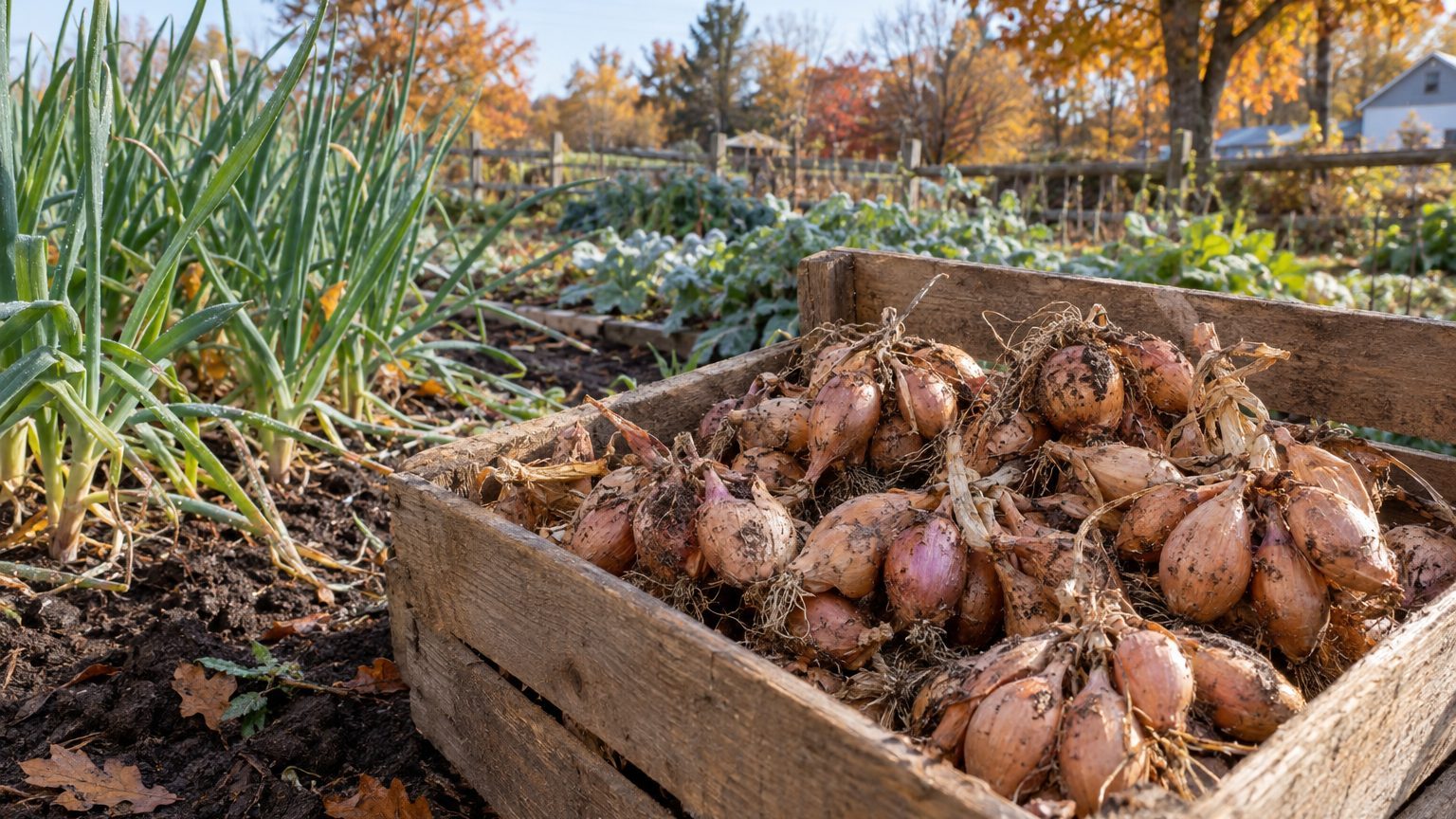

The best shallots for Hawaii are multiplier types grown from small bulbs, chosen for heat tolerance and a short time to harvest. Seed-grown shallots come second, mostly at cooler elevations. The variety name on the packet matters less than the type, because the islands have no freeze where people garden, and rainfall and elevation decide the outcome.
The short answer for Hawaii
Pick a multiplier shallot: one planted bulb that splits into a cluster of five or more. Choose a type described as heat-tolerant or quick to mature. That is the decision, and the climate numbers explain why. At the Honolulu reference station, NOAA’s 1991-2020 Climate Normals show the coldest month has a mean daily minimum of 66.8°F. The same station records zero days per year at or below 32°F. For shallots, that changes the question from “what survives winter?” to “what finishes before heat, rain or disease catches up?”
Shallots from temperate seed catalogs are bred around a cold season. They expect a cool stretch to slow growth, a long spring to build leaves, and a dry, warm finish to cure the bulbs. Hawaii offers none of that on a fixed schedule. A multiplier planted as a bulb skips the seedling stage, which is the most fragile part of the crop in warm, wet or windy weather. It also keeps its energy in a ready-made clump, so the harvest depends less on a cool-season window you may never get.
Choosing by type
Here is how the main types compare for island conditions. Treat it as a screening tool, not a ranking of named cultivars.
| Type | Fit for Hawaii | Why |
|---|---|---|
| Multiplier shallots from bulbs, small to medium round | Best first choice | Quick to mature, skip the seedling stage, forgiving in warm weather |
| Elongated “banana” types | Reasonable second try | Larger bulbs, but they take longer to size up and are harder to cure in humidity |
| Seed-grown shallots | Trial only, best at higher elevation | Many are bred for temperate seasons and need a cooler growing period |
| Large, long-season types | Poor | Slowest to finish, longest exposure to rain and leaf disease |
Two supporting details help. Every island sits in the tropics, where day length changes little through the year compared with the mainland. Shallots respond to day length and temperature together, so a type tuned to long northern summer days may bulb unevenly here. Also, since no frost calendar applies, the sowing window is a rainfall-and-elevation question. The When to Plant Shallots in Hawaii page covers that timing, and the Growing Shallots in Hawaii hub covers the full crop.
What will not work here
Start with the most common mistake: following a mainland calendar. Instructions that say “plant after the last frost” or “set bulbs six weeks before the first fall freeze” have nothing to anchor to. In inhabited Hawaii, NOAA’s freeze percentiles at 32°F and 36°F come back as not computable, because the freezes never happen. Frost shows up only on the high volcanic summits of Mauna Kea, Mauna Loa and Haleakala. A calendar built on frost dates would give you a date that means nothing.
Slow, long-season shallots come next. With a coldest-month minimum of 66.8°F, the plants never get a forced pause. They grow continuously, which sounds like a gift until you realize every extra week in the ground is another week of exposure to heavy rain, fungal leaf disease and pests. A type that needs a long, cool build-up can sit there, green and stubborn, without ever forming a tight bulb.
Weekly deep watering fails on the dry side of the islands. Leeward lowlands can go long stretches with little rain, and shallots have shallow roots. A soaking once a week leaves the top few inches bone dry for days. Those roots need light, more frequent moisture, ideally with mulch to slow evaporation. Skip that, and you get small, split or bitter bulbs.
The opposite problem hits windward gardens. Frequent rain and humidity make dense plantings a liability, because leaves stay wet for hours and disease spreads from plant to plant. The tight spacing that works in a dry mainland bed can turn a windward clump into a mildew nursery. Give each clump more room than the packet suggests, and raise beds so water drains rather than pools around the bulbs. Shallots left in saturated soil rot from the base.
Curing and storage trip up even good growers. Shallots are meant to be pulled, dried until the necks are tight, and stored. High humidity slows drying and invites mold. Cure them under cover with plenty of airflow, not in a closed garage, and expect shorter storage life than the mainland figures on the packet.
One more trap is expecting seed-grown types to behave like they do up north. Some need a stretch of cool weather to do well. Lowland Hawaii mostly cannot supply it, so those plantings can end up with small bulbs or inconsistent results. They are an experiment, not a plan.
What changes across Hawaii
Hawaii is not one garden. The USDA Plant Hardiness Zone Map (2023, built on 1991-2020 normals) places the state anywhere from zone 9a to 13a. That system rests on a single variable, the average annual extreme minimum temperature. A spread that wide means there is no single answer for the state. A coastal lowland and a high-elevation slope can sit several zones apart, and the right shallot approach differs between them.
For a reference point, Honolulu’s coldest-month mean daily minimum is 66.8°F. Use that as the warm, low-elevation baseline, and expect other parts of the state to differ. Hardiness zones also measure survival of cold extremes, not heat, rainfall or disease pressure, so they tell you little about a shallot crop on their own. For this crop, exposure often matters as much as elevation.
If you garden at higher elevation, such as the upland slopes of Maui or the Big Island, shift in three ways. Expect cooler nights, slower growth and a longer wait to harvest. Seed-grown types become a reasonable trial there, since the cooler conditions suit them better than the coast does. And plan for more cloud and mist, which keeps foliage wet and raises disease risk, so spacing and drainage matter even more. Frost still stays off the table where people live, so you are adjusting for coolness and moisture, not for killing freezes.
If you garden in a hot leeward lowland, push the other way: heat-tolerant multipliers, mulch, and frequent light watering. For your own zone, do not guess from this page. Look up your location on the USDA map and read the result for your address.
Where to check this for your own county
Your state extension service is the next stop. In Hawaii that is the University of Hawaii College of Tropical Agriculture and Human Resilience extension, part of the land-grant system listed in the USDA NIFA directory. Its agents work island by island and often district by district, which is exactly the resolution shallots need.
When you get there, look for two things. First, a local planting calendar for onions and other alliums in your county, since shallots are close cousins and guidance for one often applies to the other. Second, any record of varieties trialled in your area: which cultivars finished, which bolted, which rotted in the rain. A trial result from a similar elevation and rainfall zone beats any general recommendation, this one included.
A county recommendation beats a state one, and this page is the state one. It works from a single Honolulu reference station and a zone range that spans most of the temperature spectrum the US uses. It can tell you what type to try. It cannot tell you whether your particular valley gets the afternoon cloud that spoils a crop. Local extension staff can, and they may also know about pests and diseases that are active in your district this season.
Bring specifics when you contact them: your elevation, which side of the island you are on, and whether your soil drains fast or holds water. Those three details let an agent give a useful answer instead of a generic one.
Checking this against your own garden
Your own observations outrank every date on this page. Three are worth watching, and none needs equipment.
Soil warmth by feel. Push your hand a few inches into the bed in the morning. If it feels distinctly cool compared with the air, you are probably at an elevation or in a shaded, damp spot where growth will be slower and seed-grown shallots have a chance. If the soil feels warm and dry, treat your garden as a heat-and-water problem and stick to multipliers with mulch.
The first flush of flower stalks. If some plants send up flower stalks early, the planting is under stress or the type does not suit your conditions. A few stalks in a clump is a signal to change type or timing next round, not to keep replanting the same thing.
The first true leaves and how they behave. Watch the first leaves after planting. Fast, upright, even growth says your spot is working. Pale, floppy or spotted leaves after a few rainy days say the bed is too wet or too crowded, and the clumps need more space or better drainage.
Keep a small note of planting date, weather and result. After two seasons it will tell you more about your microclimate than any map.
Common questions
What is the single best type of shallot for Hawaii?
A small to medium multiplier grown from bulbs, labeled heat-tolerant or quick to mature. It skips the fragile seedling stage and finishes before rain and disease build up.
Can I grow shallots from seed in Hawaii?
You can try, mainly at higher elevations where nights are cooler. Many seed-grown types are bred for temperate seasons, so treat lowland plantings as an experiment.
Do I need to worry about frost dates?
No. NOAA’s 1991-2020 Climate Normals record zero days per year at or below 32°F at the Honolulu reference station, and frost occurs only on the high summits of Mauna Kea, Mauna Loa and Haleakala. Rainfall, elevation and windward or leeward exposure govern timing.
What hardiness zone is Hawaii?
The USDA system gives a range of 9a to 13a across the state, so there is no single zone. Check the USDA map for your own location rather than relying on a state-wide figure.