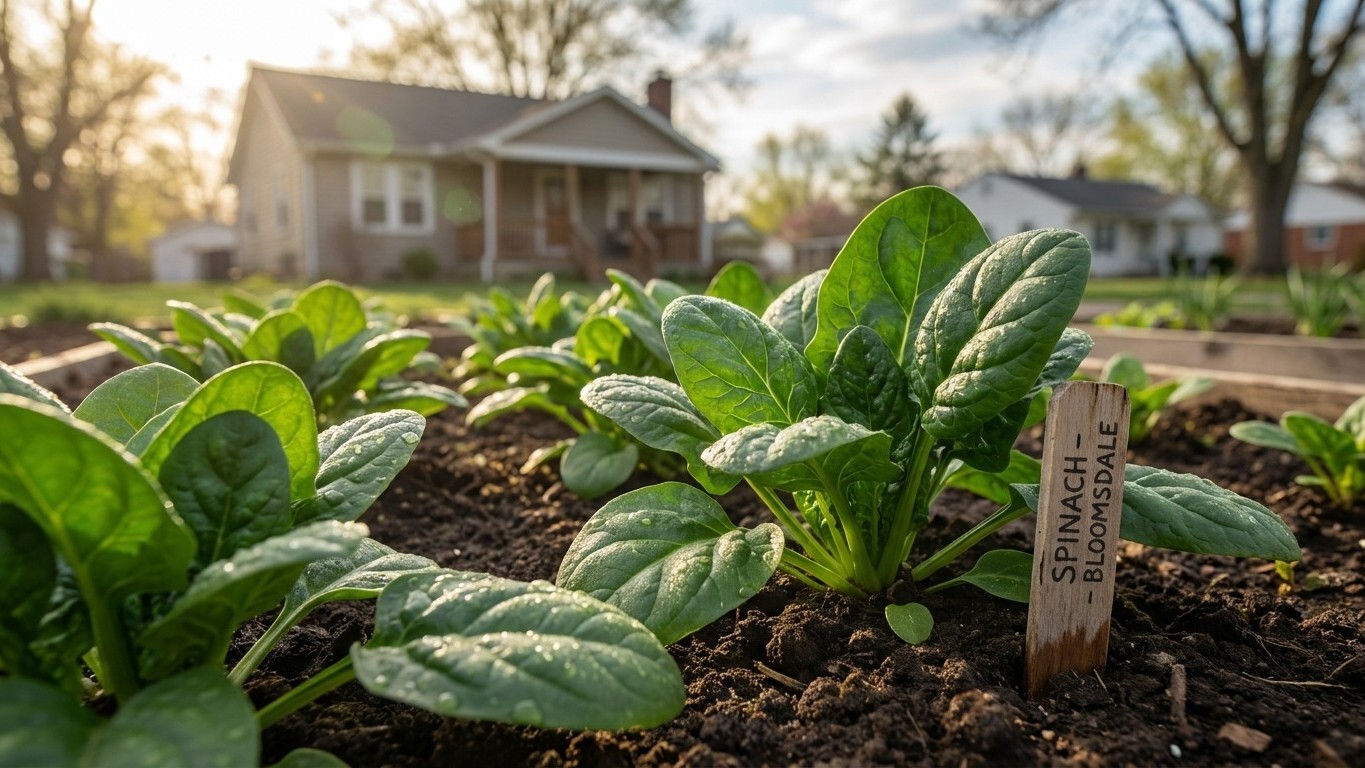

In lowland Hawaii, spinach rarely gets the chance to bolt gracefully, it just gives up early. The islands’ longest day tops out at 13 hours and 18 minutes, shorter than the 14-to-16-hour summer days that push mainland spinach into flower. But heat is the real problem here: with sea-level temperatures that rarely stay under spinach’s 75 F comfort ceiling, the crop turns bitter and shoots for seed within weeks of germinating, whatever the calendar says.
The short answer
Start with the number that actually matters for this island chain: 13 hours and 18 minutes of daylight on the longest day of the year. That is a modest figure by mainland standards, plenty of temperate gardens see 14, 15, even 16 hours of light at midsummer, the kind of day length that reliably tips spinach into flower on its own. Hawaii never gets there. So the day-length trigger that dominates spinach’s life cycle in, say, Minnesota or Maine is a weaker force here.
Heat picks up the slack. The reference station at Honolulu logs an average of 18.7 days a year at 90 F or hotter, and that figure only measures the spikes, it says nothing about the long stretches of 80-something afternoons that never make the “extreme heat” list but sit well above spinach’s 75 F growth ceiling anyway. Utah State University Extension is blunt about that ceiling: spinach grows best below 75 F, and the same threshold marks where the leaves start tasting bitter. In most of lowland Hawaii, that line gets crossed early and stays crossed for most of the year.
So the plain answer to Will Spinach Bolt Early in Hawaii? is that heat, not day length, decides when Hawaii-grown spinach bolts. The islands’ geography also removes the other calendar marker gardeners lean on elsewhere. Climate records for the reference station show no freeze at all in the 1991-2020 period, not a light frost, not a hard freeze, in any inhabited part of the islands. Frost exists only above the tree line on Mauna Kea, Mauna Loa, and Haleakala, nowhere near a vegetable bed. That means the usual frost-to-frost planting calendar simply does not apply. What replaces it is elevation, rainfall, and whether a garden sits on the windward or leeward side of an island, because those are the factors that actually pull air temperature down toward spinach’s comfort zone. A garden in the cooler uplands of Kula or in the Volcano district on Hawaii Island has a real shot at slower bolting; a garden a few hundred feet above sea level in Honolulu is fighting the 75 F ceiling almost continuously.
How long the spring window really is
- Drop the frost anchor. Mainland guidance says sow spinach 2 to 3 weeks before the last frost. Hawaii’s climate normals carry a “not computable” flag for every freeze percentile at the reference station, because there simply isn’t a frost date to count from in populated areas. Since spring planting relies on a marker that doesn’t exist here, many island gardeners find more success learning When to Sow Autumn Spinach in Hawaii instead.
- Replace it with the 75 F ceiling. That is the number that actually governs spinach here: growth slows and flavor turns bitter once temperatures push past it, and the crop bolts faster the longer it sits above that line.
- Read the heat-load number. An average of 18.7 days a year at 90 F or above at the reference station is only the visible tip of a much longer season of 75-to-89 F days that sit above spinach’s comfort range without ever registering as an “extreme heat” statistic.
- Size the window at sea level. Put those two facts together and the usable spring stretch in lowland Hawaii is short, likely limited to whichever weeks fall during the cooler part of the year, and it can close early if a warm spell arrives ahead of schedule.
- Adjust for elevation. No station data in these facts covers upcountry conditions, but cooler, higher ground extends the number of days that stay under 75 F, which is the only lever available for stretching this window on islands with no frost season to define it.
The autumn crop, and when the soil lets you sow
Two separate obstacles decide the fall sowing date almost everywhere spinach is grown, and Hawaii only really has one of them.
Soil still too warm to germinate
Utah State University Extension notes that spinach seed germination drops once soil temperature climbs above 80 F. In lowland Hawaii, soil tracks air temperature closely, and given a summer heat load that includes 18.7 days a year at 90 F or hotter at the reference station, ground temperatures at sea level plausibly sit above that 80 F line for a long stretch of the year, not just on the hottest days. Sowing has to wait for a real cool-down in the soil itself, not just a break in the air temperature, before germination has a fair shot.
The frost that ends the season, or rather, doesn’t
On the mainland, this section would count backward from the first fall frost. Hawaii’s climate record rules that out entirely: the same “not computable” flag applies to every freeze percentile at the reference station, and frost simply does not occur in inhabited parts of the islands. So nothing here ends the fall crop the way a hard freeze ends it in Ohio or Vermont. What ends it instead is the return of warm days pushing soil and air back above that 75 F growth ceiling, a shift governed by rainfall patterns, elevation, and whether a garden faces the wet windward side of an island or the drier leeward side.
Because there is no fixed frost date to count backward from, the planning has to run the other direction. Utah State University Extension’s guidance for a fall crop is to sow 50 to 75 days before the date you actually want to harvest, and no days-to-maturity figure beyond that window is published by this source. In Hawaii, the sensible target is the coolest stretch of the year, since that’s the only period likely to sit closest to spinach’s 75 F ceiling. Counting back 50 to 75 days from whenever that cool spell is expected to peak in a given garden gives a workable sowing date, one that has to be adjusted year to year and garden to garden rather than pinned to a printed calendar date.
Checking this against your own county
None of this replaces a look at your own ground. Hawaii’s four counties, Honolulu, Hawaii, Maui, and Kauai, cover an enormous range of elevation and rainfall within short distances, so a planting window that works in one valley can miss badly a few miles away or a few hundred feet higher. The University of Hawaii’s College of Tropical Agriculture and Human Resources (CTAHR) Cooperative Extension is the land-grant authority for the islands, and it can speak to soil temperature, rainfall timing, and elevation effects at a level of detail no statewide average can capture.
Bring the two numbers that matter most, the 75 F growth ceiling and the 80 F germination cutoff, and ask how your specific elevation and side of the island stack up against them. That conversation will tell you far more than any generic planting chart.
Common questions
Does Hawaii’s long summer daylight make spinach bolt the way it does on the mainland?
Not as strongly. The islands’ longest day reaches only 13 hours and 18 minutes, shorter than the 14-to-16-hour days that trigger flowering in many temperate spinach crops. Heat, tracked by an average of 18.7 days a year at 90 F or above at the reference station, is the stronger force pushing bolting here.
Is there a last-frost date to plan spinach around in Hawaii?
No. Climate normals for the reference station carry a “not computable” flag for every freeze percentile, with zero days a year at or below 32 F. Frost only occurs on high volcanic summits, never in gardened areas, so frost-based planting calendars don’t apply.
Why won’t spinach seed germinate in Hawaii’s fall garden soil?
Utah State University Extension reports that germination drops once soil temperature passes 80 F. Lowland Hawaii soil likely holds above that line for long stretches given the islands’ overall heat load, so fall sowing has to wait for the soil itself to cool, not just for a change in the air.
Which spinach varieties are recommended for a hot climate like Hawaii’s?
Utah State University Extension names Bloomsdale, Melody, Teton, and Olympia as spinach varieties, but publishes no specific performance data, days-to-maturity figures, or heat tolerance ratings for any of them in this source.