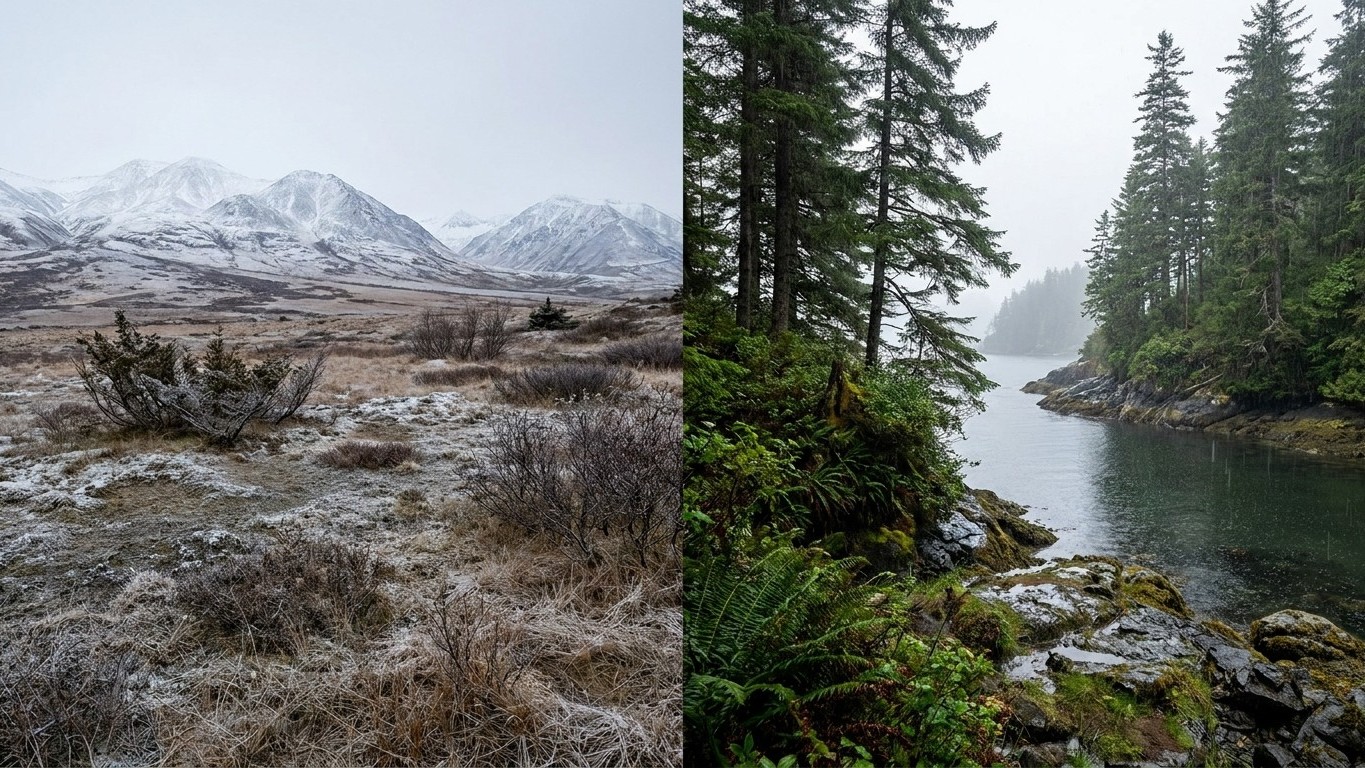

Hawaii’s hardiness range runs from USDA zone 9a to zone 13a, according to the USDA Plant Hardiness Zone Map. Cross that range against the 65 Trees, Shrubs and Perennials this site documents, and the results split three ways: none survive across the whole state, 37 survive in only part of it, and 28 will not survive anywhere in the islands. Here’s what that split means for a planting list.
What will not survive a winter in Hawaii

Hawaii’s USDA range sits entirely at the warm end of the national scale, from 9a up to 13a, based on the average annual extreme minimum temperature recorded at reference stations across the islands (USDA Plant Hardiness Zone Map, 2023, using 1991-2020 normals). Nowhere in that range does the state see the kind of hard winter that a lot of familiar landscape species were built for. Cross the state’s range against the 65 plants this site tracks, and 28 of them, a little under half of the list, are not hardy in any part of the state.
Hardy is a survival measure, not a comfort one, and here the mismatch runs one direction only. Every zone in Hawaii is warm by national standards, so none of the plants below would die from a freeze. They fail because their own hardy range tops out below zone 9a, and the islands never offer anything colder for them to use. Whatever winter chill or dormancy period these species need, Hawaii doesn’t supply it, in any county, at any elevation this site’s zone data covers.
| Type | Plants | Why they fail here |
|---|---|---|
| Fruit | Aronia melanocarpa, Prunus avium, Pyrus communis, Rubus idaeus, Rubus occidentalis, Sambucus canadensis, Vaccinium angustifolium, Vaccinium corymbosum | Too warm; hardy range stays below zone 9a |
| Perennial | Amsonia hubrichtii, Echinacea purpurea, Iris sibirica, Phlox paniculata, Salvia nemorosa | Too warm; hardy range stays below zone 9a |
| Shrub | Buxus sempervirens, Fothergilla gardenii, Hydrangea paniculata, Physocarpus opulifolius, Spiraea japonica, Syringa vulgaris, Viburnum dentatum, Weigela florida | Too warm; hardy range stays below zone 9a |
| Tree | Acer saccharum, Amelanchier canadensis, Picea abies, Pinus strobus, Quercus rubra, Thuja occidentalis, Tilia americana | Too warm; hardy range stays below zone 9a |
Some of these are plants people move to Hawaii and expect to keep growing out of habit: sugar maple, lilac, white pine, red oak. None of that is a matter of siting them better or protecting them through a rough season. Their hardy range simply never reaches into 9a, and no county in Hawaii drops that low.
The plants that work in part of the state and not the rest
This is where a statewide answer stops being useful. Hawaii’s own hardiness range covers six zones, from 9a to 13a, and 37 of the 65 plants this site documents are hardy in only one piece of that spread. A gardener at the cool end of the range and one at the warm end are not reading the same answer, and treating this bucket as a flat yes or no would be wrong for one of them.
Every plant in this middle group shares the identical fault line. Each is documented as hardy in zone 9a and nowhere else in the state’s range, shut out of zones 10a through 13a entirely. None of them fail at the cold end, because Hawaii barely has one; they all fail once the zone climbs past 9a into warmer territory.
| Type | Plants | Zones not covered |
|---|---|---|
| Fruit | Asimina triloba, Diospyros virginiana, Ficus carica, Fragaria virginiana, Fragaria x ananassa, Morus rubra, Prunus domestica, Prunus persica | 10a, 10b, 11a, 11b, 12a, 12b, 13a |
| Perennial | Achillea millefolium, Asclepias tuberosa, Baptisia australis, Anacis verticillata, Heuchera americana, Lavandula angustifolia, Monarda didyma, Rudbeckia fulgida, Hylotelephium spectabile | 10a, 10b, 11a, 11b, 12a, 12b, 13a |
| Shrub | Aronia arbutifolia, Clethra alnifolia, Hydrangea macrophylla, Ilex glabra, Ilex verticillata, Itea virginica, Kalmia latifolia | 10a, 10b, 11a, 11b, 12a, 12b, 13a |
| Tree | Acer rubrum, Betula nigra, Carpinus caroliniana, Cercis canadensis, Cornus florida, Ginkgo biloba, Juniperus virginiana, Lagerstroemia indica, Liquidambar styraciflua, Magnolia grandiflora, Nyssa sylvatica, Platanus occidentalis, Quercus alba | 10a, 10b, 11a, 11b, 12a, 12b, 13a |
Notice the pattern: every one of these 37 plants needs the coolest zone the state has to offer. That is not a coastal condition; it is the zone this site’s data associates with the cooler end of Hawaii’s range. Finding out whether a given address sits in 9a or slides into 10a and beyond is the whole question here, and that county-level picture lives on our Hawaii insulation guide, which carries the zone map for the state in more detail than a single statewide range can show.
The soil and the summer they will be planted into
Hawaii’s representative soil is the Hilo series, an Andisol built from volcanic ash. USDA NRCS lists its surface horizon as light and porous, unusually good at holding both water and phosphorus, with a pH around 5.8, so slightly acid. The recorded texture skews toward silt and clay, at 10 percent sand, 35 percent clay and 55 percent silt, with organic matter around 9.0 percent, and the series is classed as well drained.
For a woody plant, drainage is the number that matters most, more than winter cold ever is in this state. Wet feet kill more trees and shrubs than a cold snap does, and a well-drained, porous volcanic soil works in a plant’s favor there. But the Hilo series is what USDA maps as representative of Hawaii broadly, not a promise about any one yard. A property built on fill, on a river bottom, or on a soil series that has nothing to do with volcanic ash will behave differently, and a home soil test is the only way to know which one a given garden actually has.
What the summer rain adds up to
Summer rainfall at the reference station averages about 1.9 inches across June, July and August combined, out of 16.4 inches for the year. June is the driest of the three, at 0.5 inches, July comes in at 0.52, and August climbs to 0.84 (NOAA NCEI 1991-2020 normals, station USW00022521).
That figure describes rainfall, not humidity and not a watering schedule on its own, and it only means something once it’s read against the soil underneath it. An inch of rain on a fast-draining Andisol behaves nothing like an inch on heavy clay: the porous, ash-based ground this state is known for lets water move through quickly, so a summer that’s already light on rainfall doesn’t linger long in the root zone once it falls. That combination, low summer rain over quick-draining ground, is worth knowing before anything goes in the ground, even without turning it into a set watering frequency.
When to plant, here
Most planting calendars start with the last spring frost and the first fall frost. Hawaii breaks that model entirely: NOAA’s 1991-2020 normals for the reference station show zero days per year at or below 32°F, and every freeze percentile comes back not computable. In the inhabited parts of the state, frost simply doesn’t happen. What frost there is occurs only on the high volcanic summits, Mauna Kea, Mauna Loa, Haleakala, nowhere near a garden bed.
That means the reasoning behind a planting window has to shift from frost risk to something else: giving a woody plant enough time to build roots before it has to carry a full canopy through the driest stretch of the year. Since June is the driest month at just 0.5 inches, a plant that’s had a season to establish before that stretch arrives has a real advantage over one dropped into the ground right as rainfall drops off.
| Window | What it suits | Risk |
|---|---|---|
| Wetter months (roughly fall through early spring) | Getting roots established while rainfall is higher and demand on the plant is lower | Less margin if a planting is delayed into the drier months that follow |
| Drier months (roughly June through August) | Possible, but the plant needs supplemental water through establishment regardless of its eventual drought rating | Least natural rainfall of the year arrives right when new roots need it most |
A drought rating on a plant tag describes an established specimen, not a new one. Whatever the rating says, a newly planted tree or shrub in this state needs water through its first season, particularly if it goes in during June, July or August when rainfall is at its thinnest. None of this is a hard date to obey; it’s a reminder that Hawaii’s calendar runs on rainfall and elevation, not on a frost line that doesn’t exist here.
Where to read about each one
Of the 65 plants this site tracks against Hawaii’s range, the 37 that work in part of the state are the ones worth reading further, since every one of them has a real shot in at least the cooler end of the islands’ zone range.
Among trees, that group includes red maple (Acer rubrum), river birch (Betula nigra), American hornbeam (Carpinus caroliniana), eastern redbud (Cercis canadensis), flowering dogwood (Cornus florida), ginkgo (Ginkgo biloba), eastern redcedar (Juniperus virginiana), crape myrtle (Lagerstroemia indica), sweetgum (Liquidambar styraciflua), southern magnolia (Magnolia grandiflora), black tupelo (Nyssa sylvatica), American sycamore (Platanus occidentalis) and white oak (Quercus alba).
Among shrubs: red chokeberry (Aronia arbutifolia), summersweet (Clethra alnifolia), bigleaf hydrangea (Hydrangea macrophylla), inkberry holly (Ilex glabra), winterberry holly (Ilex verticillata), Virginia sweetspire (Itea virginica) and mountain laurel (Kalmia latifolia).
Among perennials: yarrow (Achillea millefolium), butterfly weed (Asclepias tuberosa), blue false indigo (Baptisia australis), Anacis verticillata, coral bells (Heuchera americana), English lavender (Lavandula angustifolia), bee balm (Monarda didyma), orange coneflower (Rudbeckia fulgida) and showy stonecrop (Hylotelephium spectabile).
The plant data behind every one of these names comes from the North Carolina Extension Gardener Plant Toolbox, a university extension database, crossed here against Hawaii’s own USDA hardiness range. Those figures are hardiness ranges built on winter survival, and they’re a separate measurement from the adaptation ranges used elsewhere on this site for apple varieties, which describe something different and shouldn’t be read against this list.