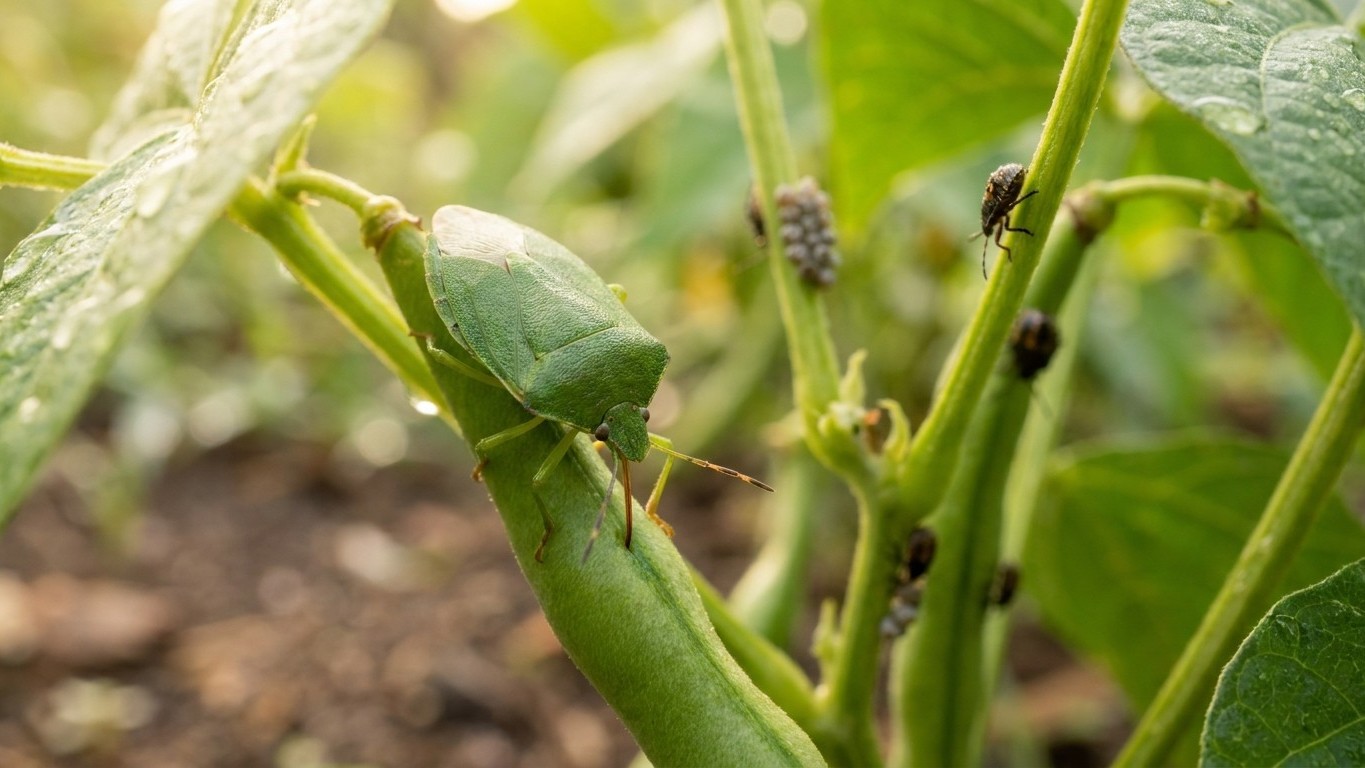

The southern green stink bug doesn’t disappear for winter in Hawaii the way it does on the mainland. Its islands never see a hard freeze, so the insect can feed, mate and lay eggs in every month of the year. What changes isn’t its presence but its pace: population pressure builds during warm, humid stretches and eases only when rain and wind knock numbers back for a while.
The weeks to watch

Hawaii’s extension service doesn’t publish a specific seasonal window for the southern green stink bug the way cooler-climate states do, because there’s no winter die-off to mark a start and end date. Instead, the general pattern for this insect in tropical and subtropical climates applies directly here: continuous breeding, overlapping generations, and activity that tracks rainfall and host-plant availability rather than a calendar.
Overlapping generations, not a single flight
In climates without frost, the southern green stink bug can complete several generations back to back within a single year, with adults, nymphs and eggs present at the same time on the same planting. That overlap is why a single spray or a single round of hand-picking rarely clears an infestation. New nymphs are hatching while adults from an earlier batch are still feeding, so pressure can look steady for weeks at a stretch rather than spiking on one identifiable date.
What actually drives the surges
Growth flares up when host plants are fruiting or podding, since that’s the stage the insect prefers to feed on. A garden with tomatoes, beans or macadamia trees setting fruit during a warm, dry spell after rain is the classic setup for a visible jump in numbers. Extended heavy rain tends to suppress activity temporarily, which is one reason gardeners on windward coasts sometimes report lighter pressure than those on drier leeward slopes.
Reading the calendar from your last frost

Hawaii has no frost season to plan around. NOAA’s 30-year climate data for the islands shows freeze percentiles that simply aren’t computable at low elevation, with zero days per year at or below 32°F recorded at representative lowland stations. Frost only forms on the summits of Mauna Kea, Mauna Loa and Haleakala, thousands of feet above where anyone gardens. So the usual mainland trick of counting weeks forward from a last-frost date doesn’t apply here at all.
What replaces it is a calendar built on rainfall, elevation and exposure. Soil in Hawaii’s lowlands stays warm enough for stink bug activity essentially all year, so the insect answers to when host plants start flowering and fruiting, not to any seasonal reset. A gardener can still do a version of the same math the frost calendar is meant to solve, just with a different starting point.
- Mark the date you transplant fruiting crops like tomatoes, beans or peppers into the ground.
- Expect the first feeding damage on young fruit or pods roughly a few weeks after flowering begins, since that’s the stage the insect targets, not the transplant date itself.
That means row covers or netting need to go on before flowers open, not before transplanting, and can come off once fruit is large enough to tolerate minor feeding without losing the harvest.
What it attacks, and what the damage looks like

Most gardeners notice the symptom well before they spot the insect. Tomatoes develop cloudy, pale blotches or hard, pithy patches under the skin near where the fruit was punctured. Beans and peas show shriveled, deformed pods with sunken discolored spots where a seed should have filled out normally. Macadamia growers see the more costly version of this: kernels with dark, sunken lesions that ruin the nut for sale even though the shell looks intact from outside. On softer greens like okra or young cabbage, feeding can leave a wilting shoot tip long before any insect is visible on the leaf itself.
Both nymphs and adults cause this damage, using the same piercing-sucking mouthparts to feed on developing fruit and seeds. That matters for timing a response, since the insect never bores inside the stem or fruit. It feeds from the outside, injecting saliva and withdrawing plant fluids at a single puncture point, which is why damage often looks localized rather than spread across the whole fruit.
Crops most commonly affected in home gardens and small farms include:
- Tomatoes
- Green beans and other legumes
- Macadamia nuts
- Peppers
- Okra
- Cabbage and other brassicas
How Hawaii sits in this pest’s range

The southern green stink bug is one of the most widely distributed agricultural pests in the world, established across warm and temperate regions on nearly every continent. Hawaii falls well inside that range, and because the islands never experience a true winter, the insect behaves here the way it does in the warmest pockets of the mainland South rather than the way it does in cooler states where cold weather interrupts its cycle each year.
Being an isolated Pacific archipelago changes how guidance gets developed, though. There’s no neighboring state extension office to borrow a seasonal calendar from, so the practical information available to Hawaii gardeners comes from the University of Hawaii’s own agricultural research rather than from a bordering territory’s published data. That local grounding matters, since a calendar built for a continental climate with a real winter simply doesn’t transfer to islands where soil temperature and rainfall, not frost, set the rhythm of the insect’s activity.
What actually works against it

Because the southern green stink bug feeds externally and never gets inside the plant, most of the effective countermeasures work by keeping adults away from flowering and fruiting plants before feeding starts. Once a fruit has been punctured, the damage is done and no later treatment reverses it, so timing is what decides whether these methods matter.
- Stagger planting to dodge peak fruiting overlap. Spreading tomato or bean transplants across a few weeks reduces the chance that every plant reaches its vulnerable flowering stage at the same time the local population happens to be high.
- Cover plants during flowering. Lightweight row covers or fine mesh keep adults from reaching flowers and small fruit, and can come off once fruit has sized up and become less attractive to feeding.
- Hand-pick adults and nymphs. Both stages are large enough to see and slow-moving enough to knock into a container of soapy water, which is effective on small plantings but becomes impractical past a certain garden size.
- Clear crop debris and nearby weedy hosts. Removing old bean vines, weeds and other host plants after harvest reduces the breeding sites available for the next overlapping generation, even without a winter to reset the population.
- Rotate away from preferred hosts. Moving tomatoes and beans to a different bed each season makes it harder for a local population built up on one planting to simply move next door.
Home remedies like copper tape or ultrasonic repellers sometimes get mentioned for stink bugs generally, but trials on their effectiveness against this species don’t show a clear result either way, so they’re worth treating as unproven rather than relying on them as a primary defense.
Common questions
Does the southern green stink bug survive year-round in Hawaii?
Yes. Without a winter cold snap to interrupt its cycle, the insect can breed continuously, with overlapping generations present at the same time rather than a single seasonal flight.
Can row covers stay on tomatoes the whole season?
They’re most useful during flowering, when the insect is most likely to puncture developing fruit. Once fruit has sized up, covers can come off, since flowers and small fruit are the stage most attractive to feeding.
Is the damage to macadamia nuts visible from the outside?
Not usually. The shell often looks normal while the kernel underneath carries dark, sunken lesions from feeding, which is why affected nuts are typically caught during processing rather than by looking at the tree.