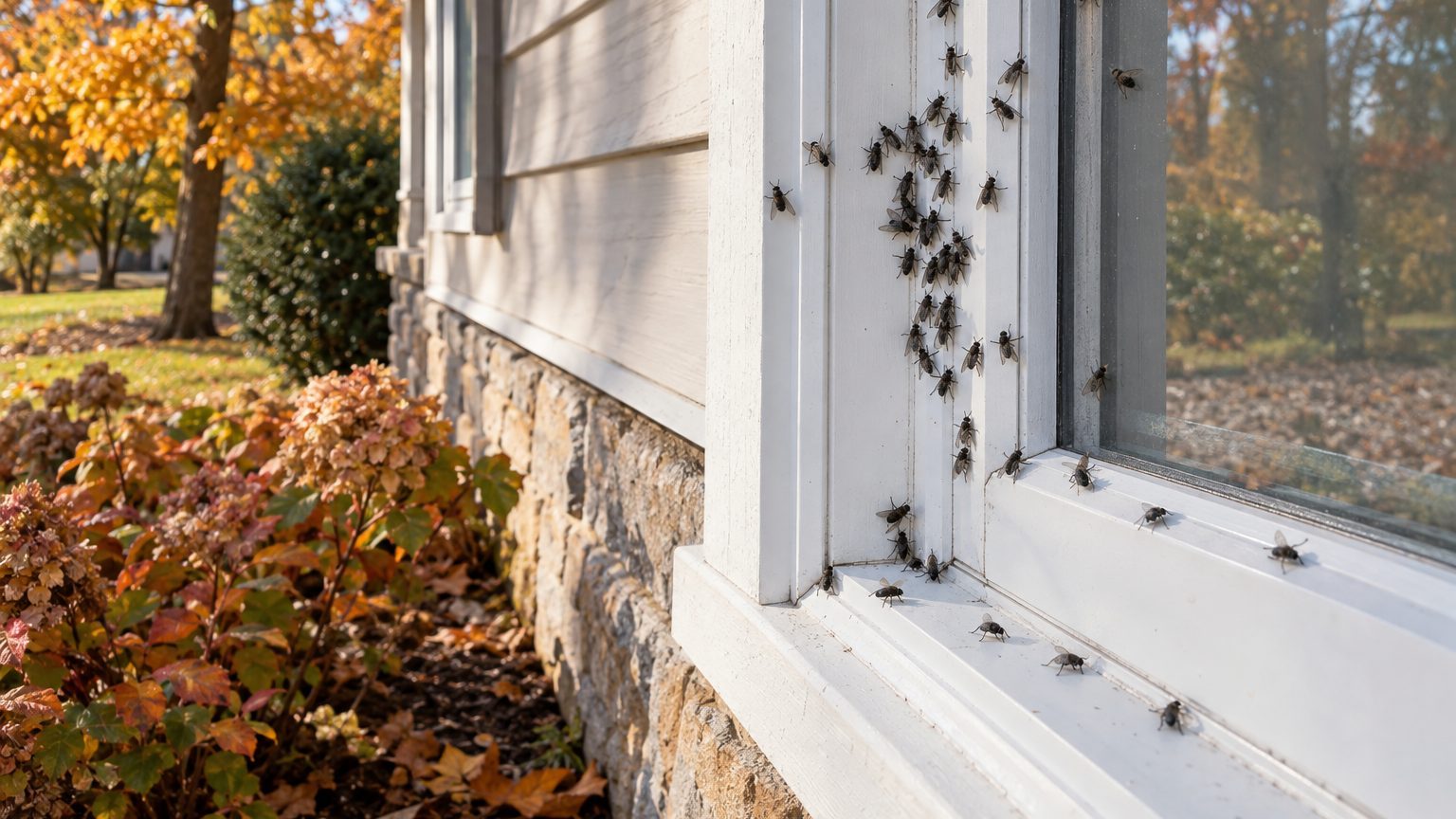

Cluster flies are decided before they ever reach your windows. The adults pick a winter hiding place in late summer and fall, then stay put until a warm day wakes them. Once they are in the walls, there is very little you can do to stop them drifting out, so the real work is closing the house before they arrive. Walk the outside of the house now and look for cracks and gaps, starting at the roofline and the siding.
Keep them out in late summer, vacuum them in winter

Purdue Extension says preventive methods need to happen before the fall, when the flies seek overwintering sites. For flies that are already indoors, Iowa State University Extension and Outreach says flies buzzing within a room can be dispatched with a fly swatter or a vacuum. That split is the whole plan: exclusion first, cleanup second.
What you are dealing with
Iowa State describes cluster flies as large black flies that do not reproduce indoors. That detail changes how you handle them. The flies at your window are not the start of a colony, and there is no breeding spot in the house to hunt down and scrub out. Every one of them came from outside.
So the number indoors can only go down as you remove flies. A vacuum with a hose attachment works well on windowsills and inside light fixtures, which are the places where they end up. A swatter is fine for a single fly on a wall, though a crushed fly can leave a stain on paint or fabric.
The plan at a glance
| Stage | What to do | Source |
|---|---|---|
| Before fall | Close the cracks and holes the flies use to get in | Purdue Extension |
| Flies inside a room | Swatter or vacuum | Iowa State Extension |
| Persistent attic flies | Outdoor insecticide, only after everything else | UNH Extension, Iowa State Extension |
Most households only ever need the first two rows. The third is for a house that keeps losing the same fight year after year.
Where they come from
A life cycle that never touches your house
Purdue Extension says cluster flies are parasites of earthworms and breed outdoors in lawns and fields. Females lay eggs in cracks in the soil. After the eggs hatch, the larvae seek out earthworms as their source of food. Nothing in that cycle needs a building, a trash can or a kitchen.
That is why a spotless house gets them anyway. Cleaning does not matter to a fly that developed inside an earthworm in a field or lawn, and fields can sit well beyond your property line. A neighbor’s lawn counts the same as yours.
How they get inside
Purdue Extension says cluster flies become a problem when the adults begin to seek protected overwintering sites in late August and September. That is the window when your house is being inspected from the outside. The University of Wisconsin Extension says they enter through cracks and holes in buildings and collect in attics and wall voids.
Those two places explain most of what you see later. An attic is warm in the sun and sheltered from wind. A wall void is dry and undisturbed. To a fly looking for a place to wait out the cold, both are ideal.
Common entry points to check:
- Gaps where siding meets trim, and around window frames
- Openings where pipes, cables and vents pass through the wall
- Loose or missing screens on attic vents and soffits
- Gaps under the eaves and along the roofline
Why they show up on warm winter days
Purdue Extension says that during warm periods throughout the winter, the flies become active and are attracted to light. This is when the building occupants notice flies in light fixtures and buzzing around windows. The flies were in the house the whole time. A mild afternoon is simply what brought them into view.
Iowa State Extension explains the trigger: they remain in hibernation until warmed by heat from the furnace or the sun. Two things can wake them. A wall that gets afternoon sun heats the void behind it. A furnace, a duct or a chimney chase can warm the space around it. Either way, a fly that has been inactive starts moving, and because it is drawn to light, it follows the glow toward the nearest window or lamp.
What that tells you
If the flies show up on one side of the house, that side is probably where the heat is reaching them, and it may be where they got in. If they appear near a ceiling fixture in a top-floor room, look at the attic above it.
One more point matters for expectations. Sealing in winter does not remove the flies already behind the walls. It stops new ones, and it may redirect some into the room instead of the attic. Plan to vacuum the stragglers through the cold months and do the serious sealing before the next fall, as Purdue advises.
Sealing, and insecticides as a last step
Sealing is the part you control. Start with finding air leaks, since a gap that lets in cold air is also a gap a fly can use. Then deal with the moving parts of the house. Weatherstripping doors and windows closes the edges that caulk cannot, and worn door sweeps are an easy miss. Use caulk on static cracks in siding and trim, and fine screening over vents that must stay open.
Gaps you can see from the ground are only part of the picture. Check the roofline and the eaves too, because the attic is where the flies end up.
Where insecticides fit
The University of New Hampshire Extension is direct about the order: using insecticides should be the last consideration after all other attempts for control have been exhausted. That means sealing and vacuuming come first, every time.
For a house that still has a persistent problem, Iowa State Extension gives its own timing: “Insecticides can be used on the outside of the house in mid-September if you have a persistent problem with attic flies.” That is Iowa State’s guidance for an outdoor treatment, and it points to the same window Purdue identifies for flies looking for shelter. Pick any product by reading its label, and follow the label on where it can be applied, how, and with what protective gear. Canadian readers should check that a product is registered for this use where they live and follow provincial guidance, since rules differ.
The same sealing helps with other fall invaders
Gaps that admit cluster flies also let in Asian lady beetles, which also look for winter shelter in the fall. They are not the only visitors. Mice use the same openings, and the reasons for that are laid out in why mice come inside in fall. One careful pass with caulk and weatherstripping before the cold arrives covers all three.
Common questions
Do cluster flies lay eggs in my house?
No. Iowa State Extension says they do not reproduce indoors, and Purdue Extension says they breed outdoors in lawns and fields. Flies you find inside will not multiply there, so you do not need to look for a breeding site.
I sealed everything and still see flies. Why?
Sealing stops new flies, but it does not remove the ones already in the attic or wall voids. Those wake on warm days, as both Purdue and Iowa State describe. Vacuum them as they appear. The following fall, the sealing should show its results.
Should I spray the attic or the walls?
Not as a first step. The University of New Hampshire Extension says insecticides should be the last consideration after all other attempts have been exhausted. Where Iowa State Extension suggests a treatment, it is on the outside of the house, and any product must be used exactly as its label directs.
Will they come back every year?
They can. The breeding happens outdoors in lawns and fields, so the supply of flies does not depend on anything you do inside. What you control is whether they can get into the house when the adults seek shelter in late August and September, as Purdue Extension describes.
Rules for pesticide products can change and differ by state and province, so confirm current requirements with your county extension office or the product label before acting.