
May is the month Illinois gardens open up. With the average last spring frost falling between April 11 and April 22 across the region, most of the state is clear to plant warm-season vegetables outdoors by early-to-mid May, while cool-season crops that have been in the ground since April keep producing right alongside them.
What goes in the ground in May

The frost math matters more than the calendar page. NOAA’s 1991-2020 climate normals put the last spring freeze in the 30-70% probability band between April 11 and April 22, which means by the time May opens, most of Illinois has already cleared its final freeze risk. That said, this figure comes from one reference weather station, and rural and low-lying gardens routinely see frost linger a week or two past that window. If your garden sits in a valley, near a lake, or at higher elevation in the northern counties, treat the first half of May as a buffer zone rather than a green light.
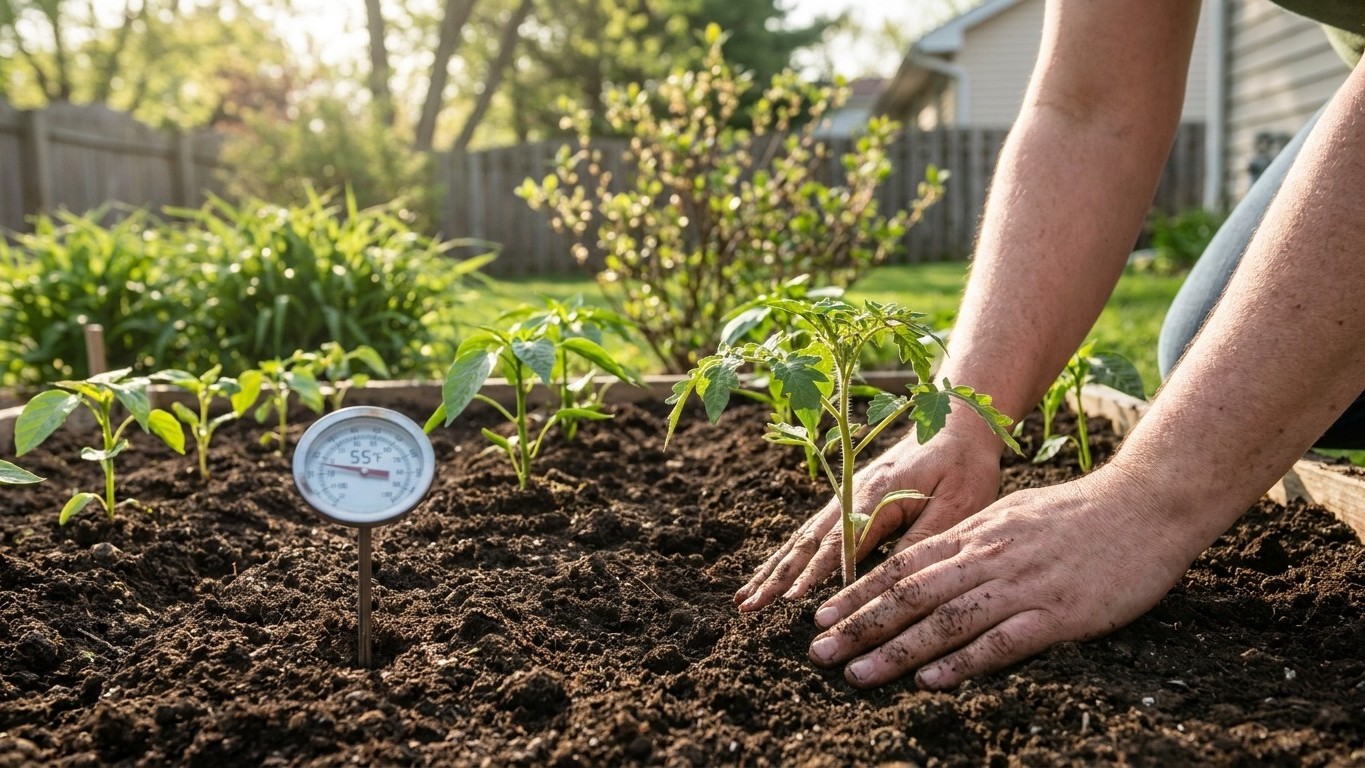
Soil temperature decides more than air temperature ever will. Warm-season crops like beans, corn, squash, cucumbers, and melons want soil that has warmed past roughly 60F at a two-inch depth before seed goes in the ground directly. A warm afternoon after a cold week doesn’t mean the soil has caught up. Pushing seed into cold, wet dirt usually means rot before germination, not an early harvest.
Tomatoes, peppers, and eggplant transplants can go outside once nighttime lows are reliably staying above the mid-50s, which for most of Illinois lines up with the back half of May. Hardening them off over a week, a few hours outside at a time, cuts down on transplant shock.
Meanwhile, the cool-season crops that don’t mind a light frost keep working through May without complaint: onions, leeks, and shallots continue bulking up, peas planted in April are climbing their trellis, and successive plantings of lettuce, spinach, and other greens can still go into the ground as long as daytime highs stay under the mid-80s. Beets, carrots, and radishes also tolerate direct sowing well into May.
What to start under cover
By May, the bulk of indoor seed-starting for the main season is already behind most gardeners, since tomatoes and peppers typically need six to eight weeks under lights before the last frost date arrives. Counting backward from an April 11-22 frost window means those seeds went in around late February to early March. If that window slipped past you, starting tomatoes indoors now still works, but expect a later, shorter harvest rather than an early one.
What still makes sense to start under cover in May are fast-cycling crops meant for a June or July transplant: a second round of cucumbers and summer squash for gardeners who want staggered harvests, or brassicas like broccoli and cabbage started now for a fall crop later in the season. Cell trays or small pots on a sunny windowsill or under a grow light work fine for these short-turnaround starts.
The two ways this goes wrong both come from timing. Starting warm-season seedlings too early leaves you with rootbound, leggy plants sitting in trays for weeks past when they should have gone outside, and they rarely recover fully once transplanted. Starting too late, on the other hand, means the seedling never gets enough size before the summer heat or the fall frost catches up with it. A rough rule: count the weeks a seed packet lists for indoor start time, then count back from either your local last frost date for spring crops or your local first fall frost date for fall crops, and plant accordingly rather than by a fixed date on the wall calendar.
What is ready to pick
May is a lean but real harvest month in Illinois. Asparagus planted in prior seasons is at its peak, and spears should be cut at 6 to 8 inches tall before the tips start to loosen and separate. Rhubarb stalks are ready once they’ve reached full color and a firm snap, usually by mid-month.
Overwintered greens and anything planted in cold frames earlier in the season are producing steadily: spinach, kale, and lettuce sown in late winter or very early spring are at prime cutting size, and cutting them regularly, rather than waiting for full maturity, keeps the plants producing longer before they bolt in the coming heat.
Green onions and scallions planted from sets in April are usually pullable by May, and radishes sown at the same time mature fast enough to be ready within the month too. If you kept a cold frame running through the tail end of winter, check it now for anything that bolted early during a warm spell; bolted greens turn bitter fast and are better pulled and composted than left to struggle.
Stored crops from the prior season, winter squash, potatoes, and onions kept in a cool, dark spot, deserve a check-in as well. Squash that’s gone soft at the stem end or developed sunken spots is on its way out and should be used first. Potatoes sprouting eyes are still edible once the sprouts are removed, but sort out any that have gone soft or slimy before they spread rot to the rest of the bin.
The jobs that matter this month
Soil preparation done now pays off for the rest of the growing season. Working compost or aged manure into beds before the bulk of transplanting happens gives warm-season crops a nutrient base they’ll need once they start fruiting. Skip this step and you’ll be trying to correct a nitrogen or phosphorus deficiency mid-season, which is a much harder fix than an early amendment.
Mulching is a May job, not a June afterthought. Laying mulch once soil has warmed but before the first heat wave locks in moisture and blocks weed germination while the ground is still workable. Wait too long and you’re mulching around weeds that have already taken hold.
Staking and caging tomatoes, peas, and anything that vines needs to happen before the plant sprawls, not after. A tomato that’s already flopped over is much harder to stake without snapping stems than one caught early with a cage slipped over it while it’s still upright.
Watering rhythm matters more than watering volume. Deep, infrequent watering, roughly an inch a week, builds deeper root systems than a light daily sprinkle, which trains roots to stay shallow and makes plants more vulnerable when a dry spell hits later in summer.
Succession sowing keeps a harvest coming instead of hitting all at once. Dropping a new short row of lettuce, radishes, or beans every couple of weeks through May spreads out the picking window well into summer.
Pest scouting in May catches problems while they’re still small. Aphids on new growth, slug damage on tender seedlings, and cutworms clipping stems at the soil line are all easier to manage now, by hand-picking or targeted intervention, than after a population has established itself across a bed.
What not to do in May
The most common mistake is planting warm-season crops into soil that still feels cold at root depth, simply because the air felt warm on a sunny afternoon. Air temperature swings fast; soil temperature lags behind it by days or weeks. Check the actual soil, not just how the day feels, before putting tomato or pepper transplants in the ground.
Uncovering cold frames, row covers, or mulch too early after a mild stretch is another frequent misstep. A few warm days in early May don’t rule out a return to frost, especially given how much that April 11-22 window can shift with local terrain. Keep protective covers within reach and ready to redeploy rather than putting them away for the season the moment temperatures climb.
Feeding a heavy dose of nitrogen too early in the season, especially to tomatoes and peppers, pushes lush leafy growth at the expense of flowering and fruit set. Wait until plants have started setting fruit before pushing nitrogen-heavy fertilizer, and lean on phosphorus and potassium instead in the early stages to support root and flower development.
Overcrowding transplants because a bed looks empty in early May is a mistake that shows up in July when everything is fighting for light, air, and root space. Give each plant its mature spacing on the label now, even if the bed looks sparse for the first few weeks.
Checking this against your own county
Everything above is a state-wide starting point, not a guarantee for your specific yard. Illinois spans USDA hardiness zones 5a through 7b, and elevation, proximity to Lake Michigan, and the general north-south divide across the state can shift planting windows by two weeks or more in either direction. A garden in the northern counties will lag behind one in the southern tip of the state by a meaningful margin.
For a county-level frost date and a planting calendar tuned to your specific region, the University of Illinois Extension is the most reliable next stop.
Common questions
Is it too late to plant tomatoes in May in Illinois?
No. May is actually the prime month for setting tomato transplants outdoors across most of the state, once nighttime lows are staying reliably above the mid-50s.
Can I still direct-sow peas in May?
Early May works for peas in most of Illinois, but they slow down and stop setting pods well once daytime highs push into the 80s, so plant them as early in the month as your soil allows.
What happens if I plant warm-season seeds too early in cold soil?
Seeds sitting in soil below roughly 60F tend to rot rather than germinate, or they sprout weak and stunted even if they do come up. Waiting for the soil, not just the air, to warm avoids the loss.
Do I still need to worry about frost in late May?
The published last-frost window for the reference station runs April 11 to April 22, but that figure can run a week or two later in low-lying or rural gardens, so keeping a row cover on hand through the first half of May is a reasonable precaution.