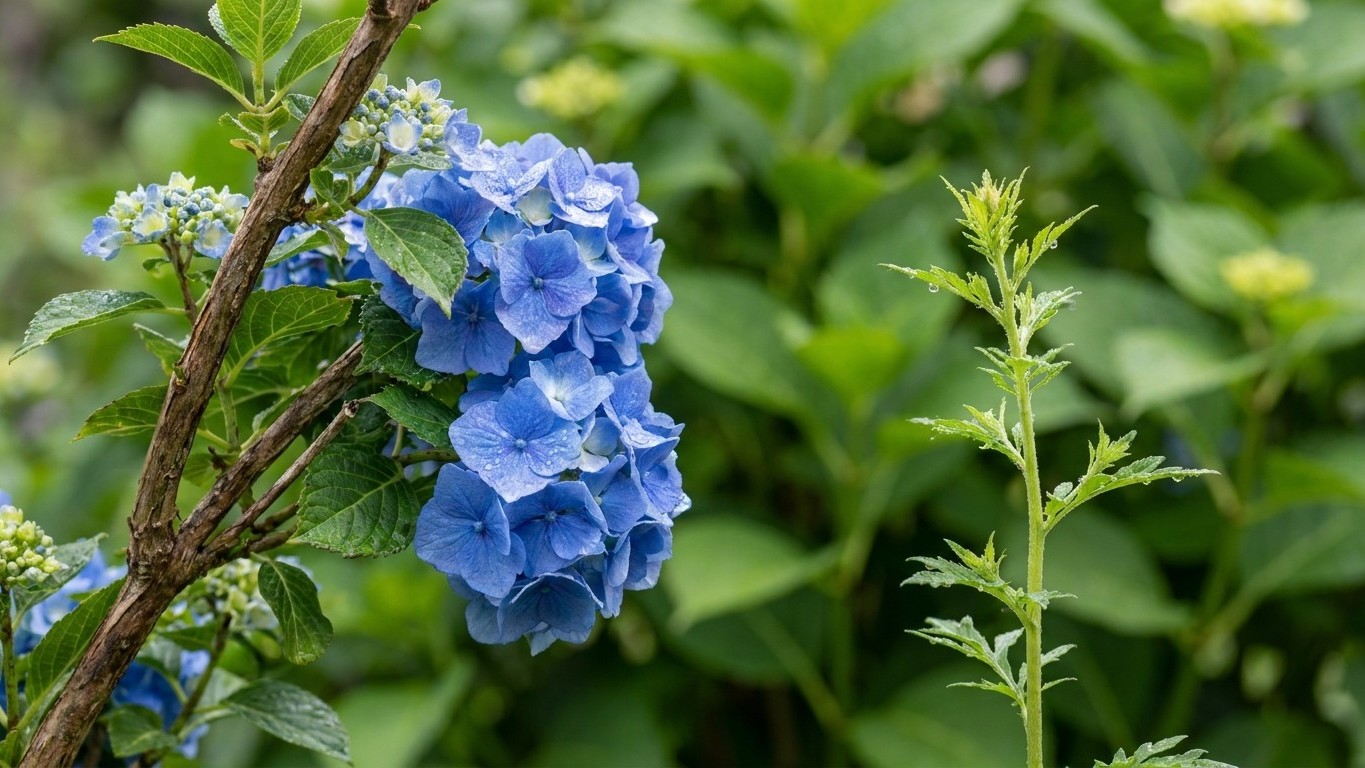

In Indianapolis, the last 32F freeze usually lands between April 9 and April 21, and the first one of fall between October 21 and October 30. Container-grown hydrangeas go in after the spring window closes or in early fall. For dependable blooms across Indiana’s winters, panicle and smooth hydrangeas are the safest bet. Bigleaf types can flower well here too, but they carry more risk, and the reasons come down to timing.
When to plant Hydrangeas in Indiana

Indianapolis is the reference point for every date in this guide. The figures come from NOAA NCEI’s 1991-2020 Climate Normals for the Indianapolis station (USW00093819), using the 30-70% probability band for a 32F freeze. Northern Indiana runs later in spring and earlier in fall than that city, and southern Indiana the reverse, by a fortnight or more. A gardener near South Bend should lean toward the late end of every range below. Someone near Evansville can lean early. Higher, exposed ground anywhere in the state behaves like a colder site.
Spring: count back from the frost band
Hydrangeas are shrubs, so a frost doesn’t kill the plant the way it kills a tomato. The risk is to new growth and, on bigleaf types, to the flower buds already sitting on last year’s stems. That makes April 21, the late edge of the Indianapolis band, a sensible target for planting bigleafs. Panicle and smooth hydrangeas leaf out later and bloom on new wood, so they can go in from early April on the same soil-workable days you’d use for perennials.
Purdue adds a caution worth taking literally: there is still roughly a 10% chance of a 32F event after the published spring date. If you plant on April 9, keep an old sheet or a few upturned buckets by the door. Covering a shrub for one night costs nothing.
Seed, cuttings and hardening off
Growing hydrangeas from seed is a poor use of a windowsill. Seedlings vary widely, take years to flower, and rarely match the named plant you liked at the nursery. The realistic paths are buying a container plant or rooting softwood cuttings in early summer, then overwintering the rooted cuttings in a protected spot and planting them out the following spring.
Nursery plants that spent March in a greenhouse still need hardening off. Set the pot outdoors in shade for two or three hours, then lengthen the time and add morning sun over 7 to 10 days. Now the arithmetic: to plant on April 21, start hardening off on April 11. To plant on April 9, start on March 30, which only makes sense if you have a sheltered porch and the forecast cooperates. Northern gardeners should shift both dates about two weeks later.
Fall planting
Fall is at least as good as spring. Soil is warm, rain is more dependable, and roots keep growing after the top stops. With the first 32F freeze falling October 21 to October 30 in Indianapolis, and the ground staying workable for a while after that, planting through early October works if you water until the soil freezes. Mulch right after planting so the roots aren’t heaved by freeze-thaw swings.
Soil and site preparation
Morning sun and afternoon shade is the classic hydrangea exposure, and Indiana’s humid summers make it more than a suggestion. Bigleaf and oakleaf types scorch in full afternoon sun on a west wall. Panicle hydrangeas tolerate the most sun, and in Indiana they bloom best with at least six hours of it, provided the roots stay moist. Smooth types sit in between.
Texture, drainage and the weeks before planting
Hydrangeas want soil that holds moisture and still drains. Heavy clay, common across much of central and northern Indiana, stays wet in spring and cracks in August. Sandy soil does the opposite. Test drainage before you buy anything: dig a hole about a foot deep, fill it with water, let it drain, then fill it again. If the second fill is still standing after several hours, raise the bed or move the site.
Four to six weeks before planting, spread 2 to 3 inches of compost over the bed and fork it into the top 8 to 10 inches. Do this in fall for a spring planting, or in early spring for a late-spring one. Skip fertilizer at this stage. The compost does the work of improving texture, and a soil test tells you whether anything else is missing. Your Purdue Extension office can point you to testing, and it is worth doing before you commit to a bed.
Spacing and the planting hole
Read the tag for mature size and believe it. A smooth or panicle hydrangea can reach 5 to 8 feet wide, and planting at half that spacing means pruning wars later. Dig the hole twice as wide as the root ball and only as deep, so the crown sits level with the surrounding soil. Backfill with the native soil you dug out, loosened and lightly amended, not pure compost, which can create a soggy bowl in clay. Water in slowly, then mulch 2 to 3 inches deep, keeping it a hand’s width off the stems.
Varieties that suit Indiana
The trait that matters most here is which wood the plant blooms on. Bigleaf hydrangeas set flower buds on last year’s stems, so a hard winter or a freeze after the buds swell can erase the season’s flowers. Panicle and smooth hydrangeas bloom on the current year’s growth. Cold can kill back the stems, and the plant still flowers. In a state where a 32F event can still show up after mid-April, that difference decides which shrub you regret.
| Type | Blooms on | Widely available examples | Good for |
|---|---|---|---|
| Smooth | New wood | Annabelle, Incrediball | Shade to part sun, reliable white blooms, cold-country toughness |
| Panicle | New wood | Limelight, Bobo, Quick Fire | Sunnier spots, long bloom season, tolerance of harsh winters |
| Bigleaf (reblooming) | Old and new wood | Endless Summer series | Blue or pink color, more forgiving than older bigleafs |
| Oakleaf | Old wood | Snow Queen | Woodland gardens, fall leaf color |
What each one is good for
Annabelle is the familiar white snowball, tough as a fence post but prone to flopping after rain. Incrediball carries the same look on stronger stems. Limelight opens lime green, fades to cream and then pink, and handles more sun than most. Bobo stays compact, which suits foundation beds and containers. Quick Fire blooms early in the season and turns pink sooner, so it gives you color while other hydrangeas are still budding.
Reblooming bigleafs such as the Endless Summer series give you a second chance, since they can flower on new growth if the old buds are lost. Even so, treat them as a bonus in Indiana and not the backbone of the planting. Gardeners in neighboring states weigh the same trade-off, as you’ll see in the Growing Hydrangeas in Pennsylvania: Types, Colour and Winter and Growing Hydrangeas in Delaware: Types, Colour and Winter guides, where milder winters shift the balance toward bigleaf.
Color, and what soil does to it
Only bigleaf and some oakleaf types change color with soil chemistry. Acidic soil with available aluminum pushes blooms toward blue, and neutral to alkaline soil toward pink. White types like Annabelle and Limelight don’t respond, and no amount of soil tinkering will change them. Test the pH before you promise yourself blue flowers. If it reads above neutral, blue means a container or a raised bed filled with acidic mix.
What to plant alongside
Good companions share the hydrangea’s taste for morning sun and moist, humusy soil. Hostas, ferns, astilbe and heuchera all fit, and they do useful work: their leaves shade the soil around the shrub’s shallow roots, which keeps the ground cooler in July. Woodland groundcovers such as foamflower do the same job at lower height. Spring bulbs planted around the base flower and fade before the hydrangea leafs out, so the space works twice.
Plants that flower while hydrangeas are still green extend the show and draw pollinators. Coneflower and bee balm suit the sunnier side of a panicle planting, though they want drier feet than a bigleaf, so keep them at the edge of the root zone. Native shrubs like buttonbush, which does well in moist ground, make a fair backdrop.
Competition is the bigger concern. Hydrangeas have shallow, thirsty roots, and they lose fights with maples, and other surface-rooting trees, for water. Planting directly beneath one means constant watering and a stunted shrub. Keep dry-soil plants such as lavender, rosemary and sedum out of the same bed, because you’ll drown one to keep the other alive.
Some popular advice has no real evidence behind it. Marigolds around a hydrangea won’t confuse pests in any measurable way, and coffee grounds do not reliably turn flowers blue. If color matters to you, adjust pH based on a soil test. Vegetable-garden pairings, such as keeping potatoes away from tomatoes, are about shared diseases and pests among vegetables, and they don’t apply to a shrub bed.
Watering, feeding and support
Water deeply, then wait
The name says it: hydra, water. New plants need a slow soak two or three times a week for the first summer, enough to wet the root ball and the soil around it. Established shrubs do better with about an inch of water a week, delivered in one or two deep sessions, than with a daily sprinkle that only wets the surface. A soaker hose or a bucket with a small hole does the job without wetting the leaves, which helps keep leaf spot in check.
Midday wilting on a hot afternoon is normal, and the leaves usually recover by evening. If they are still limp the next morning, the plant is truly dry. Mulch at 2 to 3 inches cuts evaporation, moderates soil temperature and suppresses weeds, so refresh it each spring.
Feeding on a light schedule
Hydrangeas are not heavy feeders. One application of a slow-release shrub fertilizer as growth starts in spring is usually enough, and a second in early summer is optional for containers or poor soil. Too much nitrogen produces big leaves and few flowers. Stop feeding by midsummer so the new wood can harden before freezing weather arrives in late October.
Support and pruning
Heavy blooms on smooth hydrangeas, especially Annabelle, bend to the ground after a summer storm. A peony ring set in place in spring, while the stems are short, keeps them upright without looking staged. Stronger-stemmed varieties like Incrediball often go without.
Pruning depends on type. Cut panicle and smooth hydrangeas back in late winter or very early spring, before growth starts. Annabelle can go nearly to the ground, while panicles are usually reduced by about a third. Bigleaf and oakleaf types bloom on old wood, so prune them lightly and right after flowering, never in fall or spring. Removing dead stems in late spring, once you can see which ones failed to leaf out, is the only cut most bigleafs need.
Common problems

No flowers
This is the complaint most Indiana gardeners raise, and the cause is usually one of four. First, bigleaf flower buds were killed by winter cold or a late freeze, which shows up as healthy green leaves and no blooms. Second, pruning at the wrong time removed buds. Third, too much shade. Fourth, too much nitrogen. Look at the stems in spring. If they’re green and alive above the crown but nothing flowers, buds died. If they’re brown and brittle, the stems died, and you should cut them out.
Wilting, crisp edges and pale leaves
Brown, papery leaf margins in July usually mean heat and water stress, or afternoon sun on a plant that wants shade. Deep watering and mulch fix most of it. Yellow leaves with green veins point to iron chlorosis, which is common when soil pH runs high because the iron is present but locked up. A soil test confirms it, and sulfur or iron products designed for acid-loving plants help gradually.
Wilt that doesn’t recover overnight, even after watering, can signal root rot in poorly drained soil. Dig a little at the edge of the root ball. Rotted roots are brown and mushy, and the fix is drainage, not more water.
Leaf spots and powdery mildew
Small brown or purplish spots with darker borders are typically fungal leaf spot. They look ugly and rarely kill the plant. Space plants for airflow, water at the base, and rake up fallen leaves in autumn. A white, dusty film on leaves, common in humid weather and in shady, crowded beds, is powdery mildew. Improve airflow first, and use a labeled fungicide only if the plant is badly affected. Insects such as aphids and spider mites appear on hydrangeas in many regions, but the pest lists Purdue publishes for home gardens, covered next, do not name them for Indiana.
Pests that actually show up in Indiana
What the Purdue list covers
Purdue Extension Entomology’s publication E-21, Managing Insects in the Home Vegetable Garden, names the insects it highlights for Indiana home gardens: Colorado potato beetle, striped and spotted cucumber beetles, squash bug, squash vine borer, seedcorn maggot, cabbage looper, Mexican bean beetle, asparagus beetle and brown marmorated stink bug. That is a vegetable list. Most of these insects specialize in potatoes, cucurbits, beans, asparagus or cabbage, and I have no Purdue-published evidence that they damage hydrangeas. The list also isn’t exhaustive, and pressure varies across the state, so a county office is the right place to identify anything unusual.
What matters near a hydrangea bed
The one broad feeder on that list is the brown marmorated stink bug. What you see first is a shield-shaped, mottled brown bug on foliage or on sun-warmed siding. The season runs across the same late April through September window Purdue gives for garden pests overall. The control that works for a few insects on a shrub is knocking them into a bucket of soapy water in the morning, when they’re sluggish.
If your hydrangeas sit next to a vegetable plot, the rest of the list is worth knowing for the neighboring beds. Asparagus beetle emerges from late April to early May. Colorado potato beetle feeds as soon as potato foliage emerges, in two generations, and Purdue notes that Indiana populations are resistant to most homeowner insecticides, so hand-picking is the reliable control. Cabbage looper does not overwinter here but flies in each June, with the second generation in August and September the most serious. Mexican bean beetle is a pest of southern and central Indiana only. None of these will be the reason your hydrangea struggles.
Harvest and end of season
Hydrangeas get cut for bouquets and drying, not eaten. For fresh arrangements, cut in the cool morning once the blooms are fully open and the petals feel firm. Strip the lower leaves, dunk the stem ends in warm water, and some gardeners dip smooth-type stems in hot water for a few seconds to prevent wilting. Wait for panicle and bigleaf blooms to develop papery texture, usually late summer, before cutting for drying.
For drying, hang stems upside down in a dark, dry, airy room for two to three weeks. Another method is standing them in a vase with an inch of water and letting it evaporate, which keeps color better on bigleafs. Store dried stems in a dry spot out of direct sun, where they last a year or more.
As the first fall frost approaches, October 21 to October 30 in Indianapolis, stop deadheading so that late flowers and stems can harden off. Water deeply once more if the fall has been dry, and add mulch around the base to a depth of 3 to 4 inches after the ground has started to cool. Bigleaf and oakleaf types benefit from a cage of chicken wire filled with shredded leaves around the stems in colder parts of the state, since their buds ride on old wood. Panicle and smooth types can stay as they are and get cut back in late winter.
Local help
County-level frost dates, soil testing and pest identification vary more than any statewide guide can show. Your local Purdue Extension office can test your soil pH, confirm an unfamiliar insect and tell you how your county’s season compares with Indianapolis. More state-specific gardening pages are gathered in the Indiana guides.
Common questions
When is the best time to plant hydrangeas in Indiana?
Spring after the frost band, which in Indianapolis runs April 9 to April 21, or early fall before the first freeze, which arrives October 21 to October 30 there. Push both dates later in northern Indiana and earlier in the south, by a fortnight or more.
Which hydrangeas are most reliable in Indiana?
Smooth and panicle types, because they bloom on new wood and flower even after a rough winter. Annabelle, Incrediball, Limelight and Bobo are widely sold examples. Bigleafs are possible, particularly reblooming series, but expect some years with fewer flowers.
Can I change my hydrangea’s color?
Only with bigleaf and some oakleaf types. Acidic soil pushes flowers toward blue, and neutral to alkaline soil toward pink. White varieties don’t respond. A soil test tells you where you start.
Why won’t my hydrangea bloom?
Most often the flower buds died over winter or in a spring freeze, or a pruning cut removed them. Shade and excess nitrogen are the next suspects. Check whether the stems are alive before you change anything else.
Do I need to protect hydrangeas from frost?
Only the buds and new growth. Purdue notes about a 10% chance of a 32F event after the published spring date, so keep a sheet or bucket ready in April and early May. Covering overnight is usually enough.