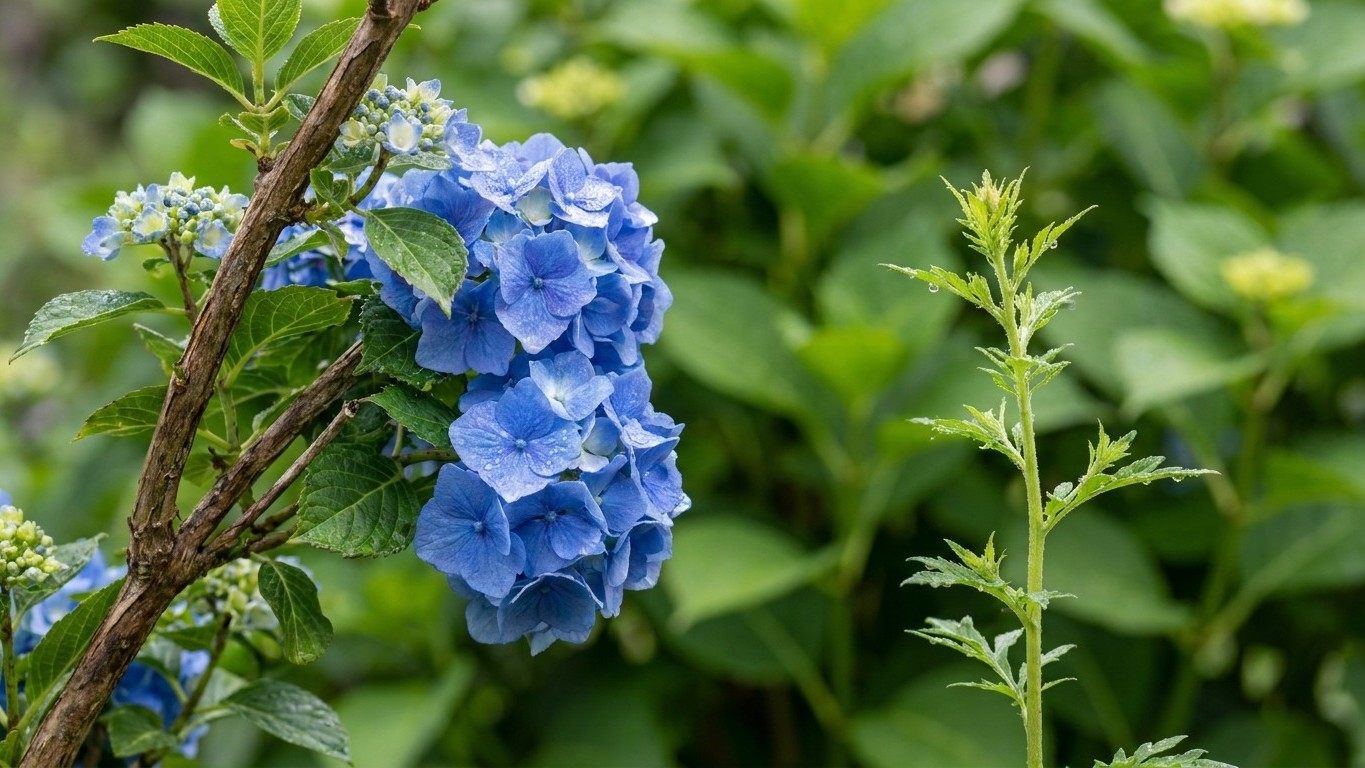

Set container-grown hydrangeas in the ground after the last spring frost, which falls between May 5 and May 15 in zone 6a per the Ohio State University Extension Ohio Gardening Calendar. Early fall planting also works. Favor types that bloom on new wood, since a late freeze can kill the flower buds on old-wood bigleaf hydrangeas. Give them morning sun, moist but well-drained soil, and a thick mulch. The rest of this guide goes month by month, and the How to Grow Hydrangeas: The Complete Guide covers the basics behind it.
When to plant Hydrangeas in Ohio

The spring window
The Ohio Gardening Calendar gives a last spring frost of May 5 to May 15 and a first fall frost of October 5 to October 15 for zone 6a. Those numbers describe that zone, not every county. Treat them as a baseline. Northern Ohio and higher-elevation spots run later in spring and earlier in fall, so push your own dates accordingly and confirm them with your county office.
Garden centers stock leafed-out hydrangeas in April, well before that window opens. Resist them, or buy and keep the pots somewhere sheltered. Fresh growth from a heated greenhouse is soft, and one frosty night can blacken it. Mid-May is the safe date for planting a shrub that has already leafed out.
Seeds, cuttings and hardening off
Most gardeners never start hydrangeas from seed, for good reason. Named cultivars don’t come true from seed, and seedlings take years to flower. The practical indoor route is cuttings: softwood pieces taken in early summer, rooted in a humid spot, then grown in pots over winter and planted out the following spring.
Whether it’s a rooted cutting or a greenhouse-grown nursery plant, the count-back works the same way. If your last frost lands between May 5 and May 15, start hardening off about 7 to 10 days earlier, which means April 25 to May 5. Give the plant an hour or two of shade outdoors on day one, add an hour or two each day, and work up to a full day in its eventual light. By planting day it should have spent a few nights outside in the pot.
The fall window
Fall planting suits hydrangeas because roots keep growing in warm soil long after the tops stop. A working rule is to finish about six weeks before the first fall frost. With a frost of October 5 to October 15, that means planting between roughly August 24 and September 3 or earlier. Anything planted later should be mulched heavily and watered until the ground freezes. Gardeners just across the border can compare notes in Growing Hydrangeas in Pennsylvania: Types, Colour and Winter, which runs on a similar calendar.
Soil and site preparation
Light and drainage
Morning sun with afternoon shade suits bigleaf, smooth and oakleaf hydrangeas through an Ohio summer. Panicle types such as ‘Limelight’ take more sun, and will bloom best with six or more hours. A bed on the east side of a house is the classic spot, and one under a thirsty maple is the classic mistake.
Drainage matters more than soil type. Plenty of Ohio yards have heavy clay, which holds the moisture hydrangeas like but drowns roots when it sits. Dig a hole about a foot deep, fill it with water, and let it drain. If water is still standing the next morning, plant on a mound or in a raised bed, and don’t try to fix it with a bucket of sand, which only makes a clay bowl.
Weeks before planting day
Test the soil first, ideally in fall or early spring. Your county Extension office can tell you how to send a sample. Pellets of sulfur or lime take months to shift pH, so they belong in the schedule weeks ahead, not in the planting hole. Work 2 to 3 inches of compost into the top 8 to 10 inches across a wide area. A single amended hole in clay behaves like a flowerpot buried in the ground.
Color is a pH story for bigleaf types only. As a general rule, soil below about 5.5 favors blue blooms, soil near 6.0 to 6.5 and higher pushes toward pink, and in between you get purples. White panicle, smooth and oakleaf varieties ignore all of it. Shifting color takes a full season or two, so plan around the plants you’ve bought and don’t expect a fast change.
On planting day, dig twice as wide as the root ball and no deeper, and set the top of the ball level with the soil. Spacing follows mature width on the plant tag. Smooth and bigleaf types usually need 3 to 6 feet, and large panicles need more. Crowding invites mildew.
Varieties that suit Ohio
The trait that matters most is which wood carries the flower buds. Old-wood bloomers set buds the previous summer, so a hard winter or a April freeze can wipe out a year of flowers. New-wood bloomers build stems and flowers in one season, and Ohio’s stretch between roughly mid-May and early October gives them enough time. Secondary traits worth checking are mildew resistance, sun tolerance, and stem strength.
| Type | Widely sold examples | Blooms on | Good for |
|---|---|---|---|
| Smooth | ‘Annabelle’, ‘Incrediball’ | New wood | Dependable white blooms after hard winters; ‘Incrediball’ has sturdier stems than ‘Annabelle’ |
| Panicle | ‘Limelight’, ‘Quick Fire’, ‘Bobo’ | New wood | Sunniest sites; blooms shift from white to pink in fall; ‘Bobo’ stays compact |
| Reblooming bigleaf | Endless Summer series | Old and new wood | Blue or pink color control; some flowers even after a bud-killing winter |
| Oakleaf | ‘Alice’, ‘Snow Queen’ | Old wood | Part shade, red fall foliage, peeling bark in winter |
| Traditional bigleaf | Classic mopheads and lacecaps | Old wood | Sheltered, protected spots; flowers are a gamble in cold years |
For a first Ohio hydrangea, a smooth or panicle type removes most of the risk. Reblooming bigleaf is the fair compromise if you want blue or pink and can offer shelter from wind. Traditional bigleaf is best planted near a south or east wall.
Bloom habits shift the further south you go, which is why the advice in Growing Hydrangeas in Florida: Types, Colour and Winter reads so differently. Ohio’s problem is cold and late frost, while Florida’s is heat and sun.
What to plant alongside
The best neighbors share hydrangeas’ appetite for evenly moist soil and fill space the shrub leaves empty. Hostas, ferns, astilbe, heuchera and Japanese forest grass all do that. They shade the soil around the roots, slow evaporation, and cover the bare ground below hydrangea stems, which can look leggy in summer. Boxwood and other evergreens give a winter backdrop when the hydrangeas are bare sticks.
Spring bulbs are an underrated partner. Daffodils and early tulips bloom before the shrub leafs out, and the hydrangea foliage hides their dying leaves later. Rhododendrons and azaleas also like acid soil and similar shade, so they make easy bedmates, though they won’t help a bigleaf stay blue by themselves.
Pollinator draw is real but uneven. Panicle, oakleaf and lacecap flowers have small fertile florets that bees visit. The big showy sterile florets of mophead types offer little, so mix in a few fertile-flowered plants if bees are a goal.
Competition causes more trouble than pests. Maples and other shallow-rooted trees drain moisture from beneath a hydrangea, and turf grass to the stem base does the same. Keep a mulched ring clear of lawn. Crowding also traps humid air, which invites powdery mildew on plants that share it, such as phlox and bee balm. Stay well away from black walnut roots, because juglone sensitivity lists vary and distance is the safe call.
Marigolds and garlic are widely said to confuse or repel hydrangea pests. Daffodils may be left alone by deer, but that doesn’t mean they protect the shrubs next to them. Treat those as nice-looking extras, not pest control.
Watering, feeding and support
Water and mulch
Deep and less often beats daily sprinkling. Aim for about an inch per week, delivered in one or two slow soakings at the base, and more in the first summer after planting. Poke a finger 2 inches down before you water. Hydrangeas wilt on hot afternoons even in damp soil, and the leaves recover by evening. Wilt that persists into the next morning is the real signal.
Spread 2 to 3 inches of shredded bark or leaf mulch across the root zone, pulled a few inches back from the stems so bark isn’t constantly wet. Mulch holds moisture, buffers soil temperature and keeps weeds down, and it’s the cheapest hydrangea care there is.
Feeding
One feeding is usually enough. Apply a slow-release, balanced fertilizer when new leaves emerge in spring, following the label. Heavy nitrogen produces big green leaves and few blooms, and late feeding pushes soft growth right before frost. Skip fertilizer after midsummer. Compost laid under the mulch each spring does much of the same work gently.
Support, pruning and suckers
Large-headed ‘Annabelle’ flops in summer rain, which is why peony rings or grow-through grids go on in spring while stems are short. Sturdier varieties skip that chore. Pruning follows bloom wood. Bigleaf and oakleaf types need only dead stems removed in spring, plus light shaping right after flowering. Smooth hydrangeas can be cut back hard, to about 6 to 12 inches, in late winter or early spring. Panicles take a trim of up to a third. Smooth types also spread by suckers, which you can dig out with a spade or let form a colony.
Common problems

No blooms
This is the complaint I’d expect most. The usual causes are pruning old-wood types in fall or spring, a winter or spring freeze that killed buds, too much shade, and too much nitrogen. Check which type you own before anything else. If it blooms on old wood, a harsh winter is likely the answer, and the fix next year is protection and patience.
Leaves and flowers
Wilting at midday while the soil is moist is normal heat stress. If leaves are limp in the morning too, check for dry roots or for soggy, rotting ones. Brown, crispy leaf edges point to sun scorch or dry spells, often on a plant moved into too much light. Round brown or purple leaf spots are fungal (commonly Cercospora). They look ugly and rarely kill the plant, so clean up fallen leaves, water at the base, and thin crowded stems for airflow. A white powdery coating on leaves is powdery mildew, most common where air is still and humid.
Blooms that turn from color to papery brown early in summer usually signal drought or intense afternoon sun. Greenish flowers on a pink or blue variety can be age. Panicle blooms naturally shift color as they mature. Wrong color in a bigleaf comes from soil pH and aluminum availability, which a soil test explains.
Dieback after winter is common in bigleaf types. Wait until leaves emerge in late spring before cutting, because stems that look dead often leaf out from lower buds. Scratch a stem with a thumbnail. Green beneath means alive.
Pests that actually show up in Ohio
The Ohio State University Extension (Ohioline) fact sheet ENT-65 and related sheets list the home-garden pests to watch in Ohio. Pressure varies across the state, so your county office can identify anything unfamiliar. These are the ones that matter for hydrangeas.
Slugs and snails leave ragged holes in leaves, often with silvery slime trails, usually on lower foliage. They reach pest status in wet springs and falls. Iron phosphate bait scattered around the plant is the control that works, and it’s far safer around pets than older metaldehyde products.
Twospotted spider mite shows up as fine stippling that turns leaves dull, bronzed or yellow, sometimes with webbing under the leaf. It’s worst in summer heat. A forceful spray of water on the undersides, repeated every few days, knocks populations back before mites build up.
Japanese beetle is easy to spot: metallic green-and-copper beetles chewing leaves into lacework. They emerge in late June and stay until early fall. Hand-pick them into soapy water in the cool morning, when they are slow, and keep at it, since new beetles arrive.
Aphids cluster on soft new growth, curling tips and leaving sticky honeydew that can grow sooty mold. A hard stream of water from the hose removes most of them, and repeating it every few days beats chemicals.
Fourlined and tarnished plant bugs, which cause damage in late spring and early summer, leave small dark spots and are mostly cosmetic on hydrangeas. European earwigs chew petals at night. Neither usually justifies treatment.
Harvest and end of season
For fresh bouquets, cut in the morning when stems are full of water, and plunge them into a bucket right away. Mopheads last longer if the cut ends are dipped in alum powder or set in warm water. Cutting a few stems doesn’t hurt the shrub, but cut above a pair of leaves, and avoid old-wood types in fall.
Dried hydrangeas are better when you let the flower age on the plant. Wait until the florets feel papery and their colors have shifted to dusty rose or green, which often happens from late summer into fall. Strip the leaves and hang stems upside down in a dark, dry place with air movement. They last a year or more if kept out of humid rooms.
The first fall frost, October 5 to October 15 in zone 6a, is the deadline. Cut any heads you want before it arrives, since frost browns the blooms. Stop fertilizing in midsummer so the growth hardens, and water deeply before the ground freezes.
For winter, mound 6 to 12 inches of shredded leaves or mulch around the base after the ground cools, and ring bigleaf types with wire filled with leaves where wind is harsh. Pull the mulch back in spring around your last frost, which runs May 5 to May 15 in zone 6a, and let the plant leaf out before you decide what’s dead. Potted hydrangeas do best in an unheated garage or shed through winter, with a little water now and then.
Local help
County-level frost dates, soil tests and pest identification come from Ohio State University Extension, which has an office in every county. Ask them about your local frost timing and send a soil sample before you decide on a color plan. More state-specific guidance is collected in the Ohio guides.
Common questions
Can I plant hydrangeas in Ohio in fall?
Yes. Early fall is a good time because roots keep growing in warm soil. A working rule is to finish about six weeks before the first fall frost, which is October 5 to October 15 in zone 6a. Mulch new plants and water them until the ground freezes.
When should I prune hydrangeas in Ohio?
It depends on the type. Smooth and panicle hydrangeas bloom on new wood and are cut back in late winter or early spring. Bigleaf and oakleaf types bloom on old wood, so prune lightly right after flowering and remove only dead stems in spring.
Why is my hydrangea not blooming?
Common causes are frozen buds, old-wood types pruned at the wrong time, too much shade, and too much nitrogen. Identify your type first. If it’s a bigleaf, a hard winter is the most likely culprit.
Can I change my hydrangea’s color?
Only with bigleaf types, and only slowly. As a general rule, acid soil near 5.5 or lower favors blue, and soil closer to neutral favors pink. Get a soil test first and expect a season or two before the color changes. White hydrangeas ignore pH.
Should I cover hydrangeas for a late frost in May?
Yes, if they have leafed out. Cover with a sheet or burlap that reaches the ground, and remove it in the morning. Cold hardiness is a separate matter from frost damage to new growth, so even a well-established shrub can lose tender shoots. A damaged plant usually pushes new growth from below, but old-wood bloomers may skip flowers that year.