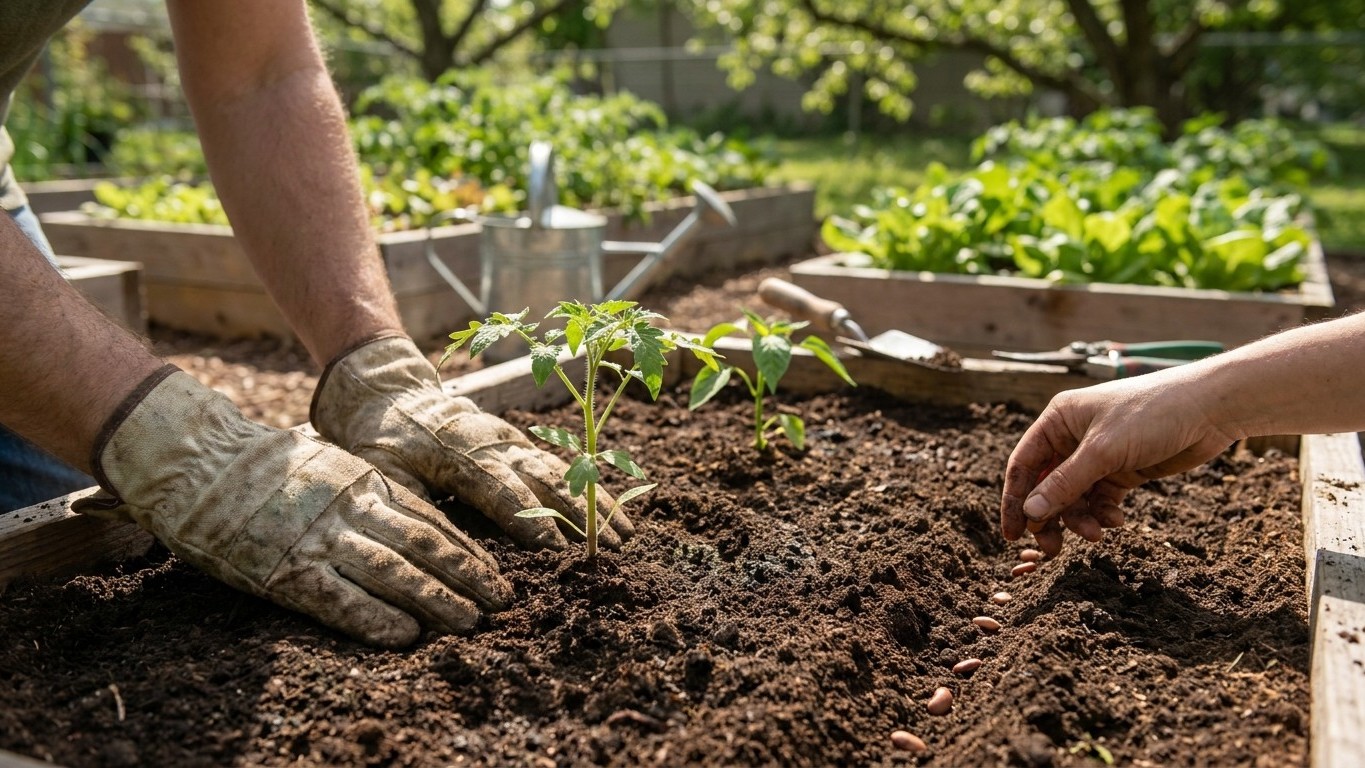

May is Indiana’s turning point: the statewide frost window closes (April 9 to April 21 around Indianapolis) and tomatoes, peppers, squash, beans, and corn can finally go outside. Direct-sow warm-season crops once soil feels warm to the touch, keep succession-sowing lettuce and spinach, and watch the first ten days of the month if you garden north of Indianapolis, since a late freeze still has roughly a 10% chance of showing up.
What goes in the ground in May

The calendar says the frost danger has passed, but soil temperature is what actually decides this month, not the date on the wall. Indianapolis sits at the center of the state’s 1991-2020 climate normals, with the last spring freeze typically landing between April 9 and April 21. By May, most of central Indiana is past that window, but Purdue’s own caution matters here: there’s still about a 10% chance of a 32F event after the published date, which means the first week or two of May is not a guarantee, especially north of I-70.
Warm-season crops are the headline this month. Tomato and pepper transplants, hardened off over seven to ten days, go into beds once nighttime temperatures hold above the mid-50s. Beans and corn get direct-sown once soil temperature sits near 60F, not just when the air feels warm. Squash, cucumbers, and melons follow the same rule, since cold soil rots seed before it ever sprouts. This is also the last realistic window for potatoes if you haven’t gotten them in, and for onion sets in northern counties still working through cool nights.
Cool-season crops don’t disappear just because it’s warm-crop season. Peas planted in early May still have a shot at a decent harvest before heat shuts them down, and lettuce, spinach, and radishes can keep going in succession as long as you’re sowing in the first half of the month, in partial shade if afternoons turn hot.
North versus south timing
| Crop | Southern Indiana (Zone 7a) | Northern Indiana (Zone 5b) |
|---|---|---|
| Tomato transplants | Early May, minimal cover needed | Mid-to-late May, keep frost cloth ready |
| Beans, direct sow | First week of May | Mid-May, once soil hits 60F |
| Peas, direct sow | Already fading by mid-May | Still viable through early May |
What to start under cover
Most of the tender starts you’ll need for May are already hardening off on a porch somewhere, having been seeded indoors back in March or early April. But this month is when you start counting backward for the second wave: fall brassicas. Broccoli, cabbage, and Brussels sprouts for a fall harvest get started indoors roughly 6 to 8 weeks before you plan to set them out in July, which puts the seed tray on your windowsill now.
Melons and winter squash, if you didn’t start them in April, can still go indoors under cover for a 3 to 4 week head start before transplanting, since they resent root disturbance and shouldn’t sit in trays much longer than that. The arithmetic is simple: count forward from your transplant date, not backward from a fixed calendar day, because the whole point is matching the seedling’s readiness to the soil’s readiness.
Two failure modes show up every May. Start too early and you end up with leggy, rootbound tomato and pepper starts that sulk for weeks after transplant instead of taking off. Start too late, particularly with fall brassicas, and you run out of season before the plants size up, since Indiana’s first fall freeze arrives between October 21 and October 30 in the Indianapolis area, and cabbage needs real time on the clock before that date closes in.
What is ready to pick
Asparagus is the month’s signature harvest, with spears cut at 6 to 8 inches before they get woody and start branching at the tip. Rhubarb stalks thicken enough to pull by mid-month, and the rule holds everywhere: leave the leaves behind, since they’re toxic, and only harvest a third of the plant in its first couple of seasons.
Spring greens sown back in March are hitting their stride now. Lettuce, spinach, and arugula are ready whenever leaves reach a usable size, picked from the outside in so the center keeps producing. Radishes sown in April are usually root-ready within 25 to 30 days, and you’ll know by the shoulders pushing up through the soil surface.
Strawberries planted in prior seasons start ripening toward the very end of May in southern counties, running later further north. Garlic planted the previous fall is still weeks from harvest, but garlic scapes, the curling flower stalks, aren’t far off and are worth watching for since cutting them early redirects energy back into the bulb.
If a cold frame or low tunnel carried greens through winter, check it now for bolting. Once daytime heat builds, lettuce and spinach under cover will flower and turn bitter fast, so pull what’s left rather than let it go to seed.
The jobs that matter this month
Staking and caging come first, and they come now, not later. Tomatoes, peas, and pole beans grow fast enough in May heat that a cage put in after the plant has flopped over does real damage to roots and stems. Set supports at transplant time, before there’s anything to disturb.
Mulching follows close behind. A 2 to 3 inch layer of straw or shredded leaves around warm-season transplants holds soil moisture as May afternoons heat up, and it suppresses the first flush of weeds before they get a foothold. Skip mulching too close to stems, though, since it invites rot and gives slugs cover.
Watering rhythm shifts this month too. Seedlings and transplants need consistent moisture while roots establish, which usually means watering every two to three days rather than a deep soak once a week. Once plants are established, that shifts back to deeper, less frequent watering that encourages roots to grow down instead of staying shallow.
Succession sowing keeps the harvest coming instead of arriving all at once. Sow another short row of beans, lettuce, or radishes every 10 to 14 days through May, and you avoid the classic glut-then-nothing pattern that hits gardeners who plant everything on one weekend.
Pest scouting matters more in May than almost any other month, since this is when Colorado potato beetles, squash bugs, and cutworms emerge and start laying eggs. A five-minute walk through the garden every few days, checking undersides of leaves, catches infestations while hand-picking is still enough to control them.
What not to do in May
The most common mistake is trusting the air instead of the soil. A warm afternoon doesn’t mean the ground six inches down has caught up, and tomato or pepper transplants set into soil that’s still in the 40s will simply stall, sometimes for weeks, even if they don’t die outright. Check soil temperature with a simple probe thermometer before committing tender transplants, rather than going by how the day feels.
Uncovering too early after a mild stretch is the second trap. A run of 70-degree days in late April or early May feels like permission to strip off row covers and cold frames, but the 10% chance of a freeze event after the published last-frost window doesn’t disappear just because a few warm days happened. Keep frost cloth folded and within reach through at least the first half of the month if you’re north of Indianapolis.
Nitrogen timing trips up a lot of tomato and pepper growers. A heavy nitrogen feed right at transplant pushes leafy, vigorous-looking growth at the expense of flowering and fruit set, so plants look great in June and produce poorly in July. Save the nitrogen push for right after transplant shock passes, then shift toward phosphorus and potassium as flowering starts.
Skipping the hardening-off process is the last classic error. Transplants moved straight from a warm windowsill into full sun and open wind will show scorched or bleached leaves within a day, a setback that costs a week of stalled growth. Seven to ten days of gradually increasing outdoor exposure fixes this, and it’s not a step worth shortcutting for the sake of getting in the ground a few days sooner.
Checking this against your own county
A statewide window is a starting point, not an instruction. Indiana’s hardiness range runs from 5b to 7a, and southern counties along the Ohio River warm up and cool down roughly two weeks earlier and later than the Indianapolis normals used here. Elevation and lake effect near Lake Michigan push northern counties in the opposite direction, sometimes by more than a fortnight.
Before locking in a planting date, check current conditions and county-level guidance through Purdue Extension, which maintains planting calendars tuned to specific regions of the state rather than a single average.
Common questions
Is it too late to plant tomatoes in Indiana in May?
No. May is the standard month for setting tomato transplants outside across most of Indiana, once nighttime temperatures hold consistently above the mid-50s and the risk from the April 9 to April 21 frost window has passed.
Can you plant grass seed in Indiana in May?
Cool-season grass seed establishes better in fall, since May heat and competition from weeds make spring seeding riskier. If spring seeding is the only option, early May gives seedlings the best chance before summer heat arrives.
What vegetables can you plant in May in Indiana?
Tomatoes, peppers, squash, cucumbers, beans, corn, and melons all go in this month, alongside continued succession sowing of lettuce, spinach, and radishes, and peas if sown in the first half of the month.
Is May too late for peas in Indiana?
Early May still works for peas, but they need to go in during the first two weeks, since rising heat later in the month slows pod production and can shut plants down before a full harvest comes in.