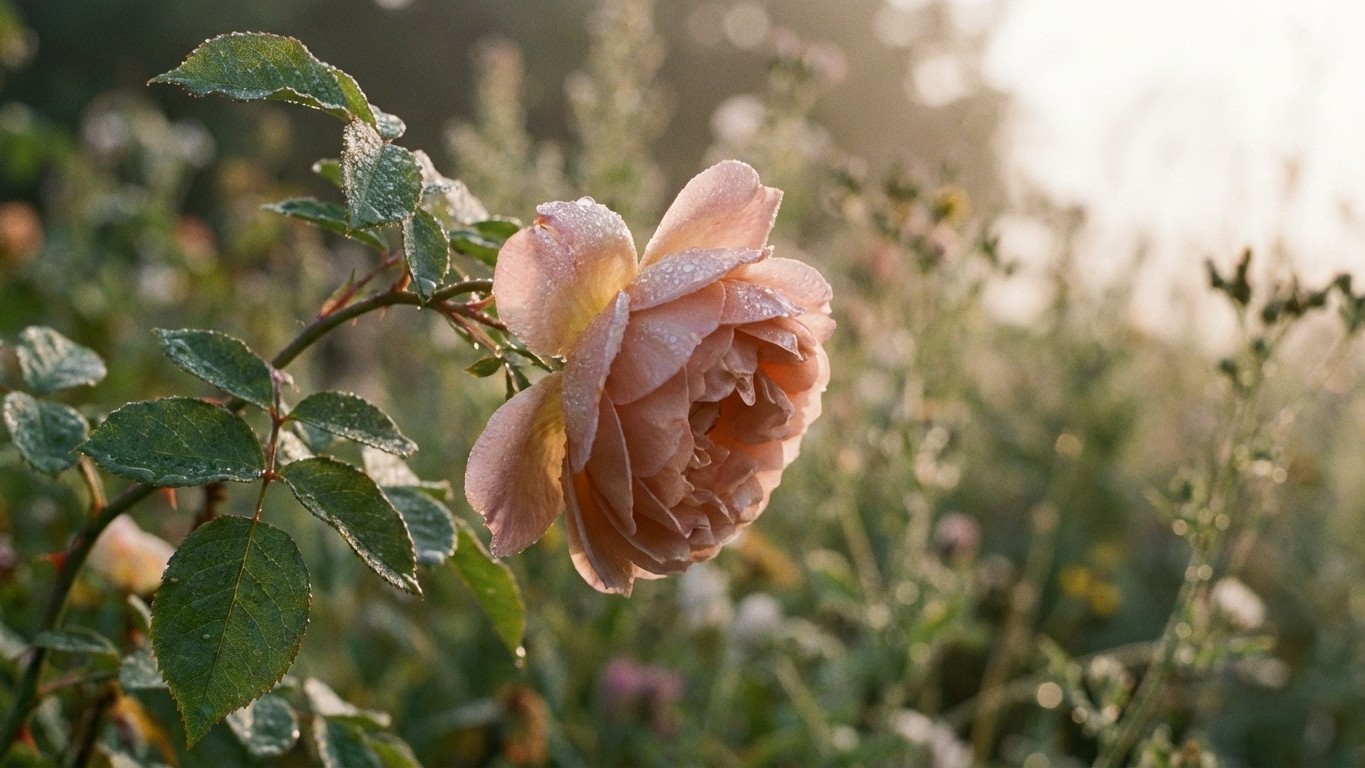

Plant bare-root roses in Indiana as soon as the soil can be worked in early spring. Set container roses out once frost risk fades, which in Indianapolis means April 9 to April 21. Choose a cold-hardy, disease-resistant variety and give it at least six hours of sun. Fall planting is nearly out of runway this year, since the first fall frost there arrives October 21 to October 30. What follows covers timing, sites, varieties and the pests Purdue flags.
When to plant Roses in Indiana
The frost dates here come from the NOAA NCEI 1991-2020 Climate Normals for the Indianapolis station (USW00093819), using the 30-70% band of 32F freeze probabilities. The station data is public. It puts the last spring frost at April 9 to April 21 and the first fall frost at October 21 to October 30. Indianapolis is the reference city, not a statewide truth. Northern Indiana runs later in spring and earlier in fall, and southern Indiana runs the other way, by a fortnight or more. Shift every date in this section accordingly.
Purdue adds a caution worth taping to the shed door: roughly a 10% chance of a 32F night remains after the published spring date. New rose growth is soft and can blacken overnight, so keep buckets or old bedsheets handy if you plant on the early edge.
Bare-root and container plants
Dormant roses are tougher than the calendar suggests. Bare-root plants arrive in late winter and go in as soon as the ground thaws and stops being sticky, often in March or early April in a normal year. Soak the roots in a bucket for 12 to 24 hours first. A dormant cane shrugs off a freeze that would flatten a leafed-out plant.
Container roses that already carry leaves and buds are a different matter. Hold them until the April 9 to April 21 window has passed, or plant them and cover them on cold nights. Fall planting works on a rule of thumb: give the plant about six weeks to root before the first frost. Counting back from October 21, that lands on September 9. If you’re reading this at the end of September, a new rose is a gamble, and early spring is the safer bet.
Starting from seed
Most roses are bought as plants, and grafted hybrid teas won’t come true from seed anyway. Species roses and some shrub roses can be grown from seed, though. The seed needs weeks of cold, damp storage (stratification) before it germinates. The arithmetic below is a rule of thumb, not a published schedule.
- Target transplant date: April 21, the late end of the Indianapolis range.
- Hardening off: 7 to 10 days of gradually longer outdoor time, so start around April 11.
- Indoor growth: about 10 weeks under lights, so sow around February 10.
- Cold stratification: about 8 weeks in the refrigerator, starting around December 16.
Add roughly two weeks to every date for northern Indiana. Expect uneven germination. Some seeds sprout in weeks and others wait a second winter.
Soil and site preparation
Sun decides more than anything else. Roses want six or more hours of direct light, and morning sun is worth the most because it dries dew off the leaves before fungus gets a start. A bed against a south or east wall, with air moving through it, beats a sheltered corner every time. Crowded, shady spots are where black spot thrives.
Drainage comes next. Much of Indiana has heavy clay, and roses sulk in wet feet. Test it by digging a hole about a foot deep, filling it with water, and filling it again the next day. If the second fill is still standing after several hours, build a raised bed or mound the planting area a few inches. Sandy patches have the opposite problem and need organic matter to hold moisture. Send a sample to a lab for a soil test through your county office (see the last section) rather than guessing at pH. Roses generally do best in slightly acidic to neutral soil.
Start the work weeks before planting day. Loosen the bed to a spade’s depth or more, and fold in a few inches of compost. Do it in fall or early spring while the soil is still workable, then leave it alone. Skip strong fertilizer in the planting hole, which can burn new roots.
Spacing depends on the type. Compact shrub roses and groundcover types can sit about 2 to 3 feet apart, while larger shrubs and hybrid teas need 3 to 4 feet. Climbers want 6 to 8 feet of wall or fence. Tight spacing looks lush in year one and turns into a mildew problem by year three.
Set grafted plants so the swollen bud union sits at or just below the soil line in cold-winter areas. That buried union gets some insulation from the soil. Water deeply after planting and mulch.
Varieties that suit Indiana
A short season isn’t the issue for roses. Winter cold, humid summers and fungus are. So the traits worth shopping for are cold hardiness, disease resistance, and repeat blooming. Bush versus climbing habit also matters, in the way “determinate versus indeterminate” matters for a tomato: it decides how much structure you’ll build.
Own-root roses, grown on their own roots rather than grafted, deserve a look. If a hard winter kills the canes to the ground, whatever regrows is still the variety you bought. On a grafted plant, regrowth below the bud union is the rootstock, which is usually a lesser rose.
| Type or variety | Traits that matter | Good for |
|---|---|---|
| Knock Out family shrub roses | Repeat bloom, good disease resistance, widely sold | Low-maintenance borders, foundation beds |
| Drift roses | Compact, repeat-blooming groundcover habit | Slopes, front edges, containers |
| Rugosa roses such as ‘Hansa’ | Very cold hardy, tough foliage, hips | Hedges, poor sites, wildlife plantings |
| Canadian Explorer roses such as ‘John Cabot’ and ‘William Baffin’ | Bred for cold, climbing or arching habit | Fences, arbors, colder northern beds |
| Hybrid teas and grandifloras | Best cut flowers, but fussier, more spray-dependent | Cutting gardens, gardeners who like to fuss |
| English-style shrub roses | Fragrant, full blooms, disease resistance varies by variety | Fragrance, cottage-style beds |
Treat this as a shopping guide to traits, not an endorsement from any institution. Cultivars come and go, and disease resistance varies by variety even within a family. Read the tag, and ask a local nursery what has held up nearby. If you’d like to compare notes with neighboring states, we cover Growing Roses in Pennsylvania: Planting Dates, Varieties and Local Pests and Growing Roses in Delaware: Planting Dates, Varieties and Local Pests too.
One buying habit pays off: match ambition to effort. If you won’t spray or deadhead, choose the tough shrub types, and save hybrid teas for the person who enjoys the ritual.
What to plant alongside
Good companions do practical jobs. Low, spreading perennials shade the soil and keep mulch from washing out. Catmint, hardy geraniums and dwarf salvias work well because they bloom at rose height and draw pollinators. They also hide the bare lower canes that many roses develop. Alliums and chives make neat neighbors too. Gardeners have long planted garlic and chives near roses to discourage aphids. The evidence for that is thin, mostly anecdotal, so plant them because they look good and don’t compete, not as pest control.
Mixed plantings do have one measurable benefit. A bed with varied flowers supports more beneficial insects than a row of bare stems, and pests find it harder to spot a single target. That effect is real but modest.
Lavender is a common suggestion that deserves skepticism. It wants lean, dry soil, and roses want steady moisture and richer ground. One of them will suffer. The same goes for anything thirsty or greedy planted in the root zone, such as big hostas or ornamental grasses, which fight the rose for water and nutrients.
Keep these well away:
- Anything crowding the canes, since roses need airflow to dry their leaves.
- Vigorous spreaders like mint, which invade the root zone and are almost impossible to pull out.
- Large trees and shrubs with shallow roots, which drain the bed.
- Vegetable-garden crops that draw the same beetles and bugs described later, when they’re planted in the same bed.
Also, keep raspberries, strawberries and other rose-family fruit at a distance. They belong to the same plant family and can share some problems, so a cleaner separation is cheap insurance.
Watering, feeding and support
Roses need about an inch of water a week during the growing season, delivered slowly and deeply so it soaks 12 inches or more. Frequent light sprinkles keep the surface wet and the roots shallow. Water at the base, in the morning if possible. Wet leaves overnight invite black spot, and overhead watering is the main way gardeners give it to themselves. A soaker hose or drip line pays for itself in the first summer.
Mulch with 2 to 3 inches of shredded bark or compost, pulled back a few inches from the canes. It holds moisture, moderates soil temperature and suppresses weeds. Refresh it each spring.
Feed when the first new growth appears in spring, with a balanced rose or shrub fertilizer, following the label rate. Repeaters like a second feeding after the first big flush of bloom in early summer. Stop feeding about six weeks before the first fall frost. Counting back from October 21, that’s roughly September 9. Late feeding pushes soft growth that winter will kill.
Prune in late winter or early spring, after the worst cold but before leaves open. Cut out dead, damaged and crossing canes, and shorten the rest to healthy, green-centered wood. Once-blooming types, such as many old roses and ramblers, flower on last year’s canes, so prune them right after they bloom instead. Deadhead repeat bloomers through summer, but ease off in early fall so the plant can slow down and harden off.
Watch for suckers on grafted plants. These are shoots from the rootstock, and they often look different from the rest of the bush, with more leaflets per leaf and duller growth. Follow them to their base and pull or cut them off cleanly. Cutting them at ground level just encourages more.
Climbers need support from day one. Fan the main canes out sideways along a trellis or wires and tie them loosely. Horizontal canes throw more flowering shoots than vertical ones. Shrub roses rarely need staking unless they are top-heavy in a windy spot.
Common problems
Black spot is the classic. Round black blotches with fringed edges show up on the leaves, which yellow and drop, starting low on the plant. It’s a fungus, and it spreads in splashing water and humid weather. Rake and discard fallen leaves, water at the base, keep the plant open to airflow, and choose resistant varieties. Fungicides slow it but need repeating.
Powdery mildew leaves a white, dusty coating on new leaves and buds, and distorts the growth. It likes warm days, cool nights and crowded plants. Better spacing and sun help more than spraying.
Few flowers usually means too little sun, too much nitrogen, or heavy pruning of a once-blooming type. Count the hours of direct light before buying fertilizer. Blind shoots, stems that grow but never form a bud, often trace back to shade or a late cold snap.
Winter dieback shows as brown, shriveled canes in spring. Cut back to green tissue and wait: many roses regrow from lower on the plant. Mound soil or mulch over the base once the ground starts to freeze in late fall to protect the bud union.
Watch closely for rose rosette disease. It causes clusters of thin, red, distorted shoots (a “witches’ broom”) and unusually thorny canes. It is spread by tiny mites and has no cure. Take a photo and check with your county office, because infected plants are normally dug out and destroyed.
Yellow leaves with green veins can point to a nutrient issue such as iron, which is more common in alkaline soil. A soil test settles that. Twisted, cupped new growth after a herbicide was used nearby is often drift damage.
Pests that actually show up in Indiana
The pest list behind this section comes from Purdue Extension Entomology publication E-21, Managing Insects in the Home Vegetable Garden. It’s written for vegetable plots, not rose beds, so it does not rank rose pests. It isn’t exhaustive either, and pressure varies across the state. Several entries, such as Colorado potato beetle, squash bug, squash vine borer, seedcorn maggot, Mexican bean beetle and asparagus beetle, target specific vegetables, so I’m leaving them out here. Purdue notes that Indiana Colorado potato beetle populations resist most homeowner insecticides, which matters if you grow potatoes. The generalist feeders on the list are the ones that may wander into roses.
Spotted and striped cucumber beetles. You’ll see small yellow-green or striped beetles crowded inside open blooms, with ragged, chewed petals. Peak pest season here runs late April through September. The simplest control is to shake or knock them into soapy water in the cool of the morning, when they’re sluggish, and to clear any cucumber or squash vines growing nearby that feed the population.
Brown marmorated stink bug. Look for shield-shaped, mottled brown bugs on stems and buds, and buds that come out pitted or deformed. Hand-picking into a jar of soapy water is the control that works in a garden this size. Wear gloves, since they release a smell.
Cabbage looper. The first sign is ragged holes chewed in leaves, with green caterpillars that arch as they crawl. Purdue says this one doesn’t overwinter in Indiana but flies in each June, and its second generation in August and September is the most serious. Pick caterpillars off by hand, or use a Bt (Bacillus thuringiensis) product labeled for caterpillars, which targets them and spares most other insects.
Since none of this is a rose-specific ranking, take a sample or clear photo to your county office if something is eating your plants and you can’t name it. Mistaking a beneficial insect for a pest is easy.
Harvest and end of season
Cut roses for the vase in the morning, when stems are full of water. Choose buds that are just starting to open, soft when squeezed gently and showing color, and cut above a leaf with five leaflets, using sharp clean pruners. Strip the lower leaves and plunge stems into water right away. A rose cut at the tight-bud stage will keep opening indoors, while one cut too tight may never open at all. Buds that feel hard as marbles rarely make it.
Cut flowers keep longest in a cool room, and a refrigerator preserves buds for a few days if you need to hold them. Change the vase water every day or two and re-cut the stem ends.
Hips, the fruit of the rose, follow a different schedule. Rugosa and many species roses set red or orange hips that ripen in fall. Stop deadheading them from late summer so the hips can form, and pick them after they turn fully colored. Many gardeners wait until after the first frost, when they soften.
As the first fall frost approaches (October 21 to October 30 at the Indianapolis reference station, earlier in northern Indiana), taper off. Stop fertilizing well ahead, as noted above, and keep watering if fall turns dry. Clean up fallen leaves to reduce black spot spores. Wait until the ground begins to freeze, then mound 8 to 12 inches of soil or compost over the base of tender or grafted roses. Save major pruning for spring.
Local help
Frost dates, soil pH and pest pressure vary from county to county, so Purdue’s extension network is your best local resource. Find your county office through Purdue Extension for soil test instructions, pest identification and up-to-date advice. More state guides are collected in our Indiana guides.
Common questions
When can I plant roses in Indiana?
Bare-root roses can go in as soon as the soil thaws and drains in early spring. Container roses with leaves should wait until the April 9 to April 21 range at Indianapolis has passed, with a cover ready in case of a late freeze. Adjust later for northern Indiana and earlier for the south.
How much sun do roses need?
At least six hours of direct sun, with morning light the most valuable. Shadier spots produce fewer flowers and far more fungal disease.
Do I need to protect roses in winter?
Hardy shrub and rugosa types usually cope on their own, though a layer of mulch never hurts. Grafted hybrid teas and other tender types benefit from a mound of soil or compost over the base once the ground starts to freeze.
Which pests should I watch for?
Purdue’s vegetable-garden publication names cucumber beetles, brown marmorated stink bug and cabbage looper among the generalists that may reach roses. It doesn’t rank rose pests specifically, so bring unknown insects to your county extension office for identification.
When should I stop feeding my roses?
About six weeks before the first fall frost. At Indianapolis, where that frost falls October 21 to October 30, that means around the second week of September, so this year’s last feeding is already behind you.