
Sweet corn ripens reliably in most of Indiana, but the calendar that matters isn’t the frost date most gardeners circle in April. It’s the soil temperature weeks later, and the stretch of warm months after that. Get the sequence right and even a slower-maturing variety has room to finish before the first fall frost. Get it backward and you lose the season before it starts.
The short answer
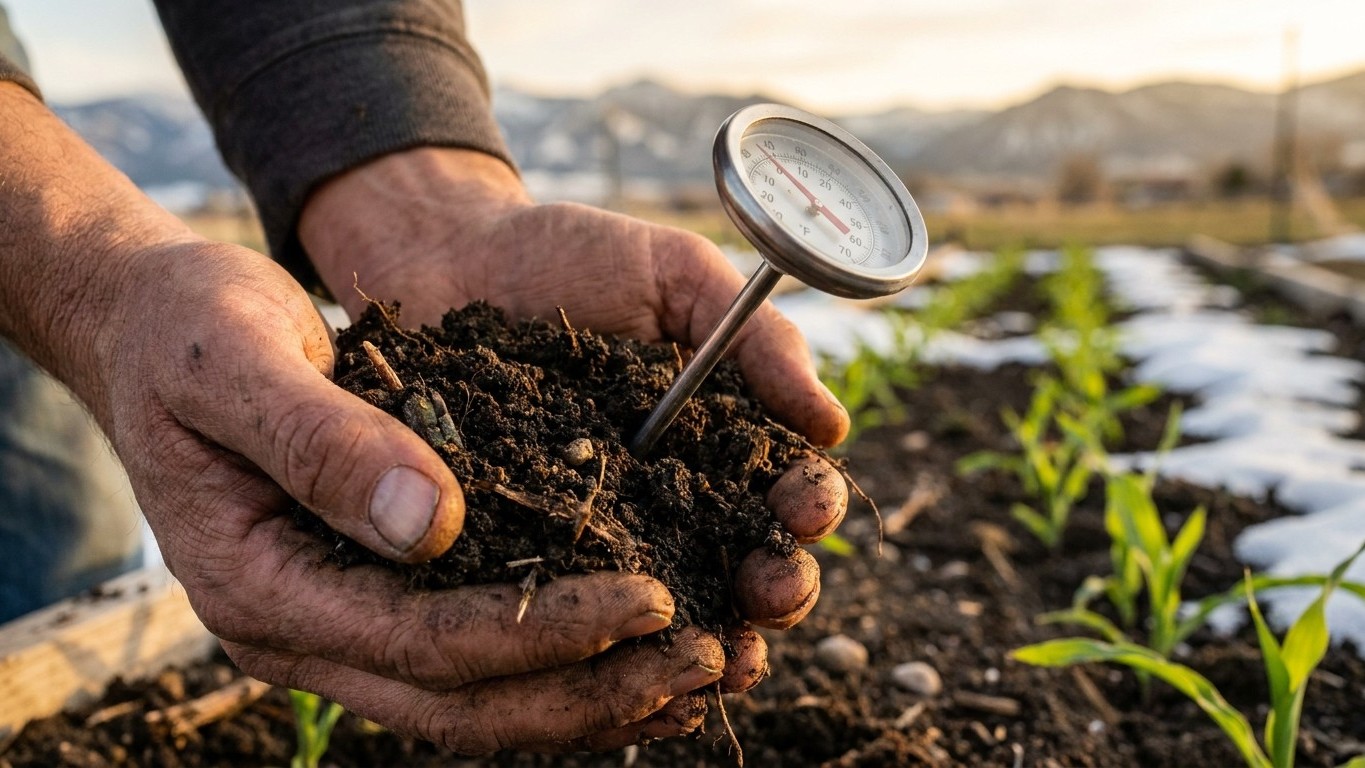
Start with the number gardeners actually track: the last spring frost at the Indianapolis reference station falls somewhere between April 9 and April 21. That date matters, but it isn’t the planting signal for sweet corn. Knowing exactly When to Sow Sweet Corn in Indiana means waiting until the soil climbs above 60°F before seed goes in the ground, and soil warms on its own schedule, well after the air stops freezing. Bare dirt holds onto winter longer than the atmosphere does, so the gap between “no more frost” and “warm enough to plant corn” is real and it isn’t optional to skip.
That lag pushes the practical planting window later than the frost date alone would suggest. It also means gardeners who plant the week after the last frost, going by the calendar instead of the ground, are often planting into soil that hasn’t caught up yet. Corn seed sitting in cold, wet dirt doesn’t germinate evenly. Some of it rots before it ever sprouts. The related question of Will Sweet Corn Ripen in Indiana? comes down largely to getting this timing right in the first place.
Once the soil has actually crossed that 60°F line, the countdown that matters is the one printed on the seed packet: 60 to 90 days from planting to maturity, depending on variety. The other end of the season is the first fall frost, which at the Indianapolis reference point lands between October 21 and October 30. Between a spring planting once the ground has warmed and that autumn cutoff, most years in Indiana leave five to six months of usable growing time. That’s a wide margin against a 60-to-90-day crop, and it’s the reason the short answer is yes for the overwhelming majority of Indiana gardens, provided the soil-temperature step isn’t skipped.
Two clocks run through this crop, and they answer different questions. The 60-to-90-day count from planting tells you whether the variety fits inside the season at all. A separate stretch of roughly two to three weeks after the silks appear tells you which week to actually pick, and that’s a different measurement handled once the ears are already forming. Don’t fold the two together, or you’ll either pick too early or leave the crop in the field wondering why it hasn’t caught up.
Location inside the state shifts both ends of this window. Southern Indiana runs earlier in spring and later into autumn than the northern counties, by two weeks or more in each direction. That’s not a rounding error. In a state this long north to south, a gardener near the Ohio River and a gardener near the Michigan line are working with meaningfully different calendars, even though both are technically “Indiana.”
Does a late variety fit here?
A 60-day variety
A fast-maturing type built around a 60-day cycle has plenty of room in this state. Even accounting for the delay before soil hits 60°F, and even in a year where the last frost lands on the late side of the April 9 to April 21 range, a 60-day variety planted once the ground has warmed will typically finish well before summer’s peak heat, let alone before the October frost window. This is the safest choice for gardeners who want an early harvest, who are working a short or shaded plot, or who simply want a wide buffer against a cold, slow spring.
The tradeoff isn’t about whether it ripens. It’s about flavor and yield expectations, since faster types are often bred for speed rather than for the sugar content some gardeners chase in slower varieties. That’s a taste decision, not a climate one.
A 90-day variety
Run the same math on the slow end and a 90-day variety still fits, in most of the state, in most years. Planted once the soil has actually crossed 60°F, even a 90-day type lands its harvest in mid-to-late summer, with real distance still separating it from the earliest fall frost date of October 21. Season length is not what threatens this variety in Indiana.
What does threaten it is heat, not frost. The Indianapolis reference station averages 14.6 days a year at 90°F or hotter, and a 90-day variety’s pollination window often lands squarely inside that hot stretch of mid-summer. Heat stress at tasseling and silking can thin out kernel set even when the season has plenty of calendar left. There’s also less margin in the northern counties, where fall frost can arrive up to two weeks earlier than the Indianapolis date and spring can run cooler and later than the southern part of the state. Stack a late spring, a slow soil warm-up, and an early northern autumn together, and a 90-day variety’s cushion gets noticeably thinner, even though it still fits on paper.
What goes wrong here
- Soil sown too cold. Planting on the frost date instead of waiting for the ground to actually clear 60°F is the most common mistake in this state, since the two events don’t happen on the same day. The remedy is patience and a soil thermometer: check the dirt itself rather than trusting the calendar, and hold off until it reads warm at planting depth, not just on a sunny afternoon.
- A variety too late for the season. Choosing a slow-maturing type and planting it later than early summer, especially in the northern counties where the fall frost date arrives sooner, can leave the crop racing an October deadline it can’t beat. The fix is matching maturity length to planting date and to where in Indiana the garden sits, leaning toward the shorter end of the scale the further north the plot is.
- Sweetness lost because two types tasseled together. This one has nothing to do with weather. Su, se, and sh2 sweet corn types cross-pollinate when their tassels release pollen at the same time, and the result is starchy, tough kernels on a plant that otherwise looks perfectly healthy. There’s no published isolation distance to rely on here; the fix is timing, not feet of space. Stagger planting dates so the types don’t tassel in the same window, or grow only one type in a given season, and keep plantings in blocks of three or more rows so pollination within the block still works well.
Checking this against your own county
Everything above is anchored to the Indianapolis reference station, and Indiana is long enough, north to south, that a gardener two counties away can be working with a real gap in both frost dates. Southern counties run earlier in spring and later into fall; northern counties compress the season from both ends.
Before locking in a planting date, check the numbers against a local source rather than assuming the Indianapolis figures apply exactly where you garden. Purdue Extension maintains county offices across the state, and they’re the source built for exactly this kind of local variation, down to frost timing and soil conditions specific to a given county rather than a single statewide average.
Common questions
Can I plant sweet corn right after the last frost in Indiana?
Not if the soil hasn’t warmed up yet. The last frost date and the point where soil crosses 60°F are two separate events, and the second one usually comes later. Planting on the frost date alone risks cold, wet soil that rots seed before it sprouts.
edDoes a 90-day sweet corn variety have time to ripen in Indiana?
In most of the state, yes, since the gap between a soil-warmed spring planting and the earliest fall frost date of October 21 usually leaves enough room. The margin is thinner in the northern counties and in years with a late, cold spring.
Why did my sweet corn turn out starchy instead of sweet?
The most likely cause is cross-pollination between different sweet corn types tasseling at the same time nearby, not a weather problem. Stagger planting dates between types, or grow just one type per season, to avoid it.
Should I go by the Indianapolis frost dates if I don’t live near Indianapolis?
Treat them as a starting reference only. Southern Indiana runs earlier in spring and later in fall, northern Indiana the opposite, by two weeks or more. Check your specific county through Purdue Extension for a more accurate picture.