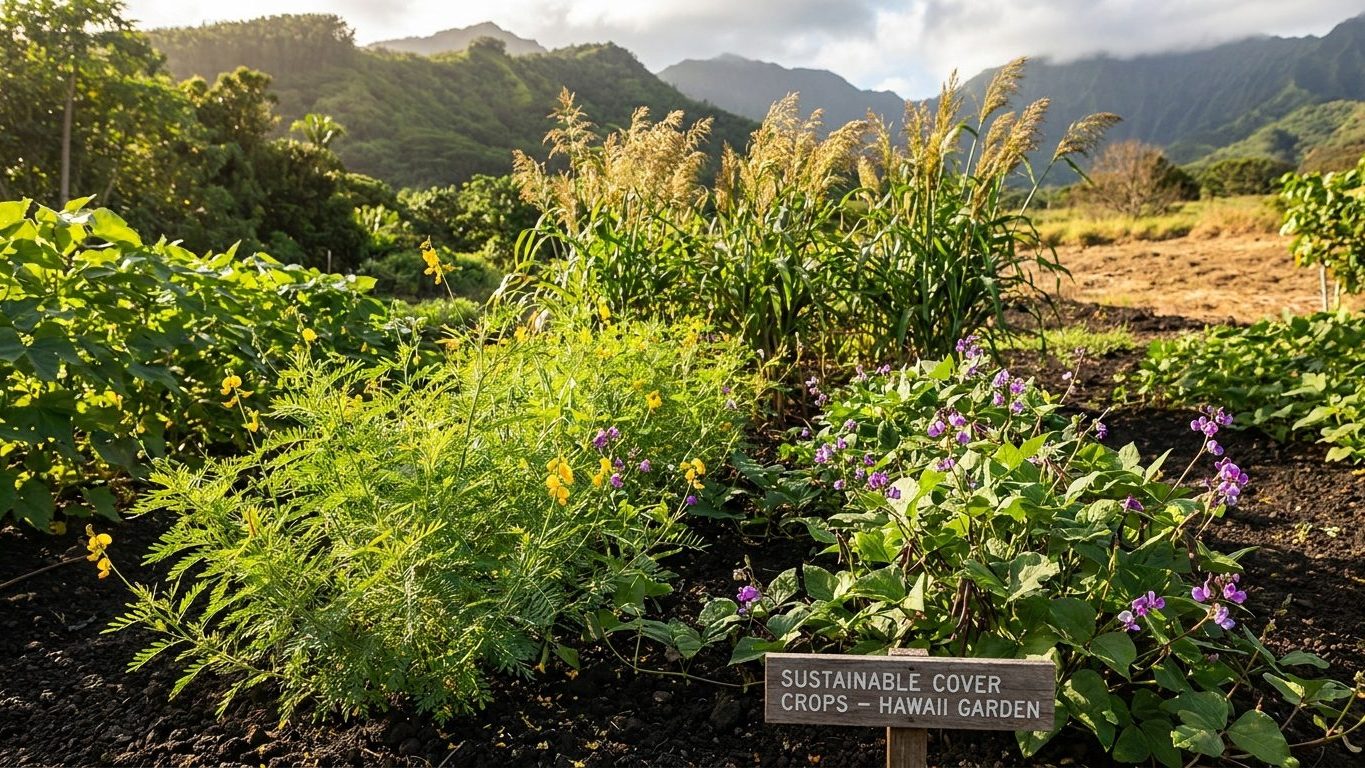

Cereal rye is the cover crop that works almost everywhere in Iowa, from the coldest counties near the Minnesota line to the milder ground around Des Moines. It survives winters that kill off gentler options, and it forgives a late planting date after corn or soybean harvest. Oats and brassicas fill in as short-season, winterkill alternatives where a farmer wants residue but not a spring termination pass.
The short answer for Iowa
Start with the two numbers that actually drive this decision: a first fall frost landing anywhere from October 14 to October 25, and a coldest-month average minimum of 13.8°F. That combination rules out anything that needs a long, mild fall to establish, and it rules out anything that can’t shrug off a mid-teens winter. Cereal rye clears both bars easily. It germinates fast in cool soil, keeps growing after a light frost, and its winter-hardiness rating puts it well below the 13.8°F threshold this state sees in its coldest month.
For growers who want a cover crop that dies on its own and never needs spring termination, oats are the standard pick. Planted in late summer after a small grain or early silage corn, oats put on rapid fall growth and then winterkill cleanly once temperatures drop into the teens, leaving a mat of residue without a herbicide or tillage pass the following spring. Brassicas like forage radish work the same way here: reliable fall growth, clean winterkill, and a taproot that breaks up compaction before the plant gives out.
If the goal is nitrogen credit for the next corn crop, a legume matters more than a grass. But this is where the frost math gets less forgiving. Legumes need more calendar time to fix meaningful nitrogen than either rye or oats need to just survive, and Iowa’s fall frost window doesn’t leave much room after a full-season soybean harvest. That pushes the practical legume choice toward whichever variety establishes fastest in the specific weeks available in a given county, which is a detail this state-level page can’t settle on its own.
Cereal rye, oats, and forage radish cover the three most common goals: winter survival with spring biomass, clean winterkill with no termination hassle, and compaction relief. Anything built around a long fall growing season or a mild winter is fighting the climate data for this state before it’s even in the ground.
What will not work here
Warm-season and tropical cover crops are the first thing to cross off the list. Species like cowpea or sunn hemp are marketed on cover-crop mixes nationally, but they need a long stretch of frost-free days after a summer planting to do anything useful, and Iowa’s fall frost arriving between October 14 and October 25 simply doesn’t give them the runway. Plant one of these after wheat or an early-silage cutting and it may put on a few weeks of growth before frost stops it cold, with little biomass and no nitrogen contribution to show for the seed cost.
Hairy vetch sits in a gray zone that’s worth naming directly. It’s a legume many Corn Belt guides recommend for nitrogen credit, and it can overwinter fine in the milder parts of this hardiness range. But the coldest-month average minimum of 13.8°F is close to the edge of what hairy vetch reliably tolerates, and in the colder pockets of the state’s 4b-6a hardiness spread, stand loss over winter is a real risk rather than a rare one. A grower betting a full field on vetch alone, without a rye backup, is betting against the thermometer.
Crimson clover has the same problem, only more pronounced. It’s a common cover crop recommendation in the Southeast and mid-Atlantic, where winters rarely dip anywhere near 13.8°F, but it’s not consistently winter-hardy at that temperature. Planted here expecting a clover that regrows in spring, a grower is more likely to find a thin, patchy stand or none at all.
On the humid side, thick brassica stands drilled at aggressive seeding rates can run into foliar disease pressure during Iowa’s wet, humid late summers, the same weeks when soybean and corn canopies are already dealing with their own fungal issues. A cover crop planted too dense, too early, in a wet August is inviting the same problems as an overcrowded garden bed. None of these failures are about bad luck. They’re about species whose baseline requirements don’t match this state’s frost dates and winter lows.
What changes across Iowa
Iowa is not one climate for cover-crop purposes. The USDA Plant Hardiness Zone Map places the state across a 4b-6a range, and that spread matters more here than the state-level frost dates suggest. A cover crop that reliably survives winter near Des Moines, which sits toward the milder end of that range, is not guaranteed to survive the same winter in a county tucked against the Minnesota border, where 4b conditions are common.
This isn’t a small technical difference. Zone 4b winters run colder than zone 6a winters by a margin that can decide whether a marginally hardy legume like hairy vetch comes back in spring or doesn’t. A grower in the northern tier of the state should treat any cover crop rated for hardiness right at the edge of this range with more caution than a grower near the Missouri border would need to. Cereal rye and oats, both bought with cold margin to spare, don’t run into this problem. Legumes and less cold-tolerant grasses do.
Elevation plays a smaller role in Iowa than in mountain states, but local topography still matters at the field level. Low-lying ground and frost pockets along river bottoms can see frost arrive earlier and linger later than the surrounding uplands, shifting the practical planting and termination windows by a week or more even within the same county.
None of this points to a single statewide answer for anything beyond the two or three toughest species. Given a 4b-6a range, the honest answer is that species selection at the margin, meaning legumes and less hardy grasses, needs to be checked against local conditions rather than assumed from a state average. The next section covers exactly where to check that.
Where to check this for your own county
This page can responsibly name what works at the state level: cereal rye as the reliable winter-hardy default, oats and forage radish as clean winterkill options. What it can’t responsibly do is tell a grower in a specific county which legume variety will establish in the exact weeks available after that county’s typical harvest date, or whether a borderline-hardy species will survive that county’s particular winter minimum.
That’s a job for Iowa State University Extension and Outreach. County-level extension offices publish planting calendars built around local frost data rather than the airport-station averages used for a statewide overview like this one, and they track which varieties have actually been trialled on local soils, not just which ones are rated for the broader region on a seed tag.
Two things are worth asking for specifically. First, the local planting window for whichever cover crop is under consideration, since the airport-based frost dates cited on pages like this one tend to run on the optimistic end compared to county-level records; Iowa State’s own long-term county figures typically show later spring frosts and earlier fall frosts than the reference station used here. Second, any variety trial results for that crop in the reader’s own county or a neighboring one, since seed-tag hardiness ratings are a starting point, not a local guarantee.
A county recommendation beats a state recommendation every time there’s a real conflict between them. This page gives the state-level picture, useful for narrowing down which species are even worth considering. The county extension office gives the local calendar that decides the planting date itself.
Checking this against your own garden
Every date on this page is a probability built from decades of station data, not a promise about this particular fall or next spring. A grower’s own observations in the field will always beat a calendar date, because they reflect what’s actually happening in that soil, that year.
Soil temperature by feel is the first check. Cover crop seed, especially small-seeded brassicas, germinates poorly in soil that still feels cold and damp rather than just cool. If the ground feels noticeably colder than the air around it in early fall, germination and establishment will lag behind what the calendar suggests, and a slightly earlier planting date is worth considering the following year.
Watching how a cash crop finishes matters just as much. A corn or soybean field that dries down and comes off earlier than usual opens a longer window for fall-planted cover crops to establish before frost, while a late, wet harvest compresses that window regardless of what the average frost date says.
Finally, watch how a stand actually responds to the first hard frost. A cover crop that browns and stops growing right at the first light frost is behaving as expected for a tender species; one that keeps pushing new growth afterward is showing real cold tolerance in that specific field, which is useful information for planning the next planting decision, whatever the seed tag or the state average says.