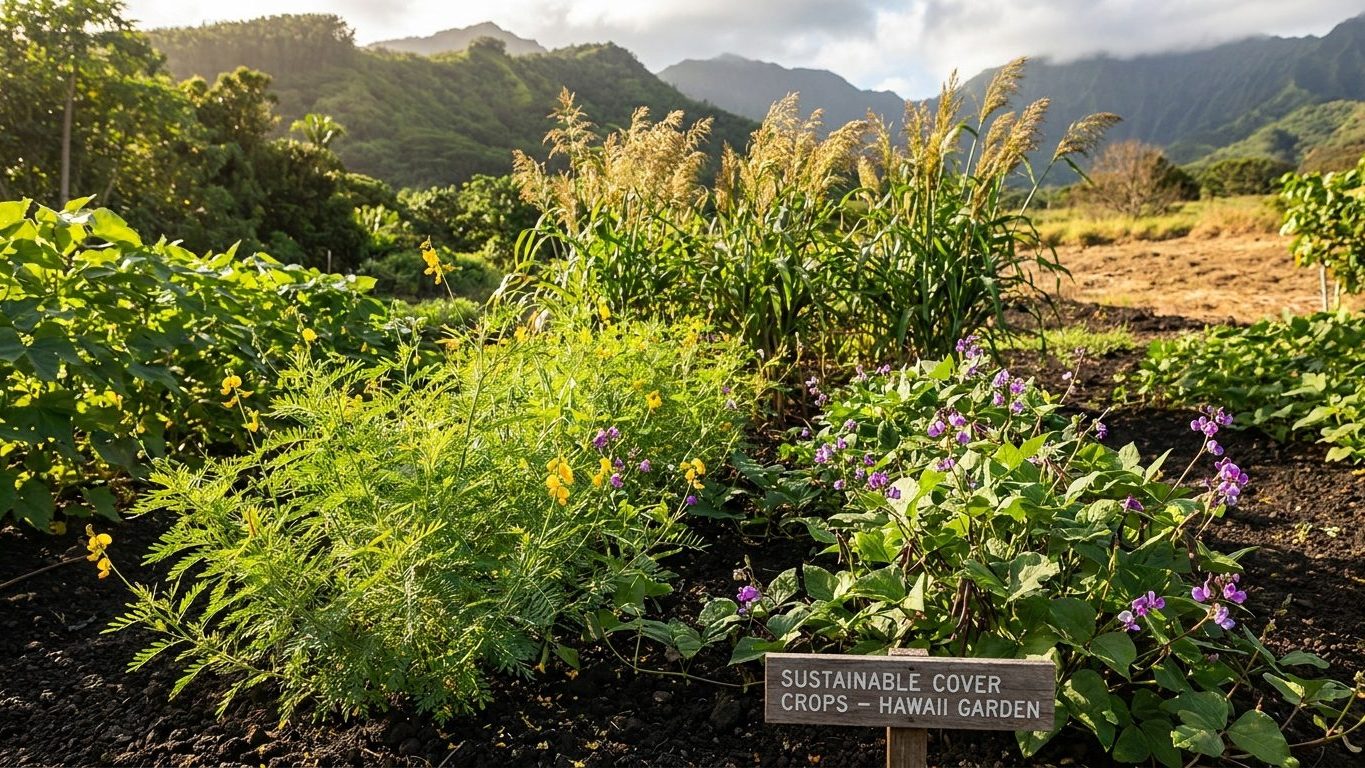

Cereal rye, hairy vetch, and crimson clover top the list for most of Kansas, with oats and daikon radish filling the gap when a fall planting window is too tight for anything slower. Which one wins depends less on personal preference than on how many frost-free days are left on the calendar and how cold that first real winter month gets.
The short answer for Kansas
Kansas gardeners and growers work with a last spring frost that falls between April 4 and April 18, and a first fall frost between October 23 and November 2, both drawn from the 1991-2020 NOAA Climate Normals at the reference weather station. That gives a frost-free stretch of roughly six months at that station, but the number that actually decides which cover crop survives the winter is the coldest month’s average daily minimum: 22.5°F. That’s not a record low, it’s the mean nightly floor in the coldest month, and it’s the figure that separates a cover crop that shrugs off winter from one that turns to mush in January.
Sorted by type, the picture looks like this. Cereal rye is the safest winter-hardy grass for almost any Kansas field or garden bed planted after a summer crop comes out, because it germinates in cool soil, keeps growing on mild days, and tolerates the 22.5°F mean minimum without issue. Hairy vetch is the legume equivalent: slower to establish than rye, but it fixes nitrogen and survives winter reliably east of the drier western counties. Crimson clover works too, but it’s the marginal case here, more reliable in the milder pockets of the state than in the coldest ones, a distinction the next section covers in more detail.
For a fast fall cover with no ambition to survive winter, oats and daikon or forage radish are the practical picks. Both germinate quickly in warm soil, put on rapid top growth before the October 23-November 2 frost window arrives, then winterkill cleanly, leaving a loose, decomposed mat by spring with no green material to terminate. That’s an advantage for anyone planting a spring garden or field crop right after: nothing to mow, spray, or till under before April.
Summer gap-fillers, meanwhile, belong to a third category entirely. Cowpeas, sorghum-sudangrass, and buckwheat are the standard choices for the stretch between a spring vegetable or grain harvest and the fall planting window, since they need warm soil to germinate and can’t handle any frost at either end. None of them are winter-hardy, and none should be planted expecting them to carry through to spring.
What will not work here
The failures in Kansas cover cropping mostly trace back to one number: that 22.5°F average nightly minimum in the coldest month. Berseem clover, a legume that performs well in milder climates, generally does not survive a Kansas winter. It’s not built for repeated nights near or below that mark, and growers who plant it expecting a vetch-like overwintering stand are usually disappointed by February.
Sunn hemp is a similar story from the opposite direction. It’s a fast, biomass-heavy summer cover crop, but it needs sustained heat and a long runway to bulk up before frost. Planted late into a Kansas fall, after the first frost date of October 23-November 2 starts closing in, it simply runs out of season. The same logic sinks any subtropical or tropical-origin cover crop planted after midsummer here: the growing window between “warm enough to germinate” and “first frost” is not generous enough to let them reach the biomass that makes them worth planting in the first place.
On the other end, some cover crops fail by being too tough, not too tender. Annual ryegrass can overwinter so reliably in the milder parts of Kansas that it becomes difficult to kill in spring, competing directly with whatever crop or planting follows it. In a state where the hardiness range stretches from 5b to 7a, that’s a real regional risk: the same seed that winterkills cleanly in the coldest counties can turn into a spring weed problem in the mildest ones.
Slow-establishing perennials are the third category that trips people up. Sweetclover and other biennial legumes need a full second season to reach the biomass and root development that make them worthwhile, which doesn’t fit a rotation built around a single cash crop’s calendar. And anything marketed as needing regular irrigation to establish, certain clover mixes among them, runs into trouble in the drier western third of the state, where a cover crop competing with a cash crop for scarce water is rarely worth the tradeoff.
What changes across Kansas
Kansas spans USDA Hardiness Zones 5b through 7a, a range built on one variable: the average annual extreme minimum temperature. That’s a meaningful spread inside a single state’s borders, and it means there is no single cover crop answer that applies from the Colorado line to the Missouri border without adjustment.
The reference figures in this article, the April 4-18 last frost, the October 23-November 2 first frost, and the 22.5°F coldest-month minimum, come from one station. Zone 7a conditions, generally milder and closer to that reference point, support crimson clover and annual ryegrass with fewer winterkill surprises. Zone 5b conditions, more common at higher elevation and in the northwestern part of the state, push those same species closer to their survival limit, and favor cereal rye and hairy vetch instead, since both tolerate a harder freeze with more margin.
Elevation compounds the difference. Higher ground in western Kansas tends to see frost arrive earlier in fall and linger later in spring than the reference station’s dates suggest, sometimes by one to two weeks. That shortens the effective planting window for a fall cover crop and narrows the choice further toward fast-germinating, quick-establishing species like oats or radish rather than anything that needs weeks of warm soil to get going.
None of this tells an individual reader which zone they’re standing in. The USDA Plant Hardiness Zone Map is the tool for that, and it’s worth five minutes of checking before committing a whole field or garden bed to a cover crop chosen off a statewide average.
Where to check this for your own county
Kansas State Research and Extension is the source that turns this state-level guidance into something specific to a single county. This article works from one reference station’s frost dates and one hardiness zone range covering the entire state; the extension service works from county-level trial data and local planting calendars that account for the exact elevation, soil type, and microclimate of a given area.
Two things are worth looking for once there. The first is a county or regional planting calendar, since the frost window on this page, April 4-18 for the last spring frost and October 23-November 2 for the first fall frost, comes from a single airport weather station and can run one to two weeks off from a rural or suburban location, especially at higher elevation. The second is a list of cover crop varieties actually trialled in or near the reader’s county, since seed performance for hairy vetch, crimson clover, or cereal rye can shift meaningfully across the 5b-to-7a range this state covers.
A county recommendation beats a state one every time, for a simple reason: it’s built on data closer to the actual field or garden in question. This page describes Kansas as a whole, using one reference station and one statewide hardiness range, because that’s the level a state-wide article can responsibly speak to. The extension office fills in the gap between “the state usually does this” and “your county does this,” and that gap is exactly where a planting decision either pays off or wastes a season of seed.
Checking this against your own garden
Every date on this page is a probability, not a guarantee, and the ground itself gives better information than any calendar once the season actually arrives. Three things are worth watching directly.
Soil warmth by feel is the first. Cover crop seed that needs warm soil to germinate, cowpeas or buckwheat among them, will sit and rot in cold, wet ground even after the calendar says the frost risk has passed. Reaching a hand into the top couple of inches and finding it consistently warm and dry enough to crumble, rather than cold and clammy, is a better signal than the date on a seed packet.
The first flush of weed growth in an unplanted bed or field edge is the second. Weeds respond to the same soil temperature and moisture cues as a cover crop would, and a sudden burst of germinating weeds after a quiet patch is often the ground announcing that conditions have turned favorable, days or even weeks before an official planting-window date would suggest it.
The first true leaves on an already-drilled cover crop stand are the third. Rye or oats that push past the initial seed-leaf stage and into true leaves quickly are growing in conditions that suit them; a stand that stalls at that stage, especially after a cold snap, is a sign the local microclimate is running colder or wetter than the reference figures on this page would suggest, and that next season’s timing should shift accordingly.