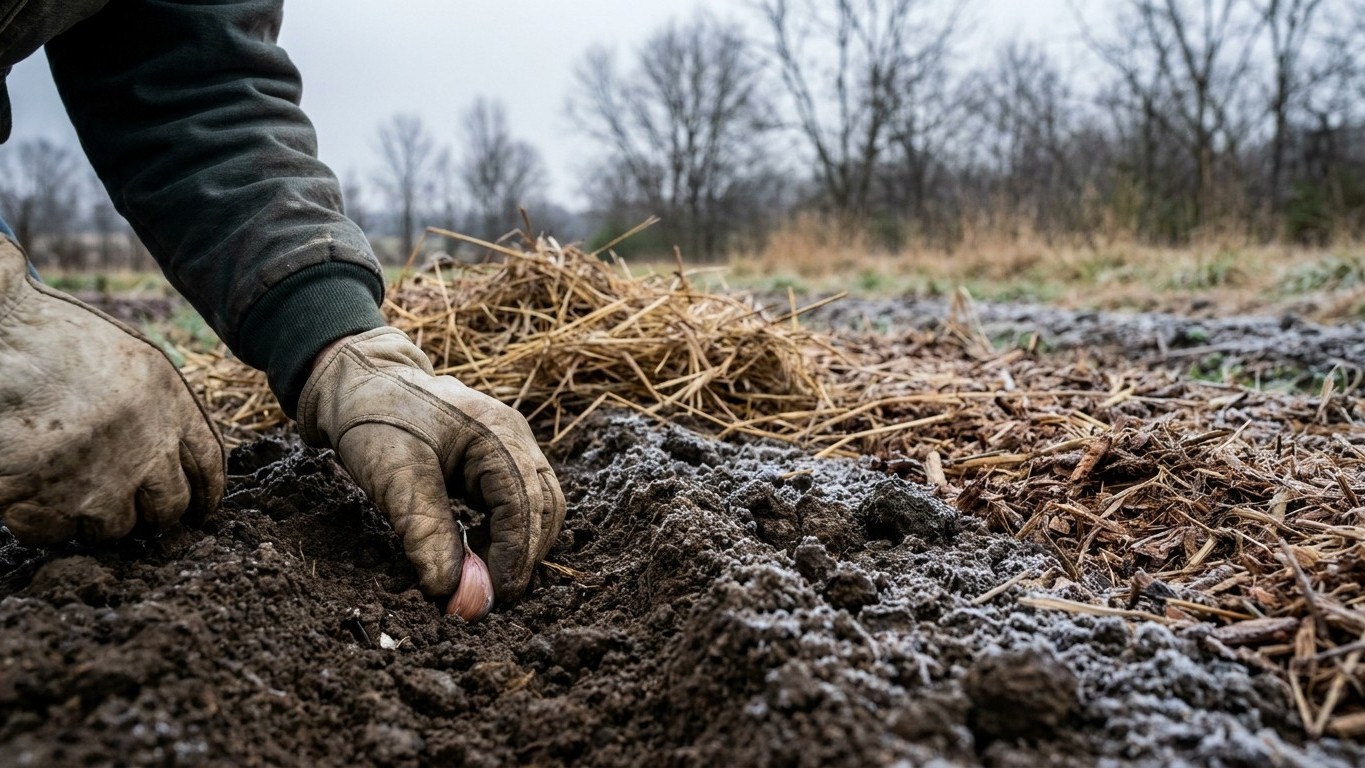

By the first week of November, most of Kentucky has already crossed its average first fall frost or is sitting right inside it. That single fact reshapes the whole month: outdoor planting narrows down to garlic and shallots, cold-frame greens, and dormant bare-root stock, while the real work shifts to pruning, soil, and next season’s seed order. The state spans USDA Hardiness Zones 6a to 7a, so the exact cutoff moves depending on where you garden.
What goes in the ground in November

NOAA’s 1991-2020 climate normals put the first fall freeze for the Louisville reference station between November 2 and November 12. That window matters more than any date on the calendar, because soil temperature and air temperature don’t always move together. A mild stretch of 60-degree afternoons can mask soil that’s already cooled past the point where roots establish well. The decision isn’t “is it November,” it’s “has the ground frozen yet, and will it stay that way.”
Garlic and shallot cloves are the exception to almost everything else this month. Both want a cold period to develop properly, and planting them into cooling but still workable soil, then mulching heavily, is standard practice across the state. Bare-root fruit trees, roses, and cane berries can also go in once they’re dormant, since they aren’t trying to grow, just settle their roots before winter locks the ground. Cold frames and low tunnels extend the season for greens that were already established before frost, rather than starting anything new from seed outdoors.
| Task | Timing window | Why it works now |
|---|---|---|
| Garlic and shallot cloves | Before ground freezes solid | Needs a cold period to bulb properly next summer |
| Bare-root trees, roses, canes | After leaf drop, while soil is still workable | Roots settle without top growth to support |
| Cold frame and low tunnel greens | Established plants only, before hard freeze | Protects existing growth, doesn’t push new seedlings |
Everything else, tomatoes, peppers, squash, beans, is finished for the season once that first freeze window passes. There’s no gambling those back into production. If your garden sits in a warmer pocket, western Kentucky’s Jackson Purchase region tends to lag the mountains by a couple of weeks, but the general rule holds statewide: once frost has settled in, the list of what’s safe to plant gets short and stays short until spring.
What to start under cover
Most seed-starting math runs backward from the last spring frost, which falls between March 24 and April 4 for the same reference station. Onions and leeks, which typically need ten to twelve weeks indoors before transplant, land their start date in January at the earliest. Starting them now, in November, means months of sitting under lights getting leggy and rootbound long before the ground is ready for them. That’s the first failure mode worth naming plainly: too early is just as costly as too late.
What does make sense under cover this month is different from spring seed-starting entirely. Winter sowing, planting hardy perennial and native seeds into vented containers left outdoors or in a cold frame, uses the coming cold as the germination trigger rather than something to avoid. Milkweed, coneflower, and many other perennials need that stratification period, and sowing them now in a sheltered spot lets nature do the work through winter, with germination showing up naturally as temperatures climb in spring.
Indoors, this is also the month for forcing bulbs, amaryllis and paperwhites are the common choices, and for keeping a steady rotation of microgreens or sprouts going under grow lights or on a sunny windowsill. Neither needs a frost calculation at all, since they’re grown start to finish in a controlled space. The second failure mode to watch is treating a cold frame like a heated greenhouse: seedlings started under cover too late in the month, expecting warmth that won’t come again until spring, simply stall out.
What is ready to pick
Outdoor harvests thin out fast once frost sets in, but they don’t disappear. Kale, collards, and Brussels sprouts actually sweeten after a freeze, as the plant converts starches to sugars in response to cold, so leaving them in place through a light frost or two is usually the better call than rushing to harvest early. Leeks handle freezing soil well and can often be pulled through a covering of mulch or even light snow later in the season.
Cold frames extend the picking window for lettuce, spinach, and mache that were established before the hard freeze hit, and a well-sealed frame can keep producing small harvests for weeks past what open ground allows. Herbs like parsley and sage often survive a light frost outright and are worth checking before writing them off.
Indoors, sprouts and microgreens fill the gap for households wanting something fresh weekly regardless of what’s happening outside. This is also the month to go through stored squash, potatoes, and onions with a critical eye. Soft spots, sprouting eyes, or a sweet fermented smell mean that item needs to be used or composted now, before it spreads rot to the rest of the bin. A single soft squash left in storage can take down everything touching it within a couple of weeks.
The jobs that matter this month
Dormant pruning of fruit trees and cane berries is one of the highest-value jobs on the November list. Once leaves have dropped and the plant is fully dormant, pruning cuts won’t trigger new growth that frost would only kill later, which is exactly the mistake to avoid earlier in fall. This is also the window for seed ordering. Popular heirloom varieties and specific rootstocks sell out well before spring, and gardeners who order in November get first pick rather than leftovers.
Soil testing pays off now too, since results come back in time to plan amendments before spring planting, and lime in particular needs months to adjust pH, so applying it in fall rather than spring actually works with the timeline rather than against it. Turning compost keeps the pile active through cooler weather instead of letting it stall, and it’s worth doing before the pile freezes solid.
Tool maintenance is easy to skip and expensive to regret. Cleaning soil off pruners and shovels, sharpening blades, and oiling metal parts before a season of sitting idle prevents rust and keeps tools cutting cleanly come spring. Beds and fencing deserve a walk-through too: repairing what winter weather would otherwise finish breaking is far cheaper now than replacing it later. Rounding it out, mulching newly planted garlic, wrapping young tree trunks against rodents and frost cracking, and draining outdoor hoses and irrigation lines before a hard freeze are all small jobs that prevent much bigger losses.
What not to do in November
The most common mistake is trusting a warm afternoon over the calendar and soil conditions together. A run of 65-degree days can tempt gardeners to leave tender crops uncovered or even attempt a late warm-season planting, but a single freeze night erases that gamble instantly. Soil temperature lags behind air temperature by days, sometimes longer, so a mild stretch doesn’t mean the ground has actually warmed.
Pruning too early, before a tree or shrub is fully dormant, is another classic error. Cuts made while a plant still has active growth can stimulate new shoots that have no time to harden off before real cold arrives, and those tender shoots are usually the first casualty of the next freeze. The fix is patience: wait for full leaf drop and a stretch of consistently cold weather before reaching for the pruners.
Nitrogen fertilizer applied late in fall causes a similar problem, pushing soft new growth right when the plant should be shutting down for winter. That new growth is weak and freeze-prone, and it can weaken the whole plant heading into the coldest months. And cold frames deserve a mention here too: opening them to vent on a mild day and then forgetting to close them before evening is a fast way to lose everything inside to a single overnight freeze.
Checking this against your own county
A statewide frost window is a starting point, not a personal forecast. Kentucky’s hardiness zones run from 6a to 7a, and elevation changes in the eastern mountains, along with the difference between the Jackson Purchase in the far west and the Appalachian counties in the east, can shift frost timing by real, meaningful margins. A garden in a valley can also trap cold air and freeze well before a hillside garden a few miles away. For a planting calendar built around your specific county, the University of Kentucky Cooperative Extension Service is the source to check before finalizing any planting date.
Common questions
Can I still plant garlic in Kentucky in November?
Yes, as long as the ground remains workable and hasn’t frozen solid. Garlic actually benefits from going in during this cooling window, since it needs a cold period to develop bulbs the following summer. Mulch heavily after planting to buffer temperature swings.
Will a light frost kill my kale and collards?
No. Both crops tolerate frost well and often taste better afterward, as cold triggers the plant to convert starches into sugars. A hard, prolonged freeze is a different story, but a light frost or two is not a reason to harvest early.
Is it too late to start seeds indoors for spring?
For most transplants like onions and leeks, yes, it’s too early rather than too late. Counting back from the last spring frost window of March 24 to April 4, most seed-starting dates fall in January or later. Starting now risks leggy, rootbound seedlings sitting under lights for months.
Should I prune my fruit trees in November?
Only once the tree is fully dormant, meaning all leaves have dropped and growth has stopped for the season. Pruning too early can trigger new shoots that won’t survive the coming cold.
Gardeners who plant by the Moon can check the November 2026 moon planting calendar, a tradition rather than a proven method.
Related guides
Elsewhere? See what to plant in November in every state and province.