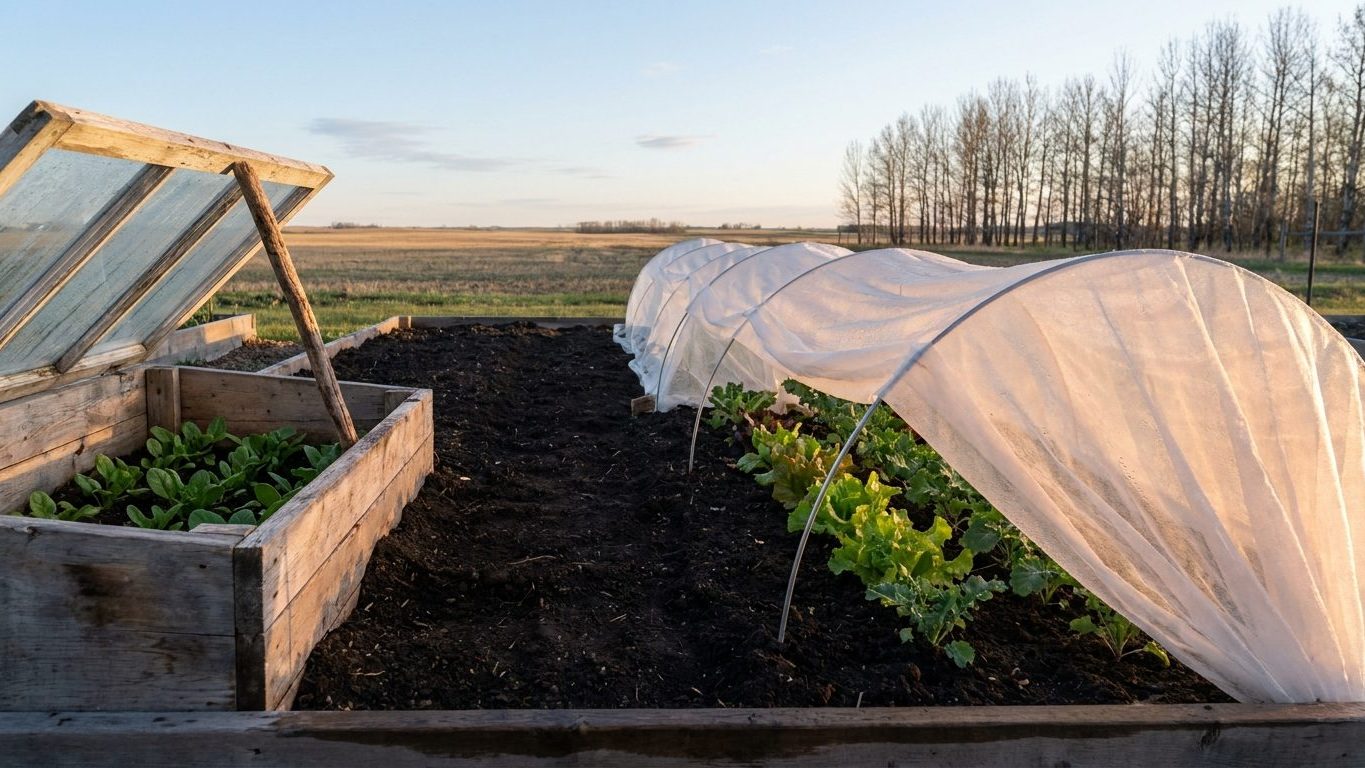

Floating row cover and low tunnels do most of the work in Kentucky. Cold frames handle winter greens, and a high tunnel pays off for gardeners ready to invest. The reason is the calendar. In Louisville, the last spring freeze falls between March 24 and April 4, and the first fall freeze between November 2 and November 12. Those gaps are small enough that light, cheap protection beats heavy hardware.
The short answer for Kentucky
Start with lightweight row cover, add hoops and clear plastic when you want a bigger jump on spring, and keep a cold frame for greens through winter. That order follows the numbers. The dates above come from NOAA’s 1991-2020 Climate Normals for Louisville, and they are a probability band, not a deadline. They mark where the chance of a 32°F freeze sits between 30 and 70 percent. Some years the last freeze comes earlier, and some years it comes later.
The other number that shapes the answer is 27.8°F, the mean daily minimum of Louisville’s coldest month. A typical January night dips only a few degrees below freezing. That is cold enough to kill tomatoes and basil, but spinach, kale and similar hardy greens can ride it out, especially with a layer of fabric or glass over them. Averages hide the bad nights, of course, so cover is insurance against the cold snap, not a promise of growth.
Here is how the main options compare for a Kentucky garden:
| Extender | Best use here | Watch for |
|---|---|---|
| Floating row cover | Frost nights in March, April and early November; protects transplants and fall greens | Gives a few degrees of protection, not a hard-freeze shield |
| Low tunnel (hoops plus plastic) | Starting spring crops earlier; carrying fall crops past the first freeze | Overheats on sunny days; needs venting |
| Cold frame | Winter greens, hardening off seedlings | Lid must be propped open on mild days |
| High tunnel | Serious production across shoulder seasons | Cost, anchoring against wind, summer heat management |
For a broader look at how these tools fit together, see Extending the Growing Season in Kentucky. For timing the covers themselves, When to Cover Your Garden in Kentucky picks up where this page leaves off.
What will not work here
Trusting March 24 as a safe planting date is the first mistake. It is the early edge of a band, and the band runs to April 4. A gardener who sets out tomatoes on the earliest date with no cover is betting against a probability that still leaves real odds of another freeze. Peppers and tomatoes set out that early will also sit in cold soil and stall, covered or not.
Sealed plastic is the second failure, and Kentucky’s humid summers and mild spells make it worse. A closed low tunnel on a sunny day in late March can cook seedlings in an afternoon. Trapped humidity then invites fungal disease, and crowded plants under plastic are the first to show it. Close spacing that works in a dry climate becomes a liability under cover in a humid one. Give crops room and open the ends on any day that feels mild.
Starting crops from seed in November is a third dead end. The first fall freeze arrives November 2 to 12, and by then days are short enough that growth has nearly stopped. Cover is for protecting what is already near harvest size, not for starting a crop late. If kale or spinach is not established by early autumn, a cold frame will mostly keep it alive, not growing.
Heated greenhouses for warm-season crops through winter are a poor trade too. With a coldest-month minimum of 27.8°F, the gap between outdoor temperature and what tomatoes need is wide, and closing it with fuel or electricity costs far more than the harvest is worth. Winter in Kentucky suits hardy greens, not summer fruit.
Finally, rural gardeners should not copy the Louisville numbers directly. NWS Louisville warns that its urban station behaves differently from the surrounding rural parts of Jefferson County. Out in the country, plan on a tighter window: a later last freeze in spring and an earlier first freeze in fall than the city figures suggest.
What changes across Kentucky
Kentucky is not one garden. The USDA Plant Hardiness Zone Map (2023, based on 1991-2020 data) puts the state at 6a to 7a, which spans three half-zone steps. That zone system rests on one variable, the average annual extreme minimum temperature, so it tells you about winter survival, not about how many frost-free weeks you get. There is no single answer for the whole state, only a spread.
The dates on this page belong to Louisville, at 38.18 degrees north. Gardeners in the northern tier, or on higher ground anywhere in the state, should expect to lean toward the colder end: start covers later in spring, put them back on earlier in fall, and treat the Louisville window as optimistic. The warmer and lower end of the range gets a little more slack, though still not a guarantee. Near the edge of the state, check your own latitude rather than borrowing Louisville’s.
Latitude matters for more than warmth. Day length, not temperature, tells an onion when to stop making leaves and start making a bulb, so a variety suited to one latitude can underperform several degrees away. Season extension does nothing to change that. If you are far north or south of Louisville, look at what your county grows before buying sets or seedlings.
Which zone applies to you is not something this page can say. Look up your location on the USDA Plant Hardiness Zone Map and read your own result, then use it to decide how much slack to build into cold-season plans.
Where to check this for your own county
The best next stop is University of Kentucky Cooperative Extension, the state’s land-grant extension service. Every county has an office, and its agents work from local frost records and local trial results, not from one reference city. A county recommendation beats a state one, and this page is the state one.
When you get there, look for two things. The first is the local planting calendar for vegetables, ideally one that gives spring and fall dates for your county rather than a single statewide table. The second is the list of varieties trialed in your county or nearby. A variety that performs well under row cover in one part of Kentucky may bolt, split or sulk in another, and trial results save a season of guessing.
Ask the county office, too, how their frost dates compare with the Louisville normals used here. Agents know which parts of the county run colder, which hollows hold frost, and which crops local growers have given up on. That kind of knowledge never makes it into a statewide page.
This page does not have county-level planting calendars or variety trial data, and it would be wrong to guess at them. The dates here describe Louisville’s probabilities. Your county may sit a week earlier or later on either end.
Checking this against your own garden
Your own observations outrank every date above. Three things are worth watching, and none needs equipment.
- Soil warmth by feel. Push your hand into bed soil in the morning. If it feels cold and clammy, warm-season seedlings will sit and sulk even when the air is mild. A bed that feels warm earlier than the neighbor’s sits in a sunnier or better-drained spot, and that bed can start first.
- The first male flowers on squash. Male blooms open ahead of female ones, so their arrival signals that plants have settled in and warmed up. If yours show up later than expected, your garden is cooler than the calendar assumes.
- First true leaves. The leaves that follow the seed leaves show a seedling is truly growing. In a cold frame or tunnel, watch how quickly they appear against an uncovered row. A big gap tells you the cover is earning its keep.
Write the dates down for a season or two. A low corner that gets frost a week before the rest of the yard will teach you more than any normals table, and those notes make the county advice from extension far easier to apply.
Common questions
Is a high tunnel worth it in Kentucky?
For a serious grower, often yes, since it stretches both ends of the season and keeps rain off crops. For a small backyard, low tunnels and cold frames cover most of the same gap at a fraction of the cost. Summer heat inside a high tunnel needs managing with vents or side walls.
How much protection does row cover give?
A few degrees, depending on the fabric weight. That helps on a borderline night near the freeze threshold but will not save tender plants in a hard freeze. Check the manufacturer’s rating and add a second layer or hoops with plastic when a deeper freeze is forecast.
Can I grow vegetables through a Kentucky winter?
Hardy greens, yes, with a cold frame or tunnel. Louisville’s coldest-month mean minimum is 27.8°F, which they tolerate, but growth is slow and cold snaps can run well below average. Plan to harvest what you planted in early fall, not to start new crops in midwinter.
Do the Louisville frost dates apply to my rural garden?
Not directly. NWS Louisville notes that its urban station differs from surrounding rural areas, and rural gardens should expect a tighter window. Use the Louisville dates as a starting point, then check your county extension office for local figures.