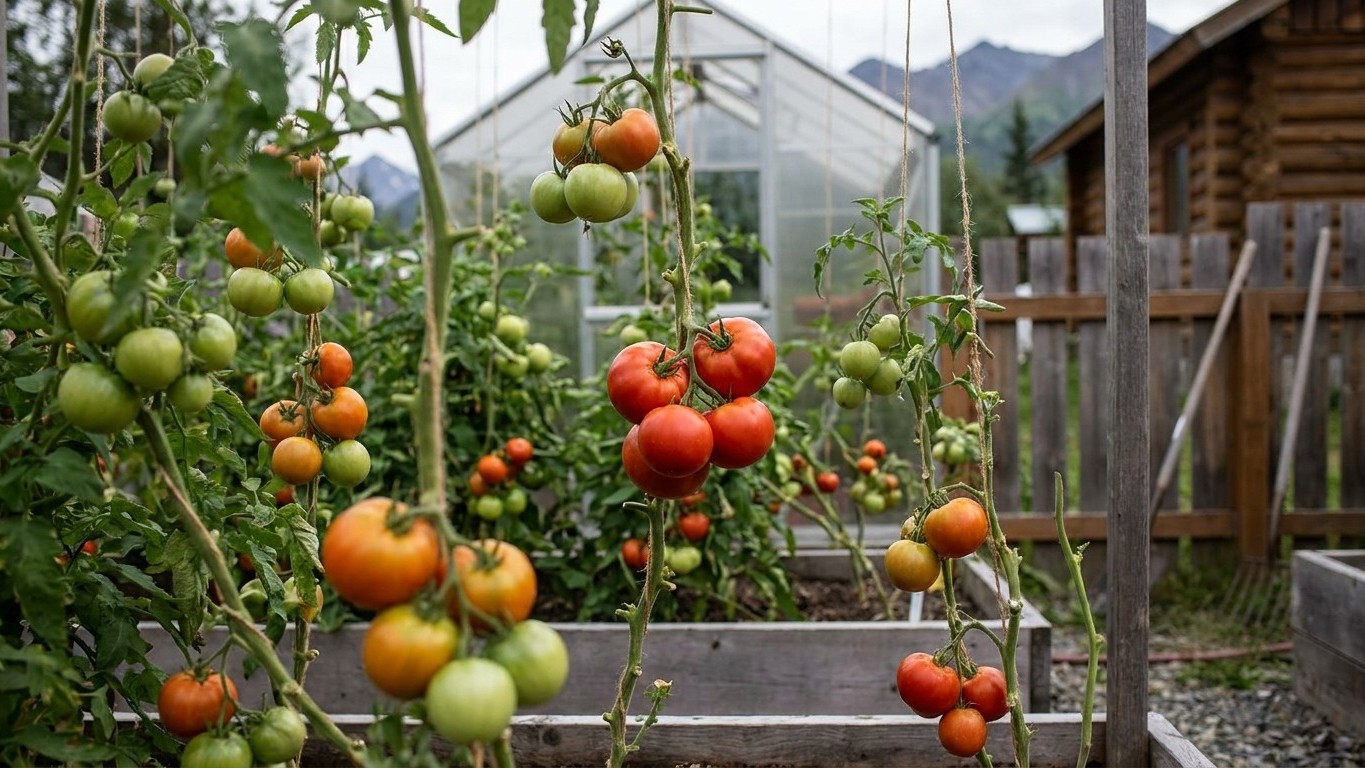

The short answer: get your tomatoes off the vine before the first fall frost lands, and for most of Kentucky that means treating early November as your hard deadline, not a suggestion. Everything ripening on the plant after that point is a gamble. The real work is knowing which fruit to pull green, which to leave for one more warm week, and how to finish the job indoors without losing flavor or texture.
When to Pick Tomatoes in Kentucky
Frost doesn’t announce itself with a calendar date. NOAA’s climate normals for the Louisville station put the first fall freeze somewhere between November 2 and November 12, based on the 1991-2020 record. That’s a ten-day band, not a single night, and it reflects the range where a 32°F freeze has a 30 to 70 percent chance of happening. Some years the freeze shows up on the early edge, some years it holds off past the middle of the month. Neither outcome is unusual.
The National Weather Service office covering Louisville has flagged something gardeners outside the city need to factor in: the station itself sits in an urban heat pocket, so it tends to report later spring frosts and earlier fall frosts than the rural county around it. If you’re gardening outside the metro core, in Jefferson County’s outer edges or beyond, your actual frost-free window is probably tighter than the Louisville numbers suggest. Practically, that means treating late October as the point to start pulling anything close to ripe if you’re rural, rather than waiting for the calendar to hit November.
Why the state doesn’t share one answer
Kentucky spans USDA Hardiness Zones 6a to 7a, according to the USDA Plant Hardiness Zone Map. That system is built on a single measurement, the average extreme minimum winter temperature, so it doesn’t map directly onto fall harvest timing, but it does explain why one statewide date is misleading. Louisville is the reference point for the frost data cited here. Western Kentucky, at lower elevation and closer to the Mississippi, tends to stay frost-free a bit longer. The mountainous east and the higher ridges of the Bluegrass region cool off sooner. If you garden outside the Louisville area, use the published window as a starting point and adjust based on how your local microclimate has behaved in past years.
The practical trigger for picking isn’t just the calendar. Watch the extended forecast once you’re inside that early-to-mid-November band. The first night a freeze warning appears, that’s harvest night, not the following morning. A light frost can still damage fruit even before the hard freeze arrives, so err early rather than late.
What to do with the green ones
Not every tomato left on the vine when frost threatens is worth bringing inside. Sort as you pick, because the sorting decision determines what happens next.
- Mature green fruit has reached full size, the skin has turned pale green to whitish-green, and a faint blush of pink or yellow may already be visible at the blossom end. These ripen reliably indoors.
- Immature green fruit is still small, dark green, and firm all the way through. These rarely ripen well and are better used fried, pickled, or in green tomato relish rather than held for ripening.
- Damaged or split fruit should be used immediately or discarded from the ripening batch, since a bruise or crack becomes a rot entry point once it’s stored in a warm spot.
Once frost is imminent, strip the plant rather than leaving anything on the vine “just in case.” A single freeze turns fruit tissue to mush from the inside, and there’s no recovering it once the cell walls rupture. Pick with the stem attached if possible; a tomato that loses its stem cap heals over more slowly and is more prone to soft rot in storage.
Wipe off garden soil with a dry cloth rather than washing the fruit before storage. Moisture on the skin encourages the same rot organisms that ruin a ripening batch overnight. If a tomato does need washing because of heavy mud, dry it completely and use it within a day or two rather than setting it aside for slow ripening.
Whole uprooted plants are another option some Kentucky gardeners use at frost time: pull the entire vine, shake off loose soil, and hang it upside down in a garage or shed. The fruit ripens gradually using the sugars already stored in the stem and foliage, which some growers find produces better flavor than fruit picked individually. It takes more space than a countertop tray, but it’s a reasonable choice if you’ve got a whole row still loaded when the freeze warning hits.
Ripening indoors, and how long they keep
Mature green tomatoes ripen best in a spot that’s warm, dim, and has decent airflow, a countertop away from direct sun works better than a sunny windowsill, since direct light and heat buildup can soften the fruit unevenly before the inside catches up. A single layer in a shallow box or on a tray, with the fruit not touching, cuts down on rot spreading from one piece to its neighbors.
Speeding it up or slowing it down
Tomatoes give off ethylene gas as they ripen, and that gas triggers ripening in whatever fruit sits near them. Tucking a green tomato into a paper bag with a ripe apple or banana concentrates that gas and speeds the color change. Wrapping tomatoes individually in newspaper does the opposite in a useful way: it slows ripening and extends storage time, which is the better choice if you’ve got more green fruit than you can use in a week.
Check the batch every couple of days. Pull out anything that’s turned fully red, or anything that’s started to soften unevenly or show a soft spot, since one rotting tomato in a box will take down its neighbors faster than people expect. There’s no fixed published timeline here for how many days a given tomato takes to turn, since it depends on the fruit’s maturity at picking, the room’s temperature, and whether it’s wrapped or exposed. Some fruit colors up within a week; less mature fruit can take considerably longer, and a portion of the greenest tomatoes in any batch simply won’t ripen at all.
Skip the refrigerator for anything still ripening. Cold temperatures halt the ripening process and, worse, damage the texture and flavor of tomato flesh in a way that doesn’t reverse once the fruit warms back up. Refrigeration is fine for fruit that’s already fully ripe and needs to hold a few extra days, but it’s the wrong tool for finishing green tomatoes.
What goes wrong here
The most common mistake isn’t a ripening technique, it’s timing. Gardeners watch the ten-day forecast, see a frost risk that’s still a week out, and decide to wait. Then a cold snap arrives ahead of schedule, or a clear, calm night drops temperatures faster than the forecast predicted, and a full plant’s worth of fruit turns to mush overnight. Given that Louisville’s own frost window spans ten days and rural areas run even tighter, waiting for certainty is the wrong strategy. Pick on the first credible frost warning, not the last possible day.
Overcrowding a ripening tray is the second common failure. Piling green tomatoes several layers deep traps moisture and heat unevenly, so fruit on the bottom rots before fruit on top even starts to change color. A single layer with space between pieces takes more counter or shelf real estate, but it’s the difference between salvaging most of a harvest and losing half of it to mold.
Washing fruit before storage causes more losses than gardeners expect. Water left on the skin creates the damp surface that rot fungi need to get started, especially in a warm room. Dry storage, with cleaning saved for right before use, holds up noticeably better.
Finally, people sometimes try to rescue fruit that was already too immature when picked. A small, hard, dark-green tomato pulled off the vine at the last minute typically doesn’t have the stored sugars to finish ripening properly, no matter how it’s stored. That fruit is better cooked green than left in a box waiting for a color change that isn’t coming. For questions specific to your county, the University of Kentucky’s Cooperative Extension Service, reachable through extension.ca.uky.edu, is the local resource for frost timing and harvest guidance tailored to your area.
Common questions
How late can I leave tomatoes on the vine in Kentucky?
Until the first credible frost warning for your area. Given that Louisville’s own fall frost window runs November 2 to November 12, and rural areas nearby tend to freeze earlier than that urban station reports, treat late October through early November as the closing window and pick as soon as a freeze watch or warning appears, rather than waiting for the exact date to arrive.
Will a light frost actually kill unpicked tomatoes?
Fruit exposed to freezing temperatures suffers cell damage that shows up as soft, watery, discolored patches, often within a day of the freeze. Even a brief overnight dip below 32°F can affect fruit sitting on an exposed vine, which is why picking ahead of the forecasted freeze night matters more than picking on the morning after.
Do green tomatoes need sunlight to ripen indoors?
No. Ripening is driven by the tomato’s own ethylene production and by stored sugars, not by light exposure. A dim, warm spot with airflow works as well as a sunny window, and it avoids the uneven softening that direct sun and heat buildup can cause.
Is it worth pulling whole plants before a frost instead of just picking fruit?
It can be, especially if a large share of the plant’s fruit is still green when a hard freeze is imminent. Hanging the uprooted plant in a garage or shed lets the fruit continue drawing on sugars stored in the stem, and many gardeners find the resulting flavor better than fruit stripped and boxed individually. It takes more space, so it makes the most sense for a small number of loaded plants rather than a full row.