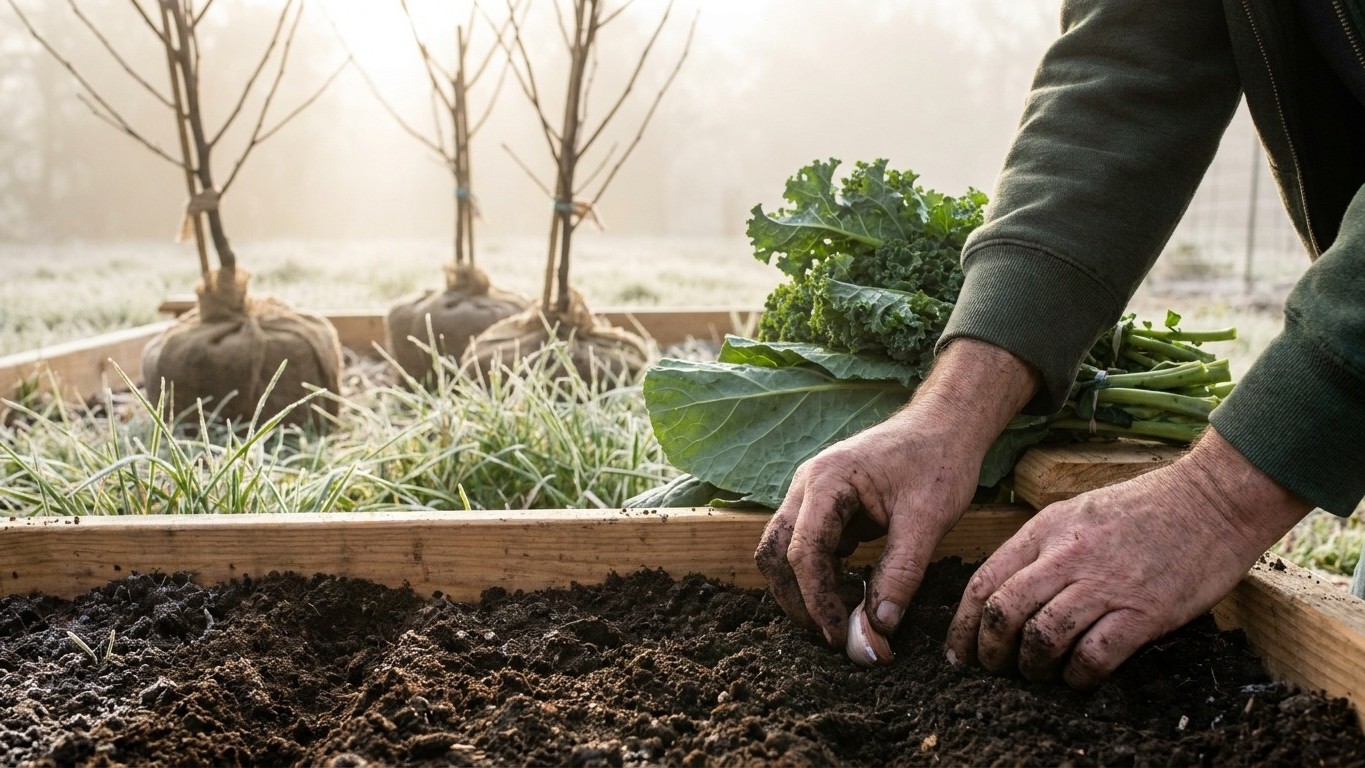

December in Louisiana sits inside the state’s own frost arrival window, not ahead of it, so this is not a month to wait out. Garlic, shallots, onions, and the full run of leafy greens and root vegetables still go into the ground across most of the state, and bare-root fruit trees go in while they’re dormant. What changes the answer is where you garden: north Louisiana gets real, repeated freezes, while the southern parishes can go an entire year without one.
What goes in the ground in December

NOAA’s 30-year climate data puts the first fall freeze for this region between December 17 and January 8, which means December is the month the cold actually shows up, not a warm-up before it. That single fact reshapes the whole month: this isn’t a “before last frost” calendar entry, it’s a “cold has arrived or is about to” one. And in the southern half of the state, that arrival is far from guaranteed. A 32°F freeze happens in only about 87 percent of years at the coastal reference station, which means roughly one winter in seven brings no hard freeze at all to south Louisiana. The limiting factor down there is never really winter cold. It’s summer heat.
That mildness is why garlic and shallots still go into prepared beds this month across almost the whole state, cloves and bulbs down before any real ground freeze sets in. Onion sets and transplants follow the same logic. Hardy greens, collards, kale, mustard, turnip greens, and spinach can all be direct-sown or set out where beds are workable, since these crops shrug off the light frosts common even in a cold December. English peas go in on the same schedule. Root crops like carrots, beets, and radishes can still be direct-sown in south Louisiana’s milder microclimates, though a hard freeze warning is reason to hold off on tender seedlings for a week or two.
Where it gets riskier
North Louisiana, closer to the Arkansas line, sees harder and more frequent freezes than the coast, so tender transplants there need row cover or a cold frame on hand rather than open ground alone. This is also the month for bare-root roses, fruit trees, and cane berries, since dormancy makes transplant shock far less of a concern. Low tunnels and cold frames buy an extra few degrees of protection for anything borderline, and citrus growers across the southern parishes should have frost cloth ready rather than improvised at the last minute.
What to start under cover
Work backward from the spring frost window, which NOAA sets at January 18 to February 8 for this region. Tomatoes and peppers typically need six to eight weeks indoors before they’re ready to go out, which means seed started indoors in mid-to-late December lines up almost exactly with that window closing. That’s an unusually short lead time compared to colder states, and it’s a direct result of how mild this region’s winter really is: the growing season here is compressed on the front end by heat, not stretched by cold.
The two ways this goes wrong are familiar to any gardener but sharper here because the window is so tight. Start too early, under weak light or without enough room, and seedlings turn leggy and rootbound long before the ground is ready for them, sitting in cramped cells while stems stretch toward whatever light they can find. Start too late, and transplants go out just as Louisiana’s spring heat is already building, giving warm-season crops far less time to establish roots before summer arrives in earnest. Since the real ceiling on this state’s growing season is heat rather than frost, losing even two or three weeks at the front end matters more here than in a state where the growing season is long and mild.
Cool-season transplants for later winter and early spring harvest, broccoli, cabbage, and lettuce among them, can also go under cover now for a staggered planting out over the following weeks. Bottom heat and supplemental light matter more this month than any other, since December daylight is short even by Louisiana standards.
What is ready to pick
December harvest in Louisiana is not a thin list. Satsumas and other cold-hardy citrus are at or near peak in the southern parishes, one of the state’s genuine winter specialties, and they’re worth checking regularly since fruit left too long on the tree after a freeze warning can be damaged even if the tree itself survives. Collards, kale, mustard and turnip greens, cabbage, and broccoli are all coming out of beds planted back in fall, and a light frost tends to sweeten rather than damage most of these. Carrots, beets, and leeks can stay in the ground and be pulled as needed rather than harvested all at once.
Where a hard freeze has come through, greens under a cold frame or low tunnel keep producing well past what open ground allows, and that gap is worth the row cover investment for anyone who wants fresh greens through the coldest stretch. Indoors, sprouts and microgreens on a windowsill fill the space between outdoor harvests with almost no equipment.
Stored crops need a hand check this month rather than a glance. Sweet potatoes, a genuine Louisiana staple crop, should be firm with no soft spots or sprouting; a single soft one in a bin can spread rot to its neighbors within days. Winter squash and stored onions deserve the same check, pulled and used first if they show any give.
The jobs that matter this month
Dormant pruning is the headline job. Pecan trees, peaches, pears, and other deciduous fruit should be pruned while they’re fully dormant and the structure of the tree is visible without leaves, which makes it far easier to spot crossing branches and storm damage before spring growth hides them again. Citrus is the exception: leave pruning until later in the season, since cutting now exposes fresh wood right as freeze risk peaks.
Seed catalogs move fast this month, and the popular open-pollinated and heirroom varieties sell out well before spring planting season arrives, so ordering now protects the specific varieties a gardener actually wants rather than whatever’s left in February. This is also the natural month to sketch out next season’s rotation on paper, since beds are bare enough to see clearly and there’s no planting deadline pressing against the decision.
Soil testing pays off now too, with results back in hand well before spring amendments need to go down. Turning the compost pile keeps it breaking down through the cooler weather instead of stalling out. Tools bought and used all through fall deserve a real cleaning and sharpening before they sit through the coldest weeks, and any bed frames, trellises, or fencing that took a beating during hurricane season are far easier to repair now, before spring growth makes access harder. None of this is filler. A dull pruning saw or a rotted bed frame in March costs real time once the season actually starts.
What not to do in December
The single most common mistake is trusting a warm afternoon over the soil itself. Louisiana Decembers swing hard, a 75-degree day followed by a freeze warning two days later, and planting warm-season seedlings because the air felt like spring is a fast way to lose them. Soil temperature, not air temperature, is what roots respond to, and it lags behind the day’s weather by days.
Uncovering row covers or cold frames too early after a mild stretch is the second classic error. A few warm days in a row don’t mean the freeze risk in this window has passed. It hasn’t, and the first fall freeze data shows that risk running as late as early January in a typical year. Pulling protection off too soon leaves tender greens and citrus exposed right when the next front comes through.
Feeding nitrogen at the wrong point is the third. Pushing a high-nitrogen fertilizer on citrus or fruit trees this month encourages tender new growth that a freeze can kill outright, undoing months of careful protection in one cold night. Hold nitrogen until growth naturally resumes in spring, and let dormant plants stay dormant.
Checking this against your own county
A statewide month is a starting point, not an instruction. Louisiana is flat enough that elevation rarely moves these windows, but the north-south spread is enormous: a freeze that’s routine in Shreveport may not happen at all in Houma in a given winter. Coastal humidity, local drainage, and how sheltered a particular yard is all shift the real date further. For a planting window built around a specific county rather than the whole state, the LSU AgCenter publishes local guidance and a planting calendar worth checking against anything written for the state as a whole.
Common questions
Can I still plant tomatoes outdoors in Louisiana in December?
No. Tomatoes are a warm-season crop and won’t survive the freezes that arrive in this window. December is the month to start tomato seed indoors for transplanting out after the spring frost window closes.
Does south Louisiana really not freeze most winters?
NOAA’s 30-year data shows a 32°F freeze occurring in about 87 percent of years at the coastal reference station, meaning roughly one year in seven sees no freeze at all in that area. North Louisiana freezes far more reliably.
Should I prune my citrus trees in December?
Hold off. Pruning exposes fresh wood right as freeze risk is highest for the season; wait until later, once the coldest stretch has passed.
What’s the single most useful job to do in a Louisiana garden this month?
Dormant pruning of fruit and nut trees, done now while branch structure is visible and before spring growth starts, saves real time and prevents storm damage from going unnoticed until it’s worse.