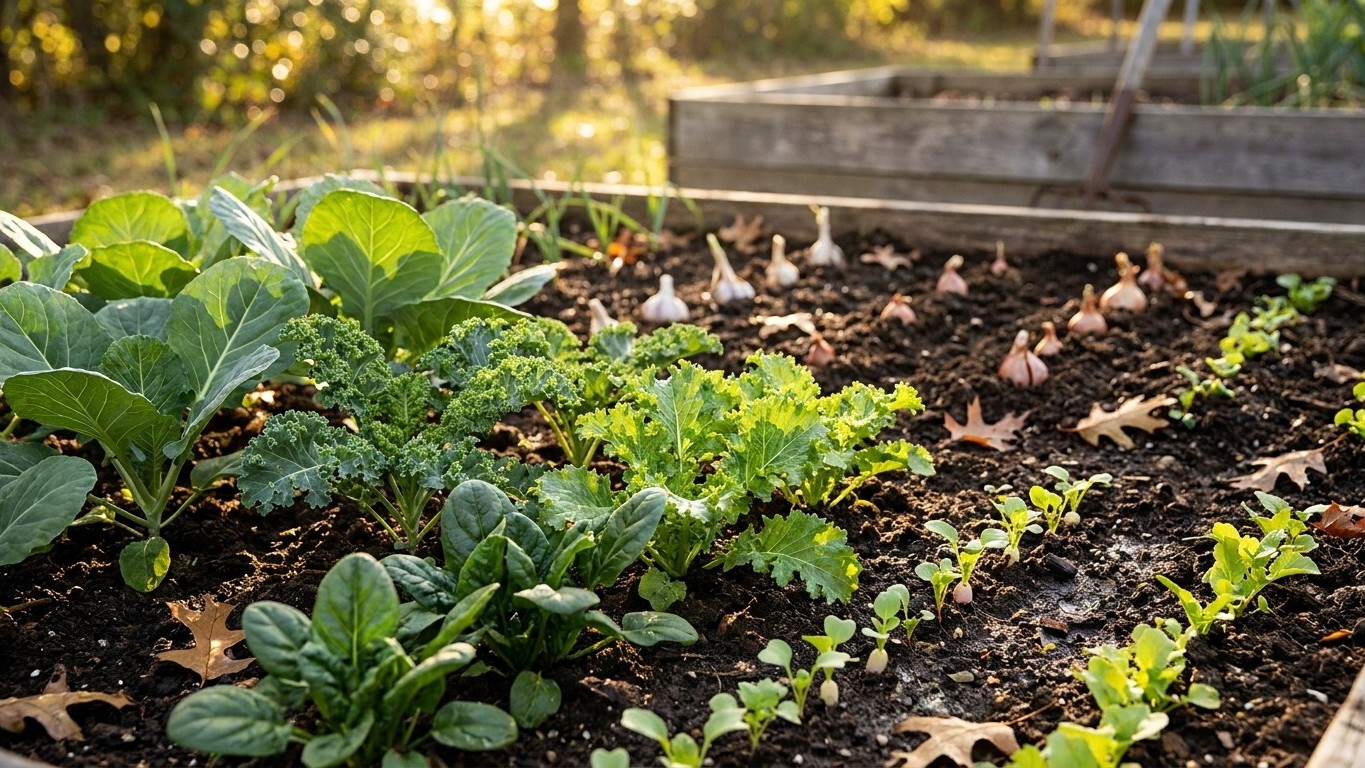

November is the Deep South’s best-kept planting secret. With the first fall frost still weeks away across most of Louisiana, this is prime time to fill beds with cool-season greens, alliums, and root crops while the soil still holds summer warmth. Garlic, shallots, collards, and English peas all go in now.
What goes in the ground in November

The number that matters here isn’t the calendar, it’s the freeze date, and Louisiana’s is unusual. NOAA’s 1991-2020 Climate Normals put the first fall freeze (32F) between December 17 and January 8 at the reference station, which means November sits well ahead of any real cold threat for most of the state. Add in the fact that this freeze occurs in only 86.8 percent of years, roughly one year in seven skips a freeze entirely, and you can see why gardeners in the New Orleans area treat November as a green light rather than a warning label.
That said, Louisiana’s hardiness range under the USDA Plant Hardiness Zone Map runs from 8a to 10a, and that spread matters. North Louisiana, closer to zone 8a, cools off earlier and more reliably. South Louisiana, pushing into 9b and 10a near the coast, sometimes doesn’t see a hard freeze until deep in winter, if at all. Whatever you plant in November down south has a longer runway than the same crop planted in Shreveport.
Direct-sow collards, kale, mustard greens, turnip greens, radishes, spinach, and lettuce straight into garden beds. Carrots and beets still have time to size up before any freeze arrives. English peas and snow peas go in now for a late-winter harvest, and this is also the month to plant garlic cloves and shallot sets, both of which need the cool months ahead to bulb properly. Onion transplants can go in toward the end of the month in most parishes. For brassicas started as transplants, cabbage, broccoli, cauliflower, and Brussels sprouts all handle the transition into garden beds well right now, since the soil hasn’t fully cooled and roots establish fast.
Herbs like cilantro, parsley, and dill also do well direct-sown this month, thriving in the mild, humid air before any real cold sets in.
What to start under cover
Work backward from the first fall frost window (December 17 to January 8) and the last spring frost window (January 18 to February 8), and November becomes an ideal month to start warm-season seedlings indoors for an early spring planting. Tomatoes, peppers, and eggplant typically need six to eight weeks of indoor growth before they’re ready for the garden, so seed started now puts transplants at the right size right around when the coldest stretch of winter finally breaks.
The math is simple to redo for any county: count backward six to eight weeks from your local last-frost date, and start seed indoors that week. In north Louisiana, where the last frost tends to land later in the range, that means slightly later starts. In south Louisiana, where frost sometimes never shows up at all, gardeners can push a little earlier and still be safe.
Two mistakes show up every year. Starting too early leaves seedlings rootbound and leggy under grow lights long before outdoor soil warms enough to receive them, weak stems, stretched growth, transplant shock. Starting too late means seedlings are still small when the last frost window closes and the summer heat arrives fast on its heels, a real risk in a state where spring is short and summer is long. Extra trays of brassica transplants can also go under cover now for a second wave of cabbage and broccoli to fill any gaps left by an early harvest.
What is ready to pick
November harvest in Louisiana straddles two seasons. Sweet potatoes, if not already dug, should come out before the ground turns cold and wet, since they store far better than they hold in the soil. Late tomatoes and peppers, whatever survived the season’s heat, are usually finishing their last flush this month.
This is also citrus season in south Louisiana. Satsumas ripen through November and into December, and homeowners with backyard trees know to watch for fruit that colors up but hasn’t yet dropped its slight green shoulder, a sign it’s a few days from peak sweetness. Pecans, one of the state’s signature crops, are dropping now too, and shaking or gathering them promptly keeps squirrels and moisture from claiming the harvest first.
Fall greens planted earlier in the season, collards, mustard, turnip tops, are often ready for a first cutting by late November, and cut-and-come-again harvesting keeps the plants producing through winter. For stored crops from earlier in the year, onions and winter squash should get a hand-check now: soft spots, a sweet fermenting smell, or a squash that feels lighter than it looks all mean it’s time to use that one first before it takes down its neighbors in storage.
The jobs that matter this month
Soil preparation done now pays off through the whole winter garden. Working compost into beds before planting greens and alliums gives roots loose, fertile ground to establish in while the weather is still mild enough for microbial activity to keep working. Mulching beds after planting holds soil moisture and moderates temperature swings, which matters more in Louisiana’s freeze-or-no-freeze winters than almost anywhere else in the country.
Pruning, ordering, and planning
Dormant pruning of deciduous fruit trees and cane berries should wait until leaves have actually dropped, which in much of Louisiana runs later than in colder states, so November is often still too early in the south, though north Louisiana orchards may be ready by month’s end. What isn’t too early is ordering seed for spring’s tomatoes, peppers, and melons. Popular varieties sell out over winter, and a November order beats the scramble in February.
Pest scouting still matters this month. Mild temperatures mean aphids and cabbage worms stay active on brassicas far longer here than in states with an earlier hard freeze, so checking the undersides of kale and cabbage leaves weekly catches problems before they spread. Testing soil pH now, while beds are between plantings, gives time to amend before spring planting season arrives. Turning compost, cleaning and oiling tools, and repairing bed edges or fencing damaged by summer storms round out a list that keeps a Louisiana garden ready rather than reactive.
Stored crops need a check-in too: rotate onions, potatoes, and squash, pulling any showing soft spots before they spread rot to the rest of the bin.
What not to do in November
The classic mistake is planting warm-season crops, tomatoes, squash, beans, directly into the garden because a warm afternoon feels like spring. Soil temperature is dropping even when air temperature spikes, and warm-season seed sown now germinates poorly or rots before it sprouts. Save those for indoor starts, not open ground.
Another common error is treating a mild stretch as the all-clear to skip protection prep. Because the freeze probability data shows roughly one year in seven with no freeze at all, it’s tempting to assume this will be one of them. But the years that do freeze can do so with little warning, and citrus trees, in particular, need frost cloth or coverings ready well before the first cold front, not scrambled together the night of.
Feeding nitrogen heavily to garlic, shallots, or fall greens late in the month can also backfire. Nitrogen pushes soft, leafy growth right when a cold snap could hit, and that tender growth is exactly what gets damaged first. A better approach is a modest feeding at planting, then holding off until growth resumes in late winter.
Uncovering cold frames or removing mulch after a few warm days is another trap. Louisiana’s winter weather swings fast, and a bed opened up during a mild spell can get caught by a front a few days later.
Checking this against your own county
A statewide November guide is a starting point, not a fixed instruction. Elevation, proximity to the Gulf, and the simple distance between Shreveport and New Orleans shift frost timing by weeks, not days. Coastal parishes near open water often stay several degrees warmer than inland areas just a short drive north. Before committing a whole bed to any of these crops, check current conditions and local planting windows through the LSU AgCenter, which tracks parish-level frost data and maintains its own seasonal planting guidance for the state.
Common questions
Is it too late to plant garlic in November in Louisiana?
No. Garlic and shallots planted in November have plenty of time to establish roots before any freeze, since the first fall frost typically doesn’t arrive until December 17 at the earliest, and often not until early January.
Can tomatoes go into the ground in November?
Not outdoors. Soil temperatures are dropping and any surviving November heat won’t hold long enough for tomatoes to thrive. Start seed indoors instead, timed six to eight weeks ahead of the local last-frost window, for transplanting once the coldest weeks pass.
Does south Louisiana really not freeze some years?
Based on NOAA’s 1991-2020 climate data, a 32F freeze occurred in 86.8 percent of years at the reference station, meaning roughly one year in seven saw no freeze at all. That’s an average, though, and any given year can still bring a hard freeze with little warning.
What’s the biggest difference between north and south Louisiana gardens in November?
North Louisiana, closer to hardiness zone 8a, cools more reliably and earlier, while south Louisiana, in zones 9b to 10a, often stretches the growing window later into winter and supports crops like satsumas that need the milder coastal climate.
Gardeners who plant by the Moon can check the November 2026 moon planting calendar, a tradition rather than a proven method.
Related guides
- What to Plant in Louisiana in October
- Watering Through a Dry Spell in Louisiana
- Will Spinach Bolt Early in Louisiana
- What to Plant in Louisiana in December
Elsewhere? See what to plant in November in every state and province.