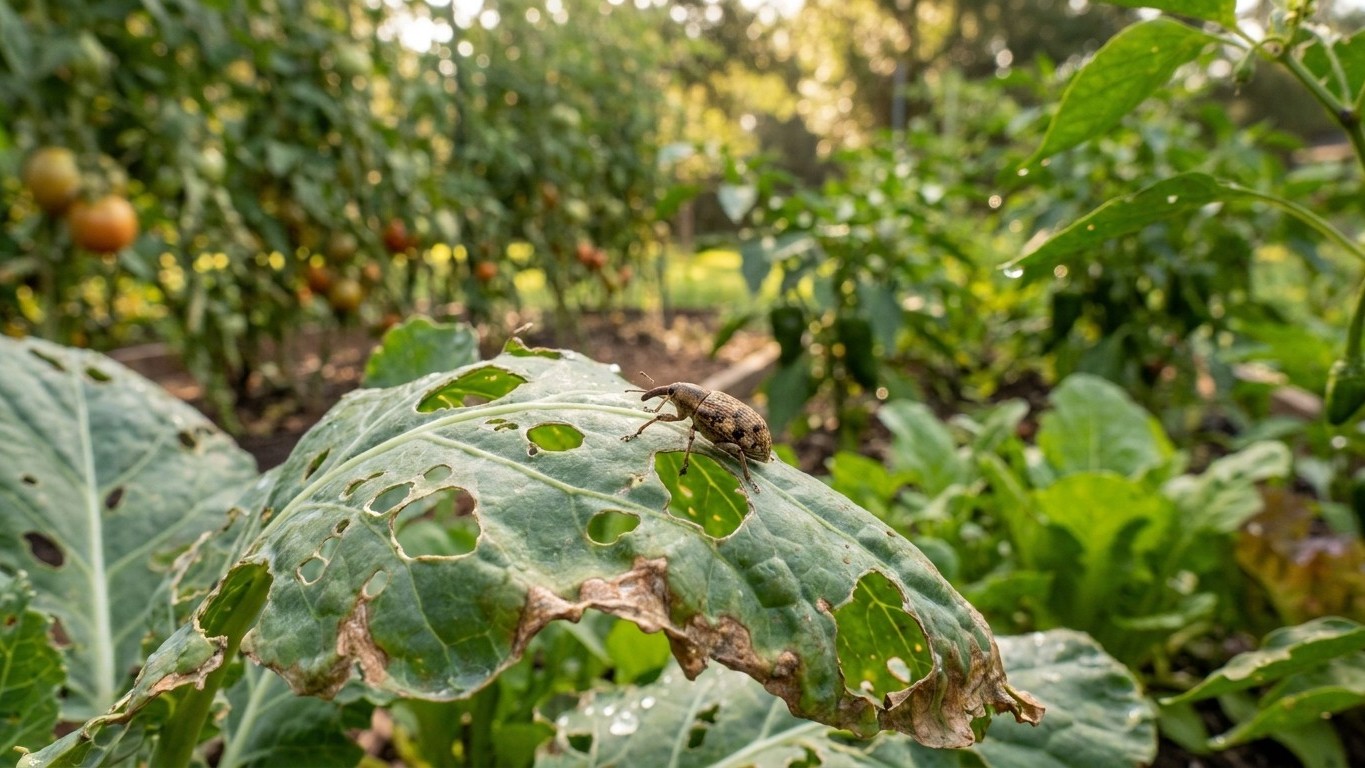

Louisiana’s LSU AgCenter does not publish a specific flight or generation window for the vegetable weevil, so there is no single date to circle on a calendar here. What the agency does confirm is the reason why: south Louisiana’s long growing season lets insect populations breed nearly year-round, which changes how a gardener should watch for damage rather than when.
The weeks to watch

LSU AgCenter’s vegetable insect guides (Publication 1838-E and Publication 2341) do not name a vegetable weevil flight window the way they do for some other pests. That absence is itself useful information: it means no local trap-count data exists to tell a gardener “watch the third week of October” or anything similarly precise. Anyone who tells you an exact date for this pest in Louisiana is guessing.
What the general pattern says instead
The AgCenter notes that Louisiana’s long growing seasons make year-round gardening possible, and that the same mild conditions let insects reproduce and thrive year-round rather than dying back on a fixed schedule. The agency’s guides do document sharper seasonal patterns for other garden pests: pickleworm and squash vine borer run much heavier late in the season, and leaf-footed bugs build up on tomatoes and peppers in high numbers during late summer and early fall. Those examples show how variable timing can be from one species to the next, even within the same state.
No confirmed generations for this pest
Without a documented generation count or peak window for vegetable weevil specifically, the safer approach is behavioral, not calendar-based. Check susceptible crops regularly through fall, winter, and early spring, since this species is generally associated with cool-season vegetables rather than the height of summer heat, and let plant condition, not a date on paper, tell you when to act.
Reading the calendar from your last frost

The one date most Louisiana gardeners actually plan around is the last spring frost, which NOAA’s 1991-2020 climate normals place between January 18 and February 8 for this area. That range matters more than any single day: a 32-degree freeze occurs in only about 87 percent of years at this station, meaning roughly one winter in seven brings no hard freeze at all. Summer heat, not frost, is the real limiting factor for gardening schedules here.
Vegetable weevils respond to soil and air temperature, not to the frost date itself, so an early or unusually mild winter can shift their activity earlier than a typical year. LSU AgCenter has not published a specific number of weeks between transplanting and first visible damage for this pest, so instead of counting days, treat the Transplant-to-establishment period as the vulnerable stretch and inspect seedlings closely through it.
- Start from your local last frost window (January 18 to February 8 for this area) and treat it as a range, not a single day.
- Cover or closely inspect seedlings from the time they go in the ground Through Their First several weeks of establishment, since no fixed week count for damage onset is published locally.
What it attacks, and what the damage looks like

Most gardeners notice the damage before they ever see the insect. Leaves develop ragged, notched edges along the margins, sometimes stripped down to the veins, and root crops can show tunneling or scarring below the soil line that isn’t obvious until you pull the plant. Wilting or stunted growth in an otherwise healthy-looking bed is often the first sign something is feeding underground as well as above it.
Vegetable weevil larvae do most of the damage, feeding on both foliage and roots, which matters because it limits what a gardener can still do once they’re Established: a treatment aimed at adults on the leaf surface won’t reach larvae already working inside a root or stem. Crops commonly affected include:
- Turnips and other root vegetables
- Cabbage and related cole crops
- Carrots
- Spinach
- Potatoes
Because the larval stage causes the deeper damage, catching a problem early, while adults are still feeding visibly on foliage, gives a gardener more options than waiting until roots are already compromised.
How Louisiana sits in this pest’s range
This site currently documents Vegetable weevil in one territory: Louisiana. That narrow footprint doesn’t mean the pest is rare elsewhere, only that this is the one place in the network where local guidance has been pulled together so far, so there’s no neighboring-state comparison to draw on for timing or severity here.
What that means practically is that Louisiana gardeners are working with LSU AgCenter’s general vegetable pest publications rather than any species-specific bulletin dedicated to vegetable weevil alone. The AgCenter’s broader point, that the state’s long growing season supports year-round insect activity, applies to this pest by extension even without a dedicated study behind it. Until more territories are added to this site’s coverage, Louisiana stands alone as the reference point, and any claim about how the state ranks against others for this particular pest would be unsupported.
What actually works against it

Cheapest and easiest measures come first, since most home gardeners want to try low-cost fixes before anything more involved.
- Rotate crops so susceptible vegetables like turnips and cabbage aren’t replanted in the same bed year after year. This works because it interrupts the pest’s access to a familiar food source and breeding site in one location, though it does nothing once weevils are already established in the current bed.
- Clear plant debris and old root crops after harvest. Larvae and pupae can shelter in leftover plant material and soil clutter, so removing it reduces overwintering sites, but only if done before the next planting cycle begins.
- Till the soil before planting to expose pupae near the surface to weather and predators. This is a physical disruption, not a chemical one, and it loses effectiveness once larvae have already moved deep into root tissue.
- Hand-pick adult weevils off foliage in the early morning or evening when they’re most active on leaf surfaces. This only reaches the adult stage; it does nothing for larvae already feeding inside roots or stems.
- Use row covers over young seedlings during their vulnerable establishment period. Covers physically block adults from reaching plants to lay eggs, but they have to go on before an infestation starts and come off before pollination if the crop needs it.
Home remedies like copper tape or ultrasonic repellents show up often in gardening conversation for various pests, but for vegetable weevil there’s no established trial data through LSU AgCenter confirming they work, and no confirmed mechanism explaining why they would. Treat those as unproven rather than as a first line of defense.
Common questions
Does vegetable weevil damage happen year-round in Louisiana?
LSU AgCenter doesn’t publish a specific seasonal window for this pest, but the agency confirms the state’s long growing season allows many garden insects to reproduce continuously rather than pausing for a fixed dormant period. That makes year-round vigilance a reasonable default in the absence of species-specific data.
Which part of the plant should I check first?
Check foliage edges for ragged notching first, since adults feed there and are easier to spot. If leaves show damage, pull a root crop or two to check for tunneling below the soil line, since larvae do the deeper damage and are harder to catch early.
Is frost a reliable way to predict when this pest appears?
Not in south Louisiana. The region’s last spring frost falls somewhere between January 18 and February 8 in most years, but roughly one year in seven sees no hard freeze at all, so frost timing is too unreliable here to use as a predictive tool for this pest’s activity.