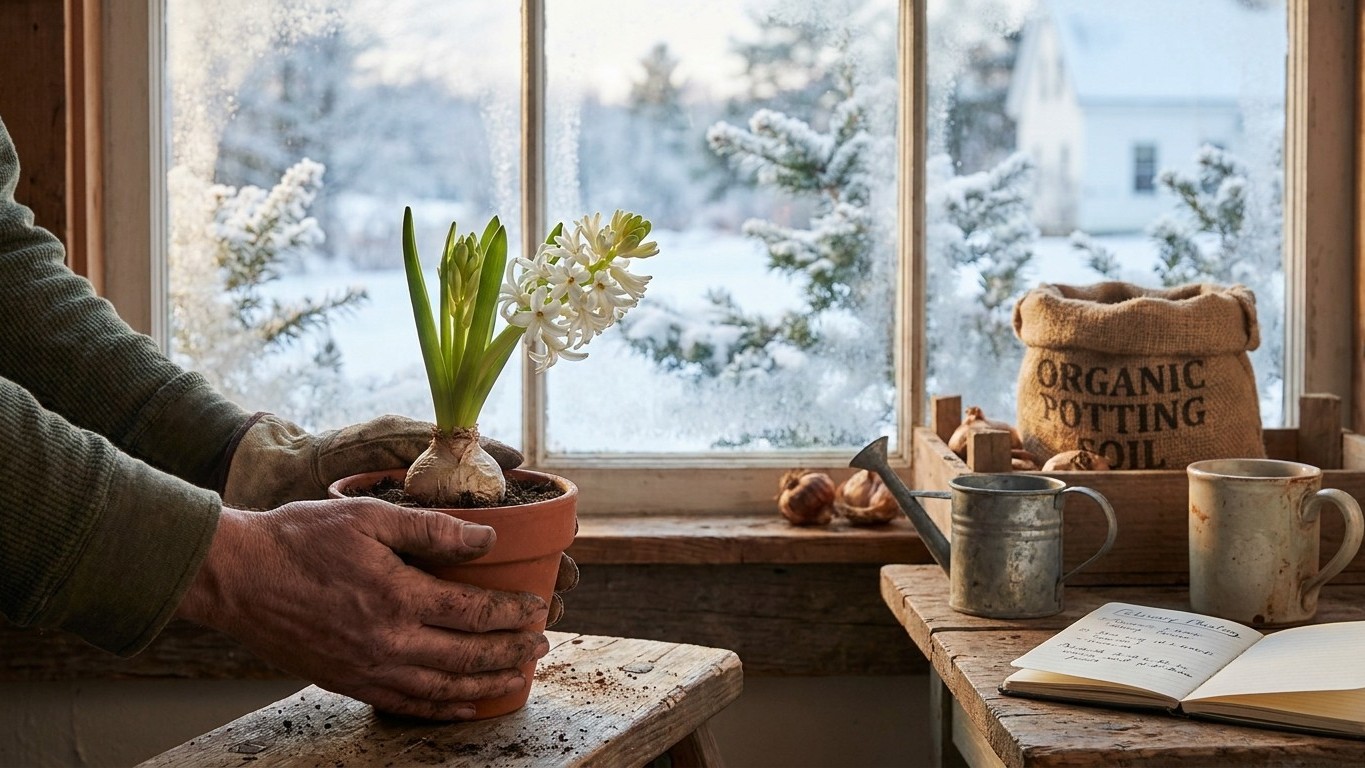

Forcing bulbs indoors works in Maine, but not for the reason it works in warmer states. Portland’s coldest month averages a minimum of 15.6°F, so the ground here already delivers more chilling than a crocus or hyacinth needs to bloom. What forcing actually solves in this state is timing, and the risk to any bulb left in an unprotected pot outdoors once the mercury drops.
Why this matters in Maine

Start with the number that decides everything: 15.6°F. That’s the average daily minimum for the coldest month at the Portland reference station, drawn from NOAA NCEI’s 1991-2020 climate normals. It’s not a record low and not a seasonal average, it’s the typical overnight floor in the depth of winter. A spring bulb needs roughly twelve to fourteen weeks with temperatures below 45°F to break dormancy and set a flower stalk. In Maine, that window arrives on its own, usually stretching from November well into March. The state is not short on cold. If anything, it has more than most bulbs require.
That changes the whole reason to force bulbs here compared with, say, a Gulf Coast garden where winter never gets cold enough and forcing is the only way to trick a tulip into blooming at all. In Maine, the constraint isn’t a lack of chilling hours in the ground. It’s what happens to a bulb that isn’t in the ground.
A garden bed insulates itself. Even when the surface freezes hard, soil a few inches down stays buffered, and a bulb planted at the recommended depth rarely experiences the full swing of an outdoor low. A container doesn’t have that luxury. A pot has no thermal mass to speak of, so when the air temperature drops, the soil inside freezes through, roots and all, in a way garden soil never does. The USDA Plant Hardiness Zone Map (2023 edition, built on 1991-2020 normals) places Maine across a wide band, from zone 3b in the northern interior to zone 6a along parts of the coast. A daffodil rated hardy in that zone range will often survive a Maine winter in open ground without issue. The same bulb, in an ordinary terra cotta or plastic pot sitting on a porch, can die from that same winter because the container offers none of the ground’s insulation.
That’s the practical takeaway for this state: forcing indoors here is less about supplying missing cold and more about controlling when bloom happens, and about giving potted bulbs a safer version of the chilling they’d otherwise get from the ground.
How to do it here
The mechanics of forcing don’t change from one climate to another, but where you find the cold does. In Maine, gardeners have two realistic options for supplying the twelve to fourteen weeks below 45°F a bulb needs before it will bloom: an unheated garage that stays reliably above freezing, or a spare refrigerator drawer kept separate from fruit, since ripening apples and pears release ethylene gas that can kill the flower bud forming inside a chilling bulb.
- Choose bulbs suited to forcing and pot them in a container with drainage holes, using one bulb type per pot so all the bulbs finish their cold period together.
- Water lightly right after potting, then move the pot to a spot that holds steady between roughly 35°F and 45°F for the full twelve to fourteen weeks. In Maine, an attached garage that never freezes works if you confirm the temperature with a thermometer first, since many detached garages here do drop below freezing in January and February.
- If using a refrigerator, keep the pot in a drawer or shelf away from any fruit, and check it weekly.
- Keep the soil barely moist through the cold period. Dry soil stalls root growth; soggy soil invites rot before the bulb ever gets warm.
- Near the end of the chilling period, tip the pot slightly and look for white roots showing through the drainage holes. That’s the signal the bulb is ready, not the calendar alone.
- Move the pot to a cool, dim room in the 55°F to 60°F range for about a week before shifting it to a bright, warmer spot. Skipping this step and going straight from cold storage to a sunny windowsill is one of the most common forcing mistakes.
- If bulbs are already potted and sitting outdoors when the first hard freeze arrives, don’t leave them exposed. Move the pot into an unheated garage or bury it to the rim in a mulched garden bed, since a standalone container freezes solid in a way ground soil at the same location does not.
Which bulbs are worth it
Not every bulb forces well, and the difference usually comes down to two things: how long a chilling period it demands and how tall it grows once it’s blooming indoors. A bulb with a short cold requirement finishes faster and is more forgiving of a Maine garage that isn’t perfectly climate controlled. A bulb that throws up a two-foot stem tends to flop over in a light indoor pot, no matter how carefully it was chilled.
| Bulb | Cold period needed | Stem height | Forcing verdict |
|---|---|---|---|
| Paperwhite narcissus | None required | Tall, floppy | Reliable, but stake or use a shallow bowl |
| Crocus | Short | Very short | Reliable, fast, sturdy |
| Hyacinth | Short to moderate | Short to medium | Reliable, fragrant, sturdy |
| Miniature daffodil (‘Tete-a-Tete’) | Moderate | Short | Reliable, good beginner choice |
| Species and single early tulips | Moderate to long | Short to medium | Reliable if cold period is met fully |
| Darwin hybrid tulips | Long | Tall | Sulks, tends to topple indoors |
| Large trumpet daffodils | Long | Tall | Sulks, weak indoor stems |
| Allium | Long | Very tall | Sulks, rarely worth the pot space |
- Force reliably here: paperwhite narcissus, crocus, hyacinth, miniature daffodils, species and single early tulips.
- Tend to sulk indoors: Darwin hybrid tulips, large trumpet daffodils, allium, fritillaria.
There’s also a cost angle worth knowing. Most tulips planted in Maine gardens decline sharply after their first spring anyway and are often treated as a one-season purchase even in the ground. If a tulip variety was never going to reliably return next year, forcing it indoors this winter costs nothing in the long run. It gets the bloom you paid for, just earlier and inside.
What goes wrong, and when you can still fix it
Leaves, but no flower
Green growth with no bud means the cold period ran short. The bulb has enough stored energy to push foliage without full chilling, but the mechanism that triggers flower formation didn’t get enough time below 45°F. This isn’t fixable this season. The bulb can be planted out in the garden bed in fall, where Maine’s natural winter will finish the job properly next year.
A flower hidden low in the leaves
A short, stunted bloom usually means the bulb was moved from cold storage straight into heat and light, skipping the intermediate cool, dim week. The stem never got the chance to elongate before the flower opened. There’s no rescue once this happens. It’s not fatal to the bulb’s long-term health, just a note for next time to slow the transition down.
Soft, rotten bulb in the pot
Rot points to a pot without adequate drainage or soil that stayed saturated during the cold period. Once a bulb has gone soft and discolored, it’s finished for this season. Discard it, wash the pot before reusing it, and confirm drainage holes are open and unobstructed the next time around.