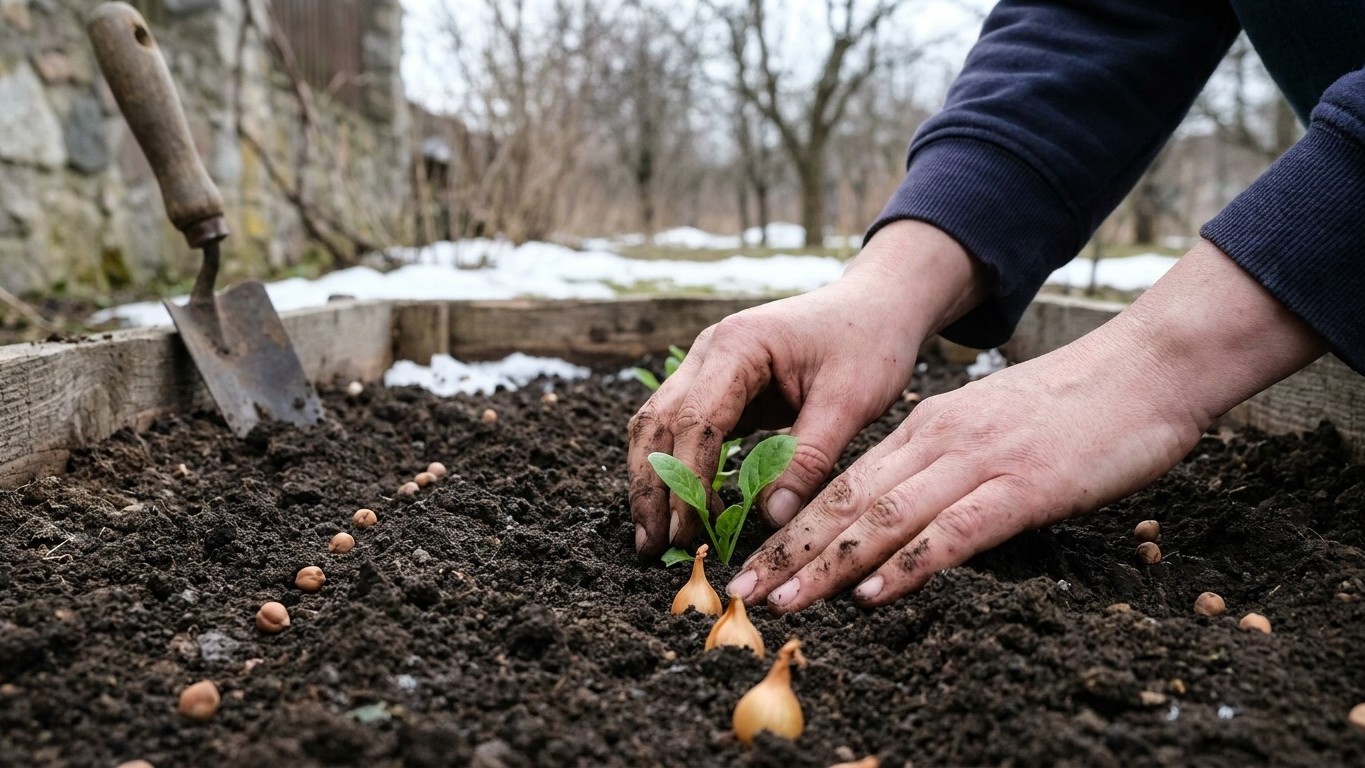

In Maine, April planting means cold-hardy crops only: peas, spinach, and other cool-season greens direct-sown once the soil is workable, onion sets and shallots tucked in early, and warm-season seedlings started indoors under lights. The last spring frost falls between April 22 and May 1 near Portland (NOAA NCEI 1991-2020 Climate Normals), and inland and northern counties run later still, so most of April stays frost territory rather than open planting season.
What goes in the ground in April

The date on the calendar doesn’t decide what survives outdoors, soil temperature and the frost window do. Portland’s last spring frost lands somewhere between April 22 and May 1 based on three decades of NOAA climate data, and that’s the mild edge of the state. Inland valleys and the northern counties push that date back by weeks, sometimes well into May. So for most of April, the ground is still cold, sometimes still frozen a few inches down, and the frost risk hasn’t cleared.
That doesn’t mean the garden sits empty. Peas tolerate a hard frost and germinate in soil that’s still cool to the touch, so they can go in as soon as the bed is workable, meaning it crumbles rather than clumps when squeezed. Spinach, arugula, mesclun mixes, and other quick greens handle the same conditions and can go in under a floating row cover for extra insurance. Onion sets and shallot bulbs go in early too, since both want a long cool start before the days lengthen and trigger bulbing.
Garlic is usually a fall crop in Maine, planted before the ground freezes for a midsummer harvest, but growers who missed that window can still push in cloves as soon as the soil opens up, accepting a smaller bulb at harvest. Bare-root fruit trees, cane berries, and dormant perennials such as rhubarb and asparagus crowns belong on the same early list: they aren’t actively growing yet, so a cold snap after planting does far less damage than it would to a leafed-out plant.
Cold frames and low tunnels stretch what’s possible. A frame that traps daytime sun can run warm enough to start lettuce, radishes, and other fast greens two or three weeks ahead of the open garden. Anything tender, tomatoes, peppers, beans, squash, stays indoors until the frost window has passed with real margin.
| Crop | Where it goes | Why |
|---|---|---|
| Peas | Direct sow, open ground | Tolerates frost and cool soil |
| Spinach, arugula, mesclun | Direct sow, with row cover | Fast, cold-hardy greens |
| Onion sets, shallots | Direct sow, open ground | Need a long cool start |
| Garlic (late) | Direct plant, open ground | Smaller bulb but still viable |
| Bare-root trees, canes, rhubarb, asparagus | Open ground, dormant | Frost hits dormant wood far less |
| Lettuce, radishes | Cold frame or low tunnel | Extra weeks of warmth |
What to start under cover
Seed-starting math works backward from the frost window, not forward from a fixed date on a seed packet. With Portland’s last frost landing between April 22 and May 1, and inland counties later still, count back from whichever date applies to your own ground.
Tomatoes and peppers need the longest indoor head start, generally six to eight weeks for tomatoes and closer to eight to ten for peppers, since peppers germinate slowly and grow on slowly too. That timing puts the seed-starting window for a late-April or May frost date squarely in February and early March for most Maine gardeners, so by April those seedlings should already be up, potted on, and hardening off toward the light. If they aren’t started yet, it isn’t too late for a shorter-season variety, but the harvest will come later.
Brassicas, broccoli, cabbage, kale for transplanting, want four to six weeks under lights before they go outside, which makes early-to-mid April the sowing window for plants destined for the garden in May. Basil and other tender herbs follow a similar short timeline and shouldn’t go outside until the soil has warmed well past the frost date.
The two ways this goes wrong run in opposite directions. Start tomatoes too early and by transplant time they’re rootbound, leggy, and stressed before they ever see real sun. Start them too late and the plant never catches up to a full growing season, especially in the shorter-season inland counties where the first fall frost can arrive by October 9. Counting backward from the actual frost window, rather than a habit or a date remembered from somewhere else, keeps both mistakes off the table.
What is ready to pick
Outdoors, April offers little in the way of harvest in Maine, and any garden claiming otherwise is probably drawing on a cold frame or a root cellar. That’s a fair trade for what’s still on offer.
Kale and leeks left in the ground over winter, especially under a thick mulch or a blanket of snow, often come through sweetened by the cold and ready to pull as soon as the ground softens. Check them by feel: leeks should still be firm at the base, not soft or slimy, and kale leaves should snap rather than go limp.
Cold frames planted the previous fall or in earliest spring can be yielding baby lettuce, spinach, and mesclun by now, cut a few leaves at a time rather than pulling whole plants so the bed keeps producing. Indoors, sprouts and microgreens fill the gap on a much shorter cycle, ready in a week or two from seed and needing nothing more than a windowsill or a shelf under lights.
The other harvest happening this month is the one already sitting in storage. Squash, potatoes, and onions from the previous season need a hard look now: press gently for soft spots, check for sprouting eyes on potatoes, and smell for the sour, fermenting odor that means an onion has turned. Pulling the failing ones out first protects everything stored around them.
The jobs that matter this month
Dormant pruning has a deadline, and April is close to the end of it. Fruit trees and cane berries should be cut back before buds swell and break, since pruning after leaf-out costs the plant stored energy it needed for the season ahead. Apple, pear, and plum trees all take this cut now, along with raspberry and blackberry canes.
Soil that’s dried enough to work should get tested and amended before anything goes in it. A soil test through the local extension office tells you what’s actually missing, rather than guessing with a bag of general fertilizer, and amendments like lime take time to shift pH, so applying them now instead of later actually changes what the summer crop can use.
Compost piles built over winter need turning to get air back into them and speed up the breakdown before it’s needed as a spring amendment. Tools deserve the same attention: a sharpened hoe or pruner cuts cleanly instead of tearing, which matters for plant health as much as for the gardener’s effort.
Seed ordering has its own deadline, tied less to weather than to inventory. Popular varieties, particular tomato types, disease-resistant squash, sell out at seed companies well before the ground is ready for them, so ordering now protects the plan for the whole season rather than leaving the gardener with whatever’s left.
Beds and fencing damaged by winter, frost heave on raised bed frames, deer or rabbit pressure on fencing, snow-load damage on trellises, need repair before plants are in the ground and repair becomes disruptive. And the same stored crops mentioned above deserve a second check here: rot spreads, and a single soft potato left in a bin can take out the ones around it within weeks.
What not to do in April
The classic April mistake in Maine is trusting the air instead of the ground. A run of warm afternoons feels like planting season, but the soil several inches down is often still cold from winter, and warm-season seeds sown into it either rot before they germinate or come up so weak they never really recover. Tomatoes, peppers, beans, and squash all belong indoors or in a tray until the frost window, April 22 to May 1 near the coast, later inland, has passed with real margin, not just until one warm afternoon arrives.
Uncovering plants too early after a mild stretch is the same mistake in reverse. Row covers, cold frame lids, and winter mulch all exist because the temperature swings back down, often hard, after a warm spell, and a young seedling exposed too soon can lose a whole season’s head start in a single night.
Working wet soil causes damage that lasts far longer than the day it happens. Soil that’s still saturated from snowmelt compacts under a boot or a tiller, and once it’s compacted, roots struggle to push through it for the rest of the season. The test is simple: squeeze a handful, and if it stays in a muddy ball instead of crumbling, it’s too wet to work.
Nitrogen fertilizer applied too early, before plants are actively growing and able to use it, mostly washes away with spring rain or feeds weeds instead of the crop. It’s better held until seedlings are established and pulling nutrients from the soil in earnest.
Checking this against your own county
A state-wide planting month is a starting point, not an instruction, and Maine makes that gap obvious. Elevation, distance from the coast, and lake effect all shift the frost window by weeks in either direction: a garden in the mountains or the northern counties can lag the Portland-area dates by a month or more, while a sheltered coastal spot might edge ahead of them. USDA hardiness zones across the state run from 3b to 6a, with Portland sitting at the milder end, so a zone map alone won’t settle the question either.
The University of Maine Cooperative Extension (extension.umaine.edu) tracks local conditions county by county and is the better source for a planting date tuned to actual ground, not a state average.
Common questions
Can I plant tomatoes outside in Maine in April? No. The frost window near Portland runs April 22 to May 1, and inland areas trail further behind, so tomatoes belong indoors under lights until that window has passed with margin.
What vegetables can I direct sow in April in Maine? Peas, spinach, arugula, mesclun greens, radishes, and onion sets or shallots all tolerate cool soil and light frost once the ground is workable.
When is the last frost date in Maine? Near Portland, it falls between April 22 and May 1 based on NOAA’s 1991-2020 climate normals. Inland and northern counties typically run later.
Is it too early to start tomato and pepper seeds indoors in April? For most Maine gardens, yes, those should already be started by this point. A shorter-season variety sown now can still work, just expect a later harvest.