
Winter squash goes into Maine soil once the ground itself has warmed, not just when frost odds drop, and that usually lands in late May to early June depending on where you garden. The state’s short, cool-to-moderate season means the type of squash you choose matters more than any trick you might try in the garden bed, and the coast behaves nothing like the interior.
When the soil is warm enough in Maine

Gardeners fixate on the last spring frost, and it’s a reasonable place to start. For the Portland reference station, NOAA’s 1991-2020 climate normals put that date between April 22 and May 1, based on the 30-70% probability band for a 32F freeze (NOAA NCEI). That’s a range built from three decades of data, and it’s a probability, not a promise: some years break warm early, others sting you in mid-May with a surprise frost.
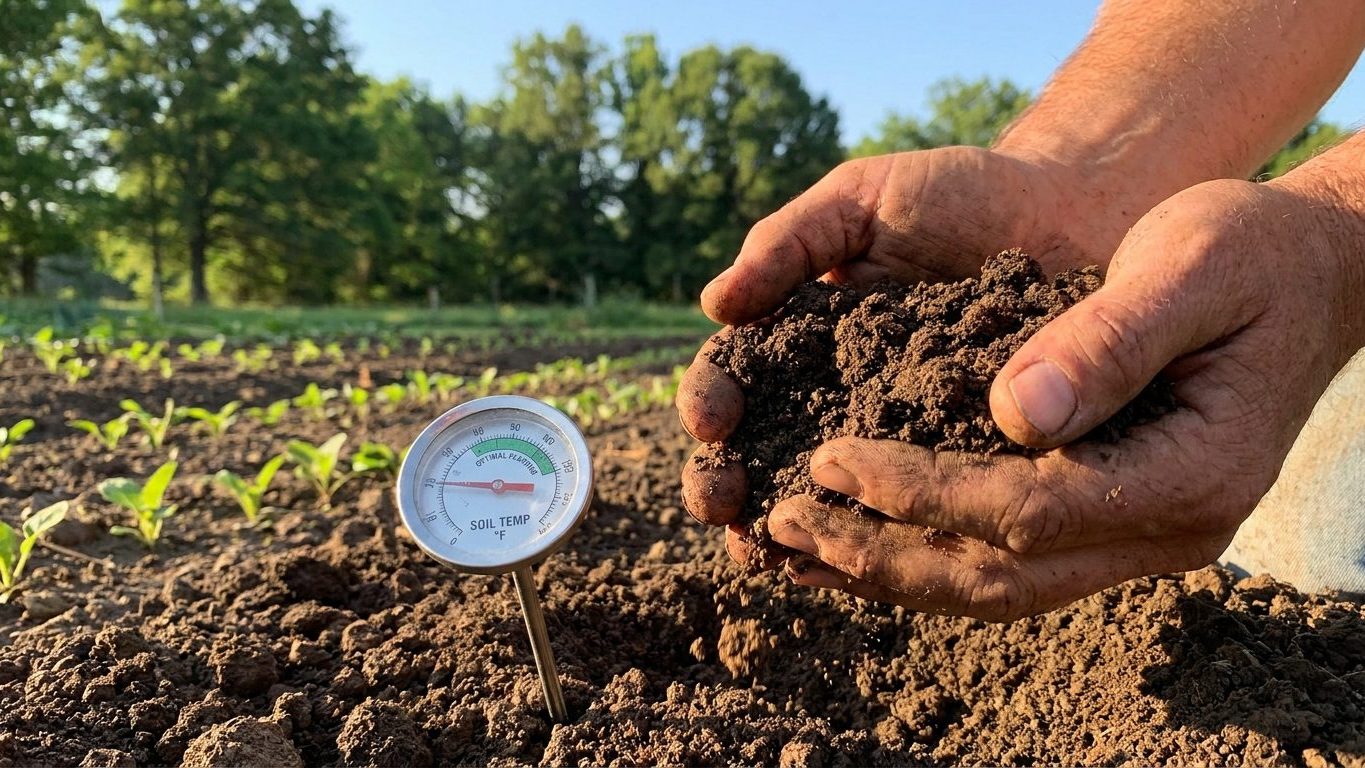
But here’s the piece that trips people up. Frost date tells you when the air stops freezing. It doesn’t tell you when the soil is warm enough for winter squash to actually grow. Squash seed sits sullen in cold, wet dirt, and transplants sulk or rot at the root if you rush them into ground that’s still in the 50s. Winter squash wants soil consistently in the 60s Fahrenheit before it germinates or transplants well, and that threshold in Maine typically arrives one to three weeks after the last frost date, not on it.
Coastal Portland is the mild edge of the state. Inland valleys and the northern reaches of Maine run measurably later in spring, sometimes by two or three weeks, because they lack the moderating effect of the ocean. A gardener in Aroostook County working from the Portland frost window will get burned by cold soil and slow germination if they don’t adjust.
The practical move is to stop watching the calendar and start watching the ground. Push a soil thermometer four inches down. If it holds steady above 60F for several consecutive days, you’re likely clear to direct-seed or set out transplants. Black plastic mulch or floating row cover laid down a week or two ahead can nudge that warm-up along, especially on heavier, slower-draining soils that lag behind sandy ones.
None of this substitutes for local knowledge. The University of Maine Cooperative Extension tracks planting windows and variety performance by region, and that’s the resource worth checking before you commit seed to ground, especially if you’re gardening well inland or north of the coastal belt (extension.umaine.edu).
How long the season lasts here
Subtract the two frost windows and Maine’s frost-free season runs from a last-spring date of April 22-May 1 to a first-fall date of October 9-21, both sourced from the same NOAA NCEI 1991-2020 normals at the Portland reference station. That puts the frost-free stretch somewhere in the neighborhood of five to six months at the coastal reference point, with real variation depending on exactly where the year’s frosts fall.
That’s a moderate window as far as winter squash goes, not a generous one. Winter squash needs the fruit to mature fully on the vine before frost hits. There’s no ripening it on a windowsill afterward, not in any way that produces a squash that cures properly or stores through winter. An immature fruit pulled ahead of frost is soft-fleshed, thin-skinned, and destined to rot in storage rather than keep.
What that season length allows, and what it doesn’t, comes down to timing your single planting well rather than counting on a second one. Maine’s window is not long enough to reliably support a second full-season sowing of winter squash the way a gardener in a longer, warmer territory might attempt. One planting, timed to soil warmth in late May or very early June, is the realistic play for most of the state. Pushing later risks running out of season before the fruit finishes sizing and curing on the vine.
This is also where the transplant-versus-direct-seed decision gets real. Because the window is on the shorter side, many Maine gardeners start winter squash indoors three to four weeks before their soil-warm date, then transplant carefully, since squash resents root disturbance and a rough transplant can cost you a week of stalled growth you don’t have to spare. In a longer-season territory that slack barely matters. Here, it can be the difference between a squash that cures fully and one caught by an early October frost.
For the broader mechanics of staggering plantings where the calendar allows it, the site’s succession sowing guide covers how to sequence crops through a full frost-free window, which is worth a look even if Maine’s own window narrows what’s realistic for squash specifically.
Heat and water in Maine

This is the section where Maine’s numbers tell a clear story, and it’s not the story of a hot, dry growing ground. The Portland reference station averages just 3.8 days a year at or above 90F, per NOAA’s 1991-2020 climate normals. That’s a low heat load by any national standard, and it changes the whole calculus for winter squash, a crop that in warmer regions is often managed around heat stress and irrigation demand.
In Maine, that’s not the primary concern. Summer rainfall averages about 11.2 inches across June, July, and August, broken down as 4.15 inches in June, 3.43 in July, and 3.57 in August, again from NOAA’s monthly normals at the same reference station. July, the driest of the three summer months, still delivers over three inches on average. Combined with a summer that rarely climbs into the 90s, this is a cool, damp growing environment rather than one where the plants are fighting evaporation and heat stress.
That changes what actually threatens the crop. Instead of writing the hot-climate playbook, the honest read for Maine points toward moisture-driven disease pressure: powdery mildew on the leaves, slower fruit ripening in a cool, cloudy stretch, and fungal issues that thrive when foliage stays damp. A gardener here isn’t rationing water through a scorching August; they’re more likely managing airflow between plants, watching for mildew on squash leaves by midsummer, and hoping for enough warm, sunny days in September to finish curing the fruit properly.
Watering still matters, particularly during dry stretches or on sandy coastal soils where rain drains through fast. But the bigger lever in Maine is spacing plants for airflow, avoiding overhead watering late in the day, and choosing garden sites with good sun exposure to compensate for a summer that isn’t naturally hot. A rain gauge on your own plot tells you more than any regional average, since a slope, a tree line, or a coastal breeze can shift what your particular garden actually receives.
None of this means irrigation is irrelevant here. It means the primary risk profile in Maine runs toward too much moisture and too little heat, rather than the reverse, and that should shape which practices get priority through the growing season.
Which winter squash suit Maine
Given a moderate season length, low heat load, and a cool, damp summer, the logic points toward earlier-maturing types of winter squash over long-season ones that need a hot, extended summer to size and cure fully. Types bred or selected for shorter seasons give the fruit a better shot at finishing on the vine before Maine’s first fall frost arrives in the October 9-21 window.
Because the state’s summer leans damp rather than dry, disease resistance becomes a real selection criterion, not an afterthought. Types with better resistance to powdery mildew and other foliar diseases common in humid, moderate-temperature summers are worth prioritizing over types chosen purely for size or storage length. Airflow matters here too: wider spacing and trellising where practical reduce the leaf-wetness periods that let mildew take hold.
What this page won’t do is hand you a cultivar name. That’s a deliberate choice, not an oversight. Variety performance is tested locally, year over year, by extension trial programs precisely because a squash that thrives in a warm coastal Maine garden may underperform sixty miles inland, and a variety recommended for a different hardiness zone entirely may simply run out of season here. Maine spans hardiness zones 3b to 6a under the USDA Plant Hardiness Zone Map (2023 edition, based on 1991-2020 normals), and that range alone tells you a single named variety can’t be the right answer for the whole state.
The University of Maine Cooperative Extension maintains trial data and regionally tested variety recommendations that reflect actual performance in Maine conditions, not generic national advice (extension.umaine.edu). That’s the resource that turns “earlier-maturing, disease-resistant type” into an actual seed packet worth buying, calibrated to whether you’re gardening on the coast, inland, or up toward the northern edge of the state’s growing zones.
Choosing by type first, then confirming with a locally trialled variety, is the sequence that holds up across a state as climatically varied as Maine. Skipping straight to a name you saw recommended for a different region is the more common mistake, and usually the more costly one by the time frost arrives.