
Winter squash goes into South Dakota soil once the ground itself has warmed, typically late May into early June depending on the county, and the fruit needs to mature fully on the vine before the first hard frost arrives in late September. The season here is short and the heat moderate, which means the type of squash matters more than any trick in the toolbox. Here’s what the numbers actually say.
When the soil is warm enough in South Dakota
Frost date versus soil temperature
The question everyone asks is when to plant, but the honest answer starts with soil, not frost. At the reference weather station for the region, station USW00014944, NOAA’s 1991-2020 Climate Normals put the last spring frost at 32°F somewhere between April 29 and May 9, the window where freeze probability runs 30 to 70 percent. That date isn’t a planting date. It’s a snapshot of frost risk, and it says nothing about whether the ground has actually warmed up enough for a squash seed to germinate or a transplant to take off.
Winter squash seeds barely germinate in cold soil, and transplants set out too early just sit there, stalled, waiting for warmth that hasn’t arrived yet. Soil temperature typically catches up to safe frost-free air a week or two after that spring frost window closes, which is why most South Dakota gardeners wait until well into the third week of May, sometimes into June in cooler pockets, before putting Winter Squash in the ground.
Local variation and hardiness zone
The frost dates above come from an airport weather station, one that tends to run warmer than the yards and fields around it. Suburban and rural gardens in the same county often see their last spring frost arrive one to two weeks later than the station date, and their first fall frost show up that much earlier, more if the land sits at higher elevation or in a low spot where cold air pools. Treat April 29 to May 9 as the reference point for the area right around that station, not a guarantee for a specific yard.
South Dakota’s growing conditions also stretch across a wide swing in USDA Plant Hardiness Zones, from 3b up to 5b depending on where in the state a garden sits, based on the average annual extreme minimum winter temperature. That range matters less for a summer annual like squash than it does for perennials, but it’s a reminder that a planting date calculated from one station doesn’t travel well across the whole state. A grower two counties away, at a different elevation, is working with a different frost calendar entirely, and a different date there isn’t a mistake, just a different microclimate.
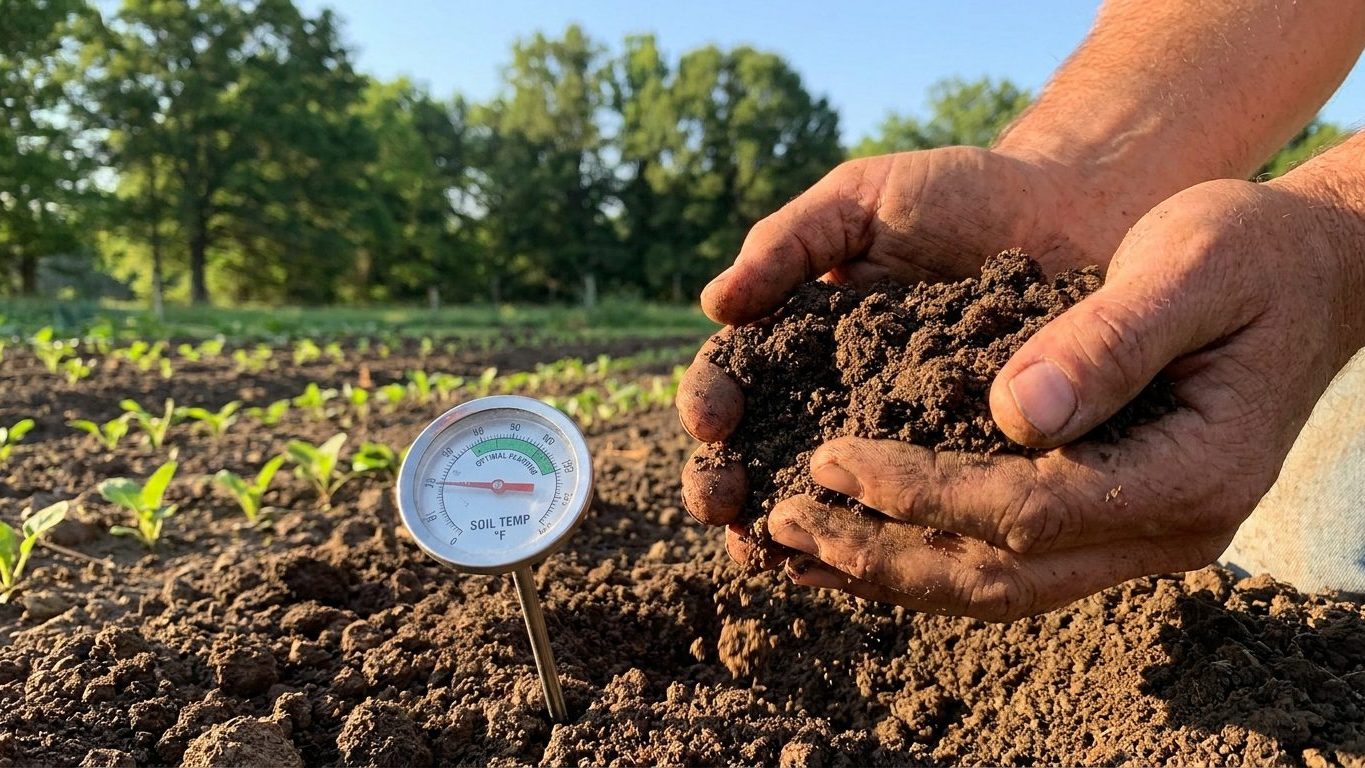
The safest approach: wait until soil temperature at planting depth holds consistently warm for several days running, and treat the frost window as a probability rather than a promise, since some years push past it in either direction. A soil thermometer pushed a few inches into the bed tells the real story better than any calendar date can.
How long the season lasts here
Doing the math
Subtract the two frost windows and a rough frost-free season emerges, using only what the same NOAA station provides. Pair the latest end of the spring frost window, May 9, against the earliest start of the fall frost window, September 24, and the shortest realistic season comes out to about 138 days. Pair the earliest spring date, April 29, against the latest fall date, October 4, and the season stretches closer to 158 days. Most years land somewhere between those two figures.
What the window allows
At 138 to 158 days, the growing window is long enough for a single planting of Winter Squash to mature properly, but it isn’t generous enough to treat that first sowing as a trial run. There’s little real margin to sow again in July if an early planting fails to germinate or gets wiped out by early pests, the way a gardener in a longer-season state might manage. That reality pushes the whole calculus toward transplants started indoors a few weeks ahead of the outdoor planting date, since a transplant buys back roughly three to four weeks of calendar time compared to direct seeding, provided the roots get checked for circling or girdling before they go into the ground. Direct-seeding stays an option in years running toward the 158-day end, but it’s a gamble that only pays off if spring cooperates.
Where a longer season allows a second or third staggered sowing of quick crops through summer, South Dakota’s window mostly rules that out for winter squash specifically, though it doesn’t rule out succession sowing altogether for faster vegetables sharing the same beds. The site’s succession sowing guide covers how to stagger plantings inside a short-season calendar like this one, and it’s worth a read before assuming every crop in the garden needs to go in on the same day as the squash.
Heat and water in South Dakota
Moderate heat, not extreme
Heat load in this region is moderate, not extreme. The reference station near Sioux Falls averages 13.8 days a year at or above 90°F, based on the 1991-2020 Climate Normals, a fraction of what a squash grower faces in the Southern Plains or the desert Southwest. That’s decent news for winter squash: this is a crop that pollinates poorly and stalls under sustained heat above the mid-90s, and 13.8 days a year rarely amounts to sustained heat stress. Most summers here won’t punish the plant that way.
Rainfall that dips at the worst time
Water is the bigger variable. Summer rainfall across June, July and August averages about 10.8 inches at the same reference station, out of 27.9 inches for the full year, and it doesn’t fall evenly. June brings 4.23 inches, August 3.34, and July, right when squash vines are setting and filling fruit, drops to the driest of the three at 3.25 inches. That dip lands at close to the worst possible moment for a crop that needs steady soil moisture to swell its fruit.
Winter squash is the crop where the length of the season decides almost everything else. The fruit has to reach full size and full rind hardness on the vine before frost; pick it early and it neither cures properly in storage nor keeps past a few weeks, no matter how it’s handled afterward. In a territory running 138 to 158 days, a July dry spell that slows fruit-fill by even a week or two eats directly into a margin the calendar already doesn’t have much of. That’s the case for watering deeply during the driest stretch rather than trusting the season’s decent overall rainfall total to average itself out.
None of these numbers read alone. The same 3.25 inches in July behaves very differently on a sandy garden bed, where it drains through within a day, than on heavy clay, which can hold that moisture for the better part of a week. A single summer thunderstorm dumping an inch of rain in twenty minutes mostly runs off a squash bed rather than soaking into the root zone, especially with those 90-plus days driving evaporation on either side of it. A rain gauge staked in the actual garden, checked through July, tells a grower far more than the regional average ever will.
Which winter squash suit South Dakota
Reasoning from the numbers, not a name
None of this points to a single named variety, and that’s deliberate. Reasoning from South Dakota’s own figures, a season running 138 to 158 days pushes the choice firmly toward the earliest-maturing types of winter squash, the ones selected to size up and cure within a shorter window rather than those needing a long, warm autumn tail to finish. A grower who wants a longer-season type still has room in the good years, closer to the 158-day end, but shouldn’t count on that margin every season.
The moderate heat load, under 14 days above 90°F most years, means South Dakota gardeners don’t need to chase varieties bred specifically for heat tolerance or plan shade structures the way a grower in Texas or Arizona might. The bigger lever here is moisture management: a mulch layer that keeps soil temperature and moisture steadier through the July dry spell does more for fruit-fill than any variety trait could.
Why this page won’t name a cultivar
Disease resistance matters less here than it would in a humid Southeastern state, since summer rainfall is moderate rather than heavy and doesn’t sit on leaves for days at a time. It’s still worth checking resistance to powdery mildew, which shows up in most squash patches by late summer regardless of climate, but it isn’t the deciding factor the way an early maturity date is in this territory.
The actual variety names that perform best in a given South Dakota county come from trial data this page doesn’t have and shouldn’t guess at. That work belongs to South Dakota State University Extension, which runs regional variety trials and keeps current recommendations for the state’s different growing zones. Naming a cultivar here without that trial data would be a guess dressed up as advice, and a gardener who’s grown squash for more than one season notices that kind of guess immediately.