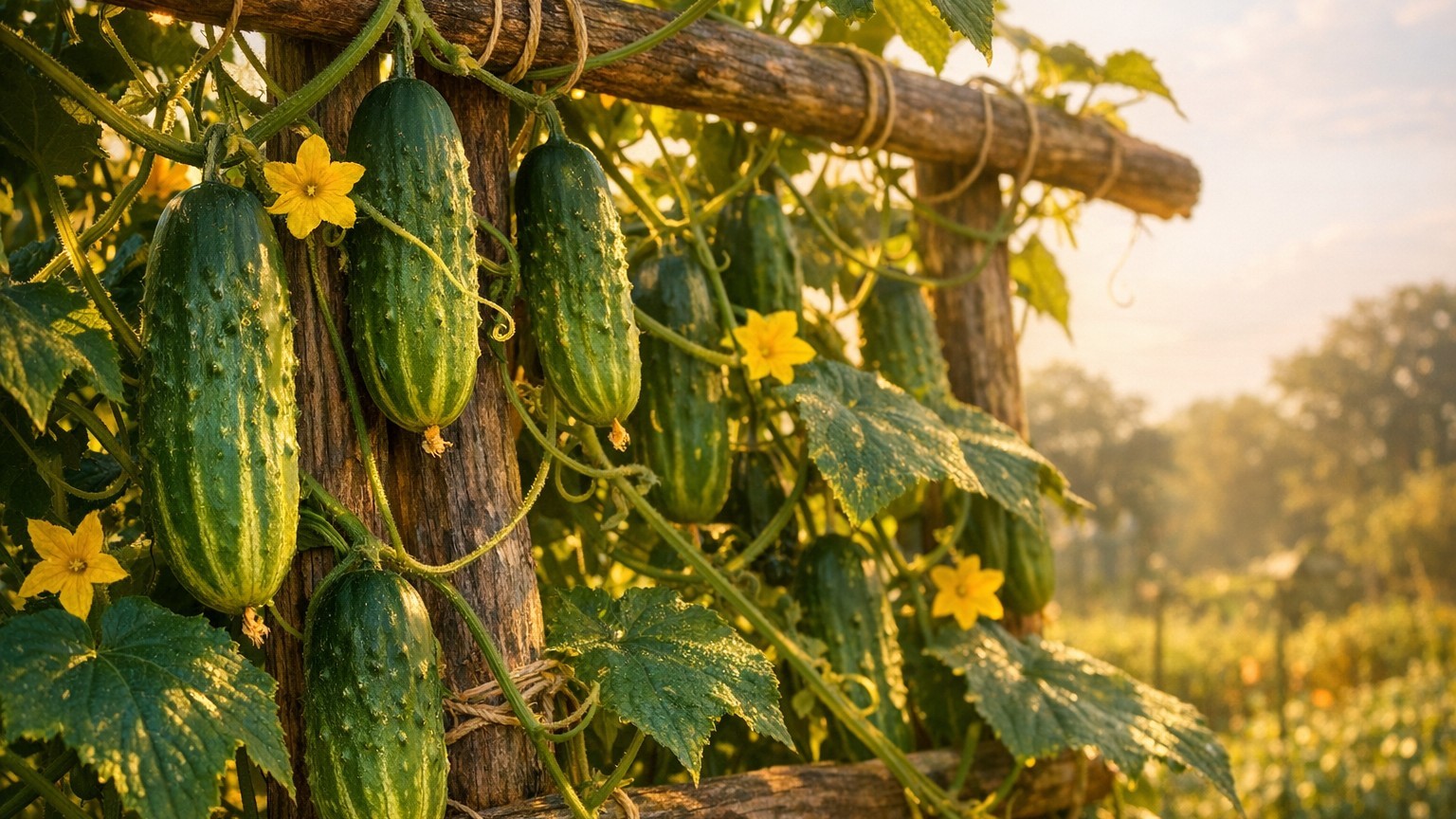

Short-season, quick-to-finish types beat anything bred for a long hot summer here: bush and compact pickling cucumbers, plus parthenocarpic slicers that don’t need bees to set fruit. Manitoba’s growing window is tight and cool, so the type you pick matters more than the brand on the seed packet.
The short answer for Manitoba
Pick cucumbers built for a short, cool season: bush-habit pickling types and self-fruiting (parthenocarpic) slicers, started from transplants rather than direct seed. Skip anything marketed as a long-season vining slicer for hot climates. That’s the whole decision, and it comes straight from the numbers on this province’s reference station.
Winnipeg Richardson’s average last spring frost lands May 23, and the average first fall frost lands September 22. Stack those two dates and you get roughly 122 days between them. That sounds workable for cucumbers. But both figures are means, not guarantees. In about half the years on record, frost arrives later than May 23 in spring or earlier than September 22 in fall. The real, safe window most seasons is shorter than 122 days, sometimes considerably so, and a plant that needs every one of those days to finish is the plant that gets caught.
Heat is the other constraint, and it cuts the same direction. The reference station logs an average of 0.0 days a year at 90°F or above. Cucumbers ripen on accumulated warmth, not on any single hot stretch, and this region simply doesn’t bank extreme-heat days the way southern gardens do. A variety selected for a hot, dry growing region won’t get the heat boost it was bred around here; it will grow, but slower, and it may still be filling out fruit when the season closes.
What to favor by type
Given a zone 3b rating (Canadian system) and a cool, short summer, the types that tend to work are:
- Pickling cucumbers, which as a category tend to reach first harvest sooner than large slicing types.
- Bush or compact-vine habits, which finish and produce over a shorter span and take up less space if you need to cover them.
- Parthenocarpic or burpless types, which set fruit without pollination, useful when cool early- and late-season nights slow down bee activity.
Starting from transplants rather than direct-seeding banks two to three weeks of the short season instead of spending them on germination. Black plastic mulch or row cover adds heat the sky isn’t providing on its own. For the actual cultivar names that have performed well in this province, that’s a job for Manitoba Agriculture, not for a general page like this one.
What will not work here

Long-maturing vining slicers are the first thing to cross off the list. They’re built for a stretched-out, warm season, and Manitoba’s frost-free window, averaging around 122 days but shrinking in roughly half of all years, doesn’t leave the margin they need. A variety that needs a long run of warm nights to size up large fruit often just isn’t finished when frost shows up.
Direct-seeding the moment the calendar hits May 23 is another common mistake. Air temperature and soil temperature aren’t the same thing, and in a zone 3b climate the soil lags well behind the air. Seed sown into cold, still-damp ground doesn’t germinate faster because the calendar says it should; it sits, sometimes rots, and comes up late if it comes up at all. Waiting for the soil itself to warm, or transplanting instead, avoids losing days you don’t have to spare.
Counting on summer heat to finish the job is also a losing bet. With an average of 0.0 days a year above 90°F, this region gets almost none of the free ripening boost that hot-climate varieties depend on. Growth here runs on cumulative mild warmth over many weeks, not on a handful of scorching afternoons, so any cucumber that “needs a hot summer to really take off” is asking for something Manitoba rarely delivers.
The watering mistake this climate invites
Summer rainfall averages about 9.7 inches across June, July, and August, broken down as roughly 3.54 inches in June, 3.13 in July, and 3.03 in August, the driest of the three. That pattern runs opposite to what a lot of gardeners assume. Many gardeners water heaviest in August, assuming peak summer means peak dryness, but August here is already the driest month on average and also the stretch when fruit is setting. Piling on extra water during that window, on top of soil that’s still cool from a short season, is a reliable way to invite rot at the root zone rather than a bigger harvest. Skipping season-extension tools altogether and betting on bare, open ground removes the last bit of margin a tight climate like this one leaves you.
What changes across Manitoba
The zone 3b rating cited here belongs to the reference city, drawn from Winnipeg-area data. It does not describe the whole province, and it shouldn’t be treated as if it does. Manitoba runs from the US border up past the 55th parallel to Hudson Bay, and a single number can’t carry that distance.
Natural Resources Canada’s own hardiness map shows warmer zones concentrated around Winnipeg and the Red River Valley, with colder ratings spreading out toward western Manitoba, the Interlake, and then dropping further north toward places like The Pas, Thompson, and the Hudson Bay coast. Anyone gardening outside the immediate Winnipeg area should treat the frost dates given here, both drawn from the Winnipeg Richardson station, as likely optimistic for their own location, not as a safe estimate.
The practical shift for a reader further north or further from the Red River Valley isn’t a different type of cucumber; it’s the same short-season strategy, applied with an even tighter margin. Transplants over direct seed, season-extension covers, and pickling or bush types over long-vining slicers matter more, not less, the further you get from the reference station. For the actual zone at a specific address, the map is the tool: planthardiness.gc.ca.
Where to check this for your own county
The provincial zone rating comes from a single reference station at the Winnipeg airport. A recommendation tied to your own municipality will always beat a provincial average, because it reflects local frost timing, local soil, and local trial results instead of one station’s normals.
Manitoba Agriculture is the place to look. Two things are worth hunting for there specifically. First, any local or regional planting calendar that reflects frost timing closer to your own area rather than the Winnipeg Richardson averages. Second, variety trial results for your region: provincial extension services routinely test specific cucumber cultivars under real local conditions and publish which ones actually finished and produced well, which is exactly the kind of named recommendation this general page has deliberately avoided making.
Provincial extension data changes as new trial results come in, so it’s worth checking every season rather than relying on something read once. A cultivar that performed well in Red River Valley trials five years ago may have been replaced by something better suited to a shorter or wetter season since. The Manitoba Agriculture site is also the right stop for questions specific to your own soil type, since sandy and clay ground in this province responds very differently to the same summer rainfall totals cited above.
Checking this against your own garden
Every date here is a provincial average pulled from one airport station. Your own garden, even a few miles from Winnipeg Richardson, can run measurably warmer or cooler, and three simple observations will tell you more about your actual microclimate than any calendar.
Feel the soil before you trust the calendar. Push a finger a couple of inches into the bed where you plan to plant. If it feels cool and slightly damp rather than merely cool, the ground hasn’t caught up to the air temperature yet, no matter what the frost-free date says, and seed or transplants set in now will sit rather than grow.
Watch for the first flush of flowers, and note whether they’re mostly male. Male blossoms show up first on most cucumber plants and appear as small flowers without any swelling behind them; a heavy flush of male-only flowers with few female blossoms setting fruit usually means the plant is still building energy and the season’s real productive stretch hasn’t started yet.
Track how quickly true leaves follow germination. A fast move from seed leaves to the first set of true, cucumber-shaped leaves tells you the plant is banking heat efficiently in your specific spot; a slow, dragging pace suggests your garden runs cooler than the provincial average, and that the season-extension steps above matter more for you than for a gardener a few blocks closer to the river.