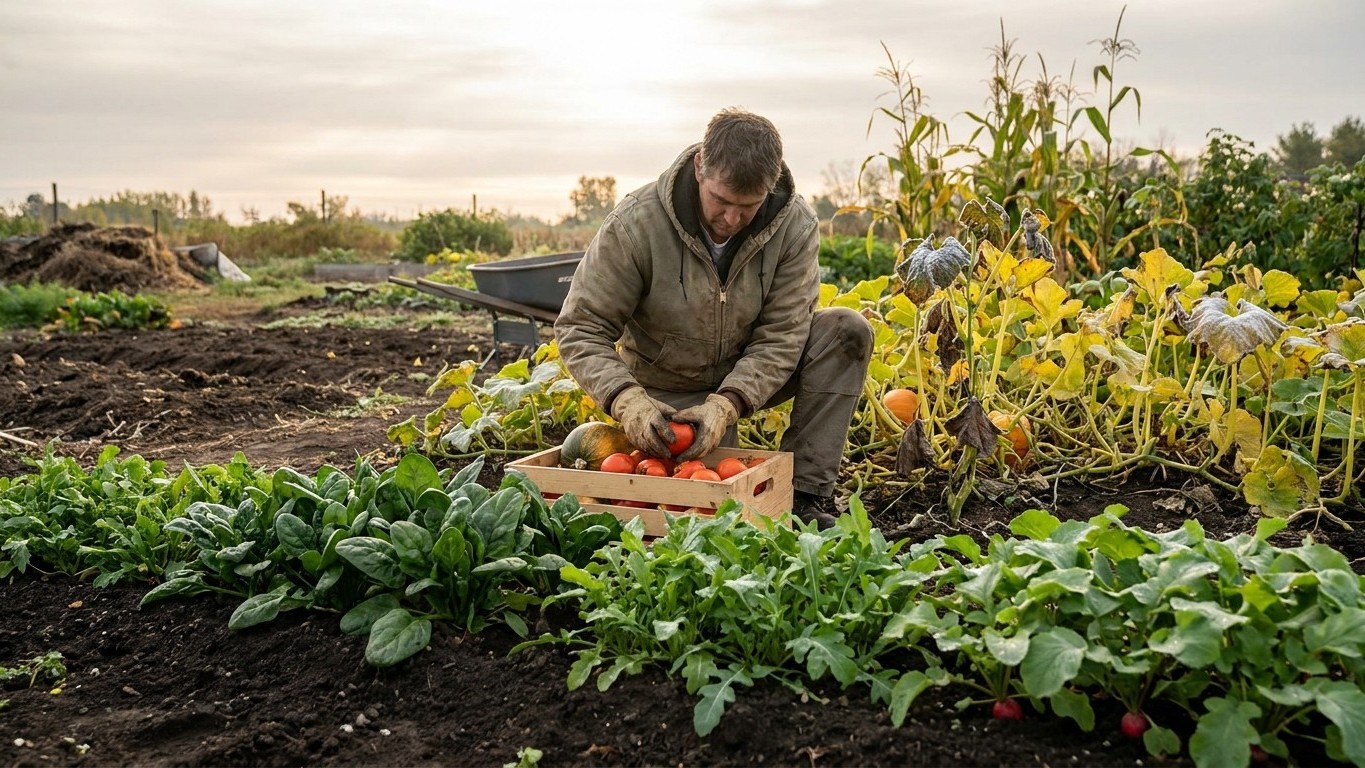

September in Manitoba is a harvest-and-close-out month, not a planting month. With the average first fall frost landing September 22 at Winnipeg, most of what goes in the ground now is a race against a date that’s already a coin flip. A few fast, cold-hardy crops can still go in early in the month under cover, but the bulk of the work is bringing in what’s already grown and protecting what’s still ripening.
What goes in the ground in September

The decision here isn’t the calendar page, it’s soil temperature and how many frost-free days are actually left. Environment and Climate Change Canada’s normals for the Winnipeg Richardson International Airport station put the average first fall frost at September 22, based on the 1981-2010 period. That’s a mean date, not a safety line: in one year out of two, the real frost lands later than that, which also means in plenty of years it arrives earlier, sometimes in the first week of the month. Treat September 22 as the midpoint of a window, never as a date you can plant around with confidence.
That narrow window rules out anything that needs a long run to maturity. Warm-season crops (tomatoes, peppers, squash starts, beans) have no business going into open ground now anywhere in the province; there simply isn’t enough season left for a seedling to catch up. What still has a real shot are the fast, cold-tolerant crops sown in the first week or two of the month: radish, spinach, arugula, and loose-leaf mesclun mixes, all of which can size up to a usable harvest in three to four weeks even as nights cool. A cold frame or a floating row cover buys extra weeks past the average frost date by holding a few degrees of warmth over the bed, which can be the difference between a picked crop and a frozen one.
Garlic and shallots, which do go into Manitoba beds in fall, are usually planted later in the season once the soil has cooled further and the ground is settling toward dormancy rather than still holding summer heat. Early-to-mid September is typically too soon for that in most of the province; treat this month as prep time for those beds (weeding, working in compost) rather than planting time. Manitoba sits in Canadian hardiness zone 3b at the reference station used for these normals, a rating built from seven climate variables under the Canadian system and not convertible to a USDA zone, so don’t lean on that number to judge frost risk directly; use the frost date instead.
What to start under cover
With the frost-free window this tight, “starting under cover” in September means indoor pots and windowsill trays more than a greenhouse full of transplants headed for the garden. Count backward from the average September 22 frost the same way you would for any sowing: check the days-to-maturity on the seed packet, add a week or two because germination and growth both slow as light and soil temperatures drop, and see whether the math still lands before the light gets too thin to finish the job. For most crops with a maturity window of 30 days or more, that arithmetic simply doesn’t work once the calendar hits mid-month.
What does work is quick stuff grown for the kitchen rather than the garden bed: microgreens, pea shoots, and sprouts started indoors in shallow trays, ready in one to three weeks regardless of what’s happening outside. Herbs already growing in pots outdoors (basil, parsley, chives) can be brought in before the first real cold snap to keep producing through fall.
The two ways this goes wrong are worth naming plainly. Start too early, while it’s still warm and bright outdoors, and potted herbs or transplants can stretch and go leggy reaching for light they don’t need yet. Start too late, past the point the packet’s maturity window allows, and the tray never produces a real harvest before short days shut growth down. Neither mistake costs much, but both waste a tray that could have gone to something that actually finishes.
What is ready to pick
September is genuinely a harvest month in Manitoba, and there’s a real list to work through before frost forces the issue. Tomatoes still on the vine need picking or covering on any night frost threatens; even green ones ripen indoors on a windowsill. Winter squash is ready when the skin resists a fingernail scratch and the stem has started to dry and turn brown; cut with a few inches of stem attached to help it store. Potatoes come out once the vines have died back on their own, a sign the skins have set enough to cure for storage. Onions signal readiness when their tops flop over and begin to dry; pull them and let them cure somewhere airy and out of direct sun for a couple of weeks before storage.
Apples and other tree fruit are ready when a gentle upward twist releases the fruit from the branch without tearing; forcing a fruit that resists usually means it needs another few days. Corn is done when the silks have browned and dried and a squeezed kernel releases a milky (not watery, not doughy) liquid. Cabbage, carrots, and beets can generally stay in the ground a while longer, since all three tolerate light frost and often taste better for it, but anything still soft-fleshed or unprotected needs to come in before a hard freeze settles in for good.
The jobs that matter this month
The single biggest job is triage: deciding, crop by crop, what gets harvested now, what gets covered on frost-threat nights, and what can ride out a light frost in the ground. Frost cloth or even old bedsheets thrown over beds on clear, still nights (the kind that radiate heat fastest) can buy tender crops another week or two past that average September 22 date.
Curing matters as much as harvesting. Winter squash and onions both need one to two weeks in a warm, airy, out-of-direct-sun spot before they go into long-term storage; skip this step and they rot faster than they should. This is also the month to plant spring-flowering bulbs (tulips, daffodils, crocus) outdoors, since they need weeks of cool soil before the ground freezes to root properly ahead of winter.
Perennial beds benefit from a cutback once foliage starts to yellow, though anything with attractive seed heads (coneflower, ornamental grasses) can be left standing for winter interest and bird food. Divide overcrowded perennials now while the soil is still workable and roots have time to settle before freeze-up. Turn the compost pile, clean and dry garden tools before they sit unused, and pull and dispose of any diseased plant debris rather than composting it, since many fungal spores survive a home compost pile’s heat cycle. Soil testing done now gives results in time to plan amendments for next spring rather than scrambling in April.
What not to do in September
The classic mistake is trusting a warm afternoon. A string of mild, sunny days in early September doesn’t mean the frost risk has passed; it means the average date hasn’t arrived yet, and in half of all years the real frost comes even later than that, but in the other half it arrives right on schedule or sooner. Leaving tomatoes, squash, and basil uncovered because the daytime felt like summer is how a whole crop gets lost overnight.
A related error is uncovering row covers or cold frames too early after a mild stretch, assuming the risk has passed for good. Manitoba’s fall weather swings; a warm week is routinely followed by a hard drop, and plants hardened off under cover lose that protection fast once exposed.
Fertilizing with nitrogen this late in the season is another common misstep, particularly on shrubs, perennials, and lawns. Nitrogen pushes soft new growth that has no time to harden off before frost, and that tender growth is exactly what gets killed first, wasting the plant’s stored energy on tissue that won’t survive winter. Save nitrogen feeding for spring and stick to phosphorus-and-potassium-focused amendments if a fall feed is needed at all. Letting soil dry out ahead of an expected frost is also worth avoiding: moist soil holds heat better overnight than dry soil, so a light watering before a cold night can offer beds a small amount of extra protection.
Checking this against your own county
A province-wide frost date is a starting point, not an instruction. The September 22 average comes from one station, Winnipeg Richardson International Airport, and Manitoba stretches from the Red River Valley in the south to districts hundreds of miles north where frost arrives noticeably earlier. Proximity to Lake Winnipeg and other large water bodies also moderates nearby temperatures, sometimes by a couple of weeks in either direction. Before betting a bed on any date in this article, check it against Manitoba Agriculture, which tracks regional conditions and crop guidance specific to local districts rather than a single airport station.
Common questions
Can I still plant tomatoes outdoors in Manitoba in September?
No. With the average first fall frost landing September 22, there isn’t enough frost-free season left for a tomato transplant to establish and produce. Any tomatoes still in the ground should be harvested or covered on frost-threat nights instead.
Is September too early to plant garlic in Manitoba?
For most of the province, yes, early-to-mid September is generally still ahead of the usual garlic-planting window, which comes later once the soil has cooled further. Use this month to prepare the bed instead.
What does Manitoba’s hardiness zone 3b actually mean for my garden?
It’s a Canadian-system rating, built from seven climate variables, for the reference station covered by these normals. It doesn’t convert directly to a USDA zone, so it’s not the right tool for judging frost timing; the frost-date normals above are more useful for that.
How do I know if my winter squash is ready to harvest?
Press a fingernail into the skin; if it resists puncturing and the stem has started to dry and brown, it’s ready. Cut it with a few inches of stem attached and cure it somewhere warm and airy for a week or two before storing.
Gardeners who plant by the Moon can check the September 2027 moon planting calendar, a tradition rather than a proven method.