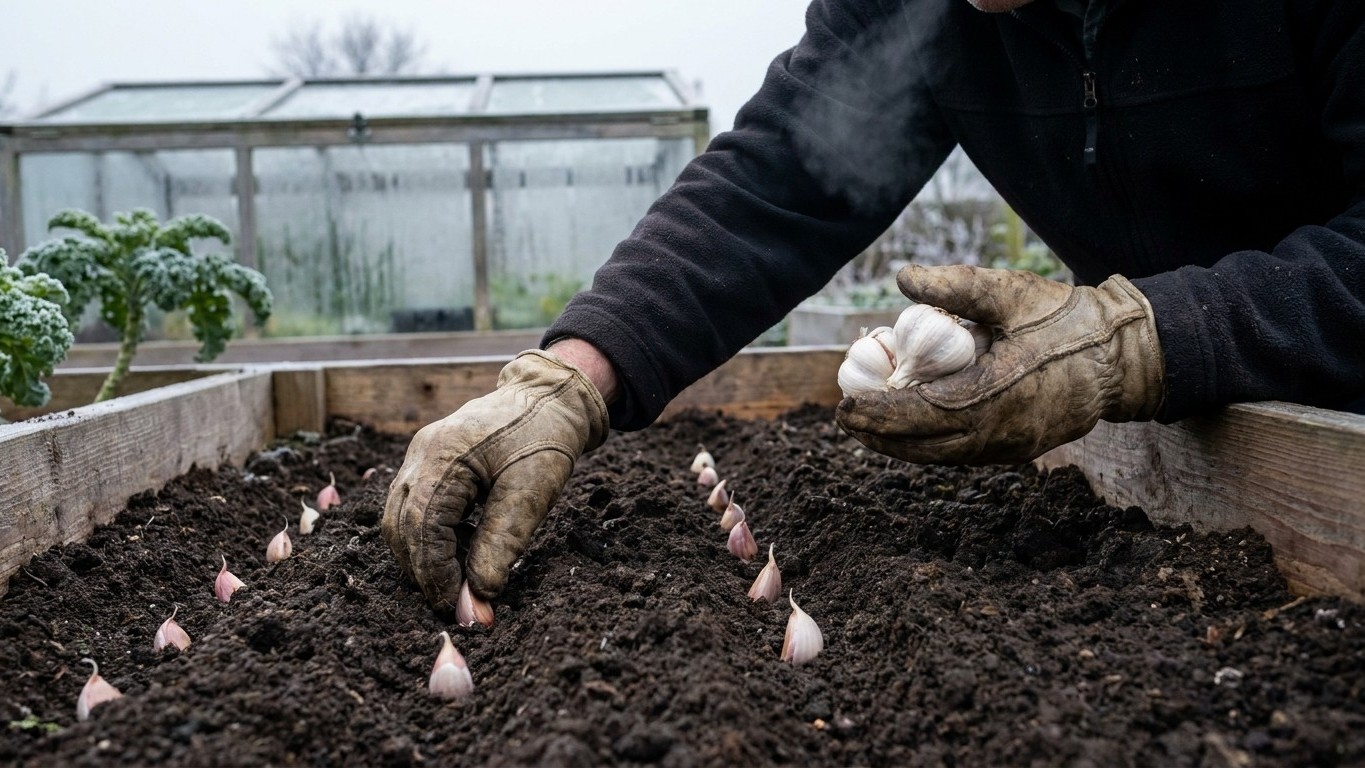

By November, most of Maryland has already crossed its first fall frost, a date that lands somewhere between October 26 and November 5 depending on where you garden. The soil is still workable in most counties, so the honest list for this month is short and specific: garlic and shallots if the ground isn’t frozen, hardy greens tucked under cold frames, bare-root and dormant plantings, and bulbs forced indoors for winter bloom. Nothing tender goes into open ground now.
What goes in the ground in November

The calendar says November, but the thing that actually decides what survives is soil temperature and how many weeks remain before the ground locks up hard. Maryland sits in USDA Hardiness Zone 5b-8a, a range built from average extreme minimum winter temperatures rather than frost dates, which is why a plant that shrugs off winter in Somerset County can die outright in Garrett County a hundred miles away. With the first fall frost already behind most of the state (October 26 to November 5), this is not a month for gambling on anything that wasn’t already hardened off weeks ago.
Bulbs and alliums still going in
Garlic and shallots are the one true planting job left for open ground this month, and the deadline is soil temperature, not the sight of frost on the grass. Cloves need roughly four to six weeks with soil above freezing to push roots before dormancy sets in, so if the ground in your yard still gives easily to a trowel, there’s time. Push cloves root-down, two inches deep, four to six inches apart, then mulch heavily with straw once the ground has cooled further. Skip planting in Western Maryland’s higher elevations if the ground has already gone hard; a spring planting there will outperform a rushed fall one.
Cold frames, bare-root, and forcing
Cold frames and low tunnels let you push hardy greens like spinach, mache, and claytonia into the ground weeks after open-air planting would fail. Bare-root fruit trees, roses, and dormant perennials can also go in now while the ground still allows digging, since they’re not actively growing and won’t suffer transplant shock the way a leafy plant would. Indoors, this is the month to start forcing paperwhites, amaryllis, and potted bulbs for winter bloom, and to force rhubarb or chicory roots in a dark, cool basement for a harvest that has no business existing outdoors this time of year.
What to start under cover
Under cover, the math changes. Cold frames and unheated hoop houses buy back several weeks that open ground has already lost, and the way to use them is to count backward from your local first fall frost date (October 26 to November 5) rather than forward from a fixed date on a seed packet. Sow spinach, mache, or claytonia now, and by the time day length drops enough to slow growth to a crawl, you want seedlings already up and rooted rather than seeds still waiting to germinate.
The two ways this goes wrong are predictable. Sow too early relative to your frame’s protection and seedlings get soft and leggy chasing weak light, arriving at winter oversized and vulnerable. Sow too late and they never size up before growth stalls, leaving you with a cold frame full of seedlings that neither die nor grow until the days lengthen again. Splitting a planting into two sowings a week or two apart, rather than betting everything on one date, hedges against both outcomes and costs nothing but a little extra seed.
This is also the window to start bulbs for forced indoor bloom on a rolling basis, potting a few every week or two rather than all at once, so blooms arrive staggered through the darkest stretch of winter instead of all together and then nothing.
What is ready to pick
Outdoors, the harvest thins fast but doesn’t disappear. Kale, collards, and Brussels sprouts often taste better after a frost has hit them, since cold triggers the plant to convert starches to sugars as a kind of natural antifreeze. Leeks left in the ground can be pulled as needed well into the cold months, and root crops like carrots, parsnips, and turnips actually improve in flavor the longer they sit in cooling soil, so there’s no rush to pull everything at once.
Cold frames extend the same logic indoors, holding lettuce, spinach, and other greens in a kind of suspended harvest where growth slows nearly to a stop but the plants stay alive and edible, functioning more like a refrigerator than a garden bed. Sprouts and microgreens grown on a windowsill or under a grow light fill the gap for households wanting something fresh that doesn’t depend on the weather at all.
Stored crops need checking now, not later. Go through winter squash, potatoes, and onions and pull anything showing a soft spot, a sweet smell, or shriveling skin, since one turning squash in a bin will take its neighbors down with it faster than most people expect. A weekly five-minute check of the storage shelf is cheaper than losing half a harvest to rot that spread unnoticed.
The jobs that matter this month
The garden work in November has nothing to do with planting and everything to do with setting up the months ahead, and skipping it costs more than it looks like it should.
Pruning, protecting, and cleaning up
Dormant pruning of fruit trees and cane berries can begin once leaves have dropped and the plant has gone fully dormant, cutting out dead, crossing, or diseased wood while the structure is easy to see without foliage in the way. Mulch garlic beds, perennial roots, and anything newly planted with a heavy layer of straw or shredded leaves once the ground has cooled, since mulch applied too early traps warmth that delays the dormancy plants need. Clean up any diseased plant debris left in beds rather than composting it, since many fungal and bacterial problems overwinter quietly in old leaves and stems and reappear stronger the following season.
Soil, tools, and planning
Fall is the best time of year to run a soil test, since any lime or amendments applied now have the entire winter to work into the soil chemistry before spring planting starts. Turn the compost pile one more time before it freezes solid, clean and sharpen pruners and hoes before they sit unused for months, and repair raised bed frames or fencing while the ground is still soft enough to reset a post. It’s also the month to order seed for the coming season, since the most popular varieties of tomatoes, peppers, and heirloom crops routinely sell out by late winter, and the gardener who orders in November gets first pick over the one who waits until March.
What not to do in November
The most common mistake this month is trusting a warm afternoon over the calendar. A run of 60-degree days can trick a gardener into uncovering cold frames or pulling mulch back too early, and then a sudden drop wipes out greens that had been perfectly safe under cover. Once protection goes down for winter, leave it down unless you’re checking on plants, not opening the whole structure to enjoy a mild stretch.
Nitrogen fertilizer is the second classic error. Feeding nitrogen to perennials, lawns, or overwintering crops this late in the season pushes soft new growth right when the plant should be shutting down for dormancy, and that new growth is exactly what a hard freeze kills first. If a soil test calls for nitrogen, it belongs in spring, not now; fall feeding, where it’s warranted at all, should lean toward phosphorus and potassium instead.
Mulching too heavily and too early causes its own problem. A thick layer of mulch piled on before the ground has actually cooled and frozen creates a warm, moist pocket that rodents find irresistible for winter nesting, right up against the base of a garlic bed or a young fruit tree. Wait until after a hard freeze to mulch deeply, and check that mulch isn’t piled directly against tree trunks or stems, where it invites both pests and rot.
Checking this against your own county
A state-wide answer for November is a starting point, not an instruction, and Maryland is a small state with an outsized range of microclimates. The mountains of Garrett and Allegany counties run weeks behind the rest of the state, often locking up hard while the Eastern Shore is still workable. Elevation, proximity to the Chesapeake Bay, and even which side of a ridge a garden sits on can shift these windows by two or three weeks in either direction.
| Region | Typical pattern relative to statewide range | Practical effect this month |
|---|---|---|
| Western Maryland (Garrett, Allegany) | Frost and ground freeze arrive earlier | Garlic planting deadline comes sooner; cold frames need extra insulation |
| Central Maryland | Tracks close to the statewide average | Most general guidance applies directly |
| Eastern Shore | Frost and ground freeze arrive later | More weeks of workable soil for alliums and bare-root planting |
For a planting calendar tuned to your own county, the University of Maryland Extension is the reliable next stop.
Common questions
Is it too late to plant garlic in November in Maryland?
Not usually, as long as the ground still gives to a trowel. Garlic needs roughly four to six weeks of soil above freezing to root before winter dormancy, so central and eastern counties often still have time even into mid-November, while higher elevations in the west may already be closed for the season.
Can I still start seeds outdoors this month?
Direct-sowing outdoors in open ground isn’t recommended once the first fall frost has passed (statewide, that’s October 26 to November 5). Cold frames and low tunnels are the workaround, extending the sowing window for hardy greens like spinach and mache by several weeks.
What vegetables taste better after a frost?
Kale, collards, Brussels sprouts, and root crops like carrots and parsnips convert starches to sugars in response to cold, which is why gardeners often leave them in the ground rather than harvesting before the first freeze.
Should I prune my fruit trees now?
Dormant pruning can begin once trees have dropped their leaves and gone fully dormant, but it’s worth waiting until the coldest part of winter has passed in most cases, since pruning too early can occasionally stimulate growth that gets damaged by a later hard freeze.
Gardeners who plant by the Moon can check the November 2026 moon planting calendar, a tradition rather than a proven method.
Related guides
- the Maryland planting calendar
- What to Plant in Maryland in October
- What to Plant in Maryland in December
Elsewhere? See what to plant in November in every state and province.