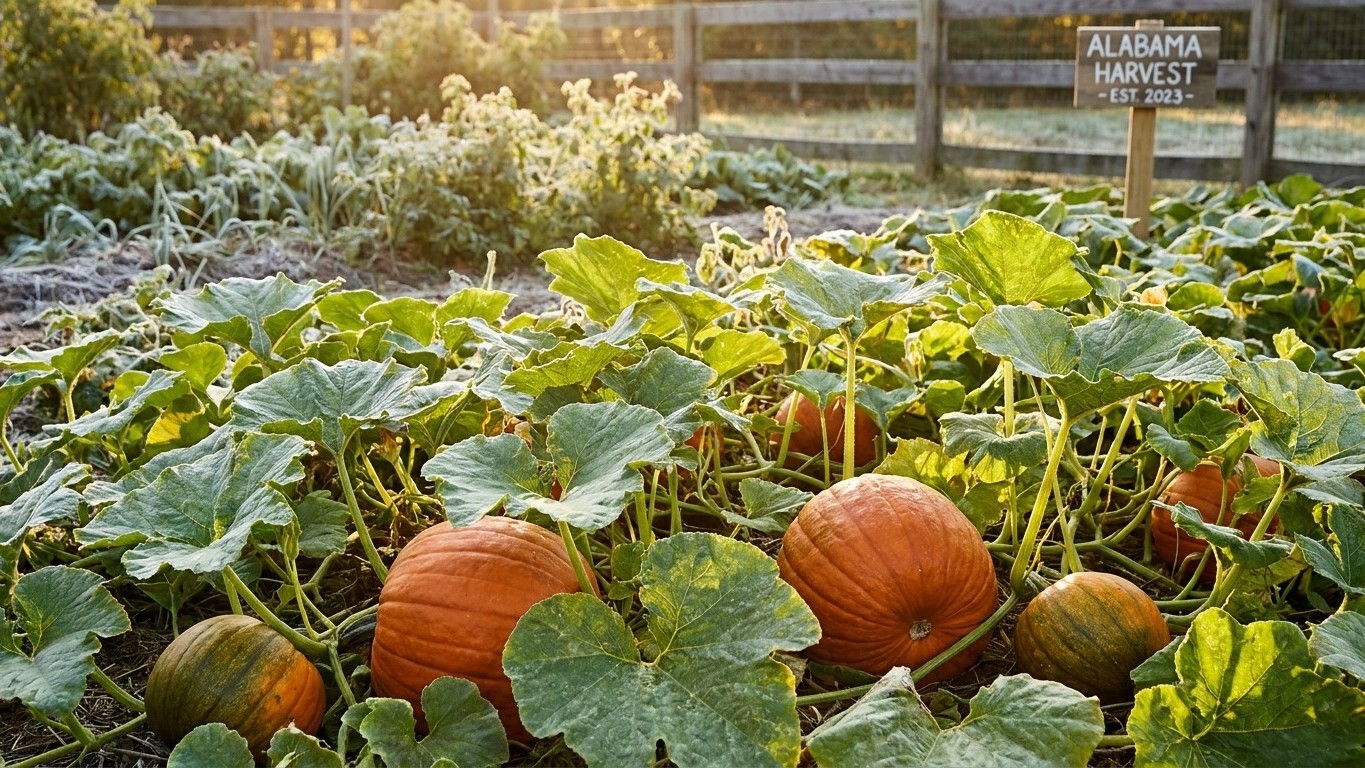

Yes, but the margin is thin. Maryland’s first fall frost typically lands between October 26 and November 5, and a pumpkin needs 45 to 55 days after its flower opens to finish ripening. That means the countdown that matters isn’t planting day, it’s the day the vine sets its last usable bloom.
The short answer
Start with the frost date, then work backward. Maryland’s first fall frost falls in the October 26 to November 5 window, according to NOAA’s 1991-2020 Climate Normals for 32°F freeze probability. Utah State University Extension puts pumpkin maturity at 45 to 55 days after flowering, not after seeding or transplanting. Subtract that maturation window from the earlier end of frost season, October 26, and you land on September 1 to September 11 as the last safe flowering date. Subtract it from the later end, November 5, and the window shifts to September 11 through September 21. Stack those two calculations together and Maryland’s real deadline for opening a flower that still has a shot at coloring up sits somewhere between September 1 and September 21, depending on where in the state you garden and which end of the frost window your particular fall decides to follow.
Why the range matters more than a single date
A single date would be tidy, but it would also be wrong for half the state. NOAA’s own caution on this data flags that western Maryland, meaning Garrett and Allegany counties, runs its mountain climate weeks later into frost risk than the rest of the state, while the Eastern Shore tends to stay milder longer. A grower near Cumberland working with a September 1 flowering deadline is playing it safer than one near Salisbury, who might squeeze a few more days out of a warmer microclimate. Neither is guessing at the frost date itself, since that comes straight from the 1991-2020 Normals, but both need to apply the 45-to-55-day math to their own conditions rather than to a statewide average.
The takeaway isn’t a calendar square to circle. It’s a habit: count backward from whichever end of the frost window your local area tends to hit, and treat any flower opening after that point as a fruit you probably won’t get to carve.
When to sow here
Soil temperature drives this decision, not the frost date, and the two are easy to confuse. Maryland’s last spring frost falls between April 3 and April 16, but Utah State University Extension is clear that pumpkin seed needs soil holding at 65°F, a threshold the ground reaches well after the air stops freezing. Here’s how the sequence actually plays out.
- Let the last frost window, April 3 to April 16, pass completely. This clears the air of freeze risk but tells you nothing about the ground itself.
- Check the soil directly with a thermometer pushed a few inches into the bed. Soil lags behind air temperature by weeks, so a frost-free April doesn’t mean plantable soil in April.
- Wait for a consistent 65°F reading, not a single warm afternoon spike. Seeds dropped into soil that’s still cold tend to rot before they ever germinate.
- If the calendar is working against you, lay black plastic mulch or set floating row covers over the bed ahead of time. Warming the soil artificially this way can buy about two weeks compared to bare, uncovered ground, which matters when you’re racing the September flowering deadline described above.
- Once the seed is in, remember the clock hasn’t really started. Germination and vine growth still have to happen before the plant produces its first flower, and it’s that flower date, not the sowing date, that gets checked against the fall frost window.
Skipping the soil check is the single most common shortcut that backfires. A gardener who sows the week after the last frost date, assuming that’s “safe,” is often putting seed into soil that hasn’t caught up yet, and that lost time compounds by the time flowering rolls around in late summer.
What goes wrong here
- A late flower that never colors: if the last blossoms open after Maryland’s safe window closes, roughly September 1 to September 21 depending on location, the 45-to-55-day clock runs straight into frost territory before the fruit has a chance to turn orange. Remedy: pinch off new female flowers once the calendar passes the local cutoff, so the plant’s energy goes into ripening fruit already set instead of starting new ones that can’t finish.
- A fruit caught by frost mid-ripening: because the first frost can arrive as early as October 26 in parts of the state, a pumpkin that’s partway through coloring gets frozen before it fully turns. Remedy: watch the forecast in that late-October window and cover exposed fruit with blankets or tarps on predicted frost nights, or cut it with the stem attached and let it finish coloring somewhere it won’t freeze.
- A vine that dies back before the skin hardens: cool nights and late-season vine damage can shut a plant down before the pumpkin’s shell has toughened, leaving fruit that looks ripe but bruises and rots quickly once picked. Vine health late in the season also depends on staying ahead of the same pests that shorten the growing window elsewhere, including squash bugs and cucumber beetles, both of which already have dedicated pages on this site walking through identification and control in Maryland conditions.
- A shorter window for mountain counties: gardeners in Garrett and Allegany face frost weeks earlier than the statewide October 26 to November 5 range would suggest, which means a flowering deadline that works fine in Baltimore can arrive too late in the western counties. Remedy: growers in that region should aim for the earliest end of the safe flowering window and treat any bloom after early September as unlikely to finish.
Common questions
Can I still plant pumpkins in Maryland in July?
It depends on the variety’s flowering-to-frost math, but working backward from the state’s October 26 to November 5 frost window and the 45-to-55-day maturation period after flowering, a July sowing leaves little room for error. The plant still needs to germinate, grow, and flower before that maturation clock can even start.
What if my pumpkin is still green when frost is coming?
Utah State University Extension’s guidance centers on harvesting with the stem attached before frost hits and moving fruit somewhere it won’t freeze. The source doesn’t publish a storage temperature or a specific keeping time, only that guidance to keep harvested fruit out of freezing conditions.
Does Maryland’s frost date differ much across the state?
Yes. The October 26 to November 5 range comes from NOAA’s Climate Normals, but that same data carries a caution that western Maryland’s mountain counties, Garrett and Allegany, see frost weeks later into the risk period, while the Eastern Shore tends to run milder.
How do I know when a flower has “opened” for counting the clock?
The 45-to-55-day maturation window starts specifically from flowering, not from seeding or transplanting, according to Utah State University Extension. A female flower is easy to spot because it sits behind a small swollen bulge, the beginning of the fruit itself, and that’s the date to mark and count forward from.