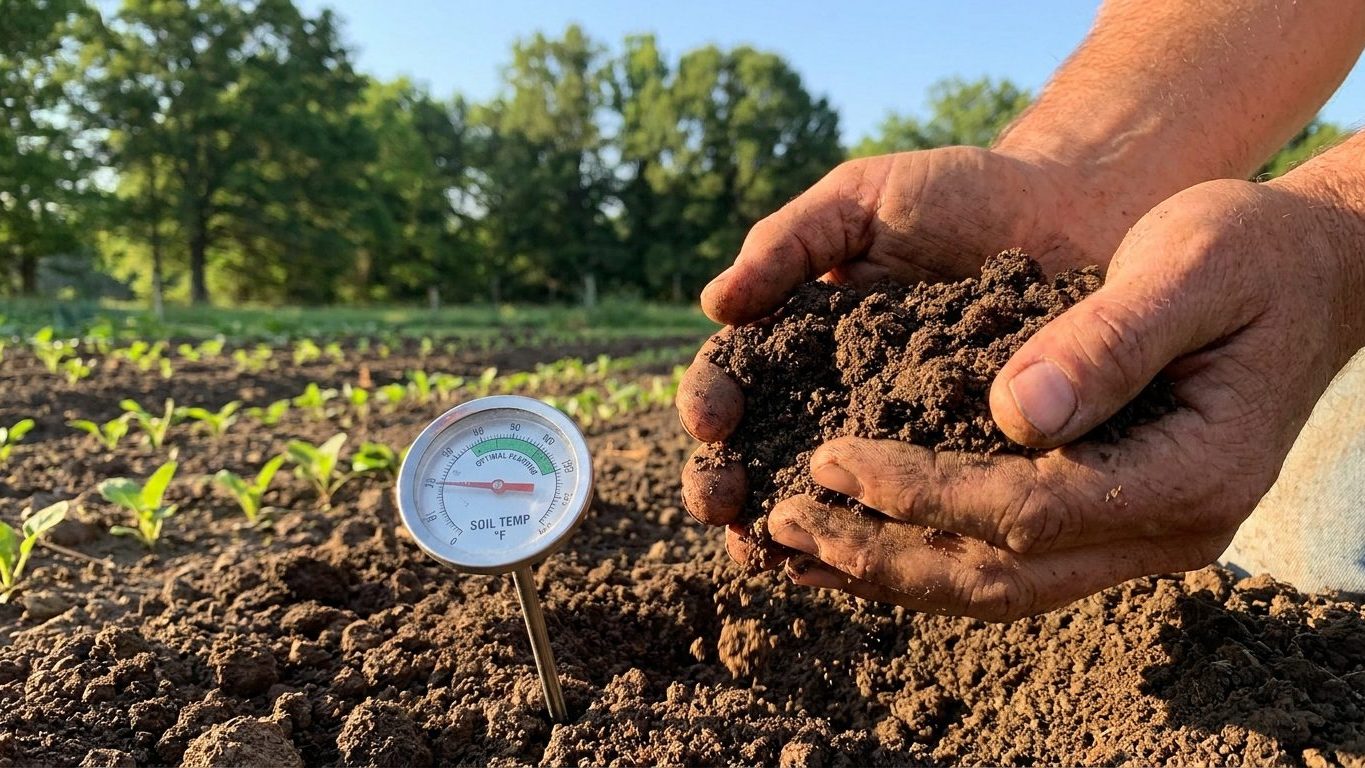

Winter squash goes into Massachusetts soil once the ground itself has warmed, which usually lands somewhere in late May, well after the frost calendar clears. That timing, plus the state’s roughly seven-month frost-free window and a summer of modest heat and steady rain, shapes almost every decision that follows: what type to plant, whether to try a second sowing, and how much watering the season will demand.
When the soil is warm enough in Massachusetts

The question every gardener actually asks is “when do I plant,” and the honest answer starts with frost, even though frost is not the real deciding factor. At the Boston reference station, NOAA’s 1991-2020 Climate Normals put the last spring frost (the date when the probability of a 32°F freeze drops into the 30-70% band) between April 1 and April 8. That is the last-frost window for the mildest corner of the state. It is not a promise, and it is not the day to plant winter squash.
Winter squash seed rots in cold, wet soil, and the seedlings sulk or die outright if a late chill hits them. What matters is soil temperature, not the frost date on a calendar. Soil in a sunny Massachusetts garden typically climbs into the range squash need for germination several weeks after that early-April frost line, which is why most growers in the state wait until mid-to-late May, sometimes into the first days of June, before direct-seeding or setting out transplants. The frost date tells you when the risk of a freeze becomes unlikely; the soil thermometer tells you when the crop will actually grow instead of stall.
Why Logan’s date isn’t your date
That April 1-8 figure comes from Boston Logan Airport, a waterfront, urban station and the single mildest reporting point in Massachusetts. Inland towns, the Connecticut River Valley, and especially the Berkshires see frost linger later into spring and arrive earlier in fall. A gardener in Pittsfield or Amherst working off a Boston-area date is planting into risk the coastal number doesn’t reflect. The safest local check is a soil thermometer pushed a few inches down on a sunny afternoon, combined with the frost data your county extension office tracks for your specific area, since a single statewide number was never meant to substitute for a local one.
Skip the pesticide-schedule mindset here too. The bigger lever at planting time is simply timing and site: choosing a warm, well-drained bed, holding off until the soil (not just the air) has warmed, and letting the plant establish roots before demanding growth from it. That single decision, made a few weeks later than the frost date might suggest, does more for a healthy stand than almost anything applied after the fact.
How long the season lasts here
Massachusetts pairs that April 1-8 last-frost window with a first fall frost arriving between November 3 and November 14, also from the Logan station’s 1991-2020 normals. Stretch those two windows against each other and the frost-free season runs from roughly 216 days at its shortest (April 1 to November 3) to about 220 days at its longest (April 8 to November 14). Either way, that’s a long growing season by New England standards, and it changes what’s realistic to attempt.
Winter squash is a long-season crop by nature: the fruit has to size up, mature, and cure on the vine before frost ends things, so most gardeners treat their single spring planting as the only one. But a 216-to-220-day window gives some breathing room that a shorter-season territory wouldn’t have. It’s generally too tight to squeeze in a full second winter-squash crop after harvesting the first, but it does open the door to a deliberate succession approach for other vegetables planted before or after the squash bed comes into play, and it gives an underperforming first sowing (one lost to a cutworm or a cold snap) a real second chance if replanted promptly in early-to-mid June rather than being written off.
What the length changes for transplants
A season this long also affects whether starting seedlings indoors is worth the trouble. In a shorter-season state, transplanting is often the only way to get squash across the finish line before frost. In Massachusetts, with over 215 frost-free days on the table, direct-seeding once soil has warmed is a perfectly viable option for most types, sidestepping the transplant shock and root disturbance squash seedlings dislike. Transplants still make sense for gardeners who want a head start or who garden in one of the state’s cooler inland pockets, but they’re a choice here, not a necessity. For readers weighing a second planting of a faster crop once squash space frees up, the site’s succession sowing guide walks through how to time that follow-on planting for New England conditions.
Heat and water in Massachusetts

This is where Massachusetts reveals its real character as squash-growing ground, and it isn’t a hot one. The Boston reference station averages just 10.2 days a year at or above 90°F. That’s a modest heat load. Winter squash isn’t starved for warmth here the way it would be in a short, cool mountain season, but it also isn’t racing against the kind of relentless summer heat that pushes irrigation to the top of the list, the way it would in a hotter, drier state.
Water tells a similar story. Summer rainfall averages about 10.4 inches across June, July, and August, with the driest month, August, still bringing 3.23 inches on average.
| Month | Average rainfall |
|---|---|
| June | 3.89 inches |
| July | 3.27 inches |
| August | 3.23 inches |
That’s a reasonably wet summer pattern compared to much of the country, and it means Massachusetts squash beds rarely face true drought stress from June through August. But steady summer moisture combined with only 10.2 days of real heat cuts both ways. The bigger risk in a cool, damp Massachusetts summer isn’t a wilting vine, it’s powdery mildew creeping across the leaves, slower fruit ripening than a squash grower in a hotter state would see, and vine diseases that thrive when foliage stays damp and air doesn’t move through the planting. Spacing plants for airflow, watering at the soil line rather than overhead, and choosing a site with morning sun to dry dew off the leaves matter more here than any drought-proofing strategy.
None of these are forecasts. They’re 1991-2020 normals for one reference station, and a rain gauge on your own plot, checked against your own soil (clay holds that inch of rain for a week, sand lets it through in a day), is what actually tells you whether a given July needs supplemental watering.
Which winter squash suit Massachusetts
Given a frost-free season running roughly 216 to 220 days, modest summer heat, and a wet, humid growing pattern, the calculus for Massachusetts leans toward types that mature reliably within that window and shrug off damp-summer disease pressure rather than types bred for blistering heat.
| Squash type | Fits Massachusetts because |
|---|---|
| Acorn | Generally among the fastest-maturing types, a safety margin against an early inland frost |
| Delicata | Compact vines that benefit from the airflow a humid summer calls for |
| Butternut | Uses the full 216+ day window well; benefits from a warm, sunny site given the state’s modest heat load |
| Hubbard / Kabocha | Longer-season types that need the fuller end of the window and good spacing against mildew |
These are broad market categories, not specific varieties, and that distinction matters. This page has no business recommending a named cultivar, because the varieties that actually perform well in a given Massachusetts county depend on trial data this article doesn’t have and shouldn’t guess at. The University of Massachusetts Amherst runs exactly that kind of regional variety trial work through its extension service, and its Extension program is the source for which specific varieties within each of these types have proven themselves against local disease pressure and local season length.
What this page can say with confidence: pick a type suited to a humid, moderately warm, 216-to-220-day season, favor disease resistance over raw size, and give the planting the airflow and morning sun a damp New England summer rewards. The rest, the actual variety name on the seed packet, is a question for the growers and researchers working the state’s own trial plots.