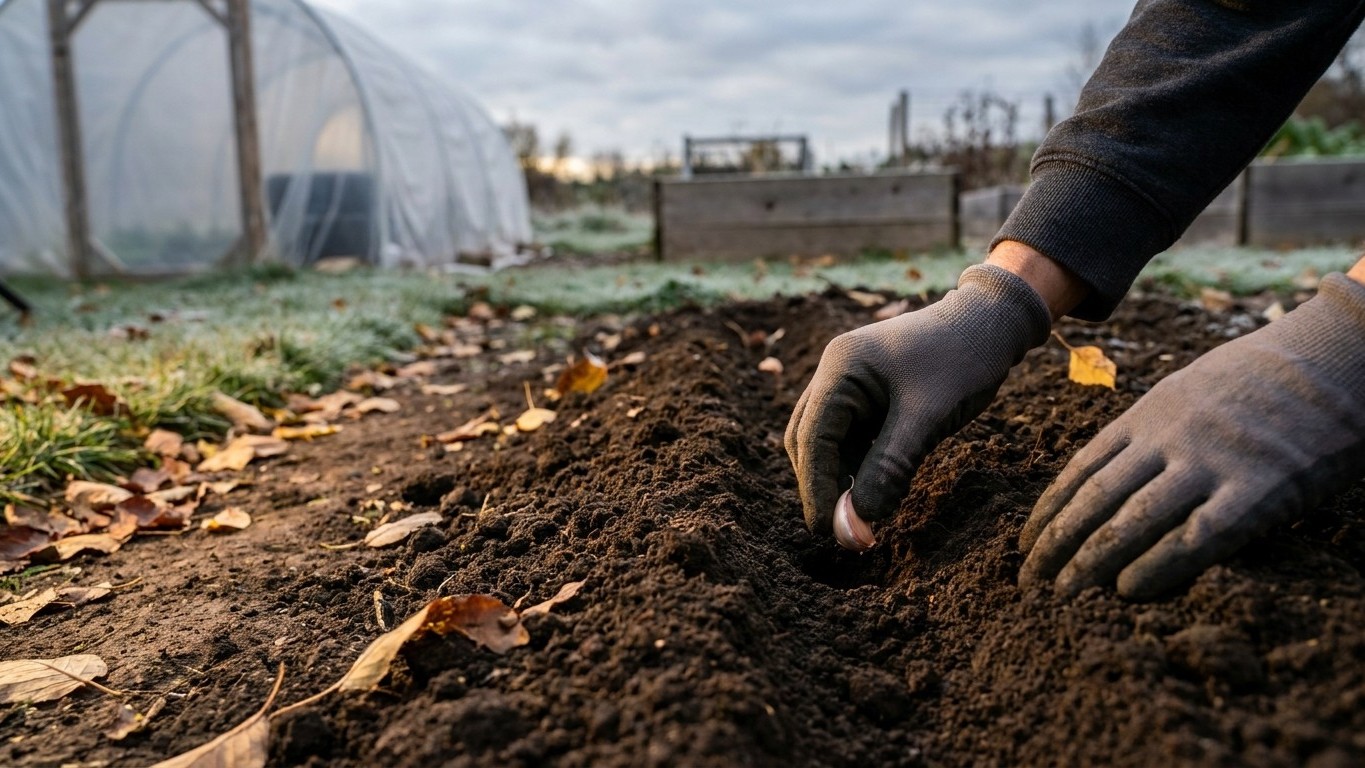

October in Michigan straddles the first fall frost, which arrives anywhere from October 6 to October 21 depending on where you garden. That range decides nearly everything below: garlic and shallots go into the ground now, a short window remains for hardy greens under cover, and anything tender needs to be off the vine before the soil locks up. This is a wind-down month for the vegetable bed, not a fresh-planting one.
What goes in the ground in October

Soil temperature, not the date on the calendar, is what actually decides whether a seed or clove survives here. With the first frost landing somewhere between October 6 and October 21 across zone 6a, the first half of the month still offers workable soil in much of the Lower Peninsula, while a garden closer to Lake Superior or at higher elevation may already be past it. The safest bet in this window is garlic and shallots. Both go into the ground in fall specifically because they need a stretch of cold to trigger the bulb formation that gives you a full head come summer, and both tolerate the freeze-thaw cycle that follows planting.
Hardy greens are a smaller, riskier opportunity. Spinach, mâche, and kale transplants set out in the first week or two of the month, especially under a low tunnel or cold frame, have a real shot at establishing before the ground hardens. Peas and lettuce sown directly outdoors are a much longer shot: by the time they’d germinate, the frost window is often already closing.
Spring-flowering bulbs belong on this list too, even though they aren’t food. Tulips, daffodils, and crocus planted now use the same cooling soil that pushes garlic to root, and they ask for nothing more than a hole deep enough to sit below the frost line.
Cover crops round out the month’s real options. Winter rye or clover seeded into beds that have finished producing holds the soil through winter and feeds it back in spring, which is a far better use of empty ground than leaving it bare.
What doesn’t belong on this list is anything warm-season: beans, squash, tomatoes, peppers, corn. Air temperature in early October can feel mild enough to fool a gardener, but soil that’s already cooling will rot those seeds before they sprout, and any seedling that does emerge has no chance of reaching harvest before frost ends the conversation.
What to start under cover
Working backward from the frost window is the only arithmetic that matters here. If a quick green like arugula or mesclun mix takes roughly three to four weeks to reach a baby-leaf harvest, and the frost falls somewhere between October 6 and October 21, a sowing made in the first days of the month under a cold frame or row cover has a workable shot. A sowing made in the third week does not, because daylight is shrinking at the same time, which slows growth well below what the seed packet’s days-to-maturity number assumes in summer.
The two ways this goes wrong mirror each other. Sow too early relative to the cover you have, and the greens outgrow the frame before the cold arrives, leaving leggy, bolt-prone plants with no protection left to give. Sow too late, and the seedlings never build enough leaf mass to survive the first hard freeze, cover or not.
Cold frames and low tunnels are the main tools this month, not seed-starting trays on a windowsill; there’s no spring transplant date to work backward from in October. The one indoor project worth starting now is potting up bulbs meant for winter bloom indoors. Amaryllis and paperwhite narcissus don’t need the cold treatment that outdoor bulbs do, and potting them in early October times their bloom for the darkest stretch of the year rather than leaving it to chance.
If cold frame space is limited, prioritize the fastest crops first. A radish or a cut-and-come-again lettuce mix has a far better chance of reaching a usable size in this shrinking window than anything that needs a full head to form.
What is ready to pick
Winter squash and pumpkins are the headline harvest, and the test is simple: the rind should resist a thumbnail press, and the stem should have started to dry and corky. Pull them before a hard freeze splits the skin, then cure them in a warm, dry spot for a couple of weeks before moving them to cold storage.
Apples peak for many varieties this month, and a light frost actually improves flavor in several of them rather than hurting the fruit. Brussels sprouts, kale, and collards work the same way: cold sweetens the leaves by converting starches to sugar, so a plant left standing through the first frost often tastes better than one picked before it.
Tomatoes still on the vine as frost approaches are worth a full strip-and-ripen effort. Green tomatoes brought indoors and set somewhere dark and cool will ripen slowly over several weeks, which stretches the harvest well past the date the plant itself gave out.
Root crops (carrots, beets, potatoes, leeks) can stay in the ground a while longer under a thick layer of mulch, but they should come out before the soil freezes solid, since digging frozen ground is a losing fight. Anything already in storage from earlier harvests deserves a walk-through now: check squash for soft spots, onions for sprouting or mold at the neck, and potatoes for green shoulders or soft rot, and pull the bad ones before they spread.
The jobs that matter this month
Clearing and protecting
Spent plants and disease-carrying debris need to come out of the beds now, not in spring. Anything that hosted blight, mildew, or rust over the summer should go to the trash rather than the compost pile, since most home compost setups never get hot enough to kill those pathogens. Freshly planted garlic and shallot beds benefit from a heavy mulch of straw once the ground has started to cool, which buffers the freeze-thaw cycles that can otherwise heave the cloves out of the soil over winter.
Soil, tools, and infrastructure
Fall is the best time in the whole year to test soil pH and add lime or sulfur, because slow-acting amendments have the entire winter to work into the root zone before spring planting starts the clock again. Hoses and drip lines need to be drained and stored before the first hard freeze cracks them, and any tool that’s spent the season in the shed deserves a real cleaning, an edge sharpened, and a light coat of oil before it sits idle. Raking and shredding fallen leaves gives you the best mulch and compost material of the year for free, and turning an existing compost pile now keeps it breaking down through the cooler weeks ahead. Tender perennials that won’t survive the coming cold should get moved indoors or mulched heavily where they stand, and any garlic or spring bulb order still on the wish list should go in now, since the popular varieties sell out well before planting season ends.
What not to do in October
The most common mistake is trusting a warm afternoon over the calendar of risk. Tomatoes, peppers, and basil left standing because “it still feels like summer” can be wiped out overnight once temperatures drop into frost range, and that range starts as early as October 6 in parts of zone 6a. Cover tender plants or harvest what’s usable before a cold snap, not after the forecast confirms it.
A close second is opening a cold frame or row cover during a mild stretch and forgetting to close it back up. Greens that have hardened off under cover can take a surprising hit from a single unprotected night, undoing weeks of careful timing in one cold evening.
Feeding nitrogen this late in the season is another classic misstep. Nitrogen pushes soft new growth on perennials, shrubs, and lawns right when the plant should be hardening off for winter, and that new growth is exactly what frost damages first. If a fall fertilizer is warranted at all, it should lean toward phosphorus and potassium, not nitrogen.
Planting garlic too early is the last trap worth naming. Cloves put into soil that’s still warm can push top growth before winter sets in, and that growth gets damaged by the first hard freeze, weakening the plant going into spring. Waiting until the soil has genuinely cooled, even if that means planting later in the month than a calendar might suggest, produces a stronger bulb.
Checking this against your own county
A statewide frost window is a starting point, not a schedule for any one backyard. Elevation, proximity to Lake Michigan or Lake Superior, and simple north-south position across the state can shift these dates by weeks: a garden near Detroit sits closer to the April 30 last-spring-frost mark, while counties farther north or at higher elevation run cooler on both ends of the season. The USDA Plant Hardiness Zone Map (2023 edition, based on 1991-2020 normals) places Michigan gardens anywhere from zone 4a to zone 6b, a range wide enough that a recommendation dated for one part of the state can miss another entirely. For a local read, the Michigan State University Extension office for your county is the most reliable next stop.
Common questions
Can I still plant garlic in late October in Michigan?
Yes, in most of the state. Garlic is a fall-planted crop by design, and planting continues to be workable as long as the ground can still be dug, even after the first light frost has passed.
What is the average first frost date in Michigan?
MSU Extension’s Michigan Garden Calendar places the first fall frost between October 6 and October 21 for zone 6a, though this shifts earlier or later depending on where in the state a garden sits.
Is it too late to start a fall vegetable garden in October?
For most direct-sown vegetables, yes, once the month is underway. Quick greens under a cold frame sown in the first week or two are the main exception, along with garlic and shallots.
Should I cover my plants when frost is forecast in October?
Any tender crop still producing (tomatoes, peppers, basil) benefits from a cover on a forecast frost night, but a cover only buys a few degrees, not immunity. Once nights consistently sit near or below freezing, it’s time to harvest rather than keep protecting.
Gardeners who plant by the Moon can check the October 2026 moon planting calendar, a tradition rather than a proven method.
Related guides
Elsewhere? See what to plant in October in every state and province.