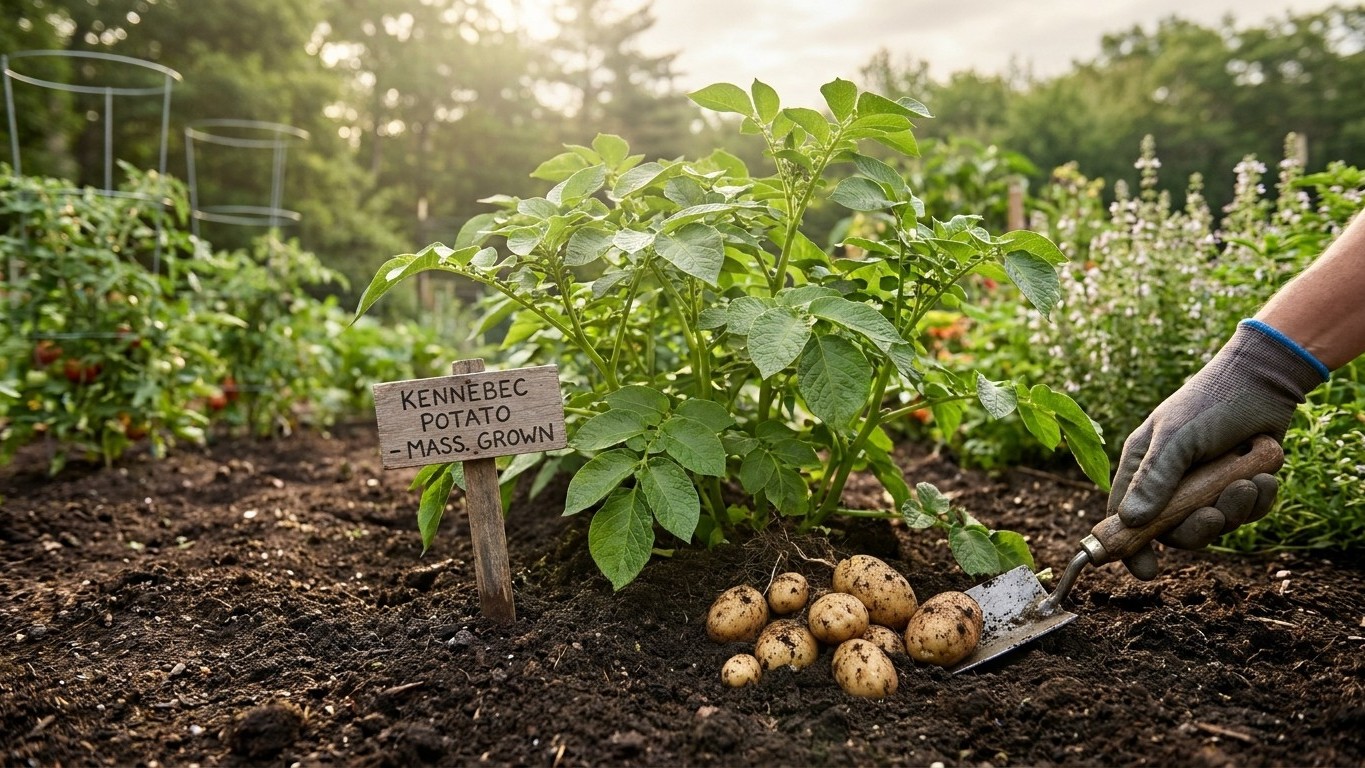

Massachusetts logs just 10.2 days a year above 90°F at the Boston reference station, according to NOAA NCEI Climate Normals, a low heat load that means summer doesn’t stop potatoes from sizing here. With the last spring frost falling between April 1 and April 8, gardeners get a full growing season, not a rushed spring-only dig like in hotter states.
The short answer

Two numbers decide whether a state can grow a full-season potato crop or whether gardeners have to squeeze in an early spring harvest before summer shuts tuber growth down. The first is heat load: how many days a year the soil and air climb past 90°F. Utah State University Extension identifies 90°F soil as the threshold where tuber set and fill stop cold, regardless of how much water you pour on. The second is the frost calendar, since potatoes go in the ground weeks before that last frost, not after it.
Massachusetts clears both hurdles comfortably. At the Boston reference station, NOAA NCEI’s 1991-2020 Climate Normals put the average at 10.2 days a year reaching 90°F or hotter. That’s a modest number compared to states where triple-digit stretches run for weeks. Ten days scattered across a summer, often in short bursts during July and August, rarely lines up with the exact window when tubers are actively bulking underground. A heat spike here and there might slow growth for a few days, but it doesn’t shut the whole crop down the way a sustained 90°F+ soil temperature does in hotter climates.
That changes the whole calculus for how you plan the season. In places with high 90°F day counts, the smart move is to plant as early as soil allows and dig the crop before the worst of summer heat arrives, treating it as a spring crop that beats the thermometer. Massachusetts doesn’t force that compromise. The growing window here runs from an early spring planting straight through to a fall harvest, giving both early-season and later-season varieties room to mature without racing a heat ceiling. For exact dates tailored to this climate, see When to Plant Potatoes in Massachusetts, and for tips on timing your dig and keeping the crop through winter, see Harvesting and Storing Potatoes in Massachusetts.
What this means for variety choice
Because the season here isn’t heat-limited, gardeners have latitude to plant across the full range of season classes rather than sticking to quick-maturing types alone. Early varieties still make sense if you want potatoes on the table sooner or you’re working a small bed you want to replant with a fall crop. Mid-season and late varieties, which need more time in the ground to bulk up, work fine too since the state’s cool summer nights and manageable heat load don’t punish a longer stay in the soil. For a closer look at which cultivars perform best under these conditions, see this guide to Potato Varieties That Suit Massachusetts. The choice comes down to what you want the potatoes for and how much space you have, not whether the calendar will let you finish the season.
When to plant here
Working backward from the frost date is the only way this math holds together, and it’s simple enough to redo for any county once you know the local last frost.
- Start with the last spring frost window for your reference area. For Massachusetts, NOAA NCEI’s 1991-2020 Climate Normals put that window between April 1 and April 8, based on the Logan station near Boston.
- Remember that Logan sits right on the water in the mildest part of the state. Inland suburbs, the Connecticut River Valley, and especially the Berkshires will see frost linger later into spring, so treat April 1-8 as a coastal baseline, not a statewide guarantee.
- Check soil temperature rather than the calendar alone. Potatoes go in once soil reaches 50°F, per Utah State University Extension and University of Maine Cooperative Extension guidance, since colder soil invites rot and stalls sprouting.
- Count back 14 to 21 days from your local last frost date. That’s the planting window, because soil at 50°F typically arrives two to three weeks ahead of the final frost as the ground warms faster than the air overnight low that defines “frost date.”
- For the coastal reference window of April 1-8, that puts planting somewhere in mid-to-late March for the earliest gardens, sliding into early April for spots with a later frost date. Inland and higher-elevation gardens should push this later, since their frost dates run behind the coast.
- Use a soil thermometer if you have one. It’s a five-dollar tool that removes the guesswork entirely and beats eyeballing the calendar, especially in a state where a mile inland or two hundred feet of elevation can shift things by a week or more.
What the heat does to the crop
The mechanism is straightforward, and it’s the single fact that should shape how anyone plans a potato bed. Once soil temperature climbs above 90°F, tuber set and fill stop, according to Utah State University Extension. The plant doesn’t die, the foliage doesn’t necessarily wilt, but underground the tubers simply quit sizing. Water doesn’t reverse this. You can irrigate every day and the potatoes still won’t bulk up while the soil sits above that threshold, because the process that triggers tuber formation and growth is temperature-driven, not moisture-driven.
This is where Massachusetts’s low heat count matters most. With only 10.2 days a year averaging 90°F or above at the Boston reference station, sustained soil temperatures above that ceiling are uncommon across most of the growing season. A hot stretch in mid-July might push air temperatures past 90°F for a day or two, but soil temperature lags behind air temperature and rarely holds at that level long enough to shut tuber growth down for an extended period, the way it would in a state logging 40 or 60 such days a year.
That’s the practical difference between a spring-only crop and a full-season one. In high-heat states, the entire strategy revolves around getting tubers planted early enough that they finish bulking before the soil crosses 90°F for good, then digging before that heat arrives. Massachusetts gardeners don’t need that workaround. The mild summer climate here, cool nights especially, keeps soil temperatures in a range where tuber development can continue through most of the summer without hitting the ceiling that stops it elsewhere. Mulching still helps keep soil temperatures more even during any warm stretch, but it’s a refinement here, not the make-or-break move it is in a state with a much higher 90°F day count.
What goes wrong here
- Planting uncertified seed potatoes. Seed sold without certification can carry viruses that stunt growth and reduce yield season after season, since those viruses persist in the tubers you save for replanting. Certified seed, available through garden centers and extension-recommended suppliers, is grown under inspection specifically to keep disease pressure low. Skipping this step is the single most common way gardeners sabotage a crop before it’s even in the ground.
- Planting into cold, wet soil. Massachusetts springs can stay damp well into April, and pushing seed potatoes into soil that hasn’t reached 50°F invites rot rather than sprouting. Waiting for the soil temperature, not just the calendar date, avoids this.
- Skipping hilling and ending up with green tubers. Potatoes that develop near the soil surface turn green when exposed to light, and green potato flesh contains solanine, which makes it unsafe to eat. Hilling soil up around the stems as the plant grows keeps tubers covered and prevents this entirely. It’s a simple, repeated task, not a one-time fix.
- Digging too early. Since neither Utah State nor the University of Maine publishes a days-to-maturity figure for specific varieties, gardeners have to watch the plant instead of the calendar. Foliage that’s still green and vigorous means the tubers are still sizing. Digging before the foliage naturally yellows and dies back trades yield for impatience.
Checking this against your own county
A statewide frost window is a starting point, not a set of instructions you can follow blindly. The April 1-8 window comes from the Logan station, a waterfront site in the mildest corner of Massachusetts. Push inland, gain elevation, or head toward the Berkshires, and that frost date shifts later, sometimes by two or three weeks. The same goes for the 90°F day count. Boston’s 10.2 days a year is a reference figure, not a guarantee for every valley and hilltop in the state.
The most reliable next step is checking conditions specific to your county rather than relying on a single reference station. The University of Massachusetts Extension, at ag.umass.edu, tracks local growing conditions and can offer guidance tuned to your particular part of the state, whether that’s the Cape, the western hills, or the Merrimack Valley.
Common questions
Can I grow potatoes all summer in Massachusetts, or do I need to dig early like in hot states?
A full season works fine here. With only 10.2 days a year above 90°F at the Boston reference station, Massachusetts doesn’t hit the sustained soil heat that forces gardeners in hotter states to dig before summer arrives.
What soil temperature should I wait for before planting?
Wait for soil to reach 50°F, per Utah State University Extension and University of Maine Cooperative Extension guidance. That typically falls 14 to 21 days before your local last frost date.
Should I choose early, mid-season, or late varieties?
Since Massachusetts’s growing season isn’t heat-limited, all three season classes work. The choice depends on how you plan to use the potatoes, baking, boiling, or storage, rather than on beating a heat deadline.
Why do my potatoes turn green, and are they safe to eat?
Green potatoes result from sunlight exposure on tubers too close to the surface, and that green flesh contains solanine, which is unsafe to eat. Regular hilling as plants grow keeps tubers covered and prevents this.