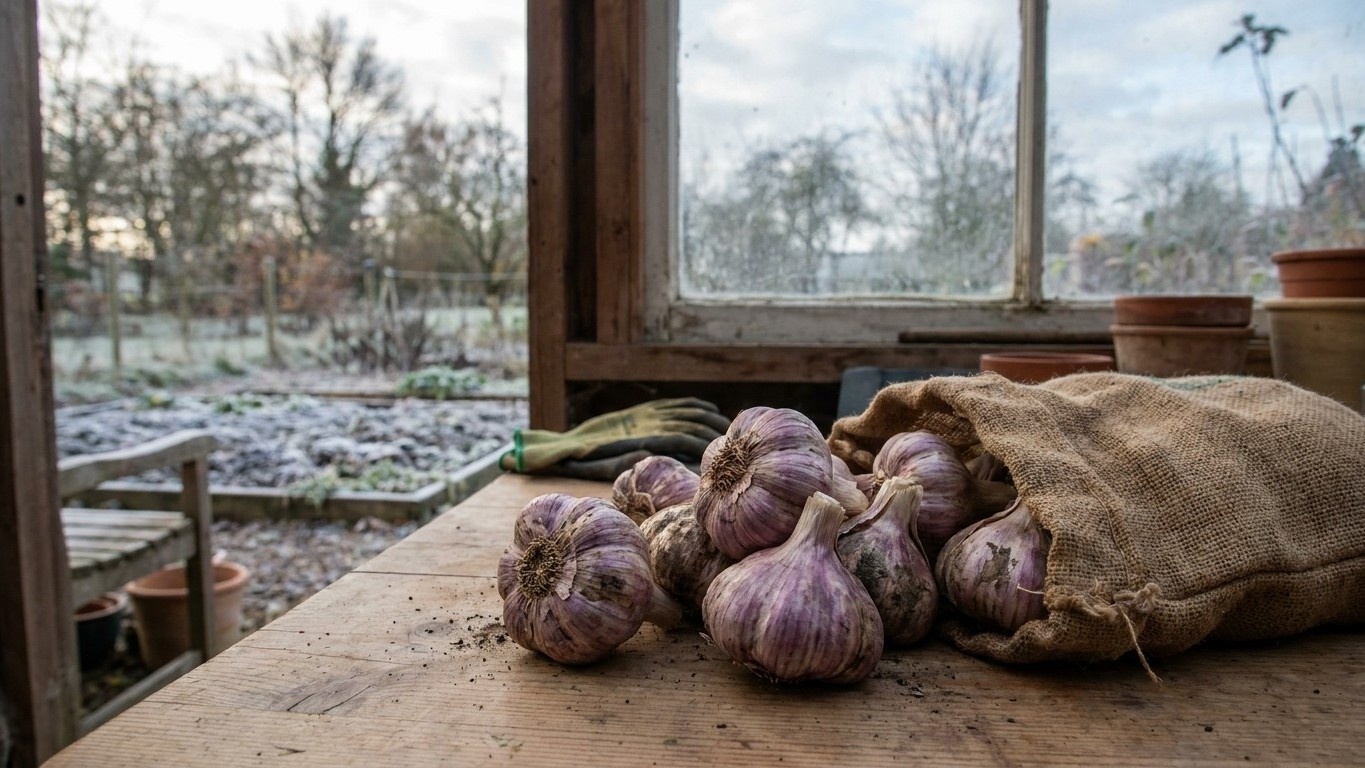

Garlic planted in Mississippi the previous fall is ready to lift from late May through June, once the bottom third to half of the leaves have browned off. Curing takes three to four weeks in a shaded, well-ventilated spot, since the state’s summer humidity works against you the whole time. Storage after that means a cool, dry, dark space, checked monthly, not a hot garage.
When garlic is ready to lift in Mississippi
Garlic doesn’t announce itself the way a tomato does. The signal is in the foliage. When five to six green leaves remain on top and the lower leaves have turned brown and papery, the bulb underground has likely stopped sizing up and started forming the wrapper layers that protect it in storage. Pull too early, and the cloves haven’t separated cleanly. Wait too long, and the wrapper splits, especially in the heavier clay soils common across much of the state, which leaves the bulb exposed to rot and shortens how long it keeps.
Mississippi’s timeline starts the previous fall. Garlic goes into the ground well before winter sets in, giving the cloves time to root before cold weather slows growth. First fall frost at the reporting station NOAA uses for the state’s 1991-2020 Climate Normals falls somewhere between November 7 and November 22. That’s a midpoint, not a guarantee. In roughly half of all years, the actual first frost lands later than that window, sometimes considerably later. Gardens away from the airport station, especially in low-lying or rural spots, tend to see frost arrive earlier than the reference figures suggest, occasionally by a week or two. Check conditions in your own county rather than treating the station numbers as settled fact.
From fall planting, garlic typically spends seven to eight months in the ground before it’s ready to harvest, which is what puts the lifting window in late spring through early summer for most of the state. Because Mississippi’s early summer humidity climbs fast, the margin between “ready” and “too late” is narrower here than in drier climates. Waiting an extra week to catch every bulb at peak size can mean losing a few to splitting or rot if a heavy rain hits right before harvest.
The most reliable way to check is a test dig. Pull one bulb from the row, brush off the soil, and look at the clove separation and wrapper condition. If it looks right, harvest the rest within a few days. Cut off irrigation or hold back on watering for the last week to ten days beforehand, since bulbs pulled from wet soil are harder to cure cleanly and more prone to storage rot later.
Curing it, and where to hang it here
Curing is the step that determines whether garlic lasts through winter or turns to mush by Thanksgiving. The goal is simple: dry down the outer wrapper and neck until they’re papery and tight, without cooking the bulb or letting mold take hold in the meantime. In a dry climate, that’s a matter of hanging garlic in the shade and walking away. In Mississippi, it takes more attention because the air itself is working against the process.
Airflow matters more here than almost anywhere else. A covered porch, an open carport, or a garage with the door cracked and a box fan running all do the job better than a sealed shed, where humidity just sits and invites mold. Lay bulbs on screens or hang them in loose bunches, roots and leaves still attached, out of direct sun. Direct sun through a window or under open sky can scorch bulbs or start them sprouting instead of curing.
Give it three to four weeks. You’ll know it’s done when the outer skins rustle like paper and the neck, where the leaves meet the bulb, feels dry and tight rather than fleshy. Don’t wash the bulbs at any point in this process. Brush off loose soil by hand and leave the rest; washing introduces moisture right when you’re trying to remove it, and in Mississippi’s humidity that moisture doesn’t evaporate as fast as you’d like.
Check on the crop every few days during curing rather than leaving it untouched for the full stretch. Humid spells, which show up often in a Mississippi summer, can slow the whole process down and create pockets of mold on bulbs that are pressed together. Spreading bulbs out with a little space between them, and running a fan on low even in shade, cuts that risk considerably. If you notice soft spots or a sour smell on any bulb during curing, pull it out and use it right away rather than risking the rest of the batch.
Storing it through a Mississippi winter
Once cured, trim the roots down close to the bulb and cut the stalk to about an inch, unless you’re braiding softneck types, in which case the stems stay on. From here, storage is about holding a steady, cool, dry, dark environment, which is a harder ask in Mississippi than in a lot of the country.
Garlic keeps best somewhere in the 60 to 65 degree range with decent air movement and low humidity. That rules out most garages and sheds for much of the year in this state, where summer heat pushes well past that range and humidity climbs right along with it. An interior closet in an air-conditioned part of the house, a cool pantry, or a climate-controlled space works better than an outbuilding here. Mesh bags, loosely woven baskets, or open crates all allow the airflow bulbs need; sealed plastic containers trap moisture and speed up rot.
Check stored garlic monthly. Pull out any bulb that’s gone soft, sprouted, or developed mold, since a single bad bulb in a bag can spread trouble to its neighbors faster than you’d expect. Bulbs meant for next fall’s planting should be set aside and stored the same way, kept out of the kitchen rotation so you’re not caught short come planting time.
How long a cured bulb lasts depends partly on type, softneck garlic generally holds longer in storage than hardneck, but in Mississippi’s climate, the storage environment usually matters more than which type you grew. A well-cured bulb kept cool and dry can last several months; the same bulb in a warm, humid garage might start softening within weeks. If you’re unsure which types perform best in your part of the state, Mississippi State University Extension is the resource to check for current variety guidance.
What goes wrong here
Most garlic problems in Mississippi trace back to one of two things: timing the harvest around wet soil, or curing in an environment that’s too humid to dry the bulbs properly. Bulbs pulled right after a heavy summer rain almost always cure worse than ones lifted during a dry stretch, since they’re starting the drying process already waterlogged.
Pests are a smaller factor for garlic than for a lot of other vegetable crops, but Mississippi State University Extension Publication 2347, Insect Pests of the Home Vegetable Garden, documents several species active in home gardens across the state. Of the pests it lists, mole crickets are the one most relevant to bulb crops, and the publication flags them specifically for the southern half of Mississippi, especially in sandy soils, where their tunneling can disturb roots and bulbs underground. The same publication also documents armyworms, cowpea curculios, fire ants, harlequin bugs, leaf-footed bugs, pickleworms and melonworms, squash vine borers, vegetable weevils, and yellowmargined leaf beetles, most of which target other vegetable crops commonly grown alongside garlic rather than the garlic bed itself, but a mixed garden means a watchful eye across the whole plot.
- Harvesting late after a rain, which softens wrappers and invites splitting
- Curing in a closed, humid shed instead of a ventilated shaded space
- Storing in a summer-hot garage instead of a cooler interior room
- Skipping the test dig and guessing at readiness based on the calendar alone
The fix for nearly all of it is patience with the process rather than the calendar: watch the leaves, dig a test bulb, cure with airflow, and store somewhere that stays cool and dry longer than a Mississippi summer allows outdoors.
Common questions
Does Mississippi’s clay soil work for growing garlic?
Heavy clay holds moisture longer than sandy or loamy soil, which can lead to softer bulbs and a higher risk of splitting near harvest. Amending beds with compost to improve drainage before planting helps the crop handle Mississippi’s wetter stretches better.
How do I know if my garlic is rotting in storage rather than just aging?
A bulb that’s simply aging dries out and shrinks. One that’s rotting turns soft, develops a sour smell, or shows visible mold. Check stored bulbs monthly and remove any that show these signs before they spread to bulbs stored nearby.
Can I cure garlic outdoors in Mississippi during summer?
Direct outdoor curing works poorly here because of humidity. A shaded, covered space with airflow, like a carport or a porch with a fan running, does the job far better than leaving bulbs exposed to open summer air.
When should I plant garlic for next year’s harvest?
Garlic goes in the ground in fall, ahead of the first hard frost, giving roots time to establish before winter. Since the reference frost window for the state runs November 7 to November 22, and that date is a midpoint rather than a guarantee, planting a few weeks ahead of that range is the safer approach for most gardens.