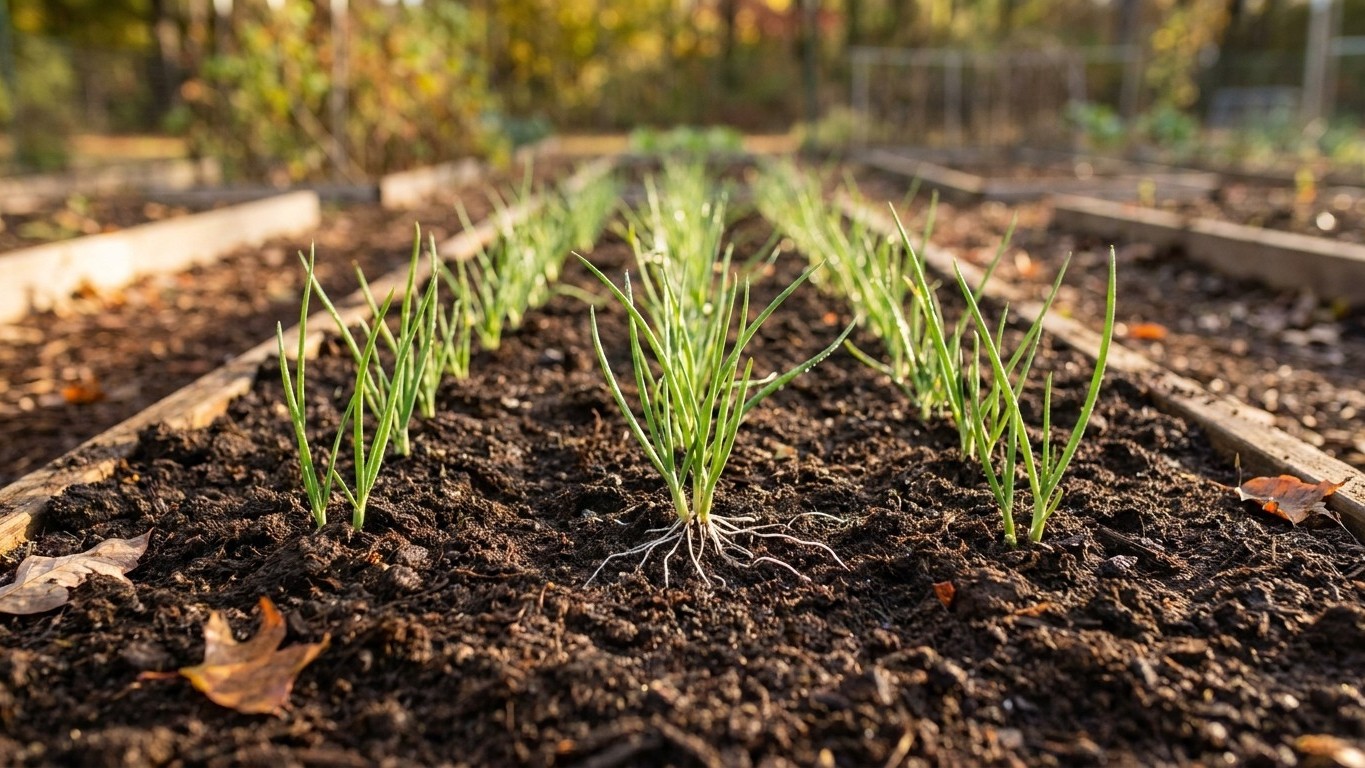

Home gardens in Mississippi deal with a short, specific list of onion pests: armyworms, mole crickets, and vegetable weevils, all documented by the state’s extension service. Only one of them, the mole cricket, comes with a location warning built in, concentrated in sandy soils across the southern half of the state. The rest of the trouble on garden pest lists targets crops that don’t look, grow, or smell anything like an onion.
Which pests attack onion in Mississippi
Mississippi State University Extension Publication 2347, Insect Pests of the Home Vegetable Garden, documents ten pests across the home vegetable garden as a whole: armyworms, cowpea curculios, fire ants, harlequin bugs, leaf-footed bugs, mole crickets, pickleworms and melonworms, squash vine borers, vegetable weevils, and yellowmargined leaf beetles.
Most of that list has nothing to do with an onion row. Cowpea curculios feed on cowpeas and related legume pods, a plant form an onion never produces. Harlequin bugs and yellowmargined leaf beetles are crucifer specialists, pulled toward cabbage, turnip, and their relatives rather than a hollow onion leaf. Leaf-footed bugs pierce fruiting vegetables like tomatoes to reach developing seed inside, and an onion offers nothing of the kind. Pickleworms, melonworms, and squash vine borers are cucurbit pests through and through, tunneling into squash and melon vines that share no resemblance with an onion’s growth habit. Fire ants build mounds in garden soil and will sting anyone kneeling near a row, but they aren’t feeding on onion tissue the way a true crop pest does.
That leaves three species from this list that actually show up in an onion bed: armyworms, mole crickets, and vegetable weevils. Armyworms are foliage feeders, chewing ragged notches into any tender leaf a moth happens to lay eggs near. Vegetable weevils work through a range of garden vegetables, onions included, feeding on both leaves and the fleshy parts underground. Mole crickets are the one this publication flags by geography: the source specifically calls out the southern half of the state, especially sandy soils, as the zone where mole cricket damage concentrates, tunneling through loose ground and severing roots and young bulbs along the way.
When each one shows up, and what it does first
Timing here tracks the plant’s growth stage rather than a month on a calendar. An onion spends its early life building leaves, then hits a physiological switch: short-day varieties grown in Mississippi start forming a bulb once daylight reaches roughly 12 hours, a threshold documented by Clemson Cooperative Extension’s HGIC Onion publication for short-day types across the Deep South. Everything a pest does before that switch changes leaf growth; everything after it changes the bulb itself.
Armyworms tend to arrive first, while the plant is still all leaf. The earliest sign is ragged notching along a leaf edge, sometimes a whole blade reduced to a papery strip overnight, because a single moth generation produces caterpillars that feed fast and move along the row. Check the base of the damaged leaf for the caterpillar itself or its dark droppings before assuming something else caused it.
Vegetable weevils run on roughly the same cool-season clock as the onion crop, since the adults stay active during the cooler months rather than at the height of summer. Their feeding looks like irregular holes chewed through leaf tissue, and unlike armyworm damage, a close look often turns up the larvae themselves, small and grayish, tucked against the leaf surface or down near the soil line.
Mole crickets work underground, so the first sign isn’t a leaf mark at all. It’s a wilted or missing seedling with no obvious chewing above ground, because the tunnel runs just under the surface and severs young roots before a gardener ever sees an insect. A light touch to the soil around a damaged plant sometimes reveals the loosened, honeycombed texture of an active tunnel, and that loosening happens more readily in the sandy soils common across the southern part of the state.
Telling the damage apart from everything else
Onion trouble that isn’t an insect at all shows up constantly, and mistaking one for the other wastes a season. A yellowing, thinning leaf tip can mean nitrogen deficiency or drought stress just as easily as feeding damage, and the difference is visible if you look closely: a nutrient or water problem fades color evenly across the leaf, while insect feeding leaves actual holes or chew marks. A collapsed, wilted plant can be basal rot or neck rot rather than a mole cricket tunnel, and pulling the plant settles it, since a tunnel leaves severed roots and loose soil, while rot leaves a soft, discolored bulb with an off smell.
| Symptom | Could also be | What tells them apart |
|---|---|---|
| Ragged notches at the leaf edge | Wind whipping or hail bruising | Storm damage hits every plant in the row the same way; insect chewing shows up on scattered plants over several days |
| Whole plant wilted or collapsed | Basal rot or neck rot | Pull one plant; severed roots and loose soil point to tunneling, a soft discolored bulb points to disease |
| Small holes with grayish larvae nearby | Slug feeding | Slugs leave a slime trail behind; vegetable weevil larvae don’t |
| Even yellowing across older leaves | Nitrogen deficiency or drought stress | No holes or chew marks accompany a nutrient or water problem |
None of this replaces a local diagnosis. Dig up one affected plant and check the root system before deciding what caused the damage, then bring what you find, or a photo of it, to a local extension office rather than guessing from a symptom list alone.
What actually works here, and what is a waste of time
Cultural timing does more work than any treatment on a short growing season. Clearing onion bed debris right after harvest keeps vegetable weevil larvae from overwintering in leftover foliage, and tilling the soil ahead of planting exposes mole cricket tunnels and eggs to drying air and birds before a new crop ever goes in. Handpicking armyworms in early morning, while they’re still visible on the leaf, removes a generation before it can move down the row and pupate.
Fire ant mounds near an onion bed are a separate problem from the crop itself. Treating the mound directly, rather than spraying the surrounding planting, deals with the ants without putting anything on a food crop that doesn’t need it. Removing crop debris right after harvest matters more here than any single treatment applied mid-season, because both weevils and mole crickets benefit from cover and loose organic material left sitting through the off-season.
What tends not to work is waiting until damage looks bad before acting. By the time armyworm notching covers a leaf, that generation is often already close to pupating and moving on regardless of what’s applied. Broad treatment applied “just in case,” without confirming which of the three pests is actually present, wastes effort and risks harming beneficial insects that would otherwise help keep the population down. A local extension office can confirm which pest is doing the damage before any treatment decision gets made, since this site doesn’t recommend specific products or rates.
Where to check this for your own county
Mississippi State University Extension is the source for what’s documented here, and its county offices are the right next stop for anything specific to one garden. A state-level publication like Publication 2347 tells you what’s been found across Mississippi as a whole, not what’s living in one particular yard, and pest pressure shifts noticeably from one county to the next, especially for a soil-dwelling insect like the mole cricket that depends on sandy ground to move easily.
That geographic variation matters more than it might seem. A gardener in the sandy soils of the southern counties faces a real mole cricket risk that someone gardening heavier clay soil farther north may rarely see at all, even though both are working from the same statewide list. Vegetable weevils and armyworms move around more evenly across the state, but local weather in a given year, a wet fall or a mild winter, still shifts how early or how heavily either one shows up.
The next useful step is contacting your county’s Mississippi State University Extension office directly, ideally with a sample or a clear photo of the damage in hand. County agents track what’s actually showing up in gardens nearby that season, which is closer to useful than any statewide list can get on its own.