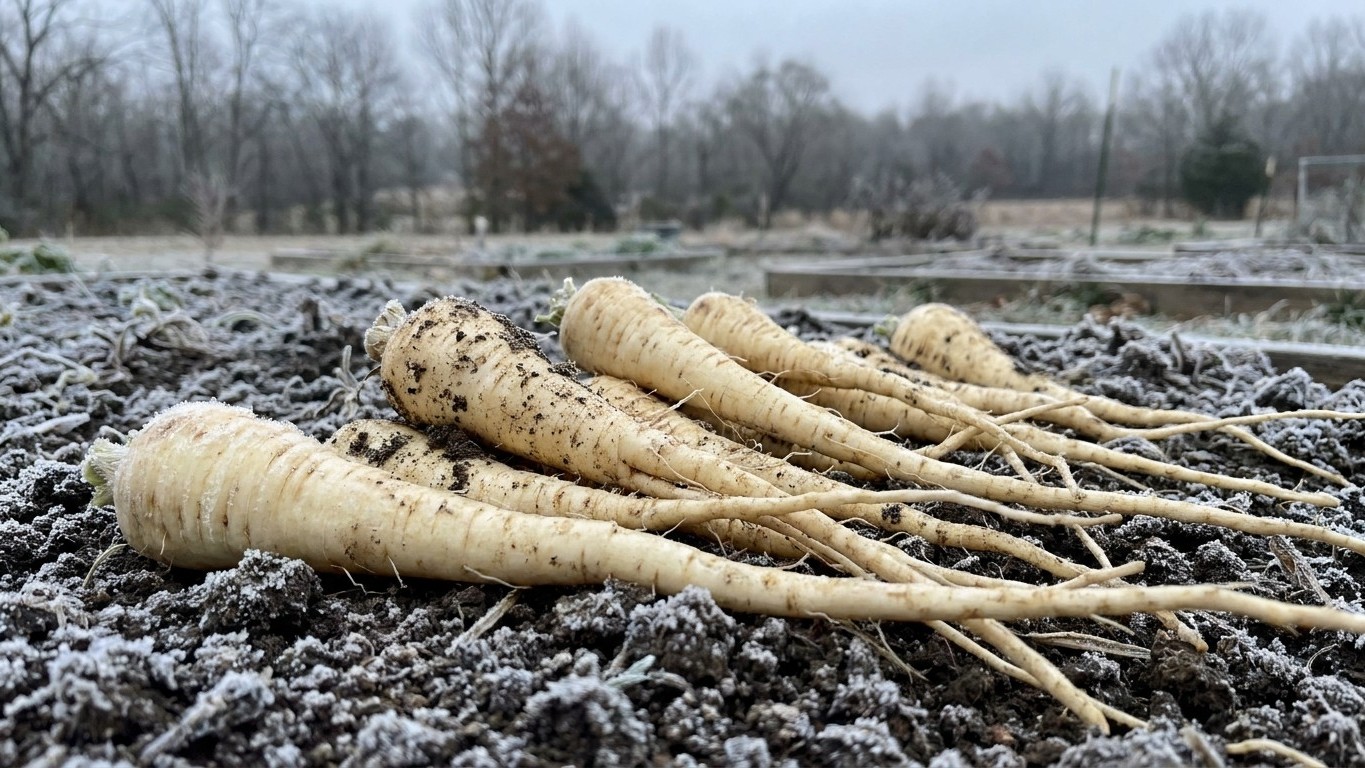

Parsnips will grow just fine in Mississippi’s long, mild season. Sweetening is the harder promise. The coldest month here averages a nightly low of 36.6°F, well short of the sustained hard frosts that convert stored starch into sugar. Expect a solid, usable root by late spring or early summer. Expect a genuinely sweet one only in the years the weather cooperates, and don’t count on it every winter.
The short answer
Does this state deliver several frosty weeks in a row? That single question decides more about a Mississippi parsnip crop than soil type, sowing date, or anything else on this page. Parsnips store carbohydrate as starch while they grow, then convert that starch into sugar only when the roots sit through repeated cold exposure. No sustained cold, no conversion. The root still exists. It just tastes closer to a bland turnip than the honeyed parsnip gardeners in colder states rave about.
The figure that matters is the mean minimum temperature of the coldest month, measured at the Jackson reference station over the 1991-2020 period tracked by NOAA’s National Centers for Environmental Information. That number sits at 36.6°F. That’s an average nightly low across an entire month, not a single cold snap and not the record low for the season. A mean minimum of 36.6°F means many nights hover just above freezing, some nights dip below it, and the deep, repeated freezes parsnips are built to respond to simply don’t stack up the way they do farther north.
This is a different question from hardiness zone, and mixing the two up is the most common mistake on parsnip pages. A hardiness zone tells you whether a plant survives the winter where you live. Frost exposure tells you whether a parsnip’s flavor changes once it survives. Mississippi’s zones are comfortable enough that a parsnip left in the ground won’t freeze solid or die outright. Comfortable is exactly the problem. Sweetening isn’t a survival mechanism, it’s a stress response to cold that Mississippi’s winters rarely apply with any consistency.
So the honest split looks like this: growing a parsnip in Mississippi is straightforward, given a deep bed and a bit of patience with slow germination. Sweetening one reliably is not. Some winters will bring a cold enough stretch to nudge the sugar content up. Most won’t deliver the multi-week frosty run that Utah State University Extension describes as the trigger. A gardener here should plant for a good parsnip, not bank on a sweet one, and treat any sweetness that shows up as a bonus rather than the expected outcome.
Does the season fit?
The math starts with the calendar, not the soil.
- Utah State University Extension puts parsnips at 100 to 120 days from seeding to harvest. They’re sown directly where they’ll grow, never transplanted, so the clock starts the day seed goes in the ground.
- The recommended sowing window falls 2 to 3 weeks before the last spring frost. In Jackson, that last frost lands somewhere between March 6 and March 22, which pushes the sowing window into the back half of February through the first few days of March.
- Before any green shows, add the germination wait: parsnip seed takes 14 to 21 days to sprout. A gardener who assumes a failed planting at day ten and re-sows is just resetting the whole clock, not fixing anything.
- Count the full 100 to 120 days forward from the actual seeding date, not from the day seedlings finally appear, and roots reach harvest size somewhere between early June and mid-July.
- Compare that maturity window against the first fall frost, which arrives in Jackson between November 7 and November 22, roughly four to five months after the roots are already sized up.
- The raw day-count says the season fits with plenty of slack: more than 230 days typically separate the last spring frost from the first fall frost in this reference location, nearly double the 100 to 120 days the crop needs.
Length of season isn’t the bottleneck here, which is unusual for a cool-season root crop this far south. The mismatch is timing. Spring-sown roots hit maturity in the hottest weeks of the Mississippi summer, months removed from any frost that could sweeten them. That’s why leaving them in the ground right at harvest size and waiting for winter, rather than pulling them the moment they mature, matters more here than in a state where the frost arrives on schedule right after the roots finish sizing up.
What goes wrong here
- Forked roots from heavy or stony ground. Mississippi’s clay-heavy bottomland soils resist a taproot pushing straight down, and the root splits around compaction or rocks instead of growing single and long. Deep, loose soil is the fix; Utah State University Extension recommends double-digging heavy ground before sowing so the root has a clear path.
- Forked roots from overwatering. This is a separate cause from heavy soil, not the same problem in disguise. Inconsistent or excessive watering pushes the root to branch rather than commit to one central taproot. Water enough to keep the bed evenly moist and let it dry slightly between waterings rather than soaking it on a schedule.
- A season that runs out. Rare in a state with this much frost-free time, but late sowing after the window closes, combined with the 14 to 21 day germination wait nobody accounted for, pushes harvest into the worst heat of summer, where roots stall and toughen. Sow within the 2 to 3 week pre-frost window and mark the true seeding date on a calendar rather than guessing.
- A winter too mild to sweeten. The mean minimum of the coldest month sits at 36.6°F in Jackson, rarely delivering the several weeks of hard, repeated frost that trigger starch-to-sugar conversion. There’s no soil fix for this one. Leaving roots in the ground through the coldest stretch of winter, rather than pulling them at the first frost, gives whatever cold does arrive the most time to work, though expectations should stay modest.
Handle with care: the sap warning
Parsnip tops carry a risk most garden pages skip entirely. The North Carolina Extension Gardener Plant Toolbox states it plainly: “All parts of this plant contain furocoumarins which can make skin sensitive to light causing burns so be sure to wear gloves, long sleeves and long pants when dealing with it.”
The mechanism is what makes this one catch people off guard. Furocoumarins sitting on skin don’t do much by themselves. The reaction needs sap on the skin and then sunlight hitting that same skin. That combination is exactly why the burn shows up hours after a bright afternoon spent pulling tops or harvesting roots, not during the work itself, and why the protection is what you wear beforehand rather than what you wash off afterward. Gloves, long sleeves, and long pants during any harvest done in daylight are the whole answer. Scrubbing exposed skin once the sun’s already done its part doesn’t reverse what already happened.
Notice the source says all parts, not just the ferny green foliage. Handling freshly pulled roots barehanded on a sunny afternoon carries the same exposure as gathering the tops, so the gloves stay on for the whole job, not just the leafy part of it.
Checking this against your own county
Every figure on this page comes from a single reference station near Jackson, and that station doesn’t speak for a rural garden two counties away. Frost dates measured at an airport typically arrive later in spring and earlier in fall once you move into low-lying rural ground or up in elevation, sometimes by a week or two in either direction. That shift changes the exact sowing window even though it rarely changes the bigger picture: a long enough season, a winter usually too mild for reliable sweetening.
Mississippi State University Extension is the resource built to answer the local version of that question, with county offices that track soil conditions and frost timing specific to where a gardener actually lives. Their site, extension.msstate.edu, is the starting point for a soil test, a local frost date, or a straight answer about what’s worked for parsnips in that particular county.
Common questions
Can parsnips even survive a Mississippi winter? Yes. The mild winters that keep them from sweetening reliably are the same winters that let roots sit in the ground without freezing solid, so overwintering the crop isn’t the risk here.
What month should parsnip seed go in the ground? Based on Jackson’s last spring frost falling between March 6 and March 22, the sowing window sits roughly 2 to 3 weeks earlier, in the back half of February into early March. Local frost dates can shift that by a week or two.
Why did my parsnips grow but never taste sweet? The likely reason is winter temperatures that never delivered several sustained weeks of hard frost. A mean coldest-month minimum of 36.6°F in this reference location means many winters simply don’t apply enough cold, long enough, to convert much starch to sugar.
Do I need to worry about touching parsnip plants at all? Yes, whenever the work happens in sunlight. All parts of the plant contain furocoumarins that sensitize skin to light and can cause burns, so gloves, long sleeves, and long pants during harvest matter regardless of which part of the plant you’re handling.