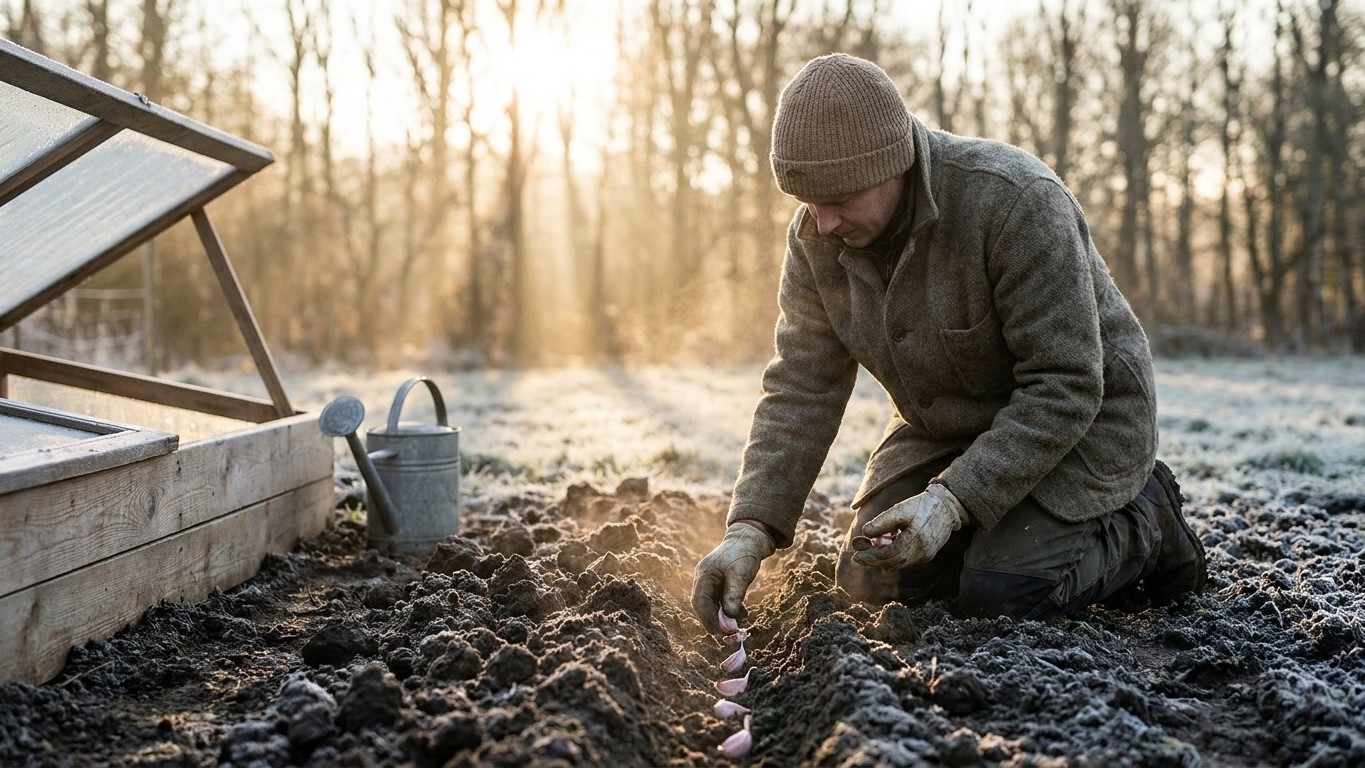

In most of Mississippi, December still leaves room for garlic, shallots, and a handful of hardy greens to go into open ground, especially south of the hill country. Cold frames and low tunnels stretch that window further. What won’t happen this month is anything tender: the state’s frost has already arrived, and nothing warm-season belongs outdoors until spring.
What goes in the ground in December

The calendar says December, but the soil doesn’t care what the calendar says. What matters is soil temperature and where a given county sits inside the frost window, and in Mississippi that window is wide. The state’s USDA hardiness range runs from 7b up into 9a, which means a garden near the Gulf Coast is working with a different winter than a garden in the northern hills or the Delta. First fall frost across the reference climate data falls between November 7 and November 22, so by December, frost has already touched most of the state at least once. That doesn’t shut the door on planting. It just changes what’s safe.
Garlic and shallots are the clearest case. Both prefer to go in during fall, but in the milder two-thirds of Mississippi, cloves and sets tucked into workable ground in early December will still root before hard cold sets in, then resume growth in late winter. Bulb size at harvest may run smaller than an October planting, but the crop will still produce.
Hardy greens are the other safe bet, and only in the warmer parts of the state. Transplants of collards, mustard, and kale can still go into ground in southern counties where deep freezes are rare, particularly under a floating row cover or inside a cold frame. Farther north, in zone 7b territory, treat December transplanting as a gamble rather than a plan; a cold frame or low tunnel turns that gamble into a reasonable bet by buffering the coldest nights.
Beyond that, December belongs to dormant-season planting rather than active growing:
- Bare-root fruit trees and cane berries, set while they’re dormant and the ground isn’t frozen
- Asparagus crowns, if the bed was prepped ahead of time
- Rhubarb divisions or chicory roots, brought indoors for forcing rather than left outside
Skip anything from the tomato, pepper, squash, or bean family entirely. There is no version of Mississippi’s December where those survive outdoors.
What to start under cover
The trick to starting seeds under cover is to work backward from the last frost window rather than forward from today’s date. The reference climate data puts that window between March 6 and March 22, though a home garden away from the airport station that generates those numbers often runs a week or two behind that, so treat mid-to-late March as the safer target for a first spring planting outdoors.
Onions and leeks are the December standouts, because they need 10 to 12 weeks of growth before they’re ready to go into the garden. Counting back from a March transplant date lands the seeding right around now, which makes December the correct month to get onion seed started indoors or in a heated cold frame, not January.
Early cool-season transplants for late winter setting out, cabbage, broccoli, and other brassicas destined for a February or early March transplant, can also go under cover now. Figure roughly six to eight weeks from seed to a transplant-ready seedling, then count backward from the target planting date.
What should wait: tomatoes, peppers, and eggplant. Started now, they’d be ready to transplant well before the frost window closes, which means weeks of rootbound, leggy plants sitting on a windowsill waiting for ground that isn’t warm enough yet. That’s the first failure mode: starting too early. The second is starting too late, missing the window for onions and leeks means a smaller bulb or a shorter leek at harvest, since neither crop forgives a late start the way a fast-growing green does.
What is ready to pick
December harvests in Mississippi lean almost entirely on what went in during fall, and on greens that actually improve with cold. Collards, kale, mustard, and turnip greens all sweeten after a frost, as the plant converts stored starches to sugars in response to cold, so a December collard patch often tastes better than the same patch picked in October. Turnips and carrots left in the ground can be pulled as needed; a light frost doesn’t hurt either root.
Where a cold frame or low tunnel is in use, lettuce, spinach, and arugula can keep producing through the month, just more slowly than they would in fall. Growth nearly stops once day length gets short enough, so treat a cold frame as cold storage with occasional new leaves rather than an active production bed.
Indoors, sprouts and microgreens fill the gap when nothing outdoors is ready. They’re worth running through winter regardless of climate, since they take a windowsill and a week, not a garden bed and a season.
December is also the month to check stored crops before small problems become lost harvests. Go through winter squash and pull any with soft spots. Check stored sweet potatoes and onions for the ones starting to sprout or turn, since one rotting onion in storage will speed up decay in its neighbors.
The jobs that matter this month
December reads like a quiet month only if the only thing counted is what’s coming out of the ground. The task list is long, and skipping it costs real ground come spring.
Pruning and planting while dormant
Dormant pruning of fruit trees, grapevines, and cane berries belongs in December through late winter, while the plant’s energy is stored in the roots rather than moving through the branches. Cutting now, rather than waiting for spring growth to start, means fewer open wounds during the season when pests and disease pressure are highest. It’s also the window for planting bare-root stock, since the plant won’t be asked to support new leaves and new roots at the same time.
Ordering, testing, and planning
Seed catalogs move fast, and the varieties that sold out first last season tend to sell out first again. Ordering seed in December, rather than in February when the ground is finally workable, is the difference between growing the variety wanted and growing whatever’s left. This is also the natural month to test soil (results take time to come back), sketch next season’s crop rotation, and turn a compost pile that’s been sitting untouched since fall.
Maintenance that pays off later
Clean and sharpen tools before they sit unused all winter; a dull pruning blade tears rather than cuts, and torn wood heals slower. Repair raised bed frames, trellises, and fencing while there’s nothing growing to work around. Mulch perennial beds and strawberry crowns to buffer root zones against the coldest nights still ahead. None of this shows up in a harvest basket, but all of it shows up in how the garden performs once spring arrives.
What not to do in December
The most common December mistake in Mississippi is trusting a warm afternoon over the calendar. A run of 65-degree days in the Deep South is common even in December, and it tempts gardeners into setting out warm-season starts or pulling row cover off hardy greens. The soil hasn’t warmed the way the air has, and a single cold night a few days later can undo weeks of growth. Check the forecast for the following week, not just the current afternoon, before making either move.
Feeding nitrogen at the wrong point in the season is the second classic error. A nitrogen application in December pushes soft, tender new growth right when a plant should be hardening off for cold. That new growth is the first tissue damaged in the next freeze. Save nitrogen feeding for active spring growth, and if a winter bed needs anything now, work in compost or a balanced amendment instead.
Uncovering cold frames or low tunnels too early after a mild stretch is the third trap. Ventilating on a warm afternoon is fine; leaving covers off overnight because the day felt like spring is not, since Mississippi’s winter temperature swings can drop 30 degrees between afternoon and midnight. Check the covering, not the thermometer on the porch, before deciding it’s safe to leave a bed open.
Checking this against your own county
A state-wide December guide is a starting point, not an instruction sheet. Mississippi stretches roughly 300 miles from the Tennessee line to the Gulf Coast, and that distance moves both the first fall frost and the last spring frost by weeks, not days. A garden in the northern hills sits closer to zone 7b, while a garden near the coast can sit in zone 9a, and the frost dates cited here come from one reference station, not from every county in between.
Before treating any date in this guide as fixed, check it against local conditions through the Mississippi State University Extension Service, which publishes county-level guidance that accounts for local elevation, soil, and microclimate in a way a single statewide figure can’t.
Common questions
Can you plant garlic in Mississippi in December?
Yes, in most of the state garlic cloves set into workable ground in early December will still root before the coldest weather arrives, though bulbs may run smaller than a September or October planting.
Is it too late to plant winter vegetables in Mississippi in December?
For direct-sown greens from seed, mostly yes; for transplants of collards, kale, and mustard in the warmer southern counties, no, particularly under row cover or in a cold frame.
What USDA hardiness zone is Mississippi in for planting decisions?
Mississippi spans USDA Plant Hardiness Zones 7b to 9a, with the coldest zone in the northern hills and the warmest along the Gulf Coast.
When is the last spring frost in Mississippi?
Reference climate data for the 1991-2020 period puts the last spring frost between March 6 and March 22, though home gardens away from the monitoring station often see frost linger a week or two longer.