
In Mississippi, January still falls inside the frost window that runs from the last spring freeze near March 6 to March 22 (NOAA NCEI, based on 1991-2020 data), but the state’s zone 7b to 9a range keeps real options open. Hardy greens, alliums, and bare-root fruit trees can go into worked soil now, cold frames stretch the greens harvest, and dormant pruning and seed ordering fill the rest of the month. Warm-season crops still wait for spring.
What goes in the ground in January

The calendar says January, but the soil doesn’t care what the calendar says. What decides whether a seed germinates or a transplant survives is soil temperature and how far the date sits from the last spring frost, which lands somewhere between March 6 and March 22 at the reference weather station NOAA uses for its climate normals. That’s a six-week window on its own, and gardens away from the airport, especially in low spots or up in the northern hill country, often see frost linger a week or two past that. January sits five to ten weeks ahead of that window statewide, which rules out anything that dies at 32 degrees Fahrenheit.
That rules out tomatoes, peppers, beans, squash, cucumbers, and corn in the open ground, full stop. But Mississippi’s USDA hardiness zone, 7b in the northern counties up to 9a along the coast, means winter here rarely delivers the deep, sustained cold that shuts a garden down completely. Several things tolerate what January brings.
What actually survives
- Hardy greens: collards, mustard, turnip greens, and spinach, direct-sown or already growing from a fall planting, keep producing through most winters and often sweeten after a light frost.
- English peas: a long Southern tradition of sowing peas as soon as the soil can be worked, well before the last frost, because pea seedlings shrug off a light freeze.
- Alliums: shallot sets and onion sets go into worked beds now; garlic ideally went in back in the fall, but a late planting in workable soil still has a shot at bulbing if it’s not too far behind.
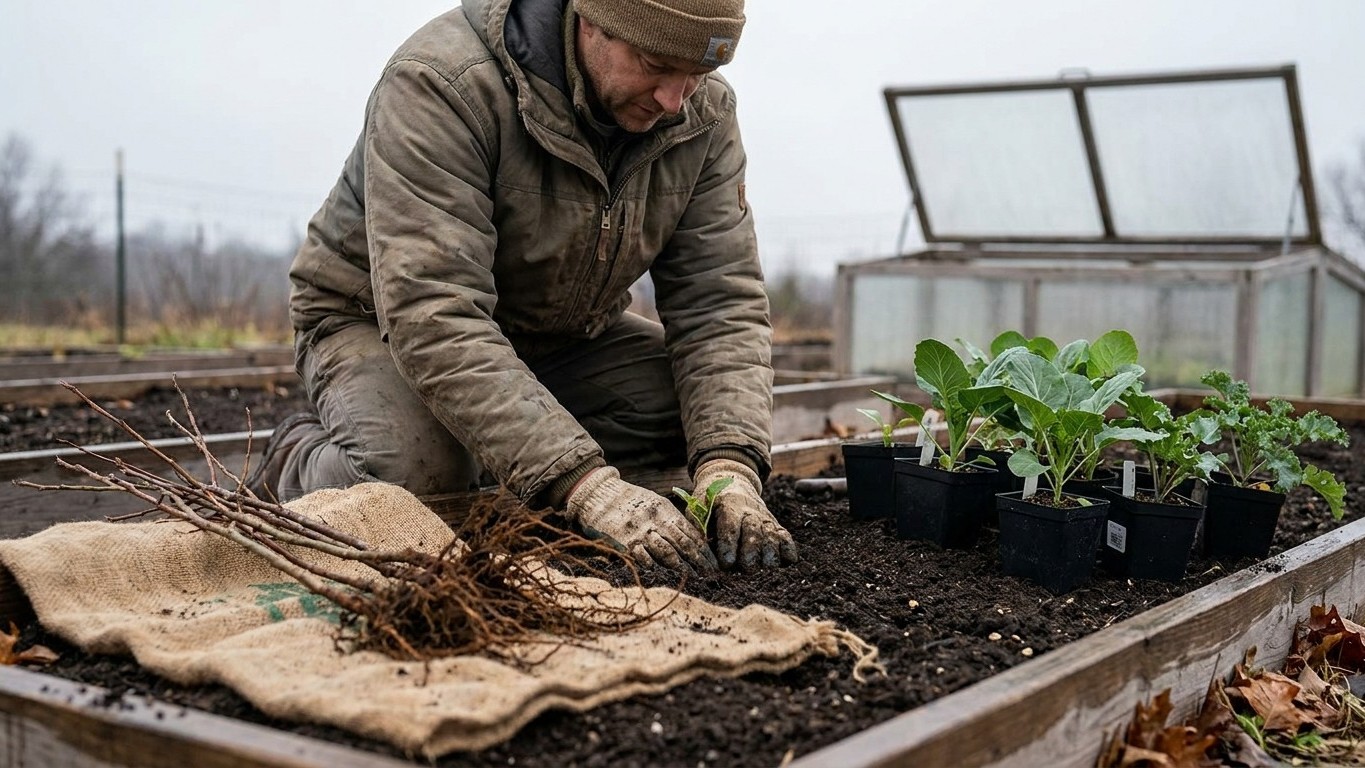
- Bare-root and dormant stock: fruit trees, blueberries, blackberries, muscadine grapes, asparagus crowns, and strawberry crowns are sold and planted dormant, and January is one of the best months to get them in before buds swell.
Cold frames and low tunnels widen the list further, letting lettuce, kale, and Asian greens keep growing through cold snaps that would flatten them in open ground. None of this is a workaround for warm-season crops; it’s simply what the season allows, and it’s more than gardeners farther north get this month.
What to start under cover
Seed-starting math in Mississippi runs backward from that March 6 to March 22 frost window, not from January 1. Tender crops get started indoors a set number of weeks before they go outside, and outside means after frost risk drops, not before.
Peppers and eggplant need eight to ten weeks under lights before they’re ready for the garden, and since they can’t go out until well after the last frost, counting back from early-to-mid March puts their seed-starting window in December and January, which makes January the last practical month to get them going. Tomatoes need six to eight weeks, so starting seed in mid-to-late January lines up with a transplant date in March. Onions from seed want eight to ten weeks before transplanting, so a January start, if not already done in December, is still workable. Broccoli and cabbage for spring transplant need six to eight weeks and go outside a few weeks before the last frost since they tolerate cool soil, so seed started indoors this month has time to size up.
| Crop | Weeks needed before transplant | Indoor start window |
|---|---|---|
| Peppers, eggplant | 8-10 weeks | December-January |
| Tomatoes | 6-8 weeks | Mid-to-late January |
| Onions (from seed) | 8-10 weeks | December-January |
| Broccoli, cabbage | 6-8 weeks | January |
Miss the window on either side and there’s a real cost. Start too early and pepper or tomato seedlings sit rootbound and leggy on a windowsill for weeks, waiting on soil that’s still too cold. Start too late and there isn’t enough season left before Mississippi’s early summer heat shuts down fruit-set on tomatoes and peppers alike.
What is ready to pick
January isn’t a bare-shelf month in Mississippi the way it is farther north, but the harvest is limited to what’s cold-hardy or stored. Collards, kale, and turnip greens that went in during fall keep giving through winter, and a light freeze usually makes them taste better, not worse, as the plant converts starches to sugars to protect its cells. Leeks left in the ground hold fine and can be pulled as needed. Under a cold frame or low tunnel, lettuce and Asian greens keep cycling through cuttings all month.
Turnips and carrots sown earlier in fall are ready to pull once the roots reach a usable size, generally when the shoulders push up at the soil surface and measure two to three inches across; smaller is fine too, since both are tender pulled young.
Checking what’s in storage
The other harvest this month happens in the pantry, not the garden. Stored sweet potatoes, winter squash, and onions need a monthly check for soft spots, sprouting, or a sour smell, since one turning squash can spread rot to its neighbors in a bin fast. Pull anything questionable before it takes down the rest of the batch. Indoors, a windowsill tray of sprouts or microgreens fills the gap for gardeners who want something fresh to cut in the middle of winter without waiting on the garden at all.
The jobs that matter this month
Dormant pruning tops the list, and the deadline is real: prune fruit trees, blueberries, blackberries, and muscadine grapes while they’re still asleep, because once buds swell, cuts made after that point cost the plant stored energy it needed for spring growth. Mississippi’s mild winters mean that dormant window closes earlier here than it does farther north, so waiting until late winter risks missing it entirely.
Ordering, testing, and planning
Seed catalogs move fast. Popular tomato and pepper varieties routinely sell out by late winter, so placing an order now, rather than waiting until planting feels urgent, is the difference between getting the variety a gardener actually wants and settling for whatever’s left. This is also the natural point to sketch next season’s rotation, moving nightshades and brassicas to beds they didn’t occupy last year to keep soil-borne pests and diseases from building up.
Soil testing belongs on this month’s list too, and Mississippi State University’s extension service offers testing through county offices. The reason to test now rather than in spring is timing: many Mississippi soils run acidic, and lime takes weeks to months to shift pH once it’s worked in, so a test in January gives amendments time to act before anything goes in the ground.
Round out the month with the jobs that never make a headline but always show up later if skipped: turning the compost pile so it keeps breaking down through the cold, cleaning and sharpening pruners and loppers before the pruning push, and walking fence lines and raised-bed frames to fix what winter weather loosened. Stored crops need the same monthly check described above. None of this is filler. Skip the pruning window, and it doesn’t come back until next winter; skip the soil test, and spring plantings go in blind.
What not to do in January
A run of 70-degree days in the middle of January is common in Mississippi, and it’s exactly the trap that catches gardeners every year. Warm air doesn’t mean warm soil, and it doesn’t mean the last frost has come and gone, not when that window doesn’t open until March 6 at the earliest by the reference station’s normals, and often later away from it. Planting tomatoes or peppers outdoors during one of these warm spells almost always ends the same way: a freeze rolls back in and kills what looked like a head start.
The same warm spell tempts gardeners to pull row covers or open cold frames early to let hardy greens catch some sun. That’s a mistake if a freeze is still on the way, since plants that have been sheltered lose some of the cold-hardening they built up, making them more vulnerable to the very freeze that follows a warm stretch. Check the forecast past the warm days before uncovering anything.
Nitrogen fertilizer is another classic misstep this month. Feeding dormant fruit trees or bare beds now pushes no growth the plant can use yet, and much of it simply leaches away with winter rain before roots are active enough to take it up. Save nitrogen for when growth actually resumes. And before planting bare-root trees or shrubs, squeeze a handful of soil: if it packs into a muddy ball instead of crumbling, it’s too wet to work, and planting into it now risks smothering roots that need air as much as moisture.
Checking this against your own county
Everything above is a statewide starting point, built from data collected at one reference weather station, not a guarantee for any specific yard. Mississippi runs from USDA zone 7b in the northern hill counties to zone 9a along the coast, and that spread alone can shift planting windows by two to three weeks between the state’s northern and southern counties. Local soil drainage, low-lying frost pockets, and even which side of a hill a garden sits on move the numbers further.
The Mississippi State University Extension Service (extension.msstate.edu) publishes county-level guidance and a state planting calendar that accounts for these differences. Checking there before planting is the difference between a statewide estimate and a date that fits an actual county.
Common questions
Can I still plant garlic in January in Mississippi?
Garlic does best planted in fall, but a late planting in workable soil in January still has a chance to bulb, especially in the milder zones near the coast. Expect smaller bulbs than a properly timed fall planting.
What vegetables can I direct-sow in Mississippi in January?
English peas, spinach, mustard greens, turnip greens, and hardy root crops like turnips and carrots can go into worked soil this month. Warm-season vegetables need to wait until after the last frost window, which runs from March 6 to March 22 at the reference weather station.
Is it too cold to start tomato seeds indoors in January in Mississippi?
Not for a late-January start. Tomatoes need six to eight weeks indoors before transplanting, so seed started in the second half of the month lines up with a March transplant date, once frost risk has passed.
What fruit trees should be pruned in January in Mississippi?
Apple, pear, peach, and plum trees, along with blueberries, blackberries, and muscadine grapes, should be pruned while still dormant. Mississippi’s mild winters mean buds swell earlier than in colder states, so pruning early in the dormant season matters more here than it does farther north.
Gardeners who plant by the Moon can check the January 2027 moon planting calendar, a tradition rather than a proven method.