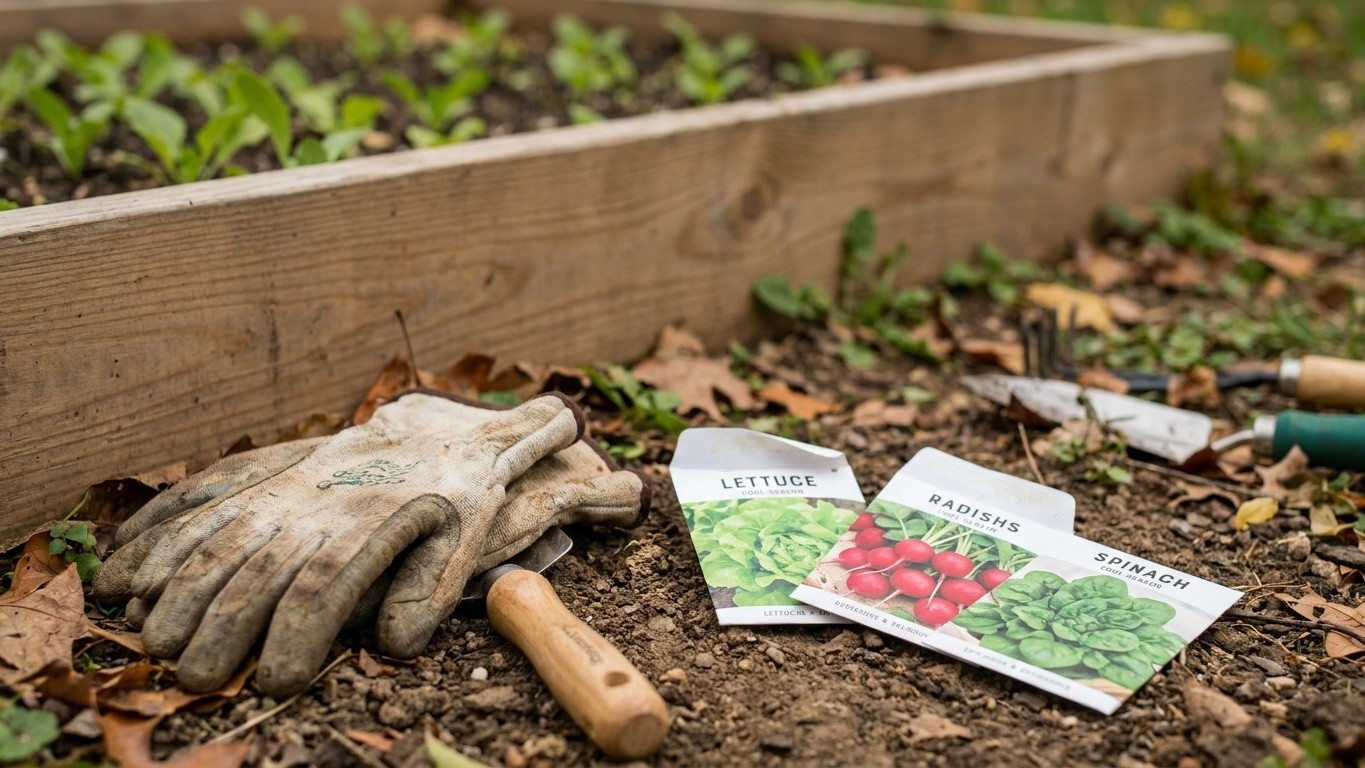

September in Mississippi means the fall garden, not the last gasp of summer. With the first frost window running November 7 to November 22 at the reference weather station, most of the state still has eight to eleven weeks of growing season left. That’s enough time for a full round of greens, root crops, and brassicas, plus the tail end of summer’s okra and sweet potato harvest.
What goes in the ground in September

The deciding factor isn’t the calendar square, it’s soil temperature and the days-to-maturity math run backward from that November frost window. Mississippi soil in early September is still hot, often 80°F or higher a few inches down, which actually works against cool-season seed germination even while the air feels like fall is coming. That’s the trap: warm soil says “plant tomatoes,” but the frost clock says “don’t bother,” since anything needing 70-plus days to fruit won’t finish before the reference frost arrives.
What does work is the cool-season lineup that tolerates warm starts and finishes as temperatures drop. Turnips, mustard, collards, and kale can go in from seed right through the month. Lettuce, spinach, radishes, beets, and carrots do best sown a little later in September once soil temperatures ease down, or shaded during germination. Bush beans still have a shot in the early part of the month in southern counties, where the frost date runs later than the state average. Broccoli, cabbage, and cauliflower transplants (started under cover in August) go into the ground now rather than from seed, since they need the head start.
| Crop group | Method | Typical days to maturity | Fits before Nov frost window? |
|---|---|---|---|
| Turnips, mustard, collards | Direct sow | 30-60 | Yes, comfortably |
| Lettuce, spinach, radishes | Direct sow (later in month) | 25-55 | Yes |
| Broccoli, cabbage, cauliflower | Transplant only | 60-80 from transplant | Yes, if transplanted early Sept |
| Bush beans (south MS only) | Direct sow, early month | 50-60 | Tight, county-dependent |
| Tomatoes, peppers from seed | Not recommended | 70-90+ | No |
The gamble crops are anything warm-season started from seed this late. It’s not that they won’t sprout, the soil is plenty warm, it’s that they run out of daylight and warmth before setting a real harvest.
What to start under cover
The math for starting seeds indoors or under a cold frame in September runs backward from that same November frost window, not from a fixed date on a seed packet. Bulb onions grown from seed for a spring harvest are the clearest example: they need eight to ten weeks to reach transplant size, and Mississippi gardeners typically move them into the garden in December or January. Counting back from that transplant date lands seed-starting squarely in September, giving the seedlings time to build a stocky root system before they go outside into cold, wet ground.
The same backward math applies to a second wave of broccoli, cabbage, and collard transplants for gardeners in the warmer southern tier, where zone 9a conditions allow a longer window before killing frost. Starting these under cover in early September, rather than waiting for the outdoor soil to cool on its own, buys transplants that are ready to set out by mid-to-late month.
Two ways this goes wrong show up every fall. Start too early and onion or brassica seedlings sit too long in trays, going rootbound and leggy before the ground is ready for them, which stunts the whole plant later. Start too late, particularly for onions, and the seedlings never build the root mass needed to survive a Mississippi winter outdoors, leaving a weak stand come spring. There’s no fixed calendar date that fixes this, only the arithmetic of transplant size needed minus weeks to grow it.
What is ready to pick
September is still harvest season for several summer plantings even as fall crops go in. Okra, planted back in late spring, keeps producing through the heat and often outlasts tomatoes and peppers in the same bed, so daily picking of pods while they’re still tender (finger-length, before they turn woody) is worth the trip to the garden alone.
Sweet potatoes planted in late spring are typically dug in September and into October, before the reference frost window arrives. The tell is foliage starting to yellow, or simply counting forward from the planting date, most varieties need roughly 90 to 120 days. Digging before a hard frost matters because frost-killed vines can let cold and moisture reach the tubers underground.
Field peas and southern peas planted earlier in summer are typically drying down or ready for shelling now, and muscadines and scuppernongs, the thick-skinned native grapes common across the state, ripen through late summer into September. Winter squash from summer plantings should be coming off the vine and curing in a warm, dry spot, a hardened rind that resists a fingernail is the sign it’s ready to store. Late watermelon and cantaloupe plantings may still be finishing as well, judged the usual way, by the dried tendril nearest the fruit and a hollow sound on the rind.
The jobs that matter this month
Soil preparation for the fall beds pays off disproportionately this month because September plantings have less time to recover from poor ground than spring ones do. Working compost into beds before sowing greens or setting brassica transplants gives roots an easier path down in soil that’s still hard and dry from summer.
Watering rhythm matters more in September than gardeners expect, since Mississippi often runs dry stretches even as air temperatures start to ease. Newly sown seed, especially fine seed like lettuce and carrots, needs consistent surface moisture to germinate in still-warm soil, which usually means light watering once or twice a day rather than a single deep soak. Mulching around new transplants helps hold that moisture and moderates soil temperature swings between hot afternoons and cooler nights.
Succession sowing keeps the fall harvest coming instead of arriving all at once. Sowing a short row of turnips or lettuce every two to three weeks through the month, rather than the whole bed at once, spreads the harvest out and hedges against a bad germination stretch.
Pest scouting can’t wait either. Fall brassica transplants are a magnet for cabbage loopers and armyworms right when they’re most vulnerable, and a few days of inattention can strip young leaves before they get established. Checking the undersides of leaves weekly and hand-picking or treating early is far cheaper than replanting. Stink bugs also tend to move onto the last tomatoes and peppers of the season as other food sources dry up, so those late fruit deserve a look too. Removing spent squash and cucumber vines once they’re done producing cuts down on overwintering squash vine borer and disease pressure for next year’s bed in the same spot.
What not to do in September
The most common mistake is planting warm-season crops from seed because the weather still feels like summer. Tomatoes, peppers, and squash started now simply don’t have the eight to ten weeks plus fruiting time left before the reference frost window in November, no matter how warm the soil feels underfoot.
The second is direct-sowing fine cool-season seed into hot, dry soil and walking away. Lettuce and spinach seed can go dormant or fail to germinate in soil above roughly 80°F, which is common in Mississippi through much of September. Watering lightly and often, or timing the sowing for a stretch of cooler days later in the month, solves this far better than fighting it with more seed.
Feeding fall root crops a heavy dose of nitrogen is another classic misstep. Turnips, beets, and carrots respond to extra nitrogen by putting energy into lush green tops instead of the root, leaving a disappointing harvest below ground. A balanced or lower-nitrogen approach suits root crops better than the feeding schedule used for leafy greens.
Finally, don’t rush newly hardened-off brassica transplants into full, unshaded afternoon sun the first few days after they leave a cold frame or shaded porch. The jump from protected conditions to open Mississippi sun in September can stress transplants enough to set them back weeks, when a few days of partial shade would have let them settle in without a hitch.
Checking this against your own county
A statewide frost window is a starting point, not a guarantee for any one backyard. Mississippi runs from the Gulf Coast to the hill country near Tennessee, and that distance, along with local elevation and low-lying frost pockets, can shift the first fall frost by a week or two in either direction from the reference figures given here. Gardeners in the Delta or far south of the state generally see frost arrive later than those in the northeastern hills.
The Mississippi State University Extension Service tracks this kind of local variation county by county and publishes its own planting guidance. It’s worth checking their planting calendar at extension.msstate.edu against the ranges above before committing a full bed to any one planting date.
Common questions
Is September too late to plant tomatoes in Mississippi?
For a seed-started tomato crop, yes, in most counties. With the first fall frost window running November 7 to November 22, there isn’t enough time left for tomatoes to germinate, grow, and fruit. A transplant of a fast-maturing variety set out very early in the month is the only realistic option, and only in the warmer southern counties.
Can I still plant okra in September in Mississippi?
New okra plantings from seed are a stretch this late, since okra needs sustained heat and around 55 to 65 days to first harvest. Existing okra plants from a spring or early summer planting, however, typically keep producing well into September and are worth harvesting daily rather than replacing.
When should I plant garlic in Mississippi?
Garlic generally goes into Mississippi ground later in fall, once soil has cooled further than it typically is in September. Shallots follow a similar timeline. Watching soil temperature rather than the calendar, and checking the Mississippi State Extension planting calendar, gives a more reliable window than a fixed date.
Why won’t my lettuce seed germinate when I sow it in September?
Mississippi soil is often still above 80°F for much of September, and lettuce seed can struggle or go dormant in that heat. Sowing later in the month as temperatures ease, watering lightly and frequently to keep the surface moist, or briefly chilling seed before sowing all improve germination odds.
Gardeners who plant by the Moon can check the September 2027 moon planting calendar, a tradition rather than a proven method.