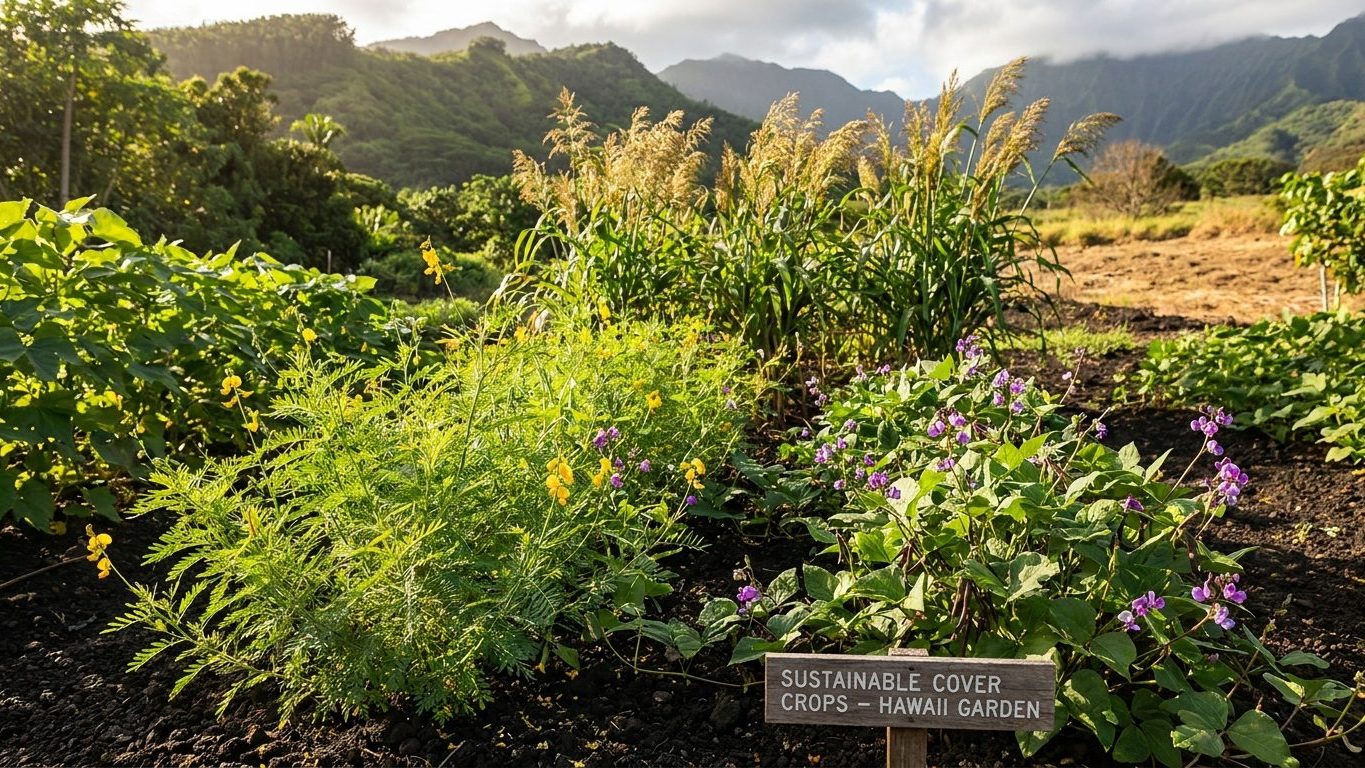

Missouri gardeners get the best mileage from cereal rye and hairy vetch through winter, and from buckwheat or cowpeas during the summer fallow. The choice depends on which season you’re covering and how much cold the plant has to survive between now and spring.
The short answer for Missouri
Cover crop choice in Missouri comes down to one question: does the plant need to survive winter, or does it just need to fill a few warm weeks? The state’s frost-free window, measured at the Kansas City reference station, runs from a last spring frost of April 6 to April 20 out to a first fall frost of October 18 to October 29. That’s a long stretch, well over five months in most years. But the number that actually decides which cover crops make it through the cold months is the mean daily minimum of the coldest month: 19.5°F at Kansas City. That’s not the record low, it’s the average low on the coldest days of January, and it’s the figure that separates a cover crop that overwinters from one that gets wiped out.
For fall-sown, winter-surviving cover, cereal rye is the workhorse here. It shrugs off a mean minimum in the high teens without trouble, establishes fast in the weeks before that October frost window closes, and resumes growth in early spring ahead of the April thaw. Hairy vetch runs a close second, pairing well with rye for a nitrogen-fixing combination that many Missouri growers drill together.
If you’d rather the cover crop die on its own and save you a termination pass in spring, oats and forage radish are the standard picks. Both grow fast in fall, then get knocked out by winter cold, especially in the northern half of the state where that 19.5°F figure is closer to reality than a fluke. Crimson clover splits the difference. It usually winterkills in northern Missouri but can limp through in the milder south.
For the warm months, between that April frost date and the October one, buckwheat and cowpeas do the heavy lifting. Buckwheat is the fastest option on this list, canopying in about three weeks and flowering within six. Cowpeas take longer but leave more nitrogen behind. Sudangrass works too, but it needs the full stretch of summer heat to pay off and isn’t worth planting after midsummer.
What will not work here
The plants that fail in Missouri mostly fail for one of two reasons: they can’t take the cold, or they can’t take the fall planting window as it actually falls on the calendar, not as a seed catalog assumes.
Winter peas are the clearest example of the first problem. They’re a fine choice in milder climates, but a mean coldest-month minimum of 19.5°F pushes them past their comfort zone in a lot of Missouri winters, especially north of Kansas City where conditions run colder than the reference station shows. Growers who plant winter peas alone, expecting a stand next April, are often disappointed by a thin, gap-toothed field instead.
The second failure mode is timing, not cold tolerance. Cover crops that need four to six weeks of active growth before a killing frost, tillage radish is the classic case, run into trouble if they go in the ground after that October 18 to October 29 window instead of before it. A radish drilled in early November in northern Missouri barely gets past the seedling stage before frost stops growth cold. The plant survives in name, but it never builds the taproot that’s the whole point of growing it. This is a scheduling failure, not a hardiness failure, and it’s easy to miss because the seed still germinates.
Missouri’s summer humidity creates its own failure point on the warm-season side. Buckwheat and cowpeas drilled at tight spacing, the rates that work fine in a drier state, invite fungal pressure once July humidity sets in. Thick stands that don’t dry out between morning dew and afternoon thunderstorms are where growers report the most disease loss. Widening row spacing or cutting seeding rate solves this more reliably than any fungicide.
Tropical species like sunn hemp are a poor match too. They want consistent heat with no cold surprises, and Missouri’s frost dates, spanning nearly a two-week range at just one station, are exactly the kind of variability that catches these plants out. A cold snap arriving even a week before the average first frost date can end a sunn hemp stand that a hardier species would shrug off.
What changes across Missouri
Missouri is not one climate. The USDA hardiness zone map puts the state across a 5b to 7b range, a spread of four full zones from the Iowa line to the Bootheel. That’s the difference between a plant that needs serious winter protection and one that barely notices frost.
The Kansas City figures used above, the 19.5°F coldest-month minimum and the frost dates, come from a station that sits well north of the city itself. Downtown Kansas City runs about five days milder in spring than that reference point, and southern Missouri is milder again, sometimes considerably so. A grower in the Bootheel, closer to zone 7b, can expect a longer frost-free season and a gentler winter minimum than a grower near the Iowa border sitting in zone 5b territory.
What that means practically: readers in the northern tier should treat the fall planting window as starting earlier and closing sooner than the state-level dates suggest, and should lean harder on the truly cold-hardy choices, cereal rye and hairy vetch, over anything marginal like winter peas. Readers in the southern third of the state have more room to experiment. Crimson clover that reliably winterkills near the Iowa border may overwinter successfully in the Ozarks or further south, and the warm-season window for buckwheat or cowpeas simply runs longer.
There’s no single planting date that fits both ends of Missouri, and this page can’t tell an individual reader which zone band they’re standing in. That’s what the map is for.
Check your exact location against the current USDA Plant Hardiness Zone Map before locking in a planting date, since a few miles of latitude or a change in elevation can shift which zone applies.
Where to check this for your own county
Everything above is a state-level picture, built from one reference station and a four-zone spread. A county recommendation will beat it every time, because county extension offices track local frost records, soil types, and which cover crop varieties have actually performed well in trials nearby, not just which ones should work on paper.
The University of Missouri Extension service, at extension.missouri.edu, is the place to look. Two things are worth searching for specifically once you’re there: the local planting calendar for your county, which will narrow down the fall and spring windows described above to dates that reflect your actual location rather than the Kansas City reference station, and any variety trial results for cover crops grown in your part of the state. Extension trials often test multiple cereal rye or clover varieties side by side under local conditions, which is more useful than a general species recommendation.
Some county offices also publish soil temperature data collected from local weather stations, which matters more than the calendar date for warm-season cover crops like buckwheat that need the soil itself to warm up, not just the air. If your county page has this, it should take priority over any date given here.
This page describes Missouri as a whole. Your county office describes your farm or your backyard specifically, and that’s the recommendation to follow when the two disagree.
Checking this against your own garden
Every date on this page is a probability built from thirty years of weather records, not a guarantee about this particular spring or fall. Your own garden will tell you more than any calendar, if you know what to watch.
Soil warmth is the first signal, and you can check it by hand. Push your fingers a couple inches into the bed in early spring; if the soil still feels cold and damp rather than merely cool, warm-season cover crops like buckwheat or cowpeas will sit and sulk rather than germinate, no matter what the calendar says. Wait for that soil to feel closer to room temperature before drilling.
The second signal is how your fall-sown cover crop behaves right before the first hard frost. A cereal rye or hairy vetch stand that’s grown a solid four to six inches of top growth before that first freeze has banked enough energy to overwinter well. A thin, sparse stand at that same point is a sign the seed went in too late for your specific spot, whatever the county average frost date says, and it’s worth moving the planting date up by a week or two next year.
The third signal comes in spring: watch how fast your overwintered cover crop puts out new growth once temperatures climb. A quick flush of fresh green within a week or two of the last frost date tells you your particular yard or field runs warmer than the county norm, a microclimate worth remembering the next time you’re deciding when to terminate the cover and plant your main crop behind it.