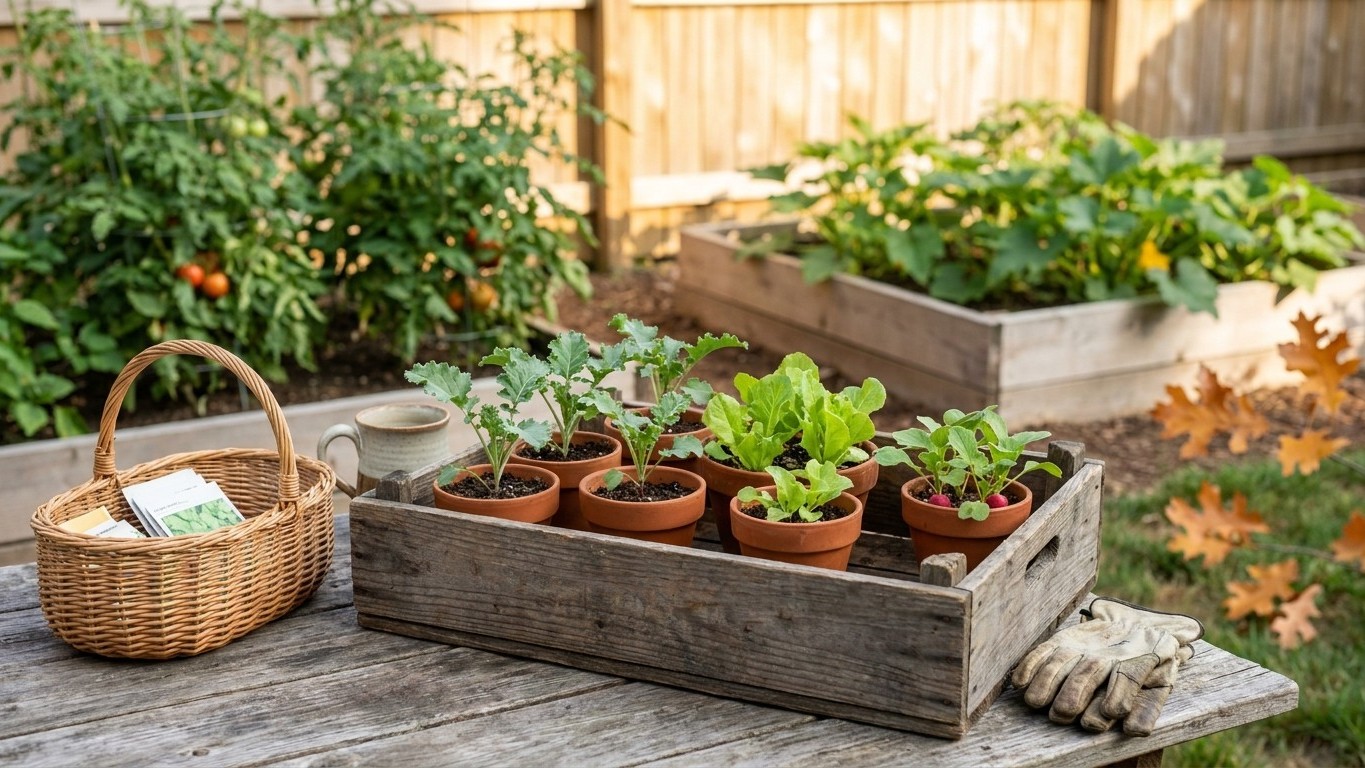

August in Missouri is a fall-planting month dressed up as the middle of summer. With the first fall frost not landing until somewhere between October 18 and October 29 (NOAA NCEI, 1991-2020 Climate Normals), gardeners still have roughly ten to twelve weeks of frost-free growing left. That’s enough time to get a real second harvest of cool-season crops in the ground, even while tomatoes and peppers are still ripening on the vine.
What goes in the ground in August

The math that matters here isn’t the date on the calendar, it’s the number of frost-free days remaining divided against the days-to-maturity printed on the seed packet. Missouri’s fall frost window runs October 18 to October 29 statewide, so a crop that needs 55 days to mature is a safe bet almost any week in August. A crop that needs 80 days is only safe if you get it in the ground in the first days of the month.
Bush beans, beets, turnips, radishes, and most leafy greens (spinach, lettuce, kale, collards, mustard, arugula, Swiss chard) all fit comfortably within that window, and several of them shrug off a light frost anyway once the cooler nights arrive. Broccoli and cabbage transplants started indoors back in July are ready to go into the ground now for a fall head. A second crop of peas, sown early to mid-month, has enough time to bear before the vines give up in the cold.
Carrots and summer squash are the tighter calls. Carrots need 70 to 80 days, which only works if sown in the first week or so of the month. Cucumbers and summer squash can still be direct-sown very early in August for a fast crop, but by mid-month that window is closing. Melons, winter squash, and sweet corn from seed are done for the season, there simply isn’t enough runway left before the frost window opens.
| Crop | Method | Days to maturity | Safe window in August |
|---|---|---|---|
| Bush beans | Direct sow | 50-55 | Early August only |
| Beets | Direct sow | 55-60 | First half of August |
| Carrots | Direct sow | 70-80 | First week of August only |
| Turnips | Direct sow | 30-55 | All month |
| Spinach | Direct sow | 40-45 | Mid to late August |
| Lettuce | Direct sow | 45-55 | All month, with afternoon shade |
| Kale, collards | Transplant or direct sow | 50-60 | All month |
| Broccoli, cabbage | Transplant | 60-70 from transplant | First half of August |
| Peas, fall crop | Direct sow | 60-70 | Early to mid-August |
What to start under cover
Counting backward from the early end of the frost window (October 18, the conservative planning date) tells you how much room is left for anything started indoors or under a cold frame this month. Take the days-to-maturity, add roughly ten days for transplant shock and establishment, then count back from that October date. A lettuce that needs 50 days plus 10 days to settle in needs about 60 days total, which lands the latest safe start somewhere in the middle of August. Wait past that and the plants may still survive but won’t size up before growth stalls in the shortening days.
Broccoli or cabbage aimed at a very late fall harvest is a tighter squeeze: 70 days plus 10 for establishment is 80 days, which pushes the latest start back into late July. If it’s already past the first week of August, that particular crop under cover is a gamble unless the transplants are already well grown.
Two failure modes bookend this window. Starting too early in August heat means seedlings under weak light or without steady moisture get leggy and heat-stressed before they ever go outside. Starting too late means the plants are still small when the light drops off in September and October, and they simply run out of season with growth stalled at a fraction of full size. Cold frames and low tunnels buy back some of that lost time in fall, but they don’t rewind the calendar, they extend the tail end of it.
What is ready to pick
August is peak harvest for the warm-season crops planted back in spring: tomatoes, peppers, cucumbers, summer squash, zucchini, sweet corn, green beans, okra, and melons are all coming in, often faster than one household can eat them. Tomatoes are ready when the color breaks fully and the fruit gives slightly to gentle pressure. Muskmelons slip cleanly from the vine when ripe; watermelons are trickier, a duller skin and a dried tendril at the stem are more reliable signs than the classic thump. Okra pods turn woody fast, so pick them at two to four inches rather than waiting for a bigger pod.
Onions and garlic planted earlier in the season are usually finishing up now too. Once the tops yellow and fall over, it’s time to pull and cure them rather than leave them in the ground, where they’re prone to rot in wet spells.
The bigger risk this month isn’t a lack of harvest, it’s letting the harvest lapse. Beans, cucumbers, and summer squash need picking every day or two. Left on the vine even a few extra days, they turn tough, seedy, or oversized, and the plant reads that as a signal to slow down or stop producing altogether.
The jobs that matter this month
Succession sowing is the job that pays off fastest right now: a fresh round of lettuce, spinach, or radishes every week or two through August keeps the fall harvest coming in waves instead of all at once. Watering rhythm matters just as much in the heat, deep and infrequent beats daily and shallow, since a good soak that reaches six to eight inches down encourages roots to follow the moisture instead of staying near the surface where they bake.
Mulch does double duty in August, holding that moisture in and keeping soil temperatures down enough for cool-season seedlings to germinate without cooking. Tomato cages and stakes that were skipped in June need attention now too, heavy fruit loads on unsupported vines snap stems and invite rot where fruit touches soil.
Pest scouting can’t wait. Japanese beetles, squash bugs, squash vine borers, and tomato hornworms all do serious damage in a matter of days during August’s warmth, and squash vine borer in particular kills a plant from the inside before the damage is visible from outside. A few minutes checking the undersides of leaves and the base of squash stems catches problems while they’re still manageable.
As spring crops finish up, clearing them out and turning compost or amendments into that bed now sets up the fall transplants going in over the next few weeks. Skipping that step means fall crops go into tired soil that’s already spent its nutrients on the spring planting.
What not to do in August
The most common mistake is sowing long-season warm crops, think melons, winter squash, or sweet corn from seed, this late in the season. The frost window opening October 18 to October 29 simply doesn’t leave enough days for them to mature, no matter how warm August feels.
Heavy nitrogen fertilizer on tomatoes and peppers now is another one to avoid. It pushes leafy growth at the expense of fruit set and can delay ripening right when the plant needs to be finishing up before frost, not starting over.
Letting the watering schedule slip during a stretch of milder days is a quieter mistake. Soil dries out fast in August heat even when the air feels bearable, and a few missed waterings on beans or cucumbers can stall production for the rest of the season. Related to that: skipping harvest for even a few days lets squash and beans go from tender to tough, and signals the plant to slow down.
Finally, don’t ignore early pest signs because “it’s just a few beetles.” By the time squash vine borer damage shows on the outside of a stem, the larvae have usually already done the damage that kills the plant.
Checking this against your own county
A statewide frost window is a starting point, not an instruction. Missouri stretches across USDA hardiness zones 5b to 7b, and elevation, local terrain, and the simple distance between the northern and southern edges of the state can shift these dates by weeks. The frost figures cited here come from a station well north of Kansas City itself; the downtown area tends to run about five days earlier in spring, and southern Missouri is milder still. For a planting calendar tuned to a specific county, the University of Missouri Extension is the source to check before betting a fall garden on a statewide average.
Common questions
Is August too late to plant tomatoes in Missouri?
From seed, yes. Tomatoes need 60 to 90 days depending on variety, and with first frost landing between October 18 and October 29, there isn’t enough runway left starting from seed in August. An already-established transplant with fruit already forming is a different story.
What vegetables can I still plant in August in Missouri for a fall harvest?
Bush beans and cucumbers early in the month, beets and carrots only in the first week or two, and turnips, radishes, spinach, lettuce, kale, collards, and other quick greens throughout the month. Broccoli and cabbage transplants started earlier can also go in now.
When should I start my fall garden in Missouri?
Counting backward from the October 18 to October 29 frost window is the reliable method: take the days-to-maturity of the crop, add about ten days for establishment, and subtract that total from mid-to-late October to find the latest safe planting date.
Can I plant grass seed in Missouri in August?
Late August is generally near the start of the preferred window for overseeding cool-season lawns in Missouri’s transitional climate, though soil and air temperatures both need to cool from their summer peak first. Check with University of Missouri Extension for guidance specific to the grass type and region.