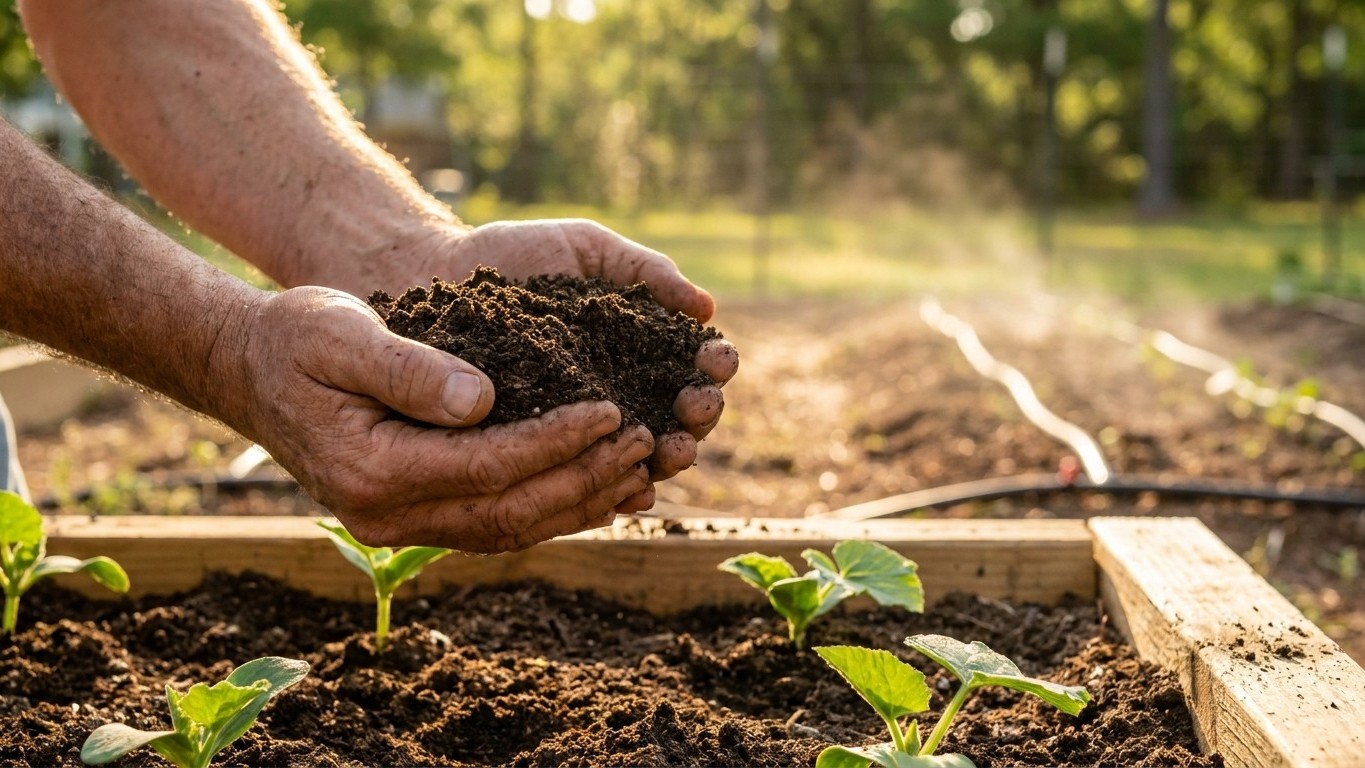

Missouri gardeners can Plant Summer Squash once the soil sits reliably above 60°F, which usually lines up with late April to mid-May depending on where in the state you are. But the calendar date matters less than what’s actually happening underground, and Missouri’s spread between its northern and southern counties, plus a summer that swings from muggy to scorching, changes how the season plays out from Kansas City to the Bootheel.
When the soil is warm enough in Missouri
The frost date everyone asks about isn’t really the number that matters. For the Kansas City reference station, NOAA’s 1991-2020 Climate Normals put the last spring frost (32°F, in the 30-70% probability band) between April 6 and April 20. That’s a probability window, not a promise, so treat it as the point where frost risk drops into an acceptable range rather than a guarantee the cold is gone for good.
Summer squash doesn’t care about frost the way tomatoes or peppers do. It cares about soil temperature. Seeds sown into cold, wet ground just sit there, rot, or germinate weak. The soil needs to hold steady warmth, and that lag between the air clearing of frost risk and the ground actually warming up can run one to two weeks. So even once you’re past that April 6-20 window, patience for another stretch of warm days pays off more than rushing seed into the ground the moment the frost date passes.
There’s a real caution buried in that Kansas City number too. The airport station (MCI) sits well north of the city itself, and the downtown station typically runs about five days earlier in spring. Drop further south into the Ozarks or the Bootheel and the frost clears earlier still, sometimes by a couple of weeks compared to the northern counties. If you garden in St. Joseph or up near the Iowa line, lean toward the later end of that window or past it. If you’re in Cape Girardeau or points south, you likely have room to plant earlier than the reference station suggests.
What this means for direct-sow versus transplants
Summer squash resents root disturbance more than people expect, and direct-sowing after the soil has warmed usually outperforms transplants that sat in a tray too long. If you want a head start anyway, especially in the cooler northern tier, starting seed indoors in biodegradable pots two to three weeks before your local frost-clear date lets you transplant without disturbing the roots much. Either way, the same rule applies statewide: wait for the soil, not just the sky.
For the actual varieties bred or trialled for Missouri conditions, the University of Missouri Extension keeps current trial data specific to the state’s growing regions, which matters more here than any generic seed packet recommendation.
How long the season lasts here
Run the two numbers together and you get the shape of a Missouri growing season. Last spring frost lands April 6 to April 20; first fall frost, per the same NOAA station, arrives October 18 to October 29. That’s a frost-free window of roughly six months, five months and change on the tight end, closer to six and a half on the generous end.
That’s a genuinely long season by national standards, and it changes the math on how you plant. A five-to-six-month window doesn’t just accommodate one planting of summer squash, it makes a second sowing worth doing. Summer squash plants tend to slow down and get chewed up by pests and disease by midsummer, so rather than nursing a tired June planting through August, many Missouri gardeners pull it and drop fresh seed in early-to-mid July for a fall crop that ripens as the weather cools back down toward that October frost date.
This is also where the transplant-versus-direct-sow decision gets more interesting. In a state with a short window, transplanting to save two or three weeks might be the only way to get a crop in before frost shuts things down. In Missouri, with frost clearing by mid-April at the latest and not returning until late October, the calendar isn’t the constraint. Direct-sowing, which avoids the root check and generally produces a sturdier plant, makes more sense here precisely because you’re not racing the clock.
The one thing to watch with a second sowing is timing it against that fall frost window. Seed dropped too late in July risks running out of daylight and warmth before it matures, especially in the northern counties where fall frost tends to arrive on the earlier side of the October 18-29 range. If you’re gardening near the southern border, you have a bit more slack on the back end.
For the specifics of staggering plantings, spacing out sowings by type, and reading your own local frost risk against the state averages, the site’s succession sowing guide walks through the timing in more detail than a single territory page can.
Heat and water in Missouri
Missouri summers aren’t extreme by Southern Plains standards, but they’re not gentle either. The Kansas City reference station averages 32.7 days a year at or above 90°F. That’s roughly a month of genuinely hot days spread across the growing season, concentrated in July and August, and it’s enough to matter for a crop like summer squash.
Squash pollen doesn’t hold up well once temperatures push into the high 90s. Flowers can open, bees can visit, and fruit still fails to set because the pollen itself has degraded in the heat. With nearly 33 days a year crossing that 90°F line, Missouri gardeners should expect at least a handful of stretches during peak summer where fruit set stalls even though the plant looks perfectly healthy. That’s not a disease or a pest, it’s heat doing what heat does to pollen.
The bigger day-to-day pressure is water. Summer squash carries broad, thin leaves that lose moisture fast, especially on a 90°F afternoon, but its root system stays fairly shallow and can’t pull water from deep in the soil to keep up. Missouri’s summer rainfall, about 14.1 inches total across June, July, and August, sounds reasonably generous on paper. But it doesn’t arrive evenly. June averages 5.25 inches, July drops to 4.58, and August, the driest and often the hottest month, falls to just 4.24 inches. That’s the exact stretch when 90°F days pile up and evaporation runs hardest, and it’s the month with the least rain to offset it.
Rain that does fall in summer tends to come as thunderstorms rather than steady soaking rain, which means a lot of it runs off rather than soaking into the root zone, particularly on clay soils common across much of the state. A gardener on sandy soil will need to water more often than the rainfall total suggests; someone on heavier clay might hold moisture longer but risk it pooling and encouraging rot around the base of the plant after a heavy storm. Mulching around the base and watering deeply but less frequently, rather than a light daily sprinkle, tends to match squash’s shallow-but-thirsty root habit better than either extreme.
None of this makes Missouri a harsh climate for summer squash. It’s a moderate one with real spikes, and August is the month that decides whether a planting coasts to the finish or stalls out. A rain gauge on your own plot will tell you more than any regional average, since a slope, a shade tree, or a nearby driveway can shift how much water actually reaches the soil.
Which summer squash suit Missouri
Given all that, three traits matter more than any specific variety name: how fast a type reaches harvest, how it handles airflow and root heat, and how it stands up to humidity-driven disease.
Missouri’s long frost-free window (April into October) means speed to maturity isn’t the constraint it would be in a shorter-season state. That opens the door to a wider range of types rather than forcing a narrow, fastest-possible choice. What the state’s heat load does argue for is choosing types known for holding up when pollen is under stress during those 90°F stretches, and for giving whatever you plant good spacing so air moves freely around the leaves and the root crown doesn’t sit baking in full sun all afternoon.
Humidity is the other factor working against Missouri gardeners, particularly in the wetter, stickier parts of a normal summer. Powdery mildew and other fungal issues thrive when leaves stay damp and air doesn’t circulate, which is common under Missouri’s mix of thunderstorm rain and high humidity. Types bred or selected for disease resistance, especially resistance to powdery mildew, tend to outlast the season better here than types chosen purely for early yield.
This page isn’t going to name a specific cultivar, and that’s a deliberate choice rather than an oversight. Seed catalogs change their offerings yearly, resistance traits get bred in and dropped, and a variety that performed well in a University of Missouri trial plot in Columbia may behave differently in a garden near Springfield or in the Bootheel. The Missouri Extension service runs and publishes variety trials specific to the state’s growing conditions, and that trial data, updated as new cultivars come through, is a far more reliable guide than any single article’s recommendation could be.
What you can decide on your own, without needing a trial report, is the type: pick for disease resistance first given Missouri’s humidity, favor good airflow habits over compact bushiness if you’re in a hot stretch of the state, and don’t worry about squeezing in the fastest possible type, since the season here gives you room to plant twice if the first round runs into trouble.