
Herbs grow well across Montana, but the state’s short, dry seasons and cold winters decide more than most gardeners expect. The real question isn’t whether basil or thyme can grow here, it’s which herbs survive the winter as permanent plants and which ones need to spend that season indoors in a pot.
When the soil is warm enough in Montana
Frost dates get all the attention, but they’re a stand-in for the number that actually matters: soil temperature. Herb seeds and transplants don’t care what the calendar says about air frost. They wait until the ground itself has warmed enough for roots to grow, and that point typically arrives after the last frost risk has passed, not the moment it does.
At the Billings reference station, NOAA’s 1991-2020 Climate Normals put the last spring frost (32°F) somewhere between April 29 and May 10. That’s a 30-70% probability band, not a guarantee, some years the last freeze comes earlier, some years later, and a frost date is always a probability, never a promise. Treat it as the earliest window to start watching soil conditions, not the day to plant.
Billings sits in one of Montana’s milder valleys. That’s worth repeating because it’s easy to assume the whole state behaves the same way. Mountain valleys elsewhere in Montana can see frost in any month of the year, which means a gardener in a high-elevation basin west of the Divide is working with a different, tighter calendar than someone gardening along the Yellowstone River bottomlands. If you’re not near Billings, treat these dates as a reference point, not a local forecast, and check conditions in your own valley before committing tender transplants to the ground.
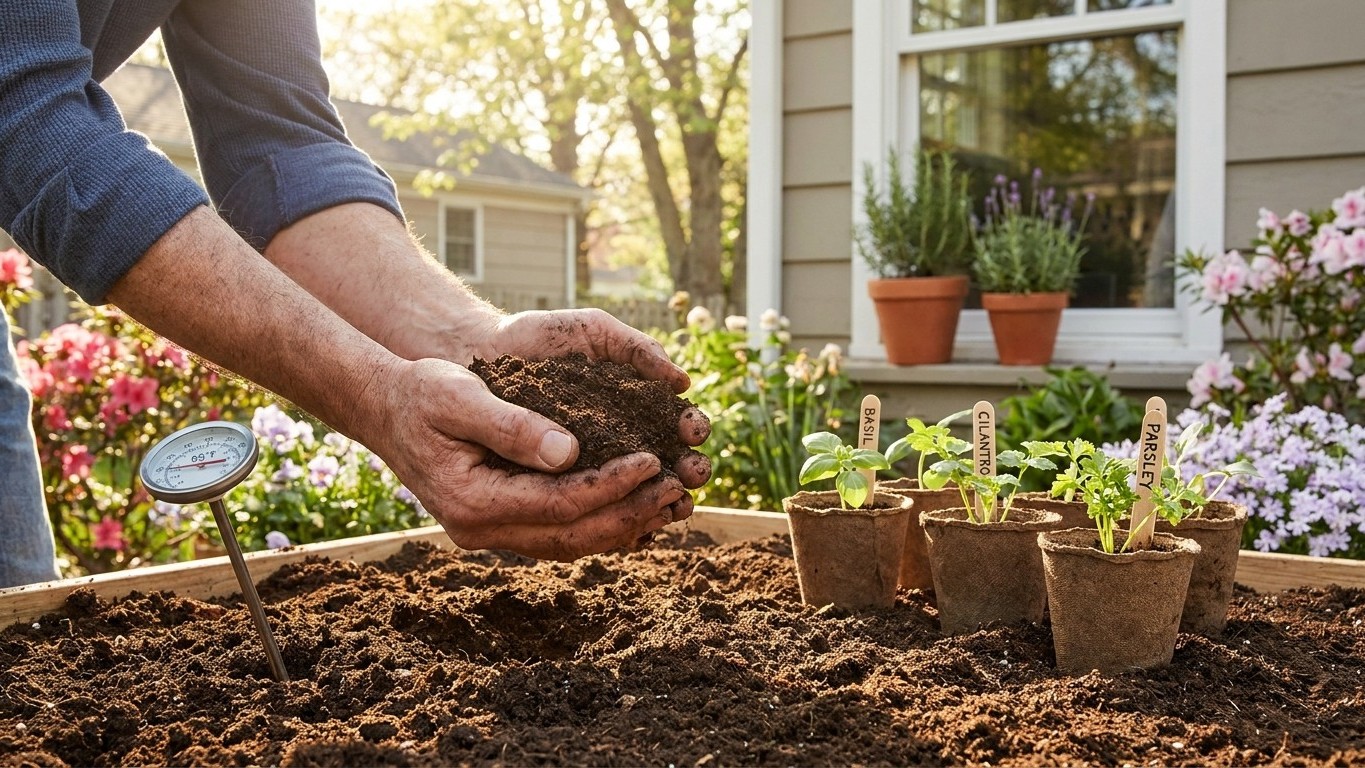
Soil that’s still cold and wet in early May will stall root growth even if the air feels warm during the day. A simple soil thermometer, or just working a trowel a few inches down, tells you more than the frost date alone. Warm, workable soil is the actual green light. Some herbs known for a long history of traditional use, like certain mints and sages, come with reputations that go well beyond the kitchen, this page sticks to growing conditions and leaves those claims unexamined.
How long the season lasts here
With both frost dates coming from the same NOAA station, the subtraction is straightforward. Using the earliest last frost (April 29) against the earliest first frost (October 1) gives a growing window of roughly 155 days. Using the latest dates in each band (May 10 to October 14) stretches it to about 157 days. Either way, Billings works with a season in the neighborhood of five months, which is more generous than many people assume for Montana.
That length matters because it changes what’s worth attempting twice. A 155-to-157-day window is long enough to sow a fast annual herb early, harvest it through summer, and still have time to sow a second round for a fall crop, particularly for herbs that mature quickly from seed. It’s also long enough that transplanting nursery starts makes real sense: a plant with a healthy, unbound root system has time to establish, size up, and produce a full harvest before the season closes, rather than just squeaking by.
In a shorter window, that math changes entirely. Where the frost-free stretch runs closer to three or four months, as it does in many of Montana’s higher valleys away from the Billings area, the first sowing often has to be the only sowing, and gardeners lean harder on transplants over direct seeding just to buy back a few extra weeks. Checking root health before transplanting becomes less optional and more of a make-or-break step, since a stressed or rootbound start has little margin left to recover.
For the mechanics of timing a second round, whether that means a fast-maturing herb reseeded in early July or a fall planting tucked in after the first harvest, the site’s succession sowing guide walks through how to stagger plantings against a known frost-free window like this one.
Heat and water in Montana
Summer heat and rainfall vary sharply across Montana’s valleys and benches, from the irrigated bottomlands along the Yellowstone to the drier high plains and mountain-shadowed basins further west. That variation makes a single heat or rainfall figure a poor guide for the whole state. For herbs specifically, though, that variation matters less than it would for a heat-loving vegetable crop. The number that actually organizes a Montana herb bed is a winter one.
USDA places Montana across hardiness zones 3a to 6a, a wide range built on one variable: the average annual extreme minimum temperature. At Billings, the coldest month’s mean daily minimum runs 17.9°F, according to NOAA’s 1991-2020 Climate Normals. That’s not a record low and not a monthly average, it’s the typical overnight floor during the coldest stretch of winter, and it’s the figure that decides whether a woody perennial herb survives outdoors or needs to come inside.
That single number reorganizes the whole herb bed. Many perennial culinary herbs, including several thymes, sages, chives, and some oregano types, are bred and selected to handle winter minimums well below freezing and can be treated as permanent plantings across much of Montana’s hardiness range. Others, rosemary being the most common example, come from Mediterranean climates that rarely see anything close to 17.9°F and simply won’t survive an outdoor winter here. Those get grown in containers and moved to a garage, porch, or indoors before the first hard freeze, then brought back out once the soil has warmed the following spring.
Because the hardiness zone is a territory-wide range and not a single number, a gardener in a milder valley near Billings is working with a meaningfully different winter than one at higher elevation or further from the moderating effect of a river valley. Anyone gardening outside the Billings area should treat 17.9°F as a reference point and expect their own coldest-month minimum to run colder, sometimes considerably colder, in the higher and more exposed parts of the state.
Which herbs suit Montana
Reasoning through the numbers already points to a short list of types worth prioritizing, without needing to name a single variety.
A roughly five-month season at the Billings benchmark, shorter in many other valleys, favors herbs that mature quickly from seed or that tolerate an early, slightly cool start: types in the parsley, dill, cilantro, and chervil families fall into that category, since they’re routinely sown as soon as soil conditions allow and don’t need a long stretch of hot weather to finish.
The winter numbers point the rest of the way. Where the coldest month’s minimum runs near 17.9°F or colder, woody Mediterranean types such as rosemary and bay make more sense as container plants than as permanent garden residents, while hardier perennial types (many thymes, chives, and cold-tolerant sage and oregano selections) can often stay in the ground year-round across a good part of the state’s hardiness range. Because Montana’s climate leans dry rather than humid, disease pressure from foliar fungal issues tends to be a smaller concern here than it would be in a wetter territory, which shifts the priority toward winter survival and drought tolerance over disease resistance when choosing what to plant.
None of that reasoning points to a specific cultivar, and it shouldn’t. Variety trials done at Montana’s own research stations, testing which named thyme, oregano, or basil selections actually perform in local soil and local winters, are the only recommendation that means anything at the ground level, and this page doesn’t have access to that trial data. The state’s land-grant extension service does: Montana State University Extension publishes locally trialled variety recommendations by region, and that’s the right next stop for turning “which type” into “which specific plant to buy.”