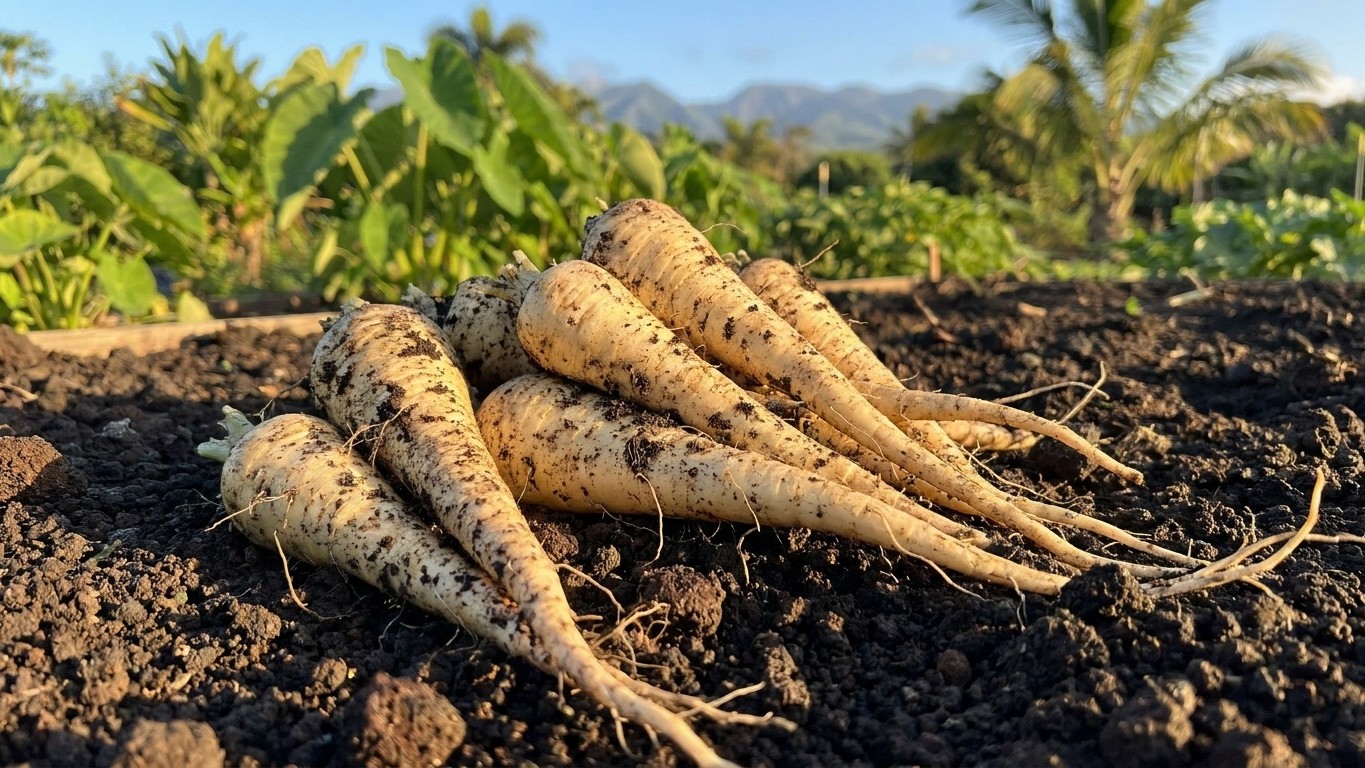

In most Montana gardens, two of the five pests Montana State University Extension documents for urban landscapes actually touch parsnip: grasshoppers and thrips. Brown marmorated stink bug shows up occasionally, but only if a parsnip plant bolts to flower in its second year. Miller moths and social wasps, though real and documented, have no business on this crop and don’t feed on it.
Which pests attack parsnip in Montana
Montana State University Extension, Urban IPM lists five insects as documented pests in Montana’s garden and landscape settings: brown marmorated stink bug, grasshoppers, miller moths, social wasps, and thrips. That’s the full list for this territory, and it’s short. No fictitious carrot rust fly, no imaginary parsnip webworm, nothing beyond what the service actually tracks here.
Not every name on that list has a reason to be near a parsnip bed. Miller moths are the adult form of the army cutworm, and the adults that swarm porch lights in early summer feed on flower nectar during their mountain migration, not on garden foliage. They’re a nuisance indoors and a curiosity outdoors, but they aren’t documented as vegetable feeders. Social wasps belong on the list for an entirely different reason: they’re predators and scavengers, often useful in a garden because they pick off caterpillars and other soft-bodied insects. A wasp working a parsnip bed is more likely hunting than eating.
That leaves three species worth watching. Grasshoppers are the one most gardeners actually see, because they’re generalist chewers that strip leaf tissue from almost anything green, parsnip tops included, once populations build later in the season. Thrips are the quieter problem: tiny, slender insects that rasp at leaf surfaces and leave a dry, silvery stippling rather than visible bite marks. Brown marmorated stink bug rounds out the list with a narrower window of interest. It’s a piercing-sucking feeder with a taste for a wide range of hosts, and while it isn’t a foliage feeder on young parsnip greens, it has been known to work over the flowering seed heads on umbellifer crops left to bolt into a second season.
So the practical shortlist for a Montana parsnip bed is grasshoppers and thrips first, brown marmorated stink bug a distant third, and the other two names on the extension list crossed off for this particular crop.
When each one shows up, and what it does first
Parsnip in Montana is sown directly in the ground, not transplanted, and that changes how you read the calendar. Working back from the state’s last spring frost, which falls between April 29 and May 10 in the milder valleys, seed typically goes in the ground two to three weeks ahead of that date. Germination is slow: expect 14 to 21 days before seedlings break the surface, and a gardener who doesn’t know that will dig up perfectly good, still-germinating seed and resow out of impatience.
Grasshoppers are a midsummer problem, not an early one. Nymphs hatch and feed lightly at first, but populations climb through the growing season as the insects mature, so the damage that starts as a few notched leaf edges in early summer can turn into skeletonized foliage by late summer if numbers get away from you. The first sign is usually ragged, chewed margins on the outer leaves, working inward as the insects grow larger and hungrier.
Thrips tend to show up earlier and quieter. They favor warm, dry stretches, and the first visible clue is rarely a visible insect at all. It’s a dulling or silvering of the leaf surface, sometimes with fine black flecks of frass, that can be mistaken for drought stress before anyone thinks to look for the insect itself.
Brown marmorated stink bug, when it appears on parsnip at all, does so later in the season and only on plants that have bolted, meaning they’ve survived a winter in the ground or been left past their first-year harvest window. The feeding shows up as pitting or discoloration on the developing seed heads rather than anything on the leaves or root.
Parsnip itself needs 100 to 120 days from seeding to reach harvest size, which puts most Montana plantings finishing up sometime between the last frost window and the first one in fall, October 1 to October 14. That’s also the stretch when a gardener is watching two things at once: how the crop is maturing, and whether grasshopper pressure is building faster than the roots are.
Telling the damage apart from everything else
Chewed leaves and dull foliage don’t always mean an insect is involved, and treating for one when the real cause is something else wastes both time and money. The distinguishing detail is almost always in the pattern, not the color.
| Symptom | Possible cause | What tells them apart |
|---|---|---|
| Ragged, chewed leaf margins | Grasshoppers | Irregular chew marks working inward from the edge, often visible insects nearby |
| Dull, silvery leaf surface | Thrips | Stippled or scarred surface texture rather than missing tissue; fine dark specks of frass |
| Yellowing between leaf veins | Nutrient deficiency | Even, symmetrical pattern across the whole plant, not isolated to a few leaves |
| Wilting, crisp leaf edges | Drought stress | Whole plant affected uniformly, improves within days of consistent watering |
| Forked or split roots | Heavy or stony soil, or overwatering | Root shape problem with no leaf damage at all; soil texture check on digging |
| Sudden collapse of a single plant | Disease or mechanical injury | Localized to one or a few plants rather than spread across the bed |
Note that forked roots have two separate possible causes here, and they shouldn’t be lumped together. Heavy or stony ground physically deflects the taproot as it grows down, while overwatering can trigger the same forking by encouraging shallow, branching root growth instead of one deep taproot. Neither has anything to do with an insect, and no amount of pest control will straighten out either problem once it’s underway.
If leaf damage doesn’t match the chewed-edge or stippled-surface patterns above, or if it’s spreading in a way that looks more like disease than insect feeding, that’s a case for a local diagnosis rather than a guess from a website.
What actually works here, and what is a waste of time
Montana’s short growing season means timing usually matters more than any single control method. A physical barrier put down at seeding, before grasshoppers build up later in summer, does more good than any treatment applied after the damage is already visible. Floating row cover over young parsnip rows keeps early-season thrips and later grasshopper nymphs off the foliage during the weeks when the plant is putting energy into establishing its root, which is exactly when leaf loss hurts the most.
Handpicking works for grasshoppers on a small planting, especially early in the season before populations climb, though it stops being practical once numbers build in a bad year. Keeping the area around a parsnip bed mowed and free of tall grass reduces the egg-laying and shelter habitat grasshoppers rely on nearby, which is a cheap and low-effort step that pays off before the insects ever reach the vegetable bed.
What doesn’t help: tilling after damage is already visible does nothing for grasshoppers that have already moved on to feed elsewhere, and it disturbs the very taproot you’re trying to protect. Watering heavily in response to thrips damage can make things worse rather than better, since it’s a feeding injury, not a drought symptom, and overwatering is itself one of the causes of forked roots described above. And because parsnip needs several weeks of frosty weather after maturity to convert its starch to sugar, pulling the crop early to “get ahead” of possible fall pest pressure trades away the flavor the whole crop was grown for.
This site doesn’t recommend specific products or active ingredients, and for good reason: what’s labeled and legal for use on a home vegetable garden varies by state, and only the local extension service can confirm what’s currently approved in Montana.
Where to check this for your own county
Montana State University Extension, Urban IPM is the source behind the pest list in this article, and it’s a statewide program, not a county-by-county survey. That matters because pest presence documented at the state level doesn’t tell you what’s actually in a given garden. A grasshopper outbreak that’s severe in one dry county can be a non-issue in an irrigated valley thirty miles away.
The most useful next step is a call or visit to the county extension office, which can speak to conditions specific to that area’s soil, elevation, and recent pest reports. Montana’s geography adds another layer worth remembering: while the state’s milder valleys see a last spring frost between April 29 and May 10 and a first fall frost between October 1 and October 14, mountain valleys elsewhere in the state can see frost in any month at all. That single fact changes both the pest calendar and the parsnip planting window enough that a neighboring county’s timing shouldn’t be treated as a stand-in for your own.
If leaf damage, stippling, or root deformity shows up and doesn’t clearly match anything described here, bringing a sample or a clear photo to the county extension office is a more reliable path than guessing from a general description. Extension staff can identify an insect from a specimen in a way no article can, and they know what’s currently documented as active in that specific county rather than the state as a whole.
Common questions
Do grasshoppers actually damage the parsnip root, or just the leaves?
Grasshoppers feed on foliage, not the root itself. The concern with heavy leaf loss is indirect: a parsnip plant stripped of leaves has less capacity to grow and fatten its taproot during the season, which can leave you with a smaller harvest even though the root wasn’t touched directly.
Can I plant parsnip earlier to avoid grasshopper season entirely?
Not by much. Parsnip seed is typically sown two to three weeks before the last spring frost, which in Montana’s milder valleys falls between April 29 and May 10, and germination alone takes 14 to 21 days. Grasshopper populations build through the growing season regardless of when the crop went in, so an earlier planting mostly buys the crop a head start on root growth rather than avoiding the pest altogether.
Why do my parsnips taste bland even though the plants look healthy?
Parsnip’s sweetness comes specifically from exposure to several weeks of cool, frosty weather after the roots mature, which converts stored starch into sugar. A parsnip pulled before that frost exposure, or grown in a stretch of unusually mild fall weather, will look and grow fine but never develop the flavor the crop is known for.
Is a stink bug on my parsnip flowers something to worry about?
Brown marmorated stink bug only shows interest in parsnip once the plant has bolted and produced flowering seed heads, typically in a second growing season. If you’re growing parsnip as a one-year root crop and harvesting before flowering, this pest has little opportunity to feed on it at all.