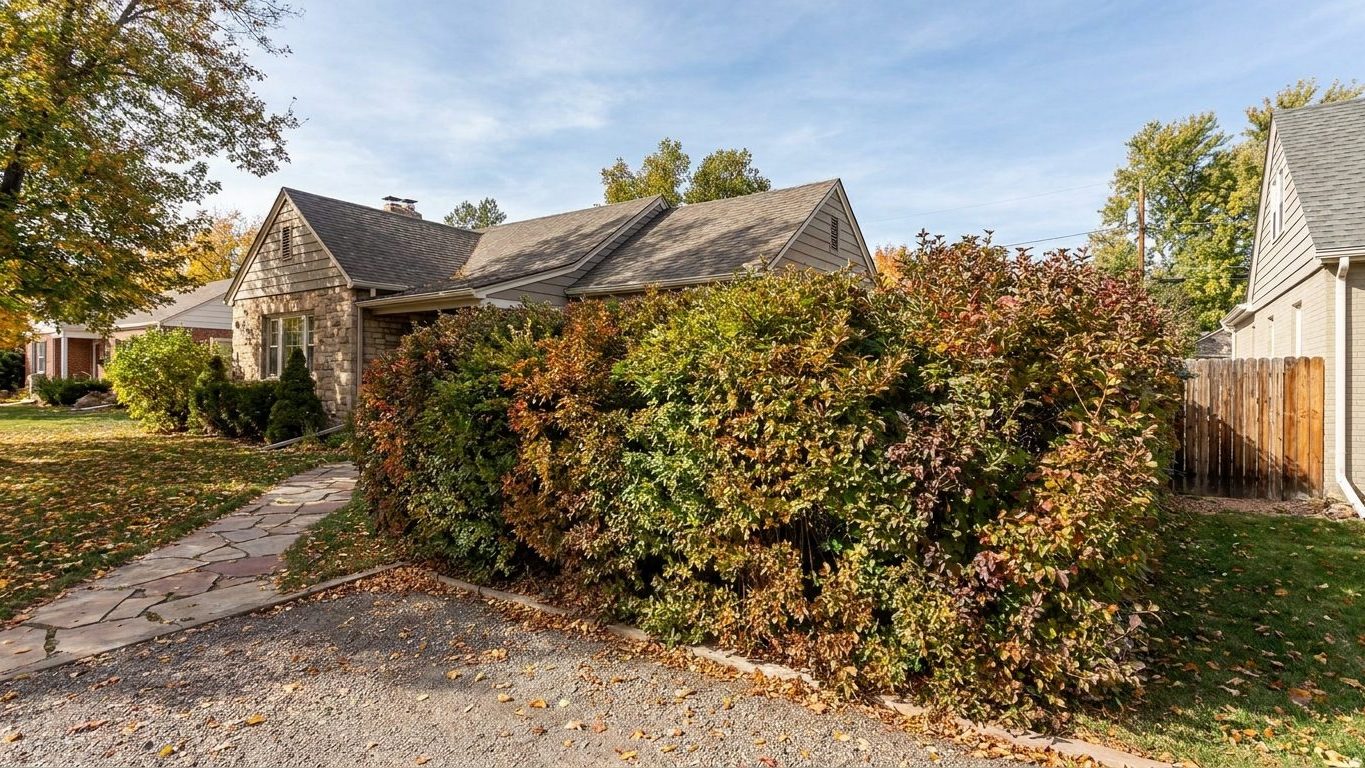

Montana has no statewide limit on how tall a hedge can grow. There is no single number, and a website that quotes one for the whole state is guessing. If a limit applies to your hedge, it sits in the ordinance of your city or town, and that ordinance may regulate fences without mentioning living plants at all. Here is why the law works this way, how to find your own rule in about an hour, and which restriction applies almost everywhere.
There is no Montana hedge height law
Height rules for hedges come from zoning, and zoning belongs to local governments. No state in the country sets a hedge ceiling by statute. Montana is no exception, so the true state-level answer is “none.” Commercial pages that print one figure for an entire state are flattening hundreds of separate local codes into a number that matches almost none of them.
Why one number is always wrong
A city council writes its fence and landscaping rules to fit its own neighborhoods. A dense downtown grid with alleys and corner lots needs different rules than a rural-edge subdivision with half-acre parcels. Two towns a short drive apart can set different limits, measure height from different points, or treat front and back yards differently. A figure that is correct in one town is simply a rumor in the next.
Several things change the answer for your yard:
- Whether you live inside city or town limits, or on unincorporated county land
- Your zoning district (residential, commercial, mixed use)
- Whether the hedge runs along the front, side or rear lot line
- Whether your lot is on a corner or has a driveway that meets a street
- Whether a homeowners association adds private rules on top of the public ones
Hedge, fence, or neither
The word your code uses matters more than most people expect. Many ordinances regulate fences as structures, with a maximum height, a permit trigger and sometimes a required setback. Living hedges are often handled separately, or left out entirely. In a code like that, a 10-foot arborvitae screen may face no height limit while a 10-foot wooden fence would be a violation.
The reverse happens too. Some codes define “fence” broadly enough to include “a hedge or row of shrubs used as a barrier,” which pulls your plants under the fence limit. You cannot tell which kind of code you have by guessing. You have to read the definitions section, which most people skip and which usually decides the question.
Other states follow the same local-control pattern, and the pages on How High Can a Hedge Be in North Dakota? What the Law Actually Says and How High Can a Hedge Be in Alabama? What the Law Actually Says explain how the same gap plays out there. The method below works the same way in all of them.
How to find the rule that actually applies to you
The fastest route is the online municipal code. Most American cities publish theirs through one of three publishers: Municode (library.municode.com), American Legal Publishing (codelibrary.amlegal.com) or eCode360. Search your city’s name plus “code of ordinances” and you will usually land on one of them. Some small towns still post a PDF on the town website, and a few keep the code only at town hall.
Search the code the right way
Once you are in the code, skip the general search at first and go to the zoning chapter. Look for sections titled “fences,” “walls and fences,” “accessory structures” or “landscaping and screening.” The hedge rule, if there is one, will be in one of those. Then use the search box with several terms, because the code might use any of them:
- “hedge” and “shrub”
- “fence” (and read its definition)
- “vision triangle,” “sight triangle” or “clear vision”
- “visibility” and “corner lot”
Write down the exact section number and the date the code was last updated. If you ever need to raise the rule with a neighbor or an inspector, a section number ends an argument faster than “I read somewhere.”
Then call a person
Codes are written for lawyers and can contradict themselves. A five-minute call settles what a half hour of reading cannot. Ask for the planning and zoning department, sometimes called community development or the building department. Code enforcement can also answer, though they tend to know the complaint side better than the permitting side.
Ask three things. Does the code regulate living hedges, or only fences? Is there a height limit for the front yard that differs from the back? And does my lot have a sight triangle? If you live outside any city or town, call the county planning office instead, and ask whether the county zoning covers your parcel at all. Some rural parcels have no zoning, and then the only rules are private ones, such as deed covenants.
| What you are checking | Where it lives | Who to ask |
|---|---|---|
| Fence or hedge height | City or town zoning chapter | Planning and zoning department |
| Corner and driveway visibility | Zoning or traffic code | Planning or public works |
| Rural parcel outside town | County zoning, if any | County planning office |
| Neighborhood restrictions | Covenants and HOA rules | HOA board or your closing documents |
Our Hedges section collects the state-by-state versions of this question, including How High Can a Hedge Be in Oregon? What the Law Actually Says, if you also own property elsewhere.
The branches that cross the line
Height is only half of what neighbors fight about. The other half is the hedge that leans, sprawls or drops branches onto the next yard. Here the rules come from a different place. In most states, the principle is that a neighbor may cut back growth that crosses onto their property, up to the boundary line and no further, at their own expense. This is general common law, built on court decisions rather than a statute, and it varies. Treat it as a starting point, not as Montana’s rule.
What the general principle usually allows
Cutting back means trimming what hangs over your side. It does not mean reaching across the line, and it does not mean destroying the plant. In most places a neighbor who kills or badly disfigures a hedge by cutting it back too hard can end up owing damages, even when every branch they removed was technically over their property. The cut has to stay modest enough that the plant survives.
Cost usually falls on whoever does the cutting. A neighbor who trims your overhang generally does not get to bill you for it, and you generally cannot bill them for trimming their own side. Courts in some states have treated “nuisance” trees or hedges differently, for example when roots or limbs cause real damage, so the details depend on where you live and what happened.
Before it becomes a dispute
Most of these conflicts never need a courtroom. A short conversation works better than a note on the windshield, and offering to split the cost of a one-time trim often ends the matter. Photograph the hedge, the boundary and the branches before anyone cuts. If the lot line itself is unclear, a survey settles it, and a hedge that sits exactly on the line may be jointly owned, which changes who can cut what.
If talking fails, or if a neighbor has already cut or poisoned your plants, stop and consult a Montana attorney before doing anything else. This article explains general principles and does not replace legal advice. The municipal code can also help in a dispute: some ordinances include nuisance or vegetation provisions, and your city’s code enforcement office can tell you whether a complaint is worth filing.
What to check before you plant
Planting season is the cheapest time to get this right. A hedge removed later costs far more than the hour spent checking the rules first. Work through the following before you buy a single shrub.
The sight triangle comes first. This is the one rule that applies almost everywhere, even where no other hedge rule exists. At a corner or where a driveway meets a street, nothing may block a driver’s view, and the height limit inside that triangle is usually far lower than the general fence height. A hedge that is perfectly legal along the back fence can be a violation at the corner of the same lot. Your zoning or traffic code will describe the triangle’s dimensions for your town, so find that section and measure from it.
Next, call 811 before you dig. Buried gas, water and electric lines run through many yards, and a planting trench along a lot line is exactly where they often sit. The call is free, and the locate marks tell you where not to dig.
Then check the paper trail on your own property:
- Easements on your plat or deed, which can prohibit plantings in certain strips
- HOA covenants, which may cap height or ban certain species even when the city does not
- Any permit requirement tied to fences, in case your hedge is defined as one
Finally, plant for the size the shrub will reach, not the size it has in the pot. Many hedge plants spread several feet wide at maturity, so setting them right on the line guarantees branches over the boundary within a few seasons. Leaving a few feet of room between the hedge and the property line gives you space to trim from your own side and keeps most of the branch disputes from ever starting.
Common questions
Is there a maximum hedge height in Montana?
Not at the state level. Any maximum comes from a city or town ordinance, and some codes set no limit for living hedges at all. Find your local code and confirm with the planning department.
Does the fence height limit apply to my hedge?
Sometimes. Some codes treat hedges as fences, others regulate them separately, and others ignore them. Read the definition of “fence” in your zoning chapter before assuming.
Can my neighbor trim my hedge?
In most states, a neighbor may trim growth that crosses onto their property, up to the line, but may not kill the plant. This comes from case law and varies, so for anything beyond a routine trim, talk to a Montana attorney.
What if I live outside city limits?
Then city ordinances do not reach you. Call the county planning office to ask whether county zoning covers your parcel, and check your deed for covenants. Some rural parcels have no public hedge rule at all, but a sight line at a driveway still matters for safety.