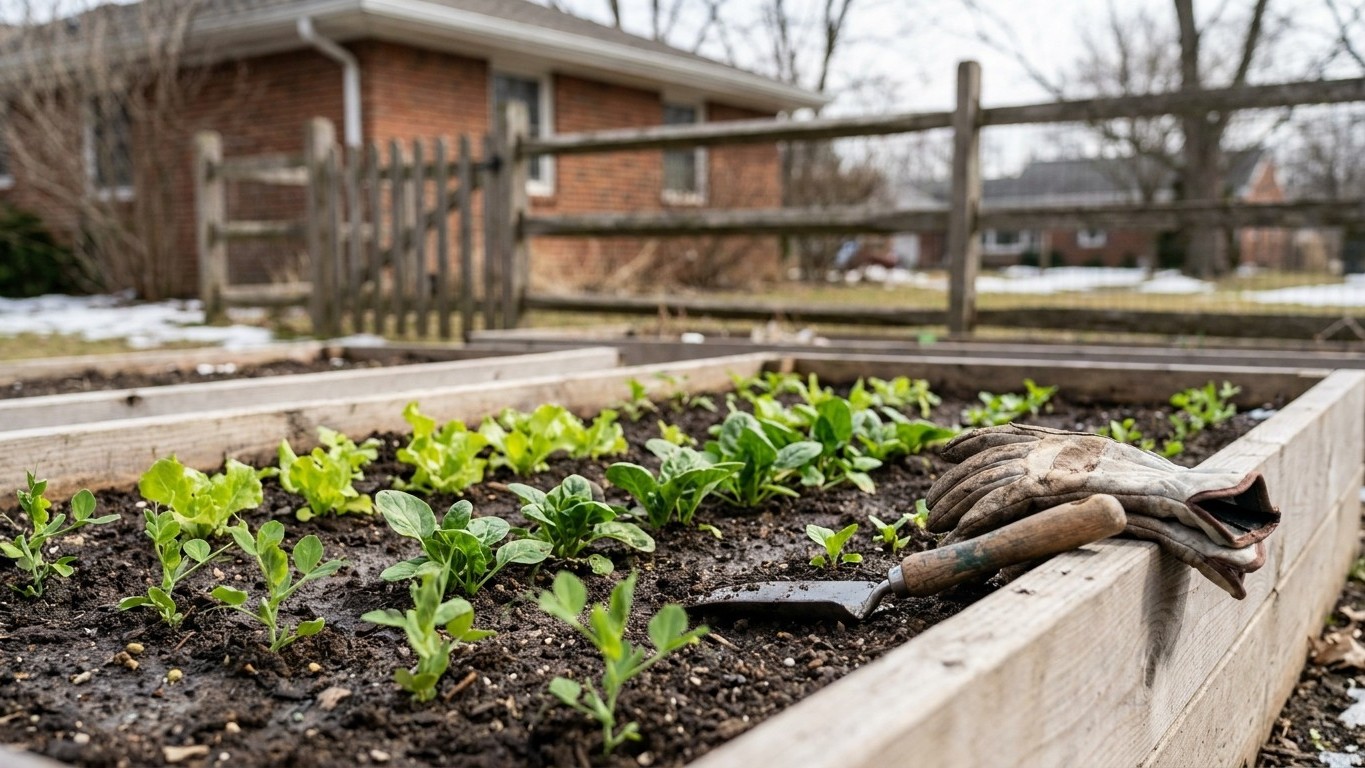

Direct answer: almost nothing goes into open Montana ground in March. NOAA’s 1991-2020 Climate Normals for Billings put the last spring freeze between April 29 and May 10, and that’s the mild end of the state. This month belongs to seed starting indoors, dormant pruning, and soil prep, not transplanting.
What goes in the ground in March

Soil temperature, not the calendar, decides what survives outdoors, and in most of Montana that soil is still locked up or soaked with snowmelt through March. With the Billings freeze window running April 29 to May 10, and mountain valleys elsewhere in the state frosting even later, planting anything tender now is a bet against physics.
That doesn’t mean the garden sits idle. Bare-root fruit trees, brambles, and roses can go into the ground the moment soil is workable, meaning it crumbles rather than clumps when squeezed. Dormant stock doesn’t care about air temperature the way a seedling does; it just needs unfrozen, drained soil to settle roots before growth starts. In the state’s warmer valleys, that window can crack open toward the end of March.
Onion sets, shallots, and seed potatoes tolerate a light frost once in the ground and can go in as soon as beds thaw, well ahead of the frost-free date. Peas are the classic test case: they germinate in soil as cool as 40 degrees and shrug off a frost on emerging leaves, so a gardener in a low, south-facing valley with workable soil can direct-sow peas in late March. A gardener at elevation, or anywhere the ground is still frozen solid, should wait.
Cold frames and low tunnels buy weeks. Spinach, arugula, and mâche sown under a cold frame in March get a head start the open bed can’t offer, because the cover traps daytime heat and blocks the hard nights. Forcing rhubarb or chicory indoors, in a dark box over a few weeks, gives a harvest before the outdoor plant has even broken dormancy. None of this replaces open-ground planting; it’s what fills the gap until the ground actually cooperates.
What to start under cover
Seed starting in Montana works backward from the frost window, not forward from a date on the packet. With the Billings freeze risk dropping between April 29 and May 10, count back the number of weeks a seedling needs before it’s ready to transplant, and that tells you when to sow indoors.
Onions and leeks need the longest runway, 10 to 12 weeks to grow a stocky transplant, which means starting them in late December through February for a Billings-area frost date, and gardeners are often already behind by March. Peppers and eggplant need 8 to 10 weeks and are the crops to prioritize now. Tomatoes need 6 to 8 weeks, which lines up well with a March start for an early-May transplant date. Brassicas like broccoli and cabbage need only 5 to 6 weeks and can wait until later in the month.
| Crop | Weeks needed before transplant | Start indoors relative to March |
|---|---|---|
| Onions, leeks | 10-12 weeks | already overdue if not started |
| Peppers, eggplant | 8-10 weeks | start now, early March |
| Tomatoes | 6-8 weeks | start now, through mid-March |
| Broccoli, cabbage | 5-6 weeks | start late March |
The two ways this goes wrong are opposite mistakes. Start too early and the seedlings outgrow their pots weeks before the ground and air are ready, turning leggy and rootbound while they wait on a windowsill. Start too late, especially with onions or peppers, and the plant never catches up, going into the ground undersized and yielding less all season. Since Montana’s frost window is a range, not a fixed date, err toward the earlier end of any calculation if the growing spot is in a colder pocket of the state.
What is ready to pick
Little to nothing comes out of an open Montana garden in March. That’s the honest state of things when the last freeze is still six to eight weeks off. What feeds the table this month comes from what was tucked away earlier or is growing under cover.
Kale and leeks planted the previous fall and left under mulch or snow cover often survive and can be dug or cut as soon as the ground softens enough to reach them; the cold actually sweetens their flavor. A cold frame sown in late winter with spinach or lettuce can already be yielding thinnings by March, and that’s some of the freshest greens a Montana gardener sees before the outdoor season starts. Indoors, sprouts and microgreens on a countertop tray are ready in days rather than weeks and need no garden space at all.
The other job this month is triage on what’s in storage. Squash should be firm with no soft spots; press gently near the stem end, where rot usually starts first. Potatoes that have sprouted eyes or gone soft should be pulled and used or composted before they spread rot to the rest of the bin. Onions with green shoots emerging from the top are drawing on their own stored sugars and are best used soon, since their flavor and shelf life both decline fast once that happens.
The jobs that matter this month
March carries more real work than it gets credit for, and skipping it costs the whole season, not just this month.
Pruning and orders
Dormant pruning of fruit trees and cane berries is best done before buds swell, while the plant’s structure is easy to see and cuts heal without pushing out sap. Wait too long and pruning cuts into new growth, wasting the energy the plant already invested. Seed orders placed now also beat the rush; popular varieties of tomatoes, peppers, and short-season corn sell out of Montana-suited stock by the time frost risk actually clears in May.
Soil and structure
Soil testing done in March gives results back in time to amend before planting, rather than guessing at fertility after the fact. Turning a compost pile that’s been sitting since fall speeds it toward being usable by the time transplants go out. This is also the month to walk fence lines and raised beds for winter damage, since a broken board or sagging wire is far easier to fix on a mild March afternoon than in the middle of a busy planting week. Rotation planning, deciding which family of crops goes where, is best done on paper now rather than improvised at the last minute in the bed.
Tool maintenance rounds out the list: a sharp hoe and clean pruners make every job faster once the season actually starts, and a rusted blade now is a slower cut in May.
What not to do in March
The biggest mistake in a Montana March is trusting a warm afternoon. A run of 60-degree days can feel like spring, but soil temperature lags air temperature by weeks, and seeds or transplants put into ground that’s still near-freezing a few inches down will rot or simply sit without germinating. Wait for the soil itself to warm, not the forecast.
A close second is uncovering plants, cold frames, or mulch too early after a mild spell. Montana’s spring weather swings hard, and a week of soft afternoons is often followed by a hard freeze that catches exposed growth off guard. Keep row cover and mulch in place until the freeze window has genuinely passed, using the April 29 to May 10 range as the guide, later at elevation.
Feeding nitrogen too early is a subtler error. High-nitrogen fertilizer applied to dormant fruit trees or perennials in March can push soft, early growth that a late frost then kills outright. Hold nitrogen until real growth is underway, and lean on compost or a balanced feed if soil tests call for something now.
Checking this against your own county
A statewide frost window is a starting point, not an instruction. Billings sits in one of Montana’s milder valleys; elevation, mountain shadow, and lake or river proximity all shift the real frost-free date by weeks in either direction, and a mountain valley can see frost in any month of the year. Before committing seed or transplants to open ground, check conditions specific to your county through Montana State University Extension, which tracks local frost data and planting timing across the state’s growing regions.
Common questions
Can I plant peas outdoors in Montana in March?
Only where soil is already workable, typically in the state’s lowest, mildest valleys. Peas tolerate cold and light frost, but the soil still needs to be thawed and crumbly, not frozen or waterlogged, for seed to germinate.
When is it actually safe to plant tomatoes outdoors?
Not until after the local frost-free date, which for the Billings area falls between April 29 and May 10. Tomatoes started indoors in March should stay under cover until that window has passed, later at higher elevation.
Onions and leeks. They need 10 to 12 weeks of indoor growth before transplanting, so a March start is already late for a Billings-area frost date and should be the first priority for anyone catching up.
Why did my seedlings get leggy this month?
Almost always insufficient light combined with starting too early relative to the transplant date. Seedlings started well ahead of when they’re needed stretch toward whatever light they can find and become weak and rootbound before the ground is even ready for them.