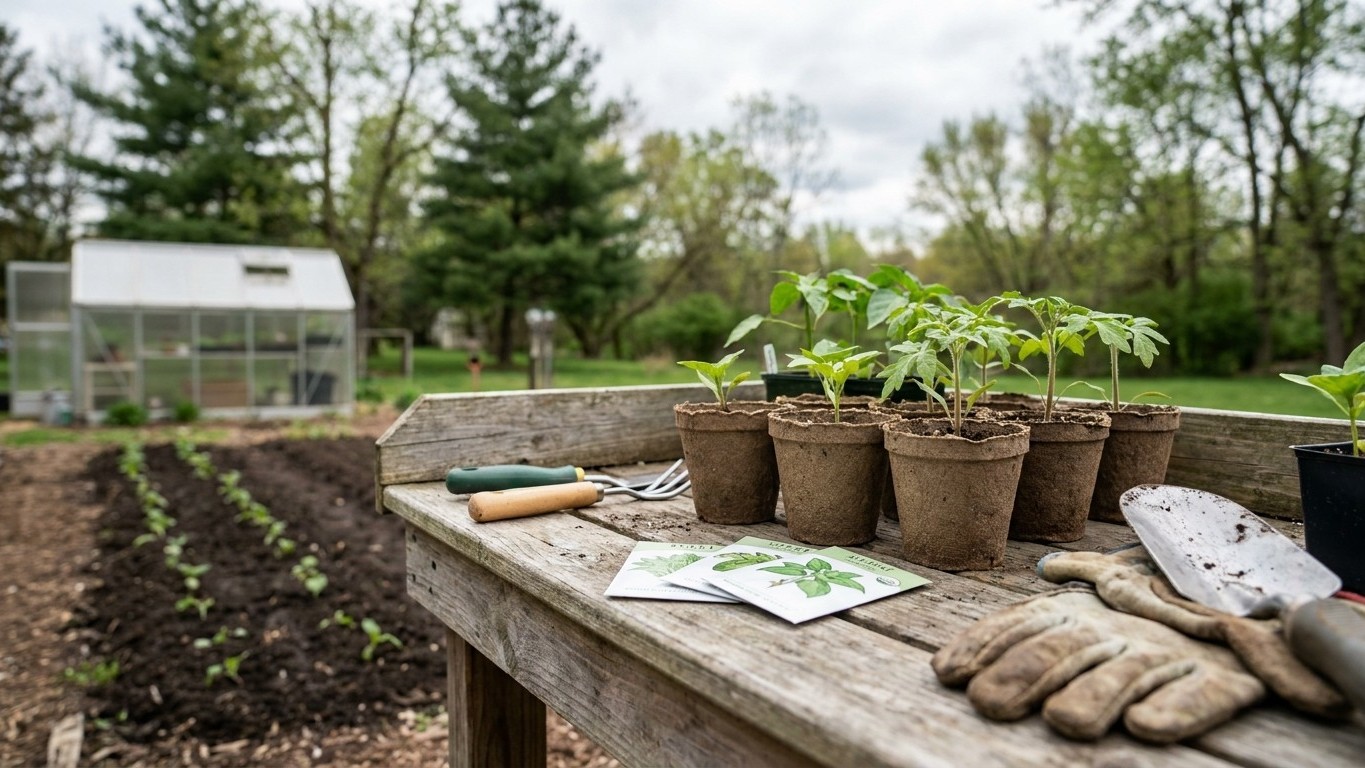

April in Montana sits mostly ahead of the last spring frost, which lands between April 29 and May 10 in the Billings area. That means the month favors hardy, frost-tolerant plants over anything tender: peas, spinach, onion sets, garlic, and cold-frame greens go in as soil allows. Warm-season crops wait for May. April is a prep-and-plant-hardy month, not a full-garden month.
What goes in the ground in April

Soil temperature and workability decide what goes outside this month, not the date on the calendar. Because the last frost window (April 29 to May 10, per NOAA’s 1991-2020 climate normals for the Billings area) hasn’t closed yet for most of April, anything tender that touches open ground now risks a hard setback or an outright kill. The safe list stays narrow and cold-tolerant on purpose.
Peas go direct-sown as soon as the ground can be worked with a hoe rather than a shovel getting stuck in mud. Spinach and lettuce mixes tolerate a stray frost and often germinate better in cool soil than in warm. Onion sets and seed potatoes can go in toward the back half of the month in the milder valleys, though gardeners at elevation or north of the interstate corridor should hold another two to three weeks. Garlic planted the previous fall is already up and growing; if a fall planting was missed, garlic and shallots can still go in now as an emergency spring planting, with a smaller bulb size to show for it come summer.
Bare-root fruit trees, berry canes, and roses belong in the ground while they’re still dormant, which April usually still allows in Montana’s Zone 3a-6a range (USDA Plant Hardiness Zone Map, using Billings as the milder reference point within that range). Cold frames and low tunnels stretch what’s possible, letting a gardener push lettuce, kale, and Asian greens outside two to three weeks earlier than open-ground timing would allow.
| Crop | April status | Note |
|---|---|---|
| Peas | Safe | Direct-sow once soil is workable |
| Spinach, lettuce | Safe | Tolerates light frost |
| Onion sets, seed potatoes | Late April, milder valleys | Hold longer at elevation |
| Garlic, shallots | Emergency planting only | Smaller bulbs than fall-planted |
| Tomatoes, peppers, squash | Gamble/no | Wait for after last frost window |
What to start under cover
Timing seed starts works backward from the last frost window, not forward from a fixed date on a seed packet. With the frost window closing between April 29 and May 10, a gardener counts back the number of weeks a crop needs before it’s ready to transplant, and that’s the start date.
Tomatoes and peppers need roughly six to eight weeks indoors before they go outside, which puts their ideal start in late February through March. If that window was missed, April is late for those two crops from seed, and buying started transplants becomes the more reliable route. Cucumbers, squash, and melons need far less lead time, usually three to four weeks, which makes early-to-mid April the right window to start them indoors for a transplant date safely after the frost window closes.
The two ways this goes wrong both cost a season. Starting too early leaves warm-season seedlings rootbound and leggy on a windowsill, stretching toward weak light for weeks longer than they should, and those plants rarely recover their vigor once they’re finally set outside. Starting too late means a squash or melon transplant goes into the ground with too few weeks left before the first fall frost (October 1 to October 14 in the same reference area) to mature a full crop. Splitting the difference by counting backward from the actual frost window, rather than guessing, is the fix for both problems.
What is ready to pick
Outdoor harvests stay thin in April, and that’s normal for a month still ahead of the frost window rather than a sign anything went wrong. Overwintered kale, and leeks left in the ground under mulch or snow cover, often come through the cold with sweeter flavor than they had in fall, and both are ready to pull as soon as the ground softens enough to dig them.
Cold frames carry the bulk of April’s fresh picking. Spinach, mâche, and hardy lettuce sown under cover the previous fall or in late winter reach picking size now, and cutting them regularly at the outer leaves keeps the plant producing longer than a single full harvest would. Indoors, sprouts and microgreens fill the gap on a countertop, ready within one to two weeks of sowing and needing nothing more than a tray, seed, and a windowsill.
Stored crops need a check-in this month. Squash held from fall harvest starts to soften and spot by spring, so any squash going soft at the stem end should get used first rather than left to rot the rest of the pile. Potatoes and onions in storage should get sorted too. Any potato that’s sprouting or turning green near the skin, and any onion gone soft at the neck, comes out before it takes the crops around it down with it.
The jobs that matter this month
April’s real payoff comes from work that has a narrow window and a real deadline, not from planting alone. Dormant pruning of fruit trees, berry canes, and roses should wrap up before buds swell and break; cutting into active growth wastes the plant’s stored energy and slows fruiting later in the season. This is also the last comfortable window to get that pruning done before leaves make it harder to see the branch structure.
Soil preparation now sets up everything planted later. Working compost or aged manure into beds while they’re still bare, and testing pH or nutrient levels before the ground fills up with roots, is far easier in April than once the garden is planted and crowded. Turning the compost pile speeds up decomposition right as warmer days start to help the process along on their own.
Seed ordering has a deadline that’s easy to miss: popular varieties of tomatoes, peppers, and squash sell out from seed companies weeks before most gardeners think to order, so April is often the last realistic month to lock in a full seed list before settling for whatever’s left on the shelf.
Other jobs stack up fast: cleaning and sharpening pruners and hoes before they see heavy use, repairing raised bed frames and fence lines while the garden is still empty enough to get a wheelbarrow through, staking or caging perennials before they leaf out and hide their own support structure, and mapping out a rotation plan so this season’s tomatoes don’t land where last season’s tomatoes grew.
What not to do in April
The most common April mistake in Montana is trusting a warm afternoon over the calendar. A string of 70-degree days can make the soil feel ready for tomatoes or squash, but air temperature and soil temperature move at different speeds, and cold soil stunts warm-season roots even when the air feels like summer. The frost window running through April 29 to May 10 doesn’t move just because one week felt mild.
Pulling row cover or mulch off too early after a warm spell is the second trap. Montana’s spring weather swings hard, and a bed uncovered during a mild stretch can take a frost hit days later that a covered bed would have shrugged off. Leaving protection in place through the full frost window costs nothing; removing it early and losing a planting costs weeks.
Feeding nitrogen at the wrong point does damage that shows up later rather than right away. Heavy nitrogen applied to fruit trees or berry canes too early in spring pushes soft, leafy growth right when the plant should be settling into steady root and bud development, and that soft growth is exactly what a late frost damages worst. Holding off on nitrogen until growth is well underway, and leaning on phosphorus and potassium for root and bud strength earlier in the season, avoids that trap entirely.
Checking this against your own county
A statewide April calendar is a starting point, not an instruction sheet. Montana’s elevation swings, its mountain valleys, and the divide between its milder river valleys and its colder high country can shift these frost windows by several weeks in either direction. A garden at elevation can see frost risk stretch well past the May 10 end of the reference window used here, and some mountain valleys carry frost risk in any month of the growing season.
The Montana State University Extension Service publishes county-level guidance that accounts for these local swings. Checking a planting plan against the Montana State University Extension office for a specific county is the fastest way to confirm whether this month’s calendar fits, or needs pushing later.
Common questions
Can tomatoes go outside in Montana in April?
No. The last frost window runs from April 29 to May 10 in the milder Billings-area reference, and tomatoes are killed by frost. They wait until after that window closes, with an extra buffer in colder counties.
Is it too late to start tomato seeds indoors in April?
It’s late for the standard six-to-eight-week head start, but a started transplant bought locally can still make a full-season crop. Squash, cucumbers, and melons, which need only three to four weeks indoors, are still on schedule if started early in the month.
What can be planted outdoors before the last frost date?
Peas, spinach, lettuce, onion sets, seed potatoes in the milder valleys, and bare-root fruit trees or canes while still dormant. All tolerate the cold soil and lingering frost risk that April still carries across most of the state.
Why does Montana have such a wide hardiness zone range?
The USDA Plant Hardiness Zone Map places the state across Zones 3a to 6a, a range driven by elevation and geography rather than a single climate. A gardener in a river valley and a gardener in mountain terrain nearby can be gardening in effectively different zones.
Gardeners who plant by the Moon can check the April 2027 moon planting calendar, a tradition rather than a proven method.