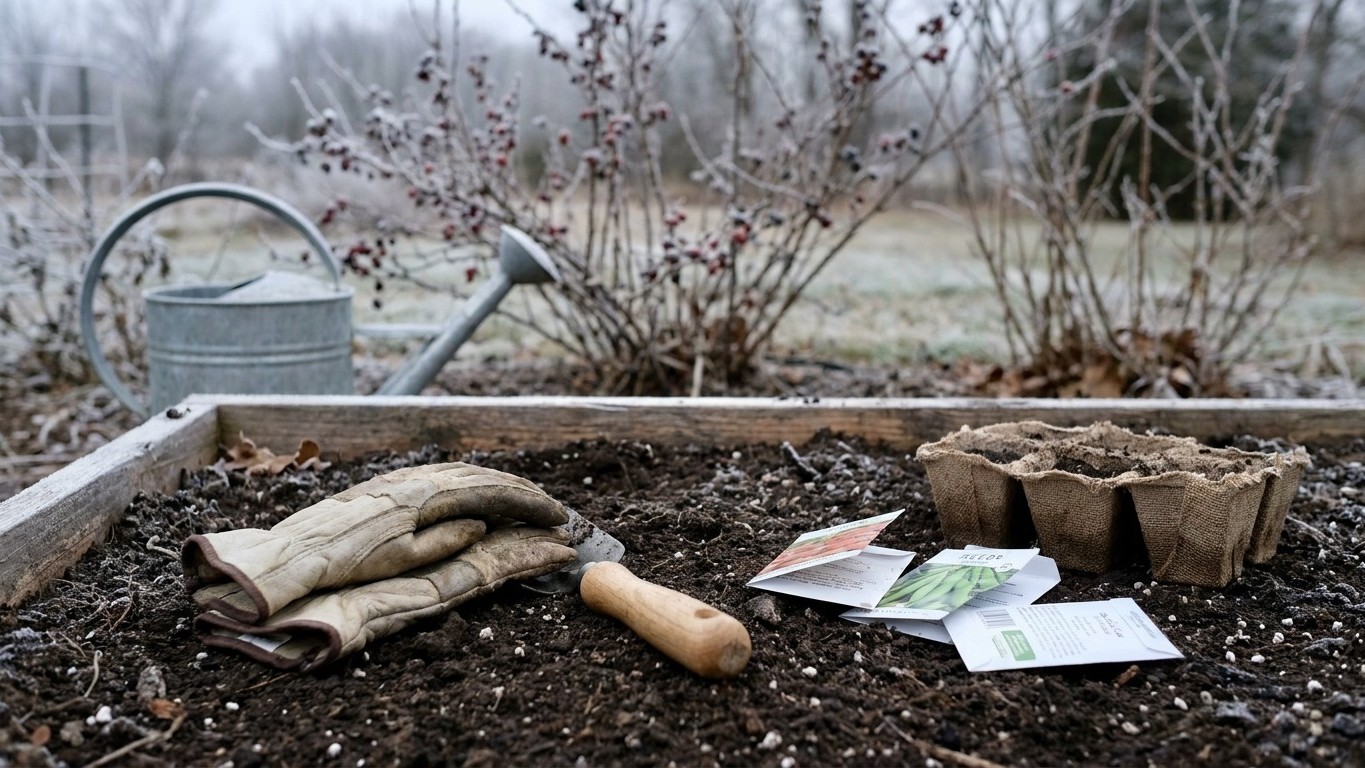

February in Nebraska sits about two to three months ahead of the last spring frost, and the ground is still frozen or waterlogged across most of the state. That means almost nothing goes into open soil this month. The real work happens indoors and under cover: starting long-season seedlings, pruning dormant fruit trees, ordering seed before good varieties sell out, and getting stored crops checked before rot spreads.
What goes in the ground in February

Say it plainly: for most of Nebraska, nothing goes into open, unprotected ground this month. The last spring frost at the reference weather station runs April 12 to April 23 (NOAA NCEI, 1991-2020 normals), which puts February a solid two months out. Soil this early is either frozen solid, saturated from snowmelt, or both, and working it now compacts the structure you’ll need come planting season.
That said, a few things can still happen with protection. Cold frames and low tunnels that were set up in fall can keep cold-hardy greens (spinach, mache, claytonia) ticking along if they were already established before the deep freeze. These aren’t new plantings, they’re maintenance on crops already in the ground.
Bare-root planting of dormant fruit trees and shrubs is possible only in years when the ground has thawed enough to dig a hole cleanly, which in Nebraska tends to be rare before late February in the far southeast counties and essentially never in the panhandle or north-central regions. If your ground is still frozen, heel the bare-root stock into a sheltered trench or a bucket of damp mulch and wait. Planting into half-thawed, waterlogged soil invites root rot before the tree ever gets going.
Garlic and shallots belong in the ground in fall, not February. If you missed that window, don’t force it now. A garlic clove planted into February soil in Nebraska will sit dormant too long and often rot before it can root. Better to wait for a proper spring-planted variety later in the season, or accept the loss and reorder for fall.
Indoors, this is a fine month to force rhubarb crowns or chicory roots in a dark, cool space for tender early stalks and chicons. It’s not glamorous, but it’s real food from the garden while everything outside stays locked under frost.
What to start under cover
Seed-starting math works backward from the last frost window, not forward from a date on the calendar. With the reference last frost falling April 12 to April 23, count back the number of weeks a crop needs before it goes outside, and you get your start date.
Onions and leeks need 10 to 12 weeks under lights before transplanting, and they tolerate being transplanted a couple of weeks before the last frost since they’re cold-hardy. Counting back from mid-April puts the start window squarely in early-to-mid February, which makes this one of the few crops where starting now is exactly right, not early.
Peppers need roughly 8 to 10 weeks and go outside only after frost risk has passed, so counting back from late April puts their start in mid-to-late February. Cabbage and broccoli need 6 to 8 weeks and can go outside a few weeks before last frost, so late February works for those too.
Tomatoes are the trap. They need only 6 to 8 weeks and can’t go outside until well after the last frost window closes, meaning the correct start date lands in March for most of the state, not February. Start tomatoes now and you’ll be babying leggy, rootbound plants for six extra weeks with nowhere to put them.
| Crop | Weeks before transplant | February start? |
|---|---|---|
| Onions, leeks | 10-12 weeks | Yes, correct window |
| Peppers | 8-10 weeks | Yes, mid-to-late month |
| Cabbage, broccoli | 6-8 weeks | Late month, cautiously |
| Tomatoes | 6-8 weeks | No, wait for March |
The two failure modes are mirror images of each other. Start too early and you get leggy, rootbound seedlings sitting in cups too small for their roots by the time the ground is finally ready. Start too late, especially with onions, and the plants never bulk up enough to size properly before summer heat shuts down bulb formation.
What is ready to pick
Honestly, not much is coming out of open ground in Nebraska this month. Anything left outdoors is either buried under snow or has already succumbed to repeated hard freezes. But the pantry and the cold frame still have something to offer.
Kale and leeks that were left in the ground under a heavy mulch layer or snow cover often survive and can be dug or cut as needed, sometimes tasting sweeter after the cold has converted starches to sugars. If your cold frame held spinach, mache, or claytonia through winter, those can still be harvested a few leaves at a time on any day the frame isn’t frozen shut.
Indoors, sprouts and microgreens are the fastest fresh food available this month, ready in a week to ten days from a sunny windowsill or a shelf under lights. No garden required, just a tray and some seed.
This is also the month to go through the root cellar or basement storage and check squash, potatoes, and onions for the ones starting to turn. A soft spot on a squash, a sprouting potato eye, or a soft onion neck means that item gets used first, not left to spread rot to its neighbors. Sort weekly if you can; it’s the cheapest insurance against losing a whole bin.
The jobs that matter this month
Dormant pruning is the headline job. Apple, pear, and stone fruit trees, along with brambles like raspberries, are pruned while they’re fully dormant and the structure is visible without leaves in the way. Wait too long and buds start swelling, making every cut a wound that bleeds sap and invites disease.
Seed ordering has a real deadline too, even if it doesn’t feel like it. Popular onion, leek, and pepper varieties sell out from catalogs by late winter, and a delayed order can mean starting substitute varieties instead of the ones your soil and season actually favor.
Soil testing is worth doing now, before spring workload piles up. A basic test tells you pH and major nutrient levels in time to amend before planting, rather than guessing after the fact. Turning the compost pile, even a partially frozen one, keeps the decomposition process moving and prevents anaerobic pockets from forming.
Tool maintenance belongs here too: cleaning soil and rust off shovels and hoes, sharpening pruners and loppers, and oiling wooden handles before they crack. A dull blade tears plant tissue instead of cutting cleanly, leaving bigger wounds that invite disease later.
Bed and fencing repairs are easier now, while nothing is growing and the ground isn’t yet a priority for planting. Fix the raised bed corner that’s sagging, replace the fence post the winter wind loosened, before you need the space in six weeks.
And keep working through that stored crop check. Rot spreads fast in a warm basement, and a single soft potato left too long can take out a whole bin by spring.
What not to do in February
The classic mistake is trusting a warm afternoon. A 55-degree day in February feels like spring, but the soil temperature a few inches down hasn’t caught up, and direct-sowing anything warm-season into that cold, often waterlogged ground just rots the seed before it germinates.
A related error is uncovering cold frames or removing winter mulch too early after a mild stretch. Nebraska’s February warm spells are routinely followed by hard freezes, and plants that were coasting under protection get hit hard once that cover comes off before the freeze risk has actually passed.
Starting tomatoes and other fast-growing warm-season seedlings this month is a timing mistake, not a safety one. They’ll germinate fine, then sit for weeks too big for their pots and too tender for the outdoors, turning leggy and stressed well before the last frost window even opens in April.
Feeding nitrogen to lawns or dormant perennials this early pushes soft, tender growth right before the next hard freeze can hit it. Wait until growth is actively underway and the freeze risk has genuinely dropped, not just when the calendar flips a page.
Finally, resist digging or tilling soil that’s still partly frozen or soaked from snowmelt. Working wet clay soil now creates clods that bake hard by summer, undoing months of soil-building effort for the sake of getting an early start that isn’t actually early, just premature.
Checking this against your own county
A statewide February guide is a starting point, not an instruction sheet. Nebraska stretches from the humid southeast to the high, dry panhandle, and elevation alone can shift frost windows by weeks. The reference frost dates here come from one weather station, and gardens at higher elevation or further west typically see frost linger later in spring and arrive earlier in fall than that station suggests.
The USDA Plant Hardiness Zone Map places Nebraska across zones 4a to 5b, a wide range built on extreme minimum winter temperature alone, not on frost timing. Before making planting decisions based on this page, check your own county’s numbers through the Nebraska Extension service, which tracks local conditions county by county.
Common questions
Can I plant anything outdoors in Nebraska in February?
For most of the state, no. Soil is frozen or waterlogged, and the last frost window doesn’t open until April 12 to April 23 at the reference station. Cold frames and low tunnels maintaining already-established greens are the exception, not new plantings.
When should I start onion and leek seeds indoors?
Onions and leeks need 10 to 12 weeks under lights before transplanting, and they tolerate cold enough to go out a couple of weeks before last frost. Counting back from the April 12-23 window puts the correct start in early-to-mid February.
What hardiness zone is Nebraska in?
Nebraska spans USDA Plant Hardiness Zones 4a to 5b, based on the 2023 map using 1991-2020 average extreme minimum temperatures. That’s a statewide range; check your specific county for the precise zone.
Is it too early to start tomato seeds in February?
Yes, for most of Nebraska. Tomatoes need only 6 to 8 weeks before transplanting, and they can’t go outside until well after the last frost window closes in April. Starting now means weeks of leggy, rootbound seedlings with nowhere to go.