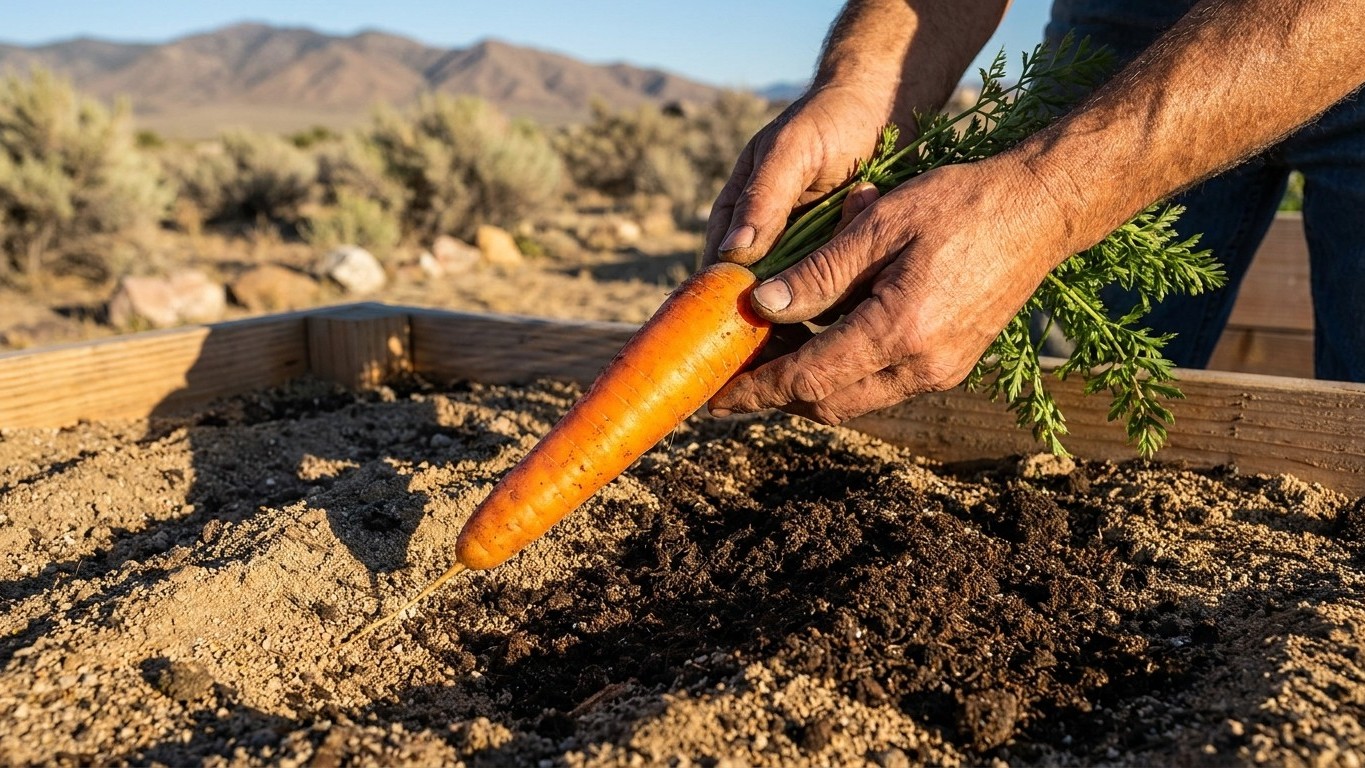

Nevada’s official state soil, the Orovada series, is sandy and well drained with an alkaline surface pH near 7.5, a texture that generally resists the forking heavy ground causes, but its low organic matter and desert chemistry still call for compost before you sow. That’s the starting point, not the verdict for your own raised bed or backyard plot.
The short answer
Nevada’s state soil is the Orovada series, an Aridisol, the kind of dry-climate soil that forms under low rainfall and tends to run alkaline and carry salts near the surface. The representative surface horizon runs 66 percent sand, 8 percent clay and 26 percent silt, with organic matter around 1.4 percent and a surface pH near 7.5. It’s classified well drained. The Nevada legislature named Orovada the official state soil, and USDA NRCS’s State Soils program records these as the representative values for the major components of the series, drawn from 223 sampled components in the Soil Survey Geographic Database.
What does that mean for a carrot? Utah State University Extension is direct about what carrots need: deep, sandy, well-drained soil rich in organic matter. Heavy or rocky ground is what makes the root fork, split, or grow stubby and misshapen instead of long and straight. On texture alone, Orovada’s 66 percent sand and well-drained rating lean in the carrot’s favor, this is not the dense clay that forces a taproot to shove sideways around an obstruction. The catch is the other number: 1.4 percent organic matter is thin. Sandy, low-organic ground drains fast and holds little nutrition, so carrots planted straight into it without amendment tend to bolt small and woody rather than fork, so Will Carrots Fork in Nevada Soil? depends more on that missing organic matter than on the state’s sandy texture. The fix Utah State University Extension gives for difficult ground, generously worked-in compost and double digging to loosen the profile a full foot or more, applies here too, just aimed at building fertility and moisture retention rather than breaking up clay, and getting that timing right matters just as much as the amendment itself, which is why knowing When to Sow Carrots in Nevada is worth checking before you plant.
Where forking becomes the real risk in Nevada is anywhere the ground departs from that sandy Aridisol norm: old streambeds with buried cobble, clay lenses in a valley bottom, or the compacted fill and construction debris common under a new subdivision’s topsoil. In any of those, a raised bed filled with a loose, sandy, compost-rich mix sidesteps the problem entirely rather than fighting the native ground every season.
None of this is a diagnosis of your yard. Nevada spans hundreds of mapped soil series across its basins, mountain ranges and irrigated valleys, from the Truckee Meadows to the Amargosa Valley, and Orovada is simply the one the state picked to represent it. Your own garden could sit on a completely different series with different clay content, different drainage, even different pH. Treat the state soil as a hint about regional tendencies, not a measurement of the dirt under your carrots.
The test that settles it in your own garden
- Dig a hole at least a foot deep where you plan to sow. Carrots need loose ground with no obstruction for their full length, so this is the depth that matters, not a shovel’s first scoop.
- Look at what you find. Note the depth before you hit a hard, undug layer, a rock shelf, or heavy clay, and count any stones or roots in the profile. Anything blocking a straight run down means fork risk, whatever the state soil says.
- Feel the texture between your fingers. Take a handful of moist soil and rub it. Gritty and loose that falls apart easily reads as sandy. A ribbon that holds together and smears reads as high clay. This rough feel test won’t give you a percentage, but it tells you which direction your ground leans compared to Orovada’s sandy profile.
- Watch how water drains. Fill the hole with water and time how long it takes to disappear. Standing water after several hours points to poor drainage and a soil that will need raised beds or heavy organic amendment before carrots do well in it.
- Send a sample for a lab soil test if you want an actual pH and nutrient reading rather than a guess. That’s the only way to know your number, since the state soil’s pH describes Orovada’s mapped surface, not your bed.
When to sow here
Carrots go in the ground as seed, directly where they’ll grow, since they don’t transplant well and any count of days to maturity runs from that seeding date, not from a seedling going into the ground. Utah State University Extension’s guidance on timing rests on soil temperature and air frost together, and both matter in Nevada’s wide range of elevations and microclimates.
- Confirm the soil has warmed past 40 F at planting depth. Carrot seed can germinate at that floor, but it will do it slowly and unevenly compared with warmer soil.
- Count backward two to three weeks from your last expected spring frost. That’s the sowing window, timed to have seedlings established as frost risk fades, not timed around a transplant that doesn’t happen with this crop.
- Aim for the 55 to 65 F range for germination whenever you can hit it. That band gives the fastest, most even sprouting; soil colder or hotter than that just stretches out the wait and thins the stand.
Nevada’s frost calendar is not one date. Data recorded at the Las Vegas airport for 1991 to 2020 puts the last freeze risk between January 7 and February 1, but that reading comes from a low desert site with a strong urban heat-island effect and does not describe the state as a whole. Reno, Carson City, and anywhere at real elevation freeze for months longer into spring than that Las Vegas window suggests, and frost returns correspondingly earlier in fall. Rather than borrow a single date and apply it statewide, count your own two-to-three-week backward window from the last frost your specific valley or bench actually experiences, and confirm that date with your county extension office before you sow.
What goes wrong here
- Forking in heavy or rocky ground. Any clay lens, buried cobble, or compacted fill in the root zone splits the taproot as it tries to grow around the obstruction. Utah State University Extension’s remedy is generous compost worked in plus double digging to loosen the soil a full foot or more, or building a raised bed filled with a loose, sandy mix if the native ground is too far gone to fix in place.
- Poor germination during a hot spell. Carrot seed slows and skips when soil runs well above the 55 to 65 F sweet spot, which happens fast in Nevada’s low-humidity heat. Sowing earlier in the recommended pre-frost window, watering lightly and often to keep the seedbed from drying and overheating between waterings, and mulching lightly over the row all help keep soil temperature in range through germination.
- Splitting from uneven watering. Roots that dry out and then get soaked swell unevenly and crack along their length. In sandy, fast-draining ground like Nevada’s state soil, that swing happens quickly because the profile holds so little water. A steady watering schedule, rather than occasional deep soaks after long dry stretches, keeps the root growing at a consistent rate.
- Stubby or woody roots from thin fertility. Low organic matter, the kind Orovada’s 1.4 percent surface reading points to, leaves carrots short on the steady nutrition a long taproot needs. Compost dug in ahead of sowing addresses this at the same time it improves structure.
Checking this against your own county
Everything above describes tendencies for Nevada’s ground and climate in general, not a reading of your specific bed. The University of Nevada, Reno Cooperative Extension is the state’s land-grant extension service, and its county offices can confirm local frost dates, recommend a soil test lab, and read your results against carrot-growing needs specifically for your valley or bench. Find your county office through the main extension site at extension.unr.edu before you commit a season’s seed to a guess about your soil.
Common questions
Is Nevada’s state soil good for growing carrots?
The Orovada series is sandy and well drained, both traits that favor a straight carrot root, but its organic matter is thin at around 1.4 percent. Compost worked into the bed before sowing addresses that gap without changing the soil’s favorable drainage.
How deep should I dig before sowing carrots?
At least a foot, since carrots need loose, obstruction-free ground for their full length. Digging that deep also lets you check for the rocks, clay lenses, or compacted layers that cause forking before you plant, rather than after.
Can I start carrots indoors and transplant them in Nevada?
No. Carrots are sown directly in the garden as seed and don’t transplant well, so there’s no seedling stage to move outdoors. Every maturity estimate for the crop counts from the seeding date, not from a transplant.
Why did my carrots split even though the soil felt loose?
Splitting usually comes from uneven watering rather than soil texture. Sandy soils like Nevada’s state soil drain fast and dry out between waterings, so a swing from dry to soaked swells the root unevenly. A steady watering schedule prevents it.